Politics
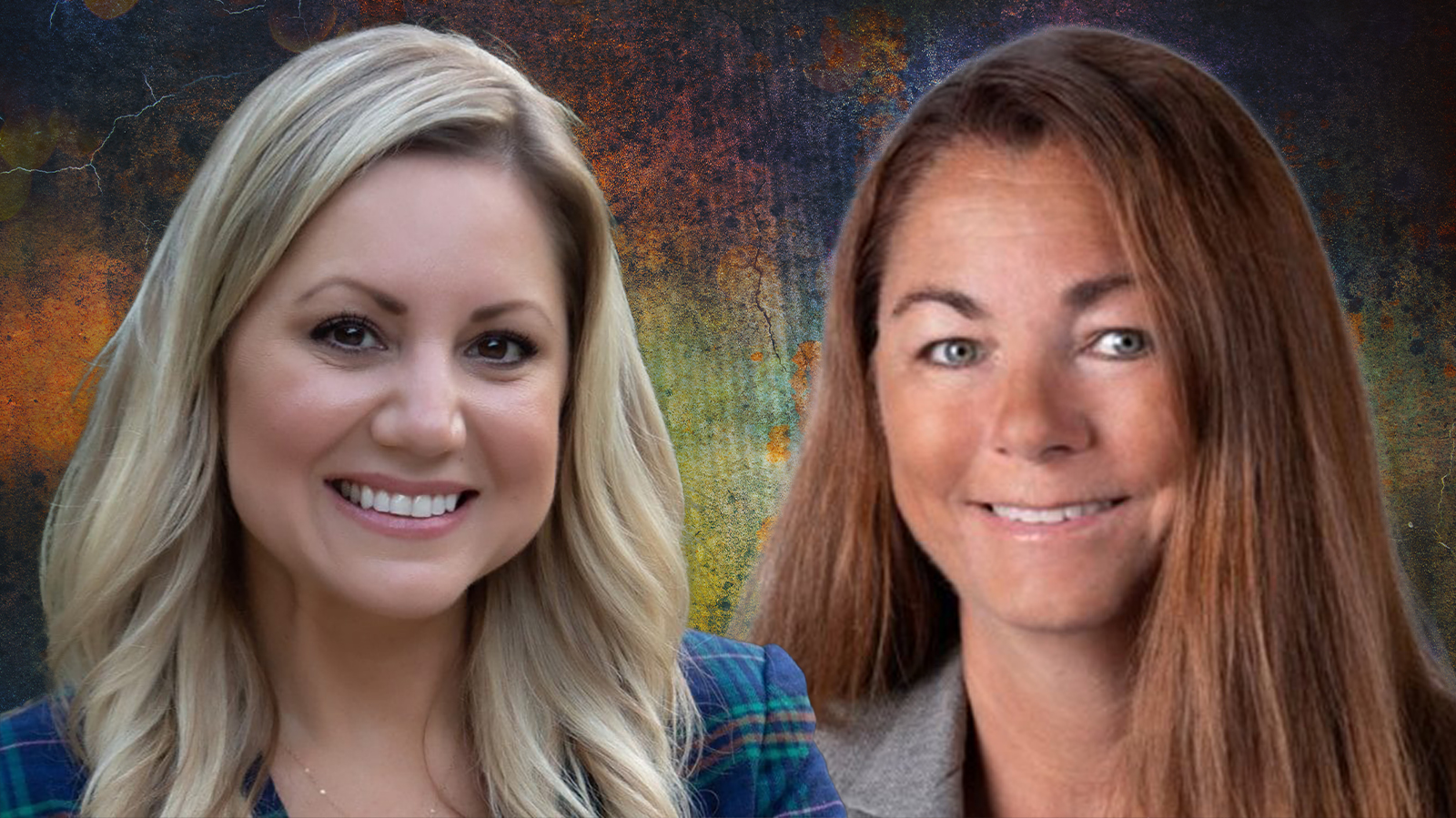
Nancy Bostock launches School Board bid, earns endorsement from Stephanie Meyer
Published
3 days agoon
By
May Greene
Former County Commissioner and School Board member Nancy Bostock has launched a campaign for the Pinellas County School Board, picking up an early endorsement from outgoing Board member Stephanie Meyer.
Bostock announced her candidacy Tuesday, framing the race around student achievement, fiscal priorities and the pressures facing public schools as costs continue to rise.
Pinellas County Schools recently earned an “A” rating from the state for the first time, but Bostock said inflation, housing affordability and demographic shifts threaten to strain classrooms, families and educators.
“Runaway inflation has increased the cost of everything in our day-to-day lives, and our schools aren’t immune,” Bostock said in a news release. “Housing affordability, demographic shifts, and rising costs negatively impact our schools, our teachers, our families and ultimately our children. We must continue to prioritize our students and their success in the face of these challenges.”
Bostock’s campaign will focus on maximizing student outcomes, providing transparency for parents and ensuring resources are directed toward classrooms. Meyer cited Bostock’s experience in education and government as reasons for her endorsement.
“Nancy’s leadership, background in education, and experience in the private sector make her uniquely qualified to serve Pinellas County again on the School Board,” Meyer said. “We need to focus on student outcomes, provide transparency for parents, and prioritize our spending to ensure student success. Nancy Bostock is our best choice for the School Board — I’m proud to endorse her campaign.”
Bostock previously served on the Pinellas County School Board from 1998 to 2008 before winning election to the Pinellas County Commission, where she served until 2012.
A lifelong Pinellas County resident, Bostock attended Clearwater High School and earned a bachelor’s degree in history from the University of Florida and a master’s degree in education from the University of South Florida. She serves as President and CEO of Chemical Standard Laboratory, a company that produces a line of specialty chemical standards.
Bostock and her husband Craig Bostock, a retired U.S. Navy veteran, have three adult children and two grandchildren.
You may like
Politics
Florida cash — healthy savings — ICED — CHIP — food pyramids
Published
20 minutes agoon
January 9, 2026By
May Greene
Energy, water, justice
In the House’s longtime effort to craft a complete budget, three appropriations bills passed this week. Each contained millions for projects earmarked for Florida.
Rep. Laurel Lee cheered wins in the Commerce, Justice and Science, the Energy and Water Development and the Interior and Environment budgets that cleared the chamber.
“These bills move Washington toward accountable budgeting by reducing overall federal spending while prioritizing essential investments that protect public safety, clean drinking water and economic opportunity,” the Thonotosassa Republican said. “As one of the fastest-growing regions in the country, Florida’s 15th District must ensure our infrastructure, public safety systems, and research institutions can keep pace with that growth.”
A vehicle incident prevention and mitigation grant will be awarded to Plant City to fund safety barriers to protect pedestrians at major gatherings. Meanwhile, safe drinking water grants were secured for the Pasco County Crystal Springs chlorine booster station, Lakeland Water Treatment Plant chlorine conversion project and Hillsborough County drinking water infrastructure inspection and analysis effort.
Lee also landed funding for Artificial Intelligence and Cybersecurity Makerspace Equipment at the University of South Florida (USF) and Cryocure research at Moffitt Cancer Center.
Rep. Gus Bilirakis also secured funding in those budgets, totaling more than $14.6 million. The largest allocations included $3 million to enhance the Citrus County Sheriff’s Office emergency communications system and $2.875 million to upgrade the Hernando County Sheriff’s Office’s advanced forensic equipment. He landed $2 million for USF’s research into Alzheimer’s disease and other neurological conditions and $1.75 million for safety enhancements at Pasco County schools.
Other wins include $1 million for infrastructure planning in Brooksville, $1 million for a physical wellness program for the Pasco County Sheriff’s Office, $750,000 for a Citrus County lift station improvement, $750,000 to improve the Crystal City wastewater treatment plant and $750,000 for a central sewer system in Hernando County.
“These investments reflect my commitment to delivering results for our communities and ensuring taxpayer dollars are used wisely,” the Palm Harbor Republican said. “These projects were identified by local government leaders as priority unmet needs. From improving public safety and protecting public health to strengthening water infrastructure and advancing lifesaving medical research, they have the potential to make a lasting, meaningful impact across our district-once these bills are approved by the Senate and signed into law.”
Meanwhile, Rep. Scott Franklin, a Lakeland Republican, touted a major regional win: $461 million in the Energy and Water budget for South Florida Ecosystem Restoration.
“As a member of the House Appropriations Energy and Water Subcommittee, I worked to advance a disciplined, member-driven approach to full-year funding that reins in spending, prioritizes core responsibilities and restores Congress’ Article I role in allocating taxpayer dollars,” Franklin said. “That includes delivering for Florida by continuing critical water infrastructure investments, such as $461 million for South Florida Ecosystem Restoration to protect our waterways, strengthen our communities and support long-term economic growth.”
The House fundraising deadline is at the end of January.
Health savings support?
When President Donald Trump met with House Republicans on strategy this week, he laid out a framework that included several specific elements of Sen. Rick Scott’s More Affordable Care Act. Those included diverting health insurance subsidies into health savings accounts rather than having the federal government pay carriers directly.
The day after, Scott was all smiles during a pen and pad briefing with the press, where he and Rep. August Pfluger, the Texas Republican carrying the House version of Scott’s bill. Both lawmakers felt Trump, without endorsing a specific proposal by name, had endorsed enough of the framework of their plan to give it momentum with the GOP caucuses in both chambers.

Scott said it was essential to restore individuals’ ability to shop for their own insurance, thereby reintroducing free-market pressures and driving providers to compete on price. That ultimately empowers the consumer, he said.
“Back in my state, people are sick and tired of the federal government telling them what to do,” he said.
He argued that reforms to the health care proposal should be able to pass Congress through budget reconciliation, avoiding the need for 60 votes in the Senate.
For his part, Scott saw little appetite in the Senate for continuing the extension of tax credits grown during the pandemic. But he isn’t pushing to change the framework for determining the amount of funding offset for those who genuinely need their health care subsidized. He just wants that money available for consumers to direct.
Does that mean it would be revenue-neutral with the original Affordable Care Act framework? He believes that, in the end, far less money will be spent because market pressures are driving down plan costs, especially if, as his plan currently allows, they can shop across state lines.
ICED
A deadly shooting by a U.S. Immigration and Customs Enforcement (ICE) officer of a woman in Minnesota drew sharp political responses from political leaders. Sen. Ashley Moody said the incident underscored the need to pass her HALO Act, which would require a 25-foot buffer around first responders performing their duties.
“Today’s tragic incident in Minneapolis was sadly inevitable. Radical politicians have spent years vilifying law enforcement and inflaming hostility toward officers doing their jobs. Assaults on police are up 1,300%, and death threats up 8,000%,” she said.

“This dangerous rhetoric puts lives at risk — which is exactly why I introduced the HALO Act, to give officers the buffer zone they need to keep everyone and their communities safe.”
It wasn’t a law enforcement officer who lost their life in the situation dominating headlines. An ICE agent shot and killed Renee Nicole Good. Homeland Security Secretary Kristi Noem said Good tried to run over the officer with her car and that he acted in self-defense.
Protesters had surrounded an ICE operation in Minneapolis.
But other Florida lawmakers in the delegation said the death resulted from poor actions by the agents.
“We won’t be gaslit about what we saw with our own eyes. A U.S. Immigration and Customs Enforcement agent killed Renee Nicole Good in the middle of a residential neighborhood in Minneapolis,” said Rep. Maxwell Frost in a speech on the House floor. “We must honor her life with action and fight to end ICE’s campaign of terror on our communities and on our people.”
Fiscal reforms
The Republican Study Committee, a conservative faction of the House GOP caucus focused on policy, unveiled its own budget proposal for the 2027 fiscal year. Rep. Aaron Bean, a Fernandina Beach Republican, touted several of his proposals that were included in the plan.
Those include transparency requirements on Medicare Advantage and a fee-for-service for health care coverage, something proposed in Bean’s Apples To Apples Act (HR 4093). Payment verification requirements from the Delivering on Government Efficiency (DOGE) in Spending Act (HR 4311). Fairness rules prohibiting the government from competing with private industry for certain contracts were added to the budget after it was initially proposed in Bean’s Freedom from Government Competition Act (HR 1554).

“Over the last three years, my top priority has been to tackle our skyrocketing national debt. The RSC Budget embodies fiscal responsibility and confronts the devastating consequences of Crazy Town’s reckless spending addiction,” Bean said.
“Our national debt now exceeds $38 trillion, but this budget proves that we can return to fiscal sanity. I’m proud to have authored several key provisions to eliminate waste, promote free-market enterprise, and strengthen America’s health care system. The vision is simple, and the goal is lasting prosperity for future generations.”
CHIP crumbs
Florida remains the only state accepting money for an expansion in child welfare through the Children’s Health Insurance Program. Rep. Kathy Castor led a letter signed by every Democrat in Florida’s congressional delegation demanding Gov. Ron DeSantis change course.
The letter says it’s not just about allowing more children to be covered by insurance. It’s the law.
“We applauded the Florida Legislature’s decisive 2023 action to expand eligibility for Florida’s Children’s Health Insurance Program (CHIP), known as KidCare. This expansion would allow children in families earning between 215% and 300% of the federal poverty level (FPL) – between about $60,000 to $80,000 for a family of three – to access health insurance with affordable premiums,” the letter reads.

“The bipartisan and unanimous approval of the KidCare expansion was meant to be a godsend to Florida children and their families, but Gov. DeSantis’ refusal to follow federal law for two years has delayed the expansion, prevented 42,000 uninsured children from gaining coverage, and illegally ripped insurance away from at least 43,000 already eligible and enrolled children.”
Federal law since 2024 has required eligibility in CHIP programs for children ages 1 through 19, unless a child leaves the state, was wrongly granted coverage or dies. But Democrats say the DeSantis administration has wrongly dropped more than 43,000 children from plans. The uninsured rate for Florida children jumped from 7.4% to 8.5% between 2023 and 2024, the largest increase nationally.
“Florida families are urgently waiting for Gov. DeSantis to stop playing political games and finally implement the bipartisan KidCare expansion,” the letter reads. “President Trump has expressed a commitment to protect the health and well-being of every American child, so we urge his administration to immediately enforce the continuous eligibility law and work with the State of Florida to allow families access to affordable coverage.”
Modern pyramid
Rep. Vern Buchanan has long pushed for policies that encourage better nutrition among Americans. The release of a new food pyramid has him excited about a new focus on reducing sugar and improving what Americans ingest.
The Longboat Key Republican met with the Department of Health and Human Services on Thursday to discuss additional ways to improve Americans’ health.
“The United States spends nearly $5 trillion a year on health care, yet Americans’ health outcomes continue to worsen,” Buchanan said.

“Nearly 90% of that spending goes toward fighting chronic disease, much of it driven by poor diet and lifestyle, while nearly 20% of children and more than 40% of adults struggle with obesity. We cannot treat our way out of this crisis — we have to prevent it, and that starts with changing how we approach food, nutrition and health in this country. These new guidelines put real food back at the center of health and empower Americans to be the CEO of their own health.”
The new pyramid emphasizes daily protein intake and full-fat dairy, while limiting highly processed foods. There are also new food guidelines for infants, children and adolescents, different from those for adults.
Rep. Daniel Webster, a Clermont Republican, said he raised concerns about prior guidance with Kennedy and with Agriculture Secretary Brooke Rollins earlier this year.
“Good nutrition is the foundation for strong families and a healthy nation, yet for years federal dietary guidance drifted away from common sense and toward highly processed foods that have contributed to poor health outcomes and rising chronic disease,” Webster said.
“I applaud President Trump and his administration for taking action to reset the guidelines, restore transparency, and put real food back on the table that will Make Americans Healthy Again.”
Clearing the air
Can Palm Beach ever host regular air traffic while Trump is in office?
The Secret Service, as it protects a Commander in Chief who already survived an attempted assassination on the campaign trail, wants to ground flights within a nautical mile of Mar-a-Lago at all times. But Rep. Lois Frankel, at a briefing with the Secret Service, stressed the need to balance community needs with national security.
“My goal is to facilitate a solution that keeps the President and our country safe, using flight restrictions that impact the least number of people in the safest, fairest way possible,” Frankel wrote in a memo on the briefing.

The West Palm Democrat represents the nation’s most prominent Republican politician in Congress. But she said partisanship has nothing to do with conversations with the Secret Service, talks that began in Trump’s first term and take on greater significance in a second term, when the President lists Florida as his full-time home.
As of Oct. 20, the Federal Aviation Administration (FAA) has enforced a 1-nautical-mile no-fly zone around Mar-a-Lago at all times. That’s a change based on Secret Service guidance. Previously, the FAA restricted airspace only when the President was on the property.
Under new restrictions, all flights at Palm Beach International Airport must now fly over neighborhoods to the northeast, even if that’s not the fastest route. That has created noise and environmental concerns for neighborhoods now under the constant shadow of planes.
When Trump is in town, the radius steps up to 30 nautical miles from Mar-a-Lago.
Frankel’s Office said it affects 5,000 of her constituents living in 2,200 homes near the President’s estate.
“In the two months since these restrictions were put in place, the Palm Beach County Department of Airports has received hundreds of complaints. Community concerns include increased noise and air pollution, lower property values and potential flight delays,” Frankel’s memo reads.
Road to Nigeria
Amid concern about persecution of Christians in Nigeria, Rep. Mario Díaz-Balart led a bipartisan delegation of lawmakers to the African nation on a fact-finding mission. There, the Hialeah Republican said he heard testimony from several Nigerians about threats on the ground. Rep. Scott Franklin, a Lakeland Republican, was also part of the trip.
Lawmakers met with U.S. Embassy officials in Nigeria and discussed President Trump’s decision to designate the country as a Country of Particular Concern. Officials said that prompted the government in Nigeria to take several tangible steps toward reducing attacks against Christians and addressing insecurity at the police levels.

In Benue State, lawmakers met with displaced groups who had fled their homes to escape persecution, Díaz-Balart said. The group also looked at whether the instability opened the door to exploitation of mining resources by the Chinese Communist Party, aided by terrorist groups in the region.
“Benue State remains the most dangerous state in which to be a Christian. Rampant attacks have deprived thousands of people of their rights to life, religious liberty and the pursuit of livelihoods,” reads a release from Díaz-Balart’s office.
Lawmakers also met with Josephine Habba, Director General of the Benue State Commission for Peace and Reconciliation, to discuss the humanitarian failures that displaced 500,000 people last year.
Crossing the aisle
The House voted to extend pandemic-era tax credits for insurance plans obtained through the Affordable Care Act. Rep. María Elvira Salazar was among the 17 Republicans who joined with Democrats to pass the measure over objections from GOP leadership.
“I voted YES to extend Affordable Care Act (ACA) enhanced premium tax credits, and I didn’t hesitate. I know firsthand how many families in FL-27 depend on this assistance to afford care,” Salazar, a Coral Gables Republican, posted on X. “Our district has one of the highest enrollment rates in the nation, and without them, thousands face higher premiums or possibly no coverage at all. This isn’t partisan. It’s human.”

But no other Florida Republicans supported the extension, even though the Sunshine State is home to 4.7 million individuals benefiting from the subsidies, more than any other state.
The move marked a rebuke of Trump and Speaker Mike Johnson, who have opposed extending the subsidies. The expiration of tax credits at the end of 2025 was a central concern for Congressional Democrats, who were at the heart of a record government shutdown last year.
Legislation extending the tax credits reached the floor only after a discharge petition by Minority Leader Hakeem Jeffries. Four Republicans, none from Florida, signed the petition last year to get the required 218 supporters and trigger a vote.
Miccosukee snub
But the House declined to snub the President on another issue of relevance to Florida. The chamber failed to override Trump’s veto of flooding protections for the Miccosukee Tribe’s Osceola Camp. Instead, the issue was referred back to the House Natural Resources Committee.
The House voted 236-188 to support the legislation, with seven members voting “present.” But an override of the veto would have required a two-thirds vote by lawmakers, or 287 votes.

In total, 24 Republicans voted with all Democrats in attempting to override the bill. Those included Miami-Dade County Republican Reps. Díaz-Balart, Carlos Giménez and Salazar. U.S. Rep. John Rutherford, a Jacksonville Republican, did not vote, but all other Florida Republicans voted to sustain Trump’s veto.
The bill (HR 504) was sponsored by Giménez and supported by the Florida congressional delegation.
Rep. Debbie Wasserman Schultz, a Weston Democrat, criticized the veto and the President’s logic in a speech on the House floor.
“It does not appropriate or authorize any new spending. The Congressional Budget Office verified that,” she said. “And this bill, in no way bestows special treatment, as it was alleged in the veto message, because the site wasn’t authorized when it was inhabited on these points. It appears the President’s staff gave him bad advice, bad facts, or both.”
Still, Trump nixed the bipartisan legislation at the end of 2025 after it passed the House on a voice vote and the Senate by unanimous consent, marking one of the first vetoes of his second term.
On this day
Dec. 9, 1945 — “U.S. invades Luzon in the Philippines” via History.com — Gen. Douglas MacArthur and the American 6th Army landed on the Lingayen Gulf of Luzon, another step in the capture of the Philippine Islands from the Japanese. The Japanese controlled the Philippines from May 1942, when the defeat of American forces led to General MacArthur’s departure and Gen. Jonathan Wainwright’s capture. But in October 1944, more than 100,000 American soldiers landed on Leyte Island to launch one of the bloodiest battles of the Pacific war — and herald the beginning of the end for Japan.
Dec. 9, 1788 — “Connecticut ratifies Constitution” via the Library of Congress — Connecticut suffered under the Articles of Confederation. While paying heavy import duties to New York State, Connecticut found it difficult to discharge its war debts and rebuild its economy. Delegates Oliver Ellsworth, William Samuel Johnson and Roger Sherman were sent to the Constitutional Convention in Philadelphia with a directive to create a more workable government in accordance with republican principles. As the debate over legislative representation polarized between large and small states, these men proved invaluable. With Federalists firmly in control of the convention, Ellsworth opened debates by reminding fellow citizens of Connecticut’s disadvantage under the Articles.
___
Peter Schorsch publishes Delegation, compiled by Jacob Ogles, edited and assembled by Phil Ammann and Ryan Nicol.
Politics
Massive immigration package targets employers hiring undocumented immigrants
Published
2 hours agoon
January 9, 2026By
May Greene
Florida businesses that purposely ignore whether employees are legally in the United States could face hefty fines or even criminal charges if they hire more than 50 undocumented immigrants, according to a sweeping new immigration package.
Filed Wednesday by Republican Sen. Jonathan Martin, the 34-page bill would presume certain noncitizens are at fault in car accidents, severely restrict their employment, and prevent state banks from loaning them money.
It’s the most wide-ranging immigration bundle proposed so far ahead of the 2026 Session, and would extend a 2025 crackdown that removed in-state tuition for undocumented students, impose state-level penalties for illegally entering Florida, and require all counties to partner with Immigration and Customs Enforcement (ICE).
The nationwide push to quash all avenues for undocumented immigration has been exemplified in Florida, the first state to create a state-run migrant detention center. Since President Donald Trump’s inauguration last January, Sunshine State officials have mirrored his anti-illegal immigration agenda.
This includes deputizing hundreds of state and local officials to act as immigration officers; Florida is the only state to have all of its (67) counties entering into 287(g) agreements, which are partnerships with ICE.
Martin didn’t immediately respond to a request for comment.
E-Verify penalties
SB 1380 would create civil penalties for employers who fail to properly use E-Verify, a federal database that checks whether new hires are legally authorized to work in the country. This builds off of another Martin bill, which would require all businesses to use E-Verify.
Employers who fail to check workers’ immigration status through E-Verify before submitting workers’ compensation claims would be personally liable for any costs, expenses or benefits for undocumented employees.
Purposely not checking their status, however, would result in suspension of business licenses for one year and fines up to $10,000. Doing it again would result in a five-year license suspension alongside a $100,000 fine, and a third violation would mean permanent license revocation and a $250,000 fine.
If the employer purposely flouts this section and the undocumented worker then ends up injuring another person, the employer’s license would be suspended for five years with a $100,000 fine. If the worker kills another person, the licenses would be permanently revoked with a $500,000 fine.
In a similar vein, the bill would impose a third-degree felony charge for an employer who knowingly hires more than 50 undocumented workers. The business would permanently lose its license. The bill would create a cause of action against the employer for any person injured or the next of kin of a person killed by the actions of an undocumented worker.
These provisions evoke a recently closed, two-year federal investigation into Archer Western, a road-building company hired by the state that employed undocumented immigrants for years, as the Tampa Bay Times has reported.
Officials opened the investigation after an undocumented Archer Western employee driving heavy machinery in 2022 hit and killed a Pinellas County deputy. At least 18 of his coworkers on that state-funded construction site were also undocumented.
Car accidents, foreign remittances, and licensing
SB 1380 would create a rebuttable presumption of fault in car accidents involving undocumented immigrants from other states. This means if an out-of-state driver who is undocumented is involved in a car accident in Florida, authorities could presume he or she was at fault — as long as the other motorist wasn’t driving recklessly, under the influence, or clearly at fault.
Insurers could not pay benefits or settle claims with an unauthorized out-of-state driver, the bill says.
Additionally, the bill requires law enforcement officers investigating car accidents to verify whether the parties are legally in the country.
Other provisions would ban the state Division of Risk Management from approving a claim submitted by an adult undocumented immigrant. Unauthorized immigrants would be barred from sending money to other countries and state banks could not accept IDs traditionally used by undocumented immigrants or those illegally in the state with down payments or loans.
All licensing procedures, relicensing instruction and licensing testing must be conducted in English, the bill says. Interpreters, translators or alternate language accommodations would be banned.
The 2026 Session begins on Jan. 13.
___
Reporting by Liv Caputo. Florida Phoenix is part of States Newsroom, a nonprofit news network supported by grants and a coalition of donors as a 501c(3) public charity. Florida Phoenix maintains editorial independence. Contact Editor Michael Moline for questions: [email protected].
Politics
Gov. DeSantis appoints business, education leaders to the St. Petersburg College Board
Published
2 hours agoon
January 9, 2026By
May Greene
The Trustees will help oversee governance, budgeting and strategic direction for St. Petersburg College.
Gov. Ron DeSantis has appointed two new members and reappointed three incumbents to the St. Petersburg College District Board of Trustees.
DeSantis announced the appointment of Richard Franz III and Danielle Marolf, along with the reappointment of Jason Butts, Katherine Cole and Thomas Kidwell.
Franz serves as Chief Operating Officer and Southeast regional managing partner at Sorren Inc. He is a member of both the American and Florida Institutes of Certified Public Accountants and previously worked as a CPA at PricewaterhouseCoopers. He earned a bachelor’s degree in accounting from the University of Florida.
Marolf is President, founder and head of school for Wellmont Academy. She also serves as Vice Chair and Treasurer of the Florida Coalition of Christian Private Schools Accreditation. Marolf holds bachelor’s degrees in psychology and music from Houghton College.
Butts is President of SimplyIOA, a division of the Insurance Office of America. He’s a member of the Citizens Property Insurance Corporation Board of Governors and the Florida Association of Insurance Agents, and earned a bachelor’s degree in telecommunications from the University of Florida.
Cole is a lawyer and shareholder at Hill Ward Henderson. She is Chair-elect of the Clearwater Regional Chamber of Commerce, serves on the Morton Plant Mease Hospital Board of Directors, and has previously served on both the Pinellas County and City of Clearwater charter review committees. Cole earned her undergraduate degree from the University of Tennessee and her law degree from Stetson University.
Kidwell is Vice President of Wealth Management at Cyndeo Wealth Partners. His background includes time as an account Vice President at UBS and time as a minor league baseball player and coach within the St. Louis Cardinals organization. He earned a bachelor’s degree in American Studies from Yale University.
All five appointments are subject to confirmation by the Senate. If confirmed, the Trustees will help oversee governance, budgeting and strategic direction for St. Petersburg College.
New study finds that late bloomers are more successful than child prodigies
Zach Bryan Takes Aim at Ex Brianna ‘Chickenfry’ LaPaglia in New Diss Tracks
France powers Uniqlo’s robust growth across Europe
Trending
-
Politics8 years agoCongress rolls out ‘Better Deal,’ new economic agenda
-
Entertainment8 years agoNew Season 8 Walking Dead trailer flashes forward in time
-
Politics8 years agoPoll: Virginia governor’s race in dead heat
-
Entertainment8 years agoThe final 6 ‘Game of Thrones’ episodes might feel like a full season
-
Politics8 years agoIllinois’ financial crisis could bring the state to a halt
-
Entertainment8 years agoMeet Superman’s grandfather in new trailer for Krypton
-
Business8 years ago6 Stunning new co-working spaces around the globe
-
Tech8 years agoHulu hires Google marketing veteran Kelly Campbell as CMO