
Fashion
Mustang seeks to cement French relaunch at the Who’s Next trade fair


Published
January 15, 2026
After its sales team wrapped up a very busy stint at Pitti Uomo, the Italian menswear trade show, on Thursday, Mustang will be at Who’s Next, the Paris fashion trade show at Porte de Versailles, from Saturday, with the ambition of continuing to build momentum in the French market.
The German denim label, founded in 1932, was for many years a major force in France before pulling back somewhat in the early 2010s following the closure of its local subsidiary. Since 2024, however, it has overhauled its strategy in the country. With best-sellers priced at €89.99, the label is now seeing the fruits of this restructuring.
“It took at least a year to put together the right team and recruit the right agents to cover the various regions. Then we took part in our first Who’s Next in early 2025, which brought us several dozen new customers,” notes Mauriz Kochendörfer, the brand’s international sales director since 2017. “As several historic players in the French market have disappeared, such as Kaporal, or are facing difficulties, we have a great opportunity for growth, with a positioning that meets consumer expectations.” The executive reports 120 stockists in the market by the end of 2025, up from around 50 before the relaunch, and says the company has doubled its business over the past two years.
For Mustang, which reported revenue of €110 million in 2024, the German-speaking markets of Germany, Austria, and Switzerland still account for 50% of its business. But the brand, which was one of the first Western labels to establish itself in countries of the former Soviet bloc, has also historically had substantial activity in Poland and Hungary. “However, France, Belgium, and the Netherlands are markets with very strong potential,” explains the executive. “We have also developed our business in the Scandinavian markets. Our organisation now covers 95% of European markets; we now need to energise growth.”

In France, Mustang also launched its first “True Heritage” campaign last October, based on a digital and influencer strategy, as well as collaborations with retailers such as the CCV multi-brand network and the Culture Denim store in Lille, to highlight its history and its work on denim silhouettes, which still account for 60% of its revenue. Alongside an accessible offering, in which straight and slim cuts still account for the largest volumes and which appeals to a number of multi-brand retailers, Mustang is strengthening its image as a denim specialist. The brand has also developed a capsule with Italian mill Candiani, with prices starting at €120.
At Who’s Next, the brand will showcase this diverse offering, highlighting its efforts to offer styles incorporating technical materials that provide greater comfort and warmth in winter for men, who account for 55% of sales, as well as for women, regarded as an important growth driver.
This article is an automatic translation.
Click here to read the original article.
Copyright © 2026 FashionNetwork.com All rights reserved.

Published
January 15, 2026
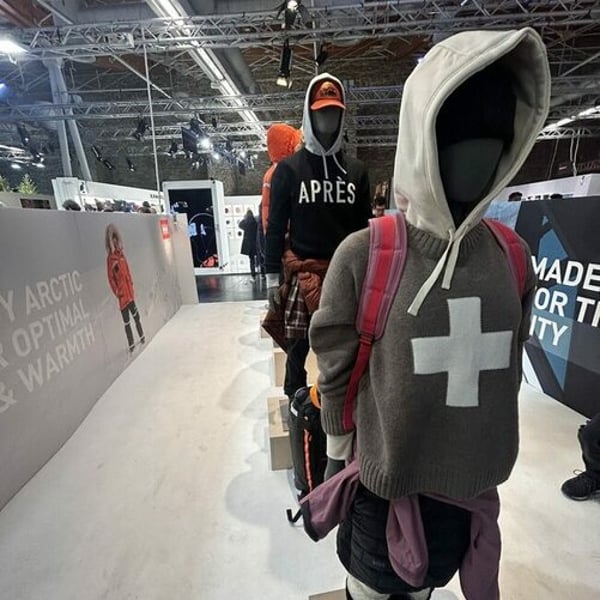
After winning over mountain and sailing professionals and enthusiasts, the historic Norwegian brand Helly Hansen– approaching its 150th anniversary and acquired in 2025 by the American group Kontoor Brands– is looking to strengthen its position in the urbanwear segment. And to achieve this goal, the Italian market plays an important role, as Italy country manager Michele Battocchio explains to FashionNetwork.com.
“We develop garments for those who have to face the cold of Greenland; we are leaders in sailing, so why not offer this expertise to those who also want to wear a technical, high-performance garment in an urban setting?” the manager says. “We are at Pitti Uomo for the second season precisely because we want to strengthen our urban and sportswear line, which already exists but has significant growth potential.”
In 2025, Helly Hansen posted global revenue of approximately €750 million; Europe is the main market, with Italy accounting for around 4% of sales. “We aim to exceed €1 billion in revenue within five years. At present, the markets where we are investing most are North America, the home territory of the new parent company, and the Far East, particularly China, where within a couple of years we have expanded into around a hundred stores with a local partner,” the manager adds. “Italy is important not so much in terms of revenue as in terms of image; it is one of the countries with the highest levels of tourism, so it is essential to have selective distribution and a premium brand perception.”

In Italy, Helly Hansen currently operates a single-brand store in Courmayeur and is stocked in around 250 multi-brand retailers, roughly thirty of which feature shop-in-shop concepts, mainly within prestigious seaside and mountain resorts.
“We generate 80% of our business through wholesale, and we want to continue to strengthen this channel through dedicated branded spaces,” Battocchio concludes. “Our long-term plans, over the next five years, also include opening further single-brand stores.”
Returning to professional products, Helly Hansen used the platform of Pitti Uomo 109 to present its new Arctic Patrol Down parka, developed with input from glaciologists and researchers from The Greenland Project, who provided insights into the conditions they face living and working in polar climates on a daily basis.
Specifically, the new parka has been designed to feel light on the shoulders, keep you warm even on the coldest days, and withstand hostile environments. The insulation is Allied’s HyperDRY, a special water-resistant down known for having the best weight-to-warmth ratio. For additional protection against the cold, the parka features a faux-fur trim on the hood, ideal in particularly snowy and windy conditions, which can be removed when not needed.
Every feature of the product has been designed with the feedback and needs of Arctic scientists in mind: the pockets and side zips are strategically positioned to be compatible with the use of a safety harness while wearing the parka; large pull tabs on the pockets allow them to be opened even when wearing gloves; and the outer fabric is reinforced with Cordura, a material resistant to rips and tears. Other functional features include a double-slider front zip with a double wind flap, generous internal pockets, and adjustable hem, hood and cuffs.
This article is an automatic translation.
Click here to read the original article.
Copyright © 2026 FashionNetwork.com All rights reserved.


Trump claims all the U.S. automakers are ‘doing great.’ Gretchen Whitmer says ‘this will only get worse without a serious shift’

Lucasfilm Leadership Shakeup as Kathleen Kennedy Steps Down

Blaise Ingoglia announces reimbursement of 5 local law enforcement agencies for immigration enforcement
-

 Politics8 years ago
Congress rolls out ‘Better Deal,’ new economic agenda
-
Entertainment8 years ago
New Season 8 Walking Dead trailer flashes forward in time
-
Politics9 years ago
Poll: Virginia governor’s race in dead heat
-
Politics8 years ago
Illinois’ financial crisis could bring the state to a halt
-
Entertainment8 years ago
The final 6 ‘Game of Thrones’ episodes might feel like a full season
-
Entertainment8 years ago
Meet Superman’s grandfather in new trailer for Krypton
-
Business8 years ago
6 Stunning new co-working spaces around the globe
-
Tech8 years ago
Hulu hires Google marketing veteran Kelly Campbell as CMO