Connect with us

Business

Musk holds hostage history’s biggest meme stock delusion

Published

on


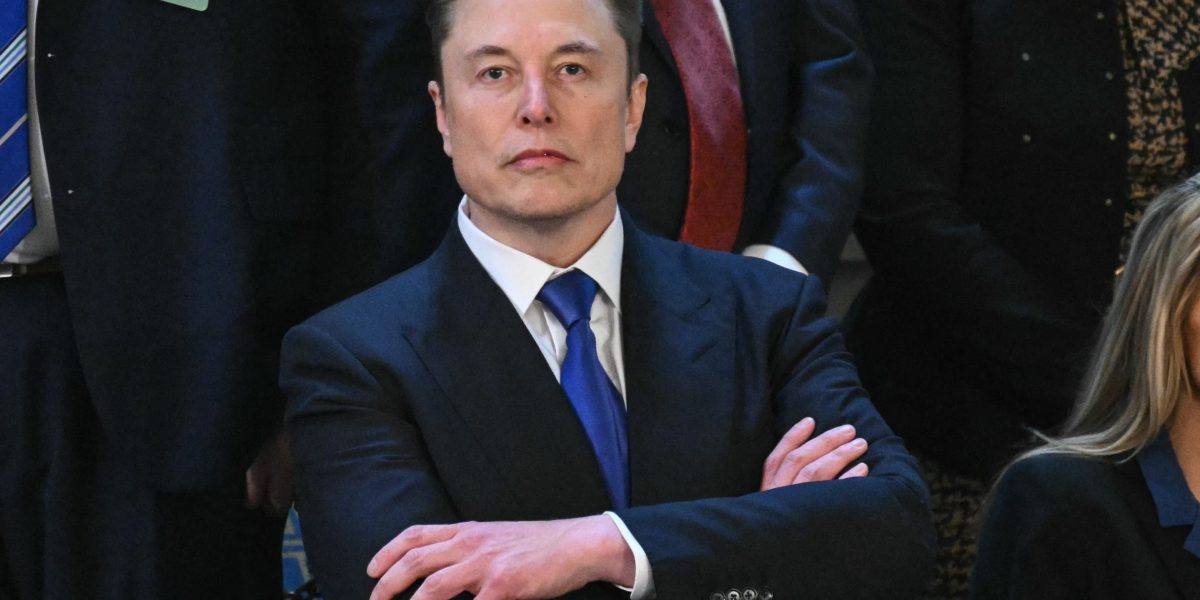
Elon Musk has once again captured media attention. This time, however, it isn’t a rogue X rant or embittered comments about President Trump’s abuse of executive authority. Instead, a proposed $1 trillion pay package crafted by Tesla’s board and Musk has grabbed headlines. The proposed scheme is ludicrous not only in terms of the highly aspirational 12 milestones that would unlock the benefits, but also in terms of good governance practice.

Greed may be good but when is enough?

Even needing to support 14 children with four different mothers, how much capital does Musk need? The argument that Musk needs additional incentive to lead Tesla to new heights runs entirely counter to the fact that he owns nearly 20% of the company’s outstanding shares and will already be well rewarded from any upside in the company’s performance. If Tesla were to achieve an $8.5 trillion market cap, as outlined by one of the pay package milestones, Musk would be worth over $1.6 trillion, based on that current ownership stake.

Musk is the richest person in the world (or second if you believe that number one is Vladimir Putin), and nearly twice as wealthy as the individuals ranked third and fourth, Larry Ellison and Mark Zuckerberg, respectively. Estimated to be worth over $437 billion, none of Musk’s lifestyle, resources, or influence will meaningfully change from any material increase in wealth.

After threatening to walk away from Tesla earlier this year, Musk received a $30 billion pay package after a federal judge denied him a $50 billion package. It is shameful for Musk to now be holding shareholders hostage to suit his need for power. Renowned founders such as Bernie Marcus of Home Depot, Bill Gates of Microsoft, Michael Dell of Dell Technologies, Steve Schwarzman of Blackstone, Sam Walton of Walmart, and Larry Fink of BlackRock never fabricated shakedown strategies like this to regain more control of their companies after they went public.

Moreover, should Musk act on his threat and leave Tesla, he would be the biggest loser as the largest shareholder of the biggest meme stock in financial market history. Tesla has a P/E ratio of over 200x, compared to the world’s most valuable company, Nvidia, at nearly 50x, so a 50% drop in the existing Tesla market cap of $1.1 trillion would result in a $110 billion loss in paper wealth, a quarter of Musk’s estimated worth.

The fine line between visionary winners and delusional losers

The performance milestones in the proposed pay package are both illusional and delusional. According to the proposal, Tesla is required to deliver 20 million vehicles, a significant increase from the 1.8 million delivered in 2024. The company must also distribute one million robots. They have not even developed a fully functional humanoid robot.

Additional benchmarks require one million robotaxis to be placed into commercial operation, versus 30 on the roads today, and 10 million subscribers for its Full Self Driving service, compared to approximately 1 million in 2024.

Most jarring are the mandates for the company to more than double the $4 trillion market cap of Nvidia and to notch $400 billion of adjusted EBITDA, versus $16.65 billion in 2024.

Battery drained in Musk’s magic wand a shareholder issue — not government

Despite the absurdity of the performance package, the federal government does not need to intervene, as it has been so inclined to do lately. If stockholders do not like the proposed pay package, then they will vote against the proposal or sell their stock holdings. Of course, shareholders, not the government, should be asking important questions—of which there are many—about the necessity for such a rich payout and high ownership stake.

One of those burning questions: If Musk preferred maintaining so much control, then why did he take Tesla public?

The centrality of the chief executive to the success of the company is far more symbolic in the eyes of tech bros than it is substantive in the eyes of the average customer. In fact, as of late, he has been the most detrimental factor to the Tesla sales pipeline, which is on track to fall for the second year in a row. Sales in Europe have notably fallen by 40% year-over-year, ceding its dominant market position to Chinese EV automaker BYD for the first time. The Chinese market has been just as challenging for Tesla, which has experienced repeated sales declines over several months this year and has yielded more than half its market share to competitors since 2021.

While Musk may be the greatest inventor of our time, his magic wand is overhyped. Most of his private companies, such as Neuralink, The Boring Company, X/Twitter, and SolarCity, have been a bust or seen lackluster performance. Solar City was a failure that got jammed down the throats of unrelated Tesla shareholders. It would take a lot of nerve to celebrate the delayed success of Neuralink. X/Twitter’s value collapsed after Musk took control.

At least there is truth in advertising for the Boring Company. It lives up to its name by failing to connect the scores of cities with high speed tunnels that were promised years ago. SpaceX has seen success primarily due to a stable flow of government contracts and subsidies, and the steady operating hand of President and Chief Operating Officer Gwynne Shotwell. xAI has potential but its Grok chatbot raised many concerns when it began spewing pro-Nazi/Hitler and antisemitic pronouncements soon after Musk tampered with the large language model’s algorithm.

Leading on the edge while taking the board off the cliff

The board is suffering from what political scientists and psychologists call “groupthink,” psychiatrists label folie à deux, social workers call “codependence,” and normal people recognize as an infatuation with a charismatic, cultish powerful figure. We have seen this happen before at Viacom with Sumner Redstone and CBS with Bill Paley.

We’ve seen it with Ken Olsen at Digital Equipment Corporation, once the world’s second-largest tech company but no longer in business. And we saw it with Juan Trippe at Pan American World Airways, the now-defunct pioneer of transoceanic travel that was once America’s flagship carrier. The original nationwide coffee house pioneer, William Black, ran the Chock full O’Nuts chain that he founded into his mid-80s when he was flat on his back in the hospital while his full-time physician and lifelong friend served as the president. Those boards followed such charismatic CEOs, who lived on the edge, until they ran right off the cliff.

The opinions expressed in Fortune.com commentary pieces are solely the views of their authors and do not necessarily reflect the opinions and beliefs of Fortune.

Fortune Global Forum returns Oct. 26–27, 2025 in Riyadh. CEOs and global leaders will gather for a dynamic, invitation-only event shaping the future of business. Apply for an invitation.


Source link

Continue Reading

Business

‘You have an entire culture, an entire community that is also having that same crisis’: Colorado coal town looks anxiously to the future

Published

on


The Cooper family knows how to work heavy machinery. The kids could run a hay baler by their early teens, and two of the three ran monster-sized drills at the coal mines along with their dad.

But learning to maneuver the shiny red drill they use to tap into underground heat feels different. It’s a critical part of the new family business, High Altitude Geothermal, which installs geothermal heat pumps that use the Earth’s constant temperature to heat and cool buildings. At stake is not just their livelihood but a century-long family legacy of producing energy in Moffat County.

Like many families here, the Coopers have worked in coal for generations — and in oil before that. That’s ending for Matt Cooper and his son Matthew as one of three coal mines in the area closes in a statewide shift to cleaner energy.

“People have to start looking beyond coal,” said Matt Cooper. “And that can be a multitude of things. Our economy has been so focused on coal and coal-fired power plants. And we need the diversity.”

Many countries and about half of U.S. states are moving away from coal, citing environmental impacts and high costs. Burning coal emits carbon dioxide that traps heat in the atmosphere, warming the planet.

President Donald Trump has boosted coal as part of his agenda to promote fossil fuels. He’s trying to save a declining industry with executive orderslarge sales of coal from public landsregulatory relief and offers of hundreds of millions of dollars to restore coal plants.

That’s created uncertainty in places like Craig. As some families like the Coopers plan for the next stage of their careers, others hold out hope Trump will save their plants, mines and high-paying jobs.

Matt and Matthew Cooper work at the Colowyo Mine near Meeker, though active mining has ended and site cleanup begins in January.

The mine employs about 130 workers and supplies Craig Generating Station, a 1,400-megawatt coal-fired plant. Tri-State Generation and Transmission Association is planning to close Craig’s Unit 1 by year’s end for economic reasons and to meet legal requirements for reducing emissions. The other two units will close in 2028.

Xcel Energy owns coal-fired Hayden Station, about 30 minutes away. It said it doesn’t plan to change retirement dates for Hayden, though it’s extending another coal unit in Pueblo in part due to increased demand for electricity.

The Craig and Hayden plants together employ about 200 people.

Craig residents have always been entrepreneurial and that spirit will get them through this transition, said Kirstie McPherson, board president for the Craig Chamber of Commerce. Still, she said, just about everybody here is connected to coal.

“You have a whole community who has always been told you are an energy town, you’re a coal town,” she said. “When that starts going away, beyond just the individuals that are having the identity crisis, you have an entire culture, an entire community that is also having that same crisis.”

Phasing out coal

Coal has been central to Colorado’s economy since before statehood, but it’s generally the most expensive energy on today’s grid, said Democratic Gov. Jared Polis.

“We are not going to let this administration drag us backwards into an overreliance on expensive fossil fuels,” Polis said in a statement.

Nationwide, coal power was 28% more expensive in 2024 than it was in 2021, costing consumers $6.2 billion more, according to a June analysis from Energy Innovation. The nonpartisan think tank cited significant increases to run aging plants as well as inflation.

Colorado’s six remaining coal-fired power plants are scheduled to close or convert to natural gas, which emits about half the carbon dioxide as coal, by 2031. The state is rapidly adding solar and wind that’s cheaper and cleaner than legacy coal plants. Renewable energy provides more than 40% of Colorado’s power now and will pass 70% by the end of the decade, according to statewide utility plans.

Nationwide, wind and solar growth has remained strong, producing more electricity than coal in 2025, as of the latest data in October, according to energy think tank Ember.

But some states want to increase or at least maintain coal production. That includes top coal state Wyoming, where the Wyoming Energy Authority said Trump is breathing welcome new life into its coal and mining industry.

Planning for the future

The Coopers have gone all-in on geothermal.

“Maybe we’ll never go back to coal,” Matt Cooper said. “We haven’t (gone) back to oil and gas, so we might just be geothermal people for quite some time, maybe generations, and then eventually something else will come along.”

While the Coopers were learning to use their drill in October, Wade Gerber was in downtown Craig distilling grain neutral spirits — used to make gin and vodka — on a day off from the Craig Station power plant. Gerber stepped over his corgis, Ali and Boss, and onto a stepladder to peer into a massive stainless steel pot where he was heating wheat and barley.

Gerber’s spent three decades in coal. When closure plans were announced four years ago, he, his wife Tenniel and their friend McPherson brainstormed business ideas.

“With my background in plumbing and electrical from the plant it’s like, oh yeah, I can handle that part of it,” Gerber said about distilling. “This is the easy part.”

He used Tri-State’s education subsidies for classes in distilling, while other co-workers learned to fix vehicles or repair guns to find new careers. While some plan to leave town, Gerber is opening Bad Alibi Distillery. McPherson and Tenniel Gerber are opening a cocktail bar next door.

Everyone in town hopes Trump will step in to extend the plant’s life, Gerber said. Meanwhile, they’re trying to define a new future for Craig in a nerve-wracking time.

“For me, my products can go elsewhere. I don’t necessarily have to sell it in Craig, there’s that avenue. For someone relying on Craig, it’s even scarier,” he said.

Questioning the coal rollback

Tammy Villard owns a gift shop, Moffat Mercantile, with her husband. After the coal closures were announced, they opened a commercial print shop too, seeing it as a practical choice for when so many high-paying jobs go away.

Villard, who spent a decade at Colowyo as administrative staff, said she doesn’t understand how the state can throw the switch to turn off coal and still have reliable electricity. She wants the state to slow down.

Villard describes herself as a moderate Republican. She said political swings at the federal level — from the green energy push in the last administration to doubling down on fossil fuels in this one — aren’t helpful.

“The pendulum has to come back to the middle,” she said, “and we are so far out to either side that I don’t know how we get back to that middle.”

___

The Associated Press’ climate and environmental coverage receives financial support from multiple private foundations. AP is solely responsible for all content.


Source link

Continue Reading

Business

Netflix’s $5.8 billion breakup fee for Warner among largest ever

Published

on


Netflix Inc.’s $72 billion acquisition of Warner Bros. Discovery Inc. includes one of the biggest breakup fees of all time — a $5.8 billion penalty that Netflix has agreed to pay its target if the deal falls apart or fails to win regulatory approval.

At 8% of the deal’s equity value, the fee is well above the average even in big-ticket dealmaking, signaling Netflix executives’ confidence they can convince global antitrust watchdogs to let the transaction go ahead. The average breakup fee in 2024 was equal to about 2.4% of the total transaction value, according to a report from Houlihan Lokey.

Netflix’s multibillion-dollar pledge is also a sign of how heated the bidding war got for control of the iconic Hollywood studio. As part of a sweetened proposal earlier this week, rival suitor Paramount Skydance Corp. had more than doubled the proposed breakup fee in its offer to $5 billion.

Warner Bros., meanwhile, would have to pay a $2.8 billion reverse breakup fee if its shareholders vote down the deal. If Warner Bros. were to accept a rival offer, the new buyer, in effect, would be on the hook for that fee.

Here are some of the biggest breakup fees in M&A history, according to data compiled by Bloomberg:

AOL/Time Warner Inc.

Deal value: $160 billion 

America Online Inc. agreed to pay a fee of about $5.4 billion if it backed out of its agreement to buy Time Warner Inc. Time Warner would pay about $3.9 billion if it broke up the transaction under certain conditions.

Percentage of deal value: 3.4%

Outcome: Completed

Pfizer/Allergan

Deal value: $160 billion

The breakup fee could have been as high as $3.5 billion, but the merger had a contingency that it would be lower if there were changes to tax law. Pfizer ended up paying just $150 million after the US cracked down on corporate tax inversions 

Percentage of deal value: 2.2% (but paid less than 0.1%)

Outcome: Terminated

Verizon/Verizon Wireless

Deal Value: $130 billion

Breakup Fee: This deal for Vodafone’s stake in Verizon Wireless was complicated. Verizon promised to pay a breakup fee to Vodafone of $10 billion if it couldn’t get financing for the deal, or $4.64 billion if its board changed its recommendation to shareholders to vote in favor of the transaction. Meanwhile, Vodafone would have owed $1.55 billion to Verizon if its board changed its mind, and either side would have had to pay $1.55 billion to the other if shareholders turned down the transaction. Vodafone also would have had to pay that $1.55 billion if an unfavorable tax ruling made it too onerous to complete the deal. 

Percentage of deal value: 7.7%

Outcome: Deal completed

AB InBev/SAB Miller

Deal value: $103 billion

Breakup fee: AB InBev agreed to pay a breakup fee of $3 billion if it failed to get approval from regulators or shareholders and instead walked away from what was then the biggest corporate takeover in UK history. 

Percentage of deal value: 2.9% 

Outcome: Completed

AT&T/T-Mobile USA

Deal Value: $39 billion 

Breakup fee: AT&T agreed to pay Deutsche Telekom a $3 billion breakup fee in cash, as well as transferring radio spectrum to T-Mobile and striking a more favorable network-sharing agreement. 

Percentage of deal value: 7.7%

Outcome: Withdrawn after regulatory opposition

Google/Wiz

Deal value: $32 billion

The companies agreed that Google would pay a breakup fee of about $3.2 billion — a huge chunk of the transaction value — if the deal didn’t close.

Percentage of deal value: 10% 

Outcome: Completed


Source link

Continue Reading

Business

A Thanksgiving dealmaking sprint helped Netflix win Warner Bros.

Published

on


The Netflix Inc. plans that clinched the deal for Warner Bros. Discovery Inc. started to shape up around Thanksgiving. 

deadline was looming: Warner Bros. had asked bidders, which also included Paramount Skydance Corp. and Comcast Corp., to have their latest proposals and contracts in by the Monday after the holiday, following a round about a week earlier. The suitors were told to put their best foot forward.

While most Americans were watching football and feasting on turkey, Netflix executives and advisers hunkered down to finalize a binding offer and a $59 billion bridge loan from banks, one of the biggest of its kind. That gave the streaming company the ammunition to make a mostly cash-and-stock bid that helped it prevail over Comcast and David Ellison’s Paramount, according to people familiar with the matter.

The resulting $72 billion deal, announced Friday, is set to bring about a seismic shift in the entertainment business — if it can survive intense regulatory scrutiny and a potential fight from Paramount. This account of Netflix’s surprise victory in the biggest M&A auction of the year is based on interviews with half a dozen people involved in negotiations. They asked not to be identified because the details are confidential.

The sales process had kicked off with several unsolicited bids from Paramount Skydance, itself a newly formed company after a merger this year orchestrated by Ellison. He’s now the studio’s chief executive officer and controlling shareholder, with backing from his father, Oracle Corp. billionaire Larry Ellison. 

Paramount’s early move gave it a head start in the bidding process weeks before other would-be buyers got access to information. But the post-Thanksgiving deadline for second-round bids became a turning point by giving Netflix time to catch up and assemble the documents it needed, some of the people said. And since the streaming giant was bred in the fast-paced ethos of Silicon Valley, it could move quickly. 

When the binding bids arrived that Monday, Netflix’s offer emerged as superior, the people said.

One issue was the Warner Bros. camp had doubts about how Paramount would pay for the company, which owns sprawling Hollywood studios, the HBO network and a vast film and TV library. Paramount’s offer included financing from Apollo Global Management Inc. and several Middle Eastern funds, and it had conveyed that its bid was fully backstopped by the Ellisons. Still, Warner Bros. executives were privately concerned about the certainty of the financing, people familiar with the matter said.

Representatives for Netflix and Warner Bros. declined to comment.

‘Noble’ vs ‘Prince’

In the weeks leading up to the finale, Warner Bros. advisers set up war rooms at various hotels in midtown Manhattan. A core group holed up at the Loews Regency, which has long been a convening spot for the city’s movers and shakers.

Inside Warner Bros., the situation was known as “Project Sterling.” The company called itself by the code name “Wonder.” The team referred to Netflix as “Noble,” while Paramount was “Prince” and Comcast was “Charm.”

At Netflix, Chief Financial Officer Spencer Neumann served as the point man while corporate development head Devorah Bertucci organized people day-to-day. Chief Legal Officer David Hyman and Spencer Wang, vice president of finance, investor relations and corporate development, also were key architects, with all of them reporting into co-CEOs Ted Sarandos and Greg Peters.

The contours of the deal were shaped in a way befitting of a tech company: mostly over video chat or phone rather than in person. Virtual war rooms were set up. While strategizing or discussing diligence on Zoom, participants would raise virtual hands or make suggestions over chat rather than unmuting and slowing down the meeting. Google Docs were used to review and edit documents together in real time.

Talks heated up this week, with Warner Bros. advisers in continuous dialogue with the bidders and negotiating contract language and value. Comcast said it would merge its NBCUniversal division with Warner Bros. Paramount offered to more than double its proposed breakup fee to $5 billion to sweeten its deal and outshine rivals. 

In the end, Warner Bros. determined Netflix had the best offer and the company was the most flexible on key terms. On Wednesday, Paramount lobbed an aggressively worded letter to Warner Bros. board saying the sales process was “tainted.” It also identified what it saw as regulatory risks in the Netflix proposal, one sign that a winning outcome was slipping away for Paramount. 

Netflix found out Thursday evening New York time that it had won. Executives and advisers were assembled on a video call when they got the official word, sparking a moment of jubilation before everyone snapped into action. By 10:25 p.m., Bloomberg News broke the news that a deal was imminent. 

Even Sarandos made it sound like the ending was a twist on a conference call with investors. “I know some of you are surprised that we’re making this acquisition, and I certainly understand why,” he said. “Over the years, we have been known to be builders, not buyers.”

Regardless of whether Paramount reemerges to try and top the bid, Netflix will have work ahead of it. It has agreed to pay a $5.8 billion breakup fee to Warner Bros. if the transaction fails on regulatory grounds. The company also has to digest its largest acquisition ever.

“It’s going to be a lot of hard work,” co-CEO Peters said on the conference call. “We’re not experts at doing large-scale M&A, but we’ve done a lot of things historically that we didn’t know how to do.”


Source link

Continue Reading

Trending

Copyright © Miami Select.