Connect with us

Business

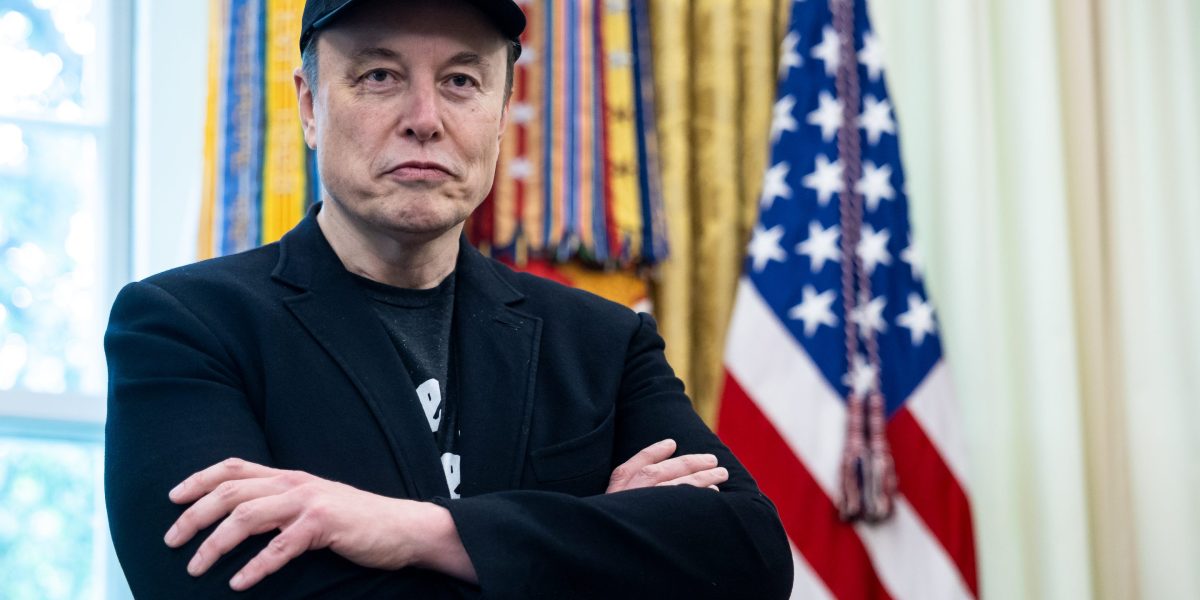
Musk forms America Party after reigniting bitter feud with Trump

Published

on


Elon Musk, an ex-ally of US President Donald Trump, said Saturday he had launched a new political party in the United States to challenge what the tech billionaire described as the country’s “one-party system.”

Musk, the world’s richest person and Trump’s biggest political donor in the 2024 election, had a bitter falling out with the president after leading the Republican’s effort to slash spending and cut federal jobs as head of the so-called Department of Government Efficiency.

“When it comes to bankrupting our country with waste & graft, we live in a one-party system, not a democracy,” the Space X and Tesla boss posted on X, the social media platform that he owns.

“Today, the America Party is formed to give you back your freedom.”

Musk cited a poll — posted on X on Friday, US Independence Day — in which he asked whether respondents “want independence from the two-party (some would say uniparty) system” that has dominated US politics for some two centuries.

The yes-or-no survey earned more than 1.2 million responses.

“By a factor of 2 to 1, you want a new political party and you shall have it!” he posted on Saturday.

The Trump-Musk feud reignited in dramatic fashion late last month as Trump pushed Republicans in Congress to ram through his massive domestic agenda in the form of the One Big Beautiful Bill.

Musk expressed fierce opposition to the legislation, and ruthlessly attacked its Republican backers for supporting “debt slavery.”

He quickly vowed to launch a new political party to challenge lawmakers who campaigned on reduced federal spending only to vote for the bill, which experts say will pile an extra $3.4 trillion over a decade onto the US deficit.

After Musk heavily criticized the flagship spending bill — which eventually passed Congress and was signed into law — Trump threatened to deport the tech tycoon and strip federal funds from his businesses.

“We’ll have to take a look,” the president told reporters when asked if he would consider deporting Musk, who was born in South Africa and has held US citizenship since 2002.

Introducing the 2025 Fortune 500, the definitive ranking of the biggest companies in America. Explore this year’s list.


Source link

Continue Reading

Business

Trump admits he can’t tell if the GOP will keep the House despite massive investment pledges

Published

on


President Donald Trump admitted that he’s not sure if his economic policies will pay off for Republicans at the ballot box in 2026.

In an interview with the Wall Street Journal that was published late Saturday, he pointed to massive investment pledges that he’s secured since returning to the White House.

But when asked if Republicans will lose control of the House in next year’s midterm elections, Trump replied, “I can’t tell you. I don’t know when all of this money is going to kick in,” adding that forecasts say the second quarter.

Trump has previously touted as much as $21 trillion of investments pouring into the U.S., though recent commitments don’t come close to adding up to such levels.

Still, under trade deals Trump has negotiated, the European Union has vowed $600 billion in investment, Japan $550 billion, and South Korea $350 billion. Separately, Saudi Arabia has promised $1 trillion. Companies have also announced plans to invest hundreds of billions of dollars, though some of that includes money planned during the Biden administration.

While the timing of all the money is uncertain, not to mention how much will actually be spent, companies have expressed the need to diversify supply chains with more domestic production. Apple has said its $600 billion pledge to build U.S. factories will create a “domino effect” that ignites manufacturing across the country.

At the same time, Wall Street expects Trump’s tax cuts from his One Big Beautiful Bill Act to deliver a significant jolt of fiscal stimulus to the economy next year, potentially reaccelerating GDP growth.

That would come as voters made clear in last month’s off-year elections that affordability is their top priority. Inflation has cooled from its 2022 high, but prices are up sharply from pre-pandemic levels, and consumers are revolting over higher insurance, electricity and grocery bills. Even most Trump voters say the cost of living is bad.

Trump has dismissed the affordability issue as a Democratic “hoax” and insists prices are down. He told the Journal that he will lower prices.

“I think by the time we have to talk about the election, which is in another few months, I think our prices are in good shape,” Trump said.

“I’ve created the greatest economy in history. But it may take people a while to figure all these things out,” he added. “All this money that’s pouring into our country is building things right now—car plants, AI, lots of stuff. I cannot tell you how that’s going to equate to the voter, all I can do is do my job.”

Trump has floated some ideas to appease voters on affordability, including a 50-year mortgage to lower monthly payments and $2,000 “dividend” checks. He also continues to pressure the Federal Reserve to lower rates, even though it could worsen inflation, and rolled back tariffs on some food imports.

In his interview with the Journal, Trump didn’t say if he would cut tariffs on other goods. He also warned that if the Supreme Court strikes down his global tariffs, his alternatives are not as “nimble, not as quick.”

 “I can do other things, but it’s not as fast. It’s not as good for national security,” Trump added. 


Source link

Continue Reading

Business

Nicotine pouches can be a better alternative to cigarettes says CEO

Published

on


Smoking is one of the clearest public-health failures of our time. More than 500,000 Americans still die each year from smoking-related illnesses, and globally the picture is even more alarming. In the United States, anti-smoking campaigns have reduced the number of new cigarette users, but the effectiveness of these measures may be fading. Indeed, the headline of a widely-shared news story notes “Celebrities Are Making Smoking Cigarettes Cool Again”. Yikes. Meanwhile, a quick trip to Mexico, Europe, or Asia is enough to see that cigarettes remain very much in style.

Reducing cigarette use, and preventing a new generation from getting hooked on nicotine, is a noble goal. That is one reason James Monsees and Adam Bowen founded the vape company JUUL Labs, as a potentially less harmful alternative for adult smokers. But a mix of regulatory missteps by a hostile FDA and market loopholes opened the door to a wave of counterfeit and bootleg vapes, often imported from China, sold in local stores, highly addictive, and completely unregulated. Many people became sick from using vapes with unknown ingredients. Teenagers were easily able to access bootleg vapes from China in youth-friendly flavors. What began as an idealistic goal—moving adult smokers off of cigarettes—turned into a new epidemic. 

Now we have two problems: cigarettes and vapes.

I believe science and technology can solve both. I was a tobacco user who became addicted to vaping. I tried everything to quit and cut down my nicotine use. Eventually, I discovered Swedish-style white pouches. That experience led me to create Sesh+, a premium, tobacco-free nicotine pouch made with transparent ingredients. It has been life-changing for me personally: I haven’t picked up a vape since switching to pouches. In Sweden, where oral nicotine products have been widely used for decades, smoking rates are among the lowest in Europe and smoking-related disease is correspondingly lower.

There is growing evidence that nicotine itself, while addictive, is not what primarily causes smoking-related disease; it’s the toxic byproducts of combustion that kill. With vaping, the concern is different: it’s the lack of transparency and quality standards that should alarm us. As a health-conscious consumer, I want to know exactly what I’m putting into my body. That’s why our pouches are independently lab-tested for contaminants like heavy metals and are manufactured in the United States under strict quality controls. 

Fake nicotine pouches are already in the U.S. market. Sofia Hamilton writes for Reason that her favorite convenience store unknowingly sells counterfeit nicotine pouches, and how only someone deeply familiar with FDA nicotine rules could tell the difference. No one should have to be a nicotine policy expert just to know whether a product is safe.

Important questions remain. We do not want to create a product that attracts people who don’t already use nicotine. The average Sesh+ customer is over 35, and I’m very proud of that. Early data is encouraging: a recent Rutgers study found that new nicotine users taking up pouches remains very low. Government has a responsibility to keep black-market and counterfeit pouches out of consumers’ hands. Industry must ensure retailers are educated and know what they’re selling. And we need strong youth prevention laws.

Nicotine pouches will only be effective if industry and government work together to ensure we are not attracting youth or non-nicotine users.

In the U.K., the proposed Tobacco and Vapes Bill would ban people born in or after 2009 from ever purchasing nicotine products. In the United States, we have already raised the legal age to buy tobacco to 21. These are the kinds of measures our industry should support. If the legislation in the U.K. passes, I hope other countries will adopt similar policies to prevent youth from accessing nicotine products. I also hope to see product-verification technology adopted as an industry standard so counterfeit nicotine products never reach consumers. Age verification is not enough; we must ensure a market for counterfeit and bootleg nicotine pouches does not emerge.

If companies in the nicotine pouch space work together, we can learn from JUUL’s experience and avoid repeating the same mistakes. Our responsibility is clear: help adult smokers move to potentially less harmful alternatives, without creating a new generation of nicotine users. If we get this right, a world free from tobacco is not just aspirational. It’s achievable.

Max Cunningham is the CEO of Sesh+, a nicotine pouch company based in Austin, Texas and backed by 8VC. The opinions expressed in Fortune.com commentary pieces are solely the views of their authors and do not necessarily reflect the opinions and beliefs of Fortune.


Source link

Continue Reading

Business

Kevin Hassett says Trump’s opinion would have ‘no weight’ on the FOMC

Published

on


National Economic Council Director Kevin Hassett, one of the top contenders to replace Jerome Powell as Federal Reserve chair, downplayed any role that President Donald Trump’s opinion would have in setting interest rates.

That’s despite Trump repeatedly insisting that he ought to have some say on monetary policy. Most recently, he said Friday his voice should be heard because “I’ve made a lot of money.”

In an interview Sunday on CBS’ Face the Nation, Hassett said Trump has “very strong and well founded views” but pointed out that the Fed is independent, with the chairman tasked with driving consensus among other policymakers on the rate-setting Federal Open Market Committee.

“But in the end, it’s a committee that votes,” he added. “And I’d be happy to talk to the president every day until both of us are dead because it’s so much fun to talk, even if I were Fed chair of if I wasn’t Fed chair.”

Hassett said he hopes Kevin Warsh, a former Fed governor who is also being considered for the chairmanship, would talk to the president as well if he becomes Fed chief.

Trump told the Wall Street Journal on Friday that Warsh was at the top of his list and said “the two Kevins are great.”

The comment surprised Wall Street, which had overwhelming odds on Hassett as the favorite. On the prediction market Kalshi, the probability that he will be nominated as Fed chair has plunged to 50% from 80.6% earlier this month, while Warsh’s odds shot up to 41% from 11%.

Trump has said he will nominate a Fed chair in early 2026, with Powell’s term due to expire in May. Until then, the contenders have time to make their case. According to the Journal, Trump met Warsh on Wednesday at the White House and pressed him on whether he could be trusted to back rate cuts. 

When asked on Sunday if Trump’s voice would have equal weighting to the voting members on the FOMC, Hassett replied, “no, he would have no weight.”

“His opinion matters if it’s good, if it’s based on data,” he explained. “And then if you go to the committee and you say, ‘well the president made this argument, and that’s a really sound argument, I think. What do you think?’ If they reject it, then they’ll vote in a different way.”

For his part, Hassett has regularly supported more easing and is one of Trump’s fiercest economic surrogates. But since joining Trump’s second administration, some of Hassett’s previous colleagues have expressed alarm over signs he’s serving more as a political loyalist.

He has become a regular presence on cable news, defending Trump’s policy priorities, downplaying unfavorable data, and echoing the White House line on everything from inflation to the legitimacy of federal statistics.

Meanwhile, the Fed’s early reappointment of its regional bank presidents eased concerns the central bank would soon lose its independence as Trump continues demanding steeper rate cuts.

That’s after the administration floated a district residency requirement for Fed presidents—an idea Hassett backed—raising fears it was seeking a wider leadership shake-up.

“If I’m reading this properly, they just Trump-proofed the Fed,” Justin Wolfers, a professor of public policy and economics at the University of Michigan, wrote in a post on X about the reappointment announcement.


Source link

Continue Reading

Trending

Copyright © Miami Select.