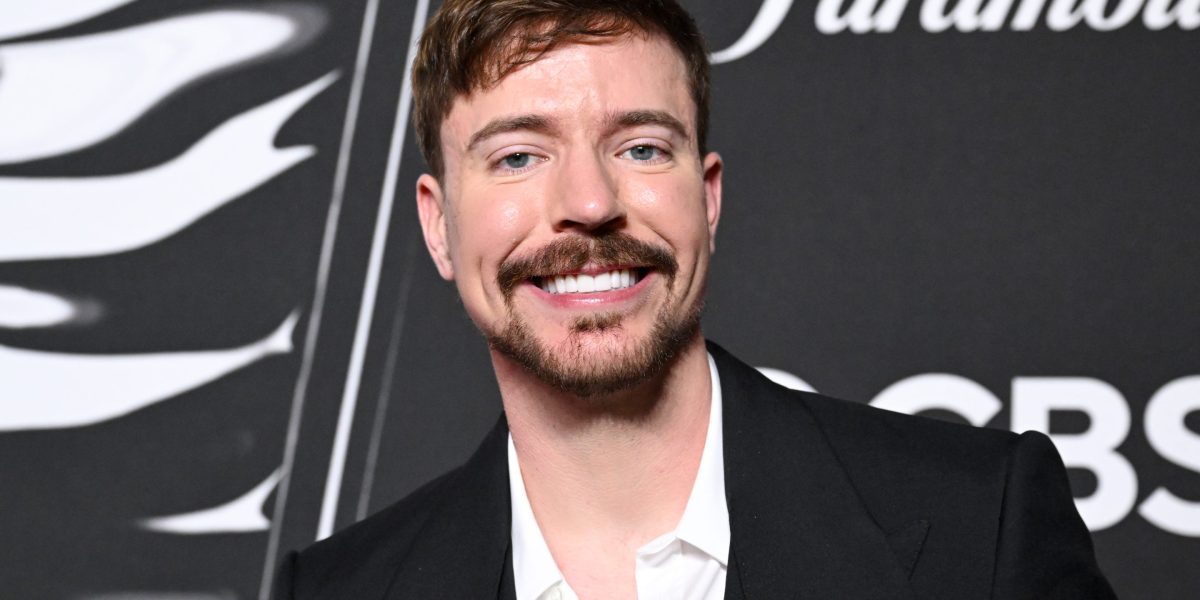
Some successful entrepreneurs sitting atop billion-dollar businesses say they may look rich on paper, but take a peek into their bank accounts, and they’re actually cash poor. Social media mogul Jimmy Donaldson, known to his 460 million YouTube followers as MrBeast, claims he’s just as broke as everyone else despite running a $5 billion entertainment empire.
“I’m borrowing money. That’s how little money I have,” Donaldson told the Wall Street Journal earlier this month. “Technically, everyone watching this video has more money than me and their bank account if you subtract the equity value of my company, which doesn’t buy me McDonald’s in the morning.”
The 27-year-old entrepreneur has said that he keeps less than $1 million for himself, despite being a billionaire and owning more than half of his $5 billion company Beast Industries. Aside from his nine-figure Amazon deal and popular YouTube channel with 107 billion lifetime views, Donaldson hit the ultra-rich club—at least on paper—from a slew of successful businesses. He’s launched ventures including multimillion-dollar chocolate brand Feastables; Lunchly, a Lunchables-esque packaged food product; MrBeast Burger, a virtual restaurant that only allows for pickup and drop-off; and production company MrBeast LLC, which helps manufacture his viral videos.
Through his assets, Donaldson is projected to be worth at least $2.6 billion—although he emphasized it’s not a fat wad of cash burning a hole in his pocket. Forbes has also estimated that his annual earnings reached $85 million between April 2024 and April 2025, a far cry from the typical American salary of $62,088 a year. However, that doesn’t mean he’s splurging on luxuries and only flying private. Donaldson claimed he’s actually in the red.
“It’s funny talking about my personal finances, because no one ever believes anything I say,” Donaldson explained. “They’re like, ‘You’re a billionaire!’ I’m like, ‘That’s net worth.’ I have negative money right now.”
“I wake up, I just work…I’m just so busy working I don’t really think about my personal bank account,” Donaldson continued. “I’m just laser-focused on making the greatest videos as possible, and building the business as big as possible.”
Why MrBeast says he’s in the red
Donaldson rakes in eight-figure earnings and runs a $5 billion business, yet still claims to be broke. So where is all of his money going? Right back into his business ventures, the YouTube star says.
“I personally have very little money because I reinvest everything (I think this year we’ll spend around a quarter of a billion on content). Ironically I’m actually borrowing $ from my mom to pay for my upcoming wedding,” Donaldson wrote on X in response to a post heralding him as the only billionaire under 30 who didn’t inherit their wealth.
“But sure, on paper the businesses I own are worth a lot,” he continued.
The billionaire entrepreneurs who say they’re broke—or act like it
Other billionaire founders have echoed that they don’t feel as wealthy as their net worth suggests. Ben Francis, the founder and CEO of $1.5 billion sportswear brand Gymshark, insisted that his $1.3 billion net worth is “all on paper,” and that his wealth isn’t a “real” marker of success.
“People assume there is some bank balance with my name on it that has billions in which is just completely untrue,” Francis said on The SuperPower Podcast in 2023. “None of it is real.”
After all, it only takes one negative earnings report or fierce new industry competitor to jolt his net worth. Since Francis owns 70% of the company, his fortune is wrapped up in the success of his assets—which can fluctuate in value at any given moment.
“It could double, it could [halve],” the Gymshark founder continued. “That’s why I think it’s important that no individual should ever pin their self-worth on things like wealth, net worth, or anything financial.”
Even the billionaires who do have cash to burn are just skirting by, out of choice. Lucy Guo, the cofounder of $29 million company Scale AI, isn’t keen to spend the $1.3 billion stake she has in the business. The youngest self-made billionaire woman in the world doesn’t like to “waste” money, opting to fly commercial, drive an old Honda Civic, wear Shein clothes, and leverage meal deals to get the best price. In fact, she believes flashing wealth and needlessly splurging on life luxuries is a sign of insecurity; Guo doesn’t feel the need to prove she’s successful.
“Who you see typically wasting money on designer clothes, a nice car, et cetera, they’re technically in the millionaire range,” Guo told Fortune last year. “It’s like, act broke, stay rich.”