
Fashion
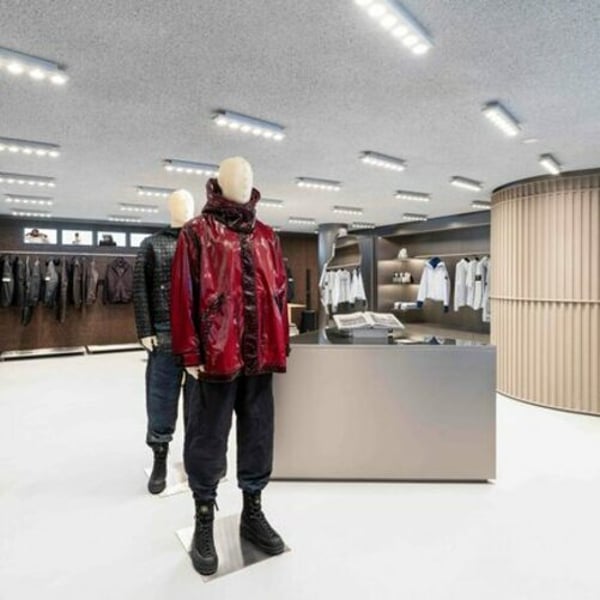
More than a store: Stone Island’s Hangzhou flagship and the quest for community

Published
September 12, 2025
The opening of the Stone Island flagship store in Hangzhou coincides with a period of profound transformation in consumer behavior. The return of rationalism and the rise of the performance wardrobe concept mean people are increasingly valuing the long-term worth of clothing, material innovation, and a sense of community over simply following trends.
For Robert Triefus, the visit was a true “first meeting.” Despite his three decades of experience in the luxury industry and numerous trips to China since 2000, his first trip to Hangzhou in 25 years was particularly exciting. As the CEO of Stone Island, his enthusiasm stemmed not just from the city’s blend of tradition and vibrancy, but also from a keen observation of the subcultural waves currently unfolding in China.
On a scorching autumn afternoon in Jiangnan, FashionNetwork.com sat with Robert in a teahouse by Hangzhou’s West Lake. Over cups of West Lake classic green tea Longjing, we discussed the essence of the Stone Island brand and its future development.
FashionNetwork.com: Following Beijing and Shanghai, Stone Island has selected Hangzhou as the location for its large-scale flagship store. What does this indicate about the brand’s strategic shift into a new phase in the Chinese market?
Robert Triefus: I particularly admire the beautiful contradiction in China — the way the past and future are so deeply connected. When we decide where to open stores, we always start with the most important, signature cities.
Of all the places I’ve visited, Hangzhou is the one that best symbolizes this blend of heritage and innovation. It’s a city where tradition and the future exist in a state of both contrast and close connection. This is a perfect match for Stone Island’s brand ethos, which honors its archive while remaining committed to material research and technical innovation.
Additionally, Hangzhou is easily accessible, especially from Shanghai. We’re also taking this opportunity to bring some of our most loyal customers here to celebrate not just the opening, but the city itself. They are experiencing its tradition while also seeing our innovation reflected in the new store, which—just like our collections—represents our commitment to pioneering new materials.
FN: OMA/AMO has designed a highly architectural and experimental retail space. In your view, what role does a physical space play in telling a brand’s story and building community?
RT: We have a long-standing partnership with OMA/AMO in Rotterdam, and Samir Bantal, one of the firm’s partners, is familiar with our brand. This collaboration enables us to ensure that all our global stores share a consistent design language, while each location retains its distinct character.
Our stores consistently feature signature materials, including our distinctive green glass, cork, and rammed earth.
We also incorporate storytelling through various screen technologies. We use these screens to project videos that tell the story of our products and our community. Our goal is to create an environment that resonates with the collection itself, allowing us to present our designs to customers in a contemporary way.

FN: In the current market environment, what are Stone Island’s core fundamentals? What specific challenges do you see in the Chinese market?
RT: Having visited China for 25 years, I’ve witnessed a remarkable evolution in consumer behavior. In the early days, Chinese fashion customers were primarily interested in logos as a symbol of status. Today, they are incredibly sophisticated and discerning. The market is complex, and customers rightly demand quality and a strong brand narrative behind their purchases.
This shift in consumer values aligns perfectly with Stone Island. Though we are still relatively new to this market, our focus on long-lasting value and innovation is highly relevant. Stone Island isn’t a traditional fashion brand; we create clothing as a solution for real life, with a legacy rooted in material innovation and technical expertise.
The enduring value of our products is evident in the vintage market, where collectors — including many here in China — actively seek out pieces from the 1980s and 1990s. This proves that from the very beginning, Stone Island has been committed to creating purposeful, high-quality items that hold their value over time.
FN: Chinese consumers are highly sensitive to performance and material innovation. How does Stone Island respond to this character?
RT: We’re not just a performance or technical apparel brand; we create a wardrobe for everyday life. Our pieces are durable, windproof, and weatherproof, designed for daily performance. We maintain extremely high levels of quality control to ensure our materials perform as expected. We understand that standards are exceptionally high in China, and we ensure our quality meets those expectations.
FN: Comparing your wealth of experience in luxury brand management, what are the similarities and differences in how brands build a community?
RT: Over the past 45 years, the Stone Island community has evolved organically, starting from various subcultures and expanding to include musicians, athletes, and artists. We are witnessing a similar natural evolution unfold in China, with the brand being adopted by a new community of collectors, musicians, and actors.
A notable difference in the Chinese market is the significant role of women. While women make up 20% of our global customers, that number rises to 30–35% in China. A large portion of these customers are buying not just for male partners but also for themselves, embracing the brand’s unisex appeal.
To reflect this growing diversity, our brand storytelling now includes a female presence, with musician Peggy Gou leading the way. We believe in building authentic connections, and our global community ambassadors, such as Steph Curry, Peggy Gou, and Chinese actor Ethan Ruan, are all people with a genuine connection to the brand. In the future, we plan to further expand our representation with more Chinese female ambassadors.
FN: Beyond its retail function, what unique experiences will this new store offer to Chinese consumers? For example, will there be exclusive customization services, limited-edition items, or opportunities for a private preview of new collections?
RT: We tell our brand story by bringing a unique experience into our stores through video and a traveling archive collection. The new store features one of our rarest and most innovative archival pieces: a supple, coat-like garment made from metal fabric.
The most technically advanced items in our collection are marked with a white badge, which symbolizes the pinnacle of our research and development. We are now making an archival item a permanent feature of our new stores to represent this ongoing commitment.

FN: From a global perspective, what have been the most crucial changes in strategy and development pace for Stone Island since its acquisition by the Moncler Group?
RT: It’s challenging for a niche brand to achieve sustained growth. Success requires three key elements: technical expertise, high-quality retail channels, and the right talent. Moncler acts as a “silent partner,” respecting Stone Island’s unique DNA and independence. They provide crucial support in three key areas: First, we have benefited from Moncler’s powerful technical and logistics systems. Second, we have received support with retail site selection, which helps our global expansion and brand building. Finally, we have brought in key executives from the Moncler Group, injecting valuable experience and momentum into our operations.
FN: What role do you see the Chinese market playing in Stone Island’s global growth? What are your specific plans for the next two years?
RT: The brand is prioritizing quality over quantity, focusing on optimizing its presence in key, high-potential markets rather than pursuing rapid, widespread expansion. In China, we will open a small number of new stores, specifically in cities like Hangzhou, which have been identified as having strong, energetic subcultures that resonate with the brand’s identity.
In established markets like Europe and the U.S., the focus is on refining the retail footprint. This involves relocating existing stores to better, higher-profile locations (as seen in Paris and Vienna) to showcase the new store concept and enhance the brand’s image.
Last year, we internalized and launched a new website, simultaneously introducing our WeChat mini-program. The digital space is also very important to us, and we want to ensure that we can offer our clients a seamless experience worldwide — from our physical stores to digital engagement.
Written by Sissi Chu
Copyright © 2025 FashionNetwork.com All rights reserved.
Fashion
From entering Portugal to launching its beauty category in Spain, Zalando takes stock of 2025
Published
December 10, 2025
In 2025, Zalando has stepped up its pace in the Iberian Peninsula with two key moves: it entered Portugal and expanded its offering in Spain with the launch of its beauty category there. These two developments align with the German platform’s ambition to be more than a purely transactional tool; it aims to be a place of inspiration and entertainment for its customers.
One of Zalando’s milestones on a global- and, of course, Iberian- scale was its entry into Portugal last October, a launch accompanied by its suite of technological tools, such as its AI assistant, available in Portuguese, and partnerships with local brands to help them, in a two-way relationship, reach a European audience.
Portugal is the company’s 26th market, and its activities in southern Europe are grouped within the cluster led by Eloisa Siclari, which includes Portugal, Spain, and Italy. Portuguese customers have access to a catalogue of more than 200,000 items and, although it has been operating in the country for just over two months, the European giant notes Portuguese consumers’ strong propensity to shop the streetwear category.
Zalando’s arrival in Portugal also strengthens the link between the Portuguese and Spanish markets: the platform’s logistics centre in Illescas (Toledo) serves Portuguese customers, cementing the complex’s status as “a key logistics hub in southern Europe.” The same centre has expanded its operations in recent months into the beauty category, supporting the German e-tailer’s expansion into this segment.
New key partnerships in the Spanish market
Zalando describes Spain as “a fundamental market,” both for its potential and because Spanish brands are “a key growth driver” for the platform and a “valuable asset” for its customers. In 2025, the German company signed agreements with Spanish labels such as Bimba y Lola, Hoff, Aristocrazy, Tous, Brownie and, more recently, Unode50.
The company maintains that brands find in it not only another sales channel, but a “gateway” to more than 52 million customers in the continent’s key markets. It illustrates this with the performance of Singularu, a Spanish jewellery brand with 80 stores in Spain and turnover of €30 million in 2024, which is relying on the German giant for its European expansion in e-commerce. According to figures provided by Zalando, the jewellery brand grew 117% year-on-year in 2025 on the platform, with more than 10 million visits (up from 5.7 million a year earlier), and 74% of its sales via the e-tailer coming from Germany, Belgium, Poland, and Italy.

“6% of the audience with brand affinity interacts with Singularu; in other words, the brand already ‘resonates’ on Zalando, but there is still much to capture by expanding coverage to audiences adjacent to trend-led jewellery,” explained the business.
“On a platform it’s difficult to project what your brand is all about, but Zalando allows us to reach audiences we can’t access otherwise. And we can do that with our visual proposition and by deciding what we want to communicate. We are very happy with this relationship, which is increasingly close, and the results back it up,” said Fernando Peris, vice-president of e-commerce and marketplaces at Singularu.
“Why does Zalando choose to collaborate with local brands? In Spain, for example, consumers demand Spanish brands. It is beneficial for them, but also for us as a platform. The fact that local brands have an international clientele is also a success; there are brands with a lot of potential. And there is some national pride there,” said Eloisa Siclari, Zalando’s managing director for southern Europe.
Also in 2025, Zalando marked one year since the launch of its revamped Plus programme in the Spanish market, rolled out in summer 2024. By 2026, it plans to expand the programme and offer customer experiences, “going beyond transactional benefits”.
And beyond Iberia? Next year is shaping up to be one of expansion for the European company: it plans to enter new markets, as well as strengthen its in-house logistics and bolster its operations.
This article is an automatic translation.
Click here to read the original article.
Copyright © 2025 FashionNetwork.com All rights reserved.


Andy Dick Suffers Apparent Overdose in Hollywood, LAPD Responds

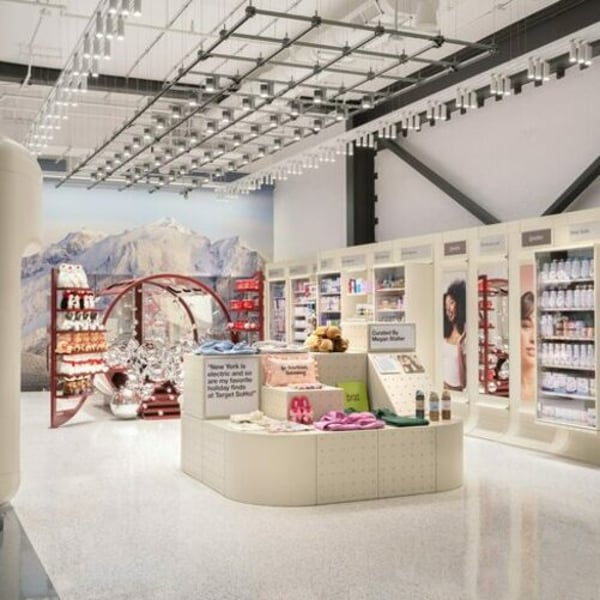
Target opens new concept store in SoHo, New York

Designer Brands Q3 sales dip 3.2%
-

 Politics8 years ago
Congress rolls out ‘Better Deal,’ new economic agenda
-
Entertainment8 years ago
New Season 8 Walking Dead trailer flashes forward in time
-
Politics8 years ago
Poll: Virginia governor’s race in dead heat
-
Entertainment8 years ago
The final 6 ‘Game of Thrones’ episodes might feel like a full season
-
Entertainment8 years ago
Meet Superman’s grandfather in new trailer for Krypton
-
Politics8 years ago
Illinois’ financial crisis could bring the state to a halt
-
Business8 years ago
6 Stunning new co-working spaces around the globe
-
Tech8 years ago
Hulu hires Google marketing veteran Kelly Campbell as CMO