Connect with us

Business

More Americans will die than be born in 2030, CBO predicts—leaving immigrants as the only source of population growth

Published

on


For the first time in modern history, the United States is on the brink of losing its most basic engine of growth: more births than deaths.

According to the Congressional Budget Office’s (CBO) Demographic Outlook, released Tuesday, the year 2030 marks a tipping point that will fundamentally reshape the  economy and social fabric. That’s the year the “natural” U.S. population—the balance of births over deaths—is projected to vanish. 

“Net immigration (the number of people who migrate to the United States minus the number who leave) is projected to become an increasingly important source of population growth in the coming years, as declining fertility rates cause the annual number of deaths to exceed the annual number of births starting in 2030,” the CBO writes. “Without immigration, the population would begin to shrink in 2030.”

From that point on, every additional person added to the U.S. population will come from immigration, a demographic milestone once associated with aging countries like Italy and Japan

The shift is striking not only for what it says about America’s rapidly aging society, but also for how soon it is expected to arrive. Just a year ago, many demographic forecasts—including the CBO’s own forecast—placed this crossover well into the late 2030s or even the 2040s. The updated outlook from CBO moves the timeline forward by nearly a decade.

This rapid acceleration, the CBO said, is driven by the “double squeeze” of declining fertility and an aging populace, combined with recent policy shifts on immigration. CBO analysts have drastically lowered their expectations for the total fertiility rate, now projecting it to settle at just 1.53 births per woman — well below the 2.1 “replacement rate” needed for a stable population. At the same time, the massive “Baby Boomer” generation is reaching ages with higher mortality rates, causing annual deaths to climb.

The timeline further compressed following the passage of the 2025 Reconciliation Act, which increased funding for more ICE agents and immigration judges to process cases faster, resulting in approximately 50,000 immigrants in detention daily through 2029, CBO said. The office calculated that these provisions will result in roughly 320,000 fewer people in the U.S. population by 2035 than previously estimated.

The new projections show that U.S. population growth will steadily decelerate over the next three decades until it finally hits zero in 2056. For most of the 20th century, the population grew at close to 1% a year: a flat population would represent a historic break from that norm. 

The economic consequences of this shift are hard to overstate. While the number of retirees swells, the pool of workers funding the social safety net — and caring for the aging population —  is narrowing. Americans aged 65 and older are the fastest-growing segment of the population, pushing the “old-age dependency ratio” sharply higher. In 1960, there were about five workers for every retiree. Today, that ratio is closer to three-to-one. By the mid-2050s, the CBO projects it will fall to roughly two workers per retiree. The contraction will have “significant implications” on the federal budget, including outsized effects on Social Security and Medicare, placing pressure on those trust funds which rely on a robust base of payroll taxes that a stagnant population cannot easily provide.

Further, because national GDP is essentially the product of the number of workers multiplied by their individual productivity, the loss of labor force growth means the American economy will have to rely almost entirely on technological breakthroughs and AI to drive future gains. This may be happening ahead of schedule, as continued weak employment growth in December showed a “jobless expansion,” in the words of KPMG chief economist Diane Swonk, as Fortune previously reported.

This story was originally featured on Fortune.com


Source link

Continue Reading

Business

Top Univ. of Minn. grads are ‘as good, maybe better’ than Harvard’s best: former Goldman Sachs CEO

Published

on


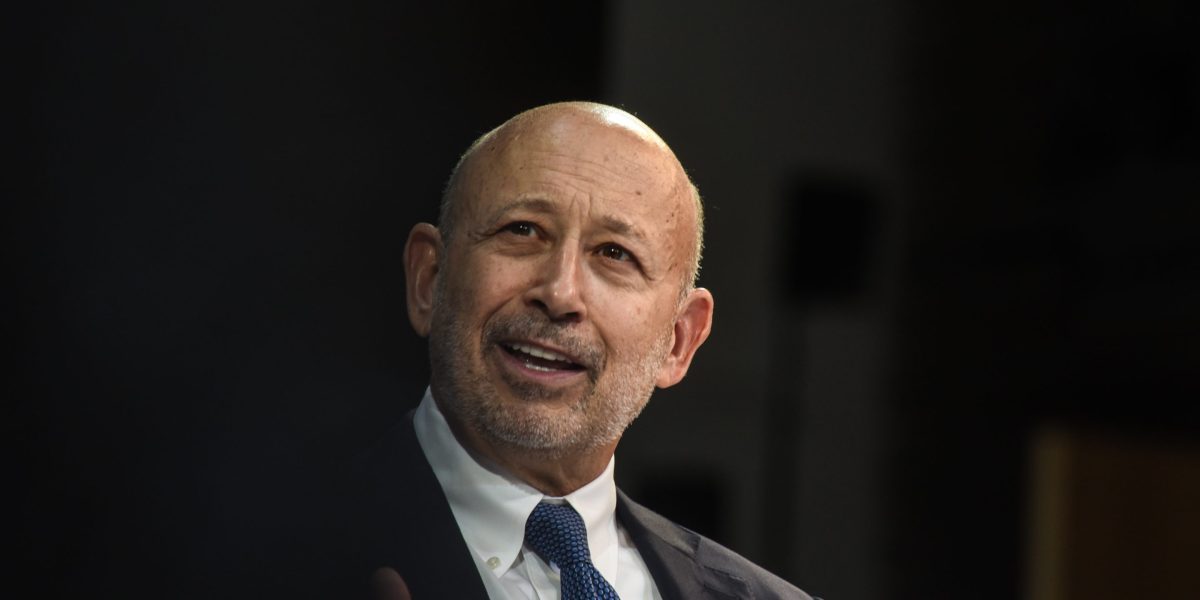
When Lloyd Blankfein was CEO of Goldman Sachs, thousands of newly minted graduates from top universities joined the ranks of the investment banking giant.

But despite being a Harvard alum himself, he wasn’t a snob about where someone went to school and recognized that superior talent can come from outside the Ivy League.

In an interview on the Big Shot podcast two weeks ago, Blankfein pointed out that his colleague Gary Cohn, Goldman’s former president and chief operating officer, attended American University, and current CEO David Solomon went to Hamilton College.

To be sure, the overall population of grads from elite schools should exceed their peers elsewhere, Blankfein conceded.

“The average is going to be higher at these great schools, which are very, very hard to get into and have very high thresholds,” he said. “And the average person may be higher, and certainly the bottom quartile is going to be a lot higher.”

But when assessing the cream of the crop, that advantage disappears, Blankfein added. That’s because a large public university has a much bigger student population.

So surviving such a gauntlet to emerge at the head of the class means more than being the best in a significantly smaller pool.

“If you’re going to look at the tippy, tippy top of Harvard or the tippy, tippy top of the University of Minnesota—where you’re the top of 50,000 as opposed to the top of 1,600—and you’ve gone through that,” he said, “I would say that having gone through that they’re at least as good, maybe better.”

In fact, developing that edge actually begins before college even starts. Students who matriculated into non-elite universities have been “swimming upstream against a much bigger current,” Blankfein said.

But for students who went to top prep boarding schools like Choate or Andover, which send many grads to the Ivy League, “the current’s going with you.”

The comments come as Americans reconsider the value of a college degree as AI shrinks demand for entry-level workers in professional careers. By contrast, interest in skilled trades is booming as those jobs have been less affected by AI and don’t require taking out tens of thousands of dollars, or more, in student loans.

In addition, college students are increasingly using AI to do coursework, which is often graded by professors using AI. The academic rigor of higher education is also in doubt, with Harvard admitting that rampant grade inflation has resulted in about 60% of the marks that are handed out being A’s, up from 40% a decade ago and less than a quarter 20 years ago.

Meanwhile, author Malcolm Gladwell recently urged prospective college students to pick their second or third choice school, where they have a shot at being at the top of their class.

“If you’re interested in succeeding in an educational institution, you never want to be in the bottom half of your class. It’s too hard,” he said in an episode of the Hasan Minhaj Doesn’t Know podcast. “So you should go to Harvard if you think you can be in the top quarter of your class at Harvard. That’s fine. But don’t go there if you’re going to be at the bottom of class. Doing STEM? You’re just gonna drop out.”

But the proliferation of AI-generated résumés has made many applications appear identical, causing some recruiters to fall back on university prestige to distinguish candidates.

A 2025 survey of over 150 companies found that 26% were recruiting from a narrow range of schools, up from 17% that were doing the same in 2022, according to recruiting intelligence firm Veris Insights.

That means job applicants from top schools or those located near company headquarters have priority, Chelsea Schein, Veris’s vice president of research strategy, told the Wall Street Journal

“Everyone’s not starting from the same place if some people have access to on-campus engagement and some don’t,” she said. 


Source link

Continue Reading

Business

Thousands protest in Minneapolis after deadly ICE shooting as agents continue city-wide sweeps

Published

on


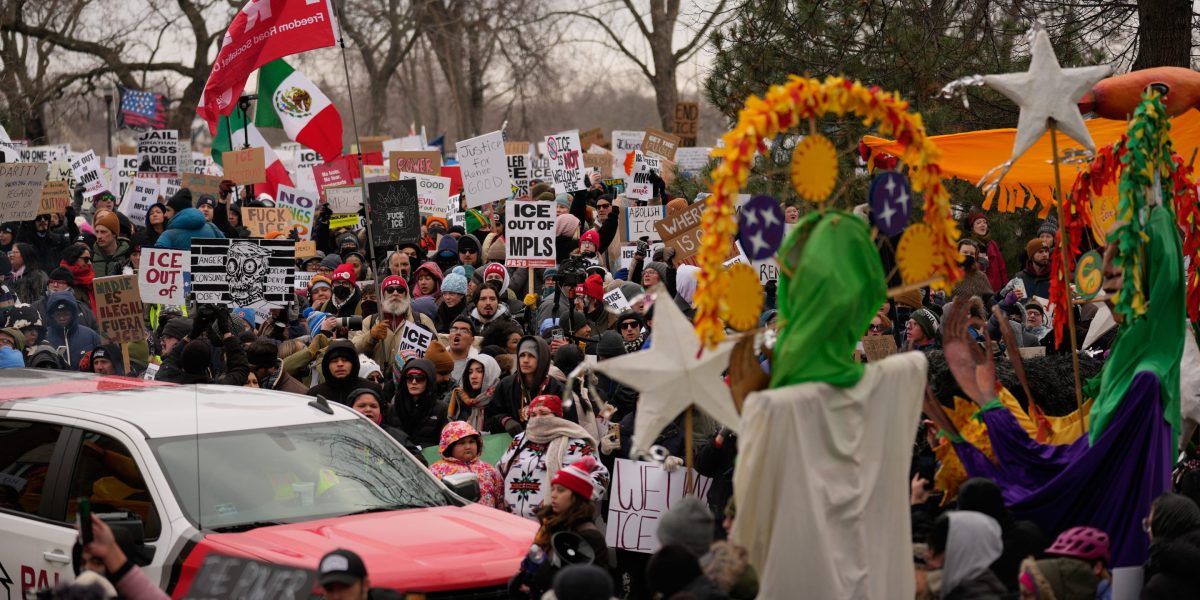
Thousands of people marched in Minneapolis Saturday to protest the fatal shooting of a woman by a federal immigration officer there and the shooting of two people in Portland, Oregon, as Minnesota leaders urged demonstrators to remain peaceful.

The Minneapolis gathering was one of hundreds of protests planned in towns and cities across the country over the weekend. It came in a city on edge since the killing of Renee Good on Wednesday by an Immigration and Customs Enforcement officer.

“We’re all living in fear right now,” said Meghan Moore, a mother of two from Minneapolis who joined the protest Saturday. “ICE is creating an environment where nobody feels safe and that’s unacceptable.”

On Friday night, a protest outside a Minneapolis hotel that attracted about 1,000 people turned violent as demonstrators threw ice, snow and rocks at officers, Minneapolis Police Chief Brian O’Hara said Saturday. One officer suffered minor injuries after being struck with a piece of ice, O’Hara said. Twenty-nine people were cited and released, he said.

Minneapolis Mayor Jacob Frey stressed that while most protests have been peaceful, those who cause damage to property or put others in danger will be arrested. He faulted “agitators that are trying to rile up large crowds.”

“This is what Donald Trump wants,” Frey said of the president who has demanded massive immigration enforcement efforts in several U.S. cities. “He wants us to take the bait.”

Minnesota Gov. Tim Walz echoed the call for peace.

“Trump sent thousands of armed federal officers into our state, and it took just one day for them to kill someone,” Walz posted on social media. “Now he wants nothing more than to see chaos distract from that horrific action. Don’t give him what he wants.”

Communities unite in frustration

The U.S. Department of Homeland Security says its deployment of immigration officers in the Twin Cities is its biggest ever immigration enforcement operation. Trump’s administration has said both shootings were acts of self-defense against drivers who “weaponized” their vehicles to attack officers.

Connor Maloney said he was attending the Minneapolis protest to support his community and because he’s frustrated with the immigration crackdown.

“Almost daily I see them harassing people,” he said. “It’s just sickening that it’s happening in our community around us.”

He was among thousands of protesters, including children, who braved sub-freezing temperatures and a light dusting of snow, carrying handmade signs saying declaring, “De-ICE Minnesota!” and “ICE melts in Minnesota.”

They marched down a street that is home to restaurants and stores where various nationalities and cultures are celebrated in colorful murals.

Steven Eubanks, 51, said he felt compelled to attend a protest in Durham, North Carolina, on Saturday because of the “horrifying” killing in Minneapolis.

“We can’t allow it,” Eubanks said. “We have to stand up.”

Indivisible, a social movement organization that formed to resist the Trump administration, said hundreds of protests were scheduled in Texas, Kansas, New Mexico, Ohio, Florida and other states.

ICE activity across Minneapolis

In Minneapolis, a coalition of migrant rights groups organized the demonstration that began in a park about half a mile from the residential neighborhood where the 37-year-old Good was shot on Wednesday.

But the large protest apparently did not deter federal officers from operating in the city.

A couple of miles away, just as the demonstration began, an Associated Press photographer witnessed heavily armed officers — at least one in Border Patrol uniform — approach a person who had been following them. Two of the agents had long guns out when they ordered the person to stop following them, telling him it was his “first and final warning.”

The agents eventually drove onto the interstate without detaining the driver.

Protests held in the neighborhood have been largely peaceful, and in general there has been minimal law enforcement presence, in contrast to the violence that hit Minneapolis in the aftermath of the killing of George Floyd in 2020. Near the airport, some confrontations erupted on Thursday and Friday between smaller groups of protesters and officers guarding the federal building used as a base for the Twin Cities crackdown.

O’Hara said city police officers have responded to calls about cars abandoned because their drivers have been apprehended by immigration enforcement. In one case, a car was left in park and a dog was left inside another.

He said immigration enforcement activities are happening “all over the city” and that 911 callers have been alerting authorities to ICE activity, arrests and abandoned vehicles.

The Trump administration has deployed thousands of federal officers to Minnesota under a sweeping new crackdown tied in part to allegations of fraud involving Somali residents. More than 2,000 officers were taking part.

Lawmakers snubbed

Three congresswomen from Minnesota attempted to tour the ICE facility in the Minneapolis federal building on Saturday morning and were initially allowed to enter but then told they had to leave about 10 minutes later.

U.S, Reps. Ilhan Omar, Kelly Morrison and Angie Craig accused ICE agents of obstructing members of Congress from fulfilling their duty to oversee operations there.

A federal judge last month temporarily blocked the Trump administration from enforcing policies that limit congressional visits to immigration facilities. The ruling stems from a lawsuit filed by 12 members of Congress who sued in Washington, D.C. to challenge ICE’s amended visitor policies after they were denied entry to detention facilities.



Source link

Continue Reading

Business

Venezuela slow-walks prisoner releases with 11 freed while over 800 remain locked up

Published

on


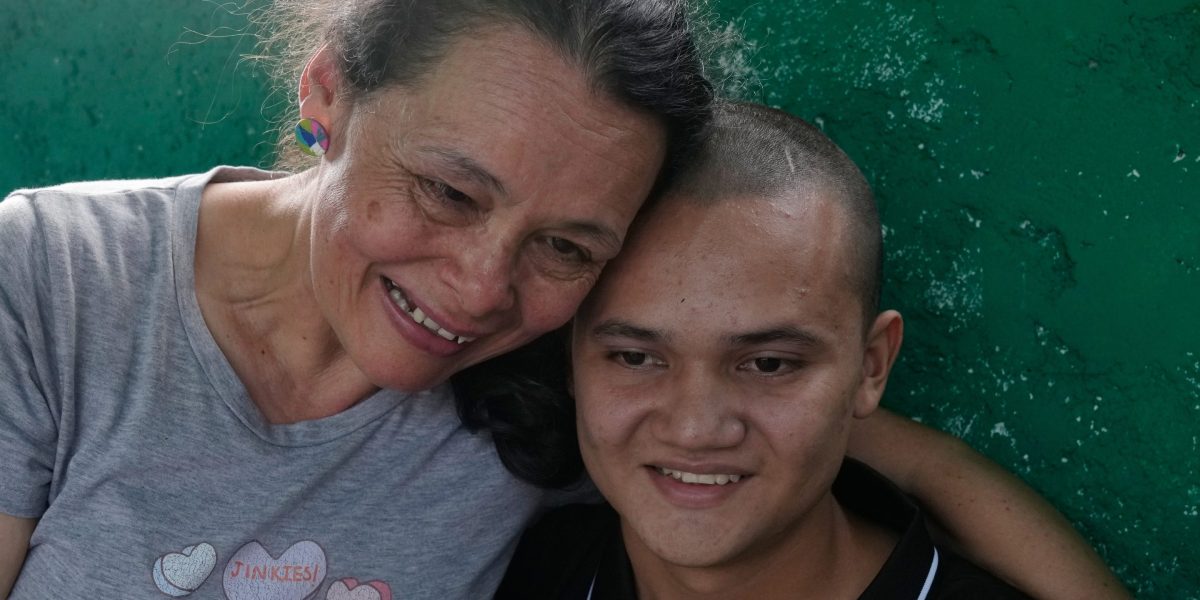
As Venezuelan detainee Diógenes Angulo left a prison in San Francisco de Yare after a year and five months behind bars, his family appeared to be in shock.

He was detained two days before the 2024 presidential election after he posted a video of an opposition demonstration in Barinas, the home state of the late President Hugo Chávez.

As he emerged from the jail in San Francisco de Yare, approximately an hour’s drive south of the capital Caracas, he learned that former President Nicolás Maduro had been captured by U.S. forces Jan. 3 in a nighttime raid in the capital.

Angulo told The Associated Press that his faith gave him the strength to keep going during his detention.

“Thank God, I’m going to enjoy my family again,” he said, adding that others still detained “are well” and have high hopes of being released soon.

Families with loved ones in prison gathered for a third consecutive day Saturday outside prisons in Caracas and other communities, hoping to learn of a possible release.

On Thursday, Venezuela’s government pledged to free what it described as a significant number of prisoners.

But as of Saturday, only 11 people had been released, up from nine a day prior, according to Foro Penal, an advocacy group for prisoners based in Caracas. Eight hundred and nine remained imprisoned, the group said. It was not immediately clear if Ángulo’s release was among the 11.

A relative of activist Rocío San Miguel, one of the first to be released and who relocated to Spain, said in a statement that her release “is not full freedom, but rather a precautionary measure substituting deprivation of liberty.”

Among the prominent members of the country’s political opposition who were detained after the 2024 presidential elections and remain in prison are former lawmaker Freddy Superlano, former governor Juan Pablo Guanipa, and Perkins Rocha, lawyer for opposition leader María Corina Machado. The son-in-law of opposition presidential candidate Edmundo González also remains imprisoned.

One week after the U.S. military intervention in Caracas, Venezuelans aligned with the government marched in several cities across the country demanding the return of Maduro and his wife Cilia Flores. The pair were captured and transferred to the United States, where they face charges including conspiracy to commit narco-terrorism.

Hundreds demonstrated in cities including Caracas, Trujillo, Nueva Esparta and Miranda, many waving Venezuelan flags. In Caracas, crowds chanted: “Maduro, keep on going, the people are rising.”

Acting president Delcy Rodríguez, speaking at a public social-sector event in Caracas, again condemned the U.S. military action on Saturday.

“There is a government, that of President Nicolás Maduro, and I have the responsibility to take charge while his kidnapping lasts … . We will not stop condemning the criminal aggression,” she said, referring to Maduro’s ousting.

On Saturday, U.S. President Donald Trump said on social media: “I love the Venezuelan people and I am already making Venezuela prosperous and safe again.”

After the shocking military action that overthrew Maduro, Trump stated that the United States would govern the South American country and requested access to oil resources, which he promised to use “to benefit the people” of both countries.

Venezuela and the United States announced Friday that they are evaluating the restoration of diplomatic relations, broken since 2019, and the reopening of their respective diplomatic missions. A mission from Donald Trump’s administration arrived in the South American country on Friday, the State Department said.

Amid global anticipation over the fate of the South American country, Venezuelan Foreign Minister Yván Gil responded to Pope Leo XIV, who on Friday called for maintaining peace and “respecting the will of the Venezuelan people.”

“With respect for the Holy Father and his spiritual authority, Venezuela reaffirms that it is a country that builds, works, and defends its sovereignty with peace and dignity,” Gil said on his Telegram account, inviting the pontiff “to get to know this reality more closely.”


Source link

Continue Reading

Trending

Copyright © Miami Select.