With two weeks to avoid US President Donald Trump’s punitive 50% tariffs, Prime Minister Narendra Modi has drawn a red line. India, he says, “will never compromise on the interests of its farmers, livestock producers, and fisherfolk.”
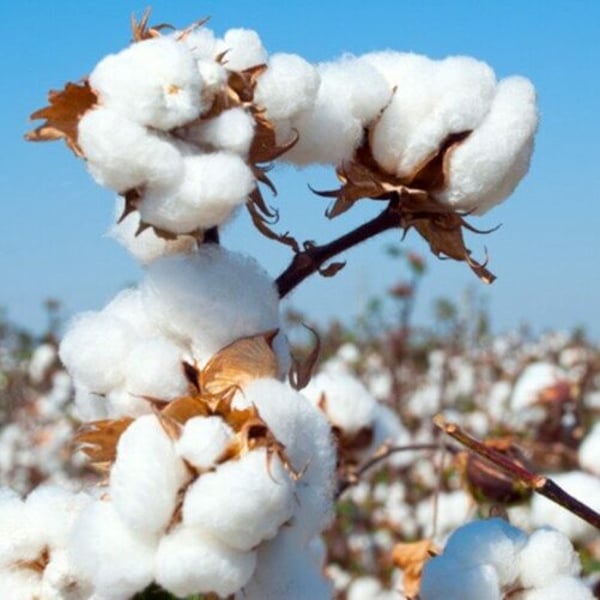
Indian cotton farmers could be significantly affected by high US tariffs – Myagrilife- Facebook
That commitment is partly dictated by realpolitik. Nearly half of India’s workforce relies on agriculture, a degree of dependence that has increased since the pandemic. It is very hard for a leader to make any concession that appears to let down the very people who have, starting in the 1960s, made the world’s most-populous nation self-sufficient in food and dairy — in the face of tremendous constraints.
But paeans to the farmer do nothing to alter the harsh economic reality. Even if New Delhi says that a trade war with the US is the price it would pay for shielding growers from a deluge of American corn, soy, and cotton, it isn’t clear that local farmers will be grateful for the protection. For the most vulnerable among them won’t benefit from it.
Already, international apparel buyers are canceling or suspending orders, thanks to Trump’s 50% tariff threat. How would India deliver decent returns to farmers on their cotton crop if demand swoons in its biggest overseas market for shirts, trousers and T-shirts? Modi wants his fellow citizens to buy things made with the “sweat of our people.” But with a belligerent Washington threatening to upend a vast swathe of local factory jobs, there will be less money at home to buy domestically produced goods. Tamil Nadu’s garment-exports hub in southern India alone is responsible for 1.25 million paychecks.
Losing access to the US consumer may hurt India’s farm economy more than slashing its 39% average tariff on imported produce. In fact, Pakistan may have played Trump better. It has a significant cotton-growing population as well. But last year it became the world’s largest buyer of US cotton, which it imports duty-free. It might take in more now to appease the White House.
India’s textile industry, too, has asked the government to let go of the 11% duty on short-staple fiber if it helps sell more of locally manufactured garments at Walmart and Target. After all, this tariff isn’t really helping the farmer. Domestic cotton production is languishing at a 15-year low even though 44% of the output hitting the market is being scooped up by a state agency at government-assured minimum prices.
The crop in neighboring Pakistan has fared even worse. But at least with a competitive 19% tariff, the apparel industry there can hope to expand its market share in the US. Indian exporters, meanwhile, are staring at a much higher tax — after paying nearly 13% more for the main raw material than the prevailing international price.
Cotton is just one example. Domestic prices of most agricultural produce are higher than internationally. While lavish farm subsidies in rich nations make their surpluses globally competitive, New Delhi’s elaborate apparatus of state intervention largely channels the difference between local and international prices toward middlemen. Crop yields are abysmal, and climate change is making farm incomes increasingly erratic even behind high trade barriers. The poultry industry is struggling with feed costs, yet tariffs of 45%-56.5% make US soy meal too expensive. If India allows its farmers to grow genetically modified food, they may be able to hold their own against American corn and soybean.
At $32 billion, agricultural imports are low for a country of 1.4 billion people; and even this figure is padded by palm oil brought in from Indonesia and Malaysia. The US accounts for less than $2 billion of the total. Why not switch sourcing to US soybean oil and make it duty-free to give Trump a win?
More broadly, why not exploit Trump’s tariff shock to rewire unproductive agriculture and lift stagnant manufacturing? India has 126 million people answering to the description of farmers even though their landholding is less than five acres.(1) As a 2023 survey of marginal producers showed, their 60,000 rupees ($700) average annual income from selling crops is often less than what they earn from a second occupation as daily-wage labor. They’re stuck on the land because of food security — and because the urban economy has nothing for them.
Just about one in 10 families has someone in a salaried job, and only a third of these farmers take advantage of state procurement at pre-announced prices. Others sell to private traders. The most popular government support program for this group is straight-up cash in bank accounts; it would stop if they were no longer holding on to the land.
Yet the taxpayer is picking up the bills for keeping the land cultivated when imports would be cheaper; and for shielding urban workers from the high costs of locally grown produce. Lest expensive food crush the country’s dream of industrialisation, the government gives free rice and wheat to 800 million people so that their employers don’t have to pay them high wages. Throw everything into the mix, and the annual cost was in excess of $100 billion during the pandemic. If the tariff-related disruption turns out to be worse than Covid-19, as some exporters fear, then the fiscal drag might only become heavier.
Four years ago, Modi was forced to withdraw legislation whose basic premise was to give farmers more freedom to discover free-market prices. If that was a poorly designed makeover, striking a defiant note against a mercurial US president in the name of agricultural interests is also ill-conceived. But with the prime minister’s political opponents stepping up their campaign against his 11-year-old rule, it’s irrational to expect meaningful reforms. Politics will triumph over economics.