Connect with us

Business

Millennial designer spent months building ‘The Holiday’ cottage replica. It’s renting at $499/night

Published

on


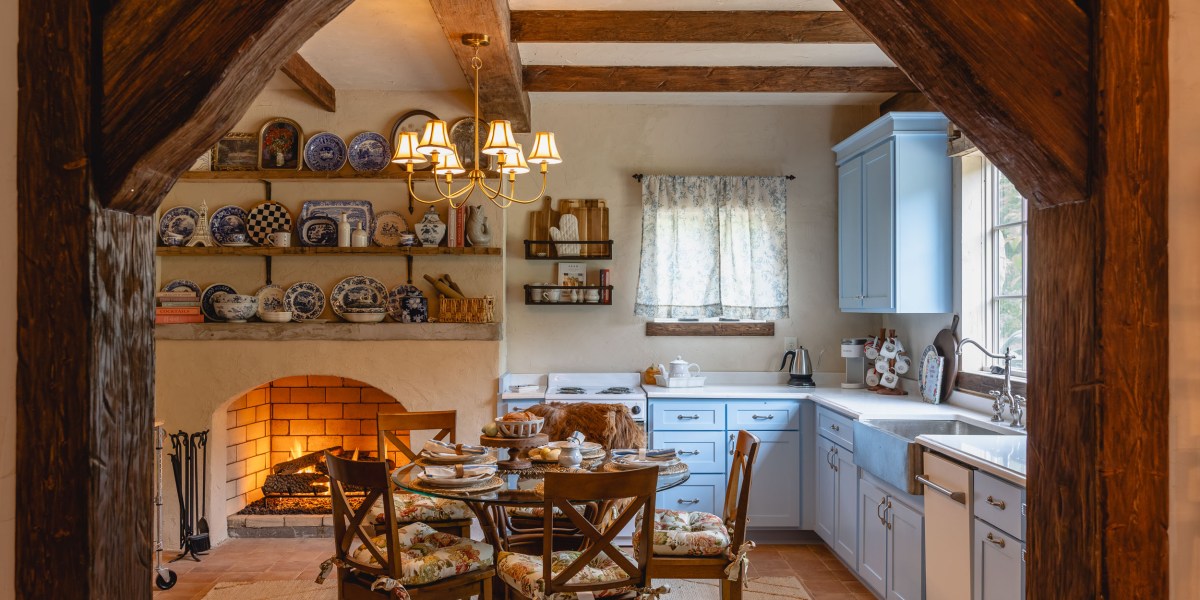
Everyone has must-watch holiday movies that they binge during the festive season, from Love Actually to Home Alone. But few actually get the chance to step inside the world of their favorite comfort flicks—that is, until now. Superfans of The Holiday can now rent out a replica of the quaint English cottage where fictional Hollywood bigwig Amanda Woods (played by Cameron Diaz) was charmed by heartthrob British book editor Graham (played by Jude Law). They’ll have to wait four months, and make the trek to Georgia instead of the Cotswolds. 

Home designer Lucy Small put The Holiday Cottage up for short-term rentals this October after a nine-month build—and a fan frenzy quickly ensued. The 37-year-old has spent the past six years designing homes in the Blue Ridge Mountains; she’s worked on three dozen houses, from bathroom and kitchen rebuilds to hardcore construction projects. But nothing could have prepared her for the rush of attention that came with her latest project: replicating the cozy Rosehill Cottage featured in The Holiday, from the ground up. After all, nearly two decades after the movie’s release, it continues to be a top-watched festive flick—in 2023, The Holiday was streamed 2.3 million times, according to an analysis from Samba TV.

As it turned out, the house featured in the 2006 film—owned by Kate Winslet’s character Iris, who home-swapped with Amanda’s L.A. mansion for the Christmas season—never actually existed in real life. It was a big undertaking, but Small saw a potential hit on her hands. 

“The Holiday Cottage was really a fun thing. I was like, ‘Hey, why don’t I do this? I have everything at my disposal to be able to do it, I know how to build, and I can find land,’” Small tells Fortune, adding she’s a fan of the iconic movie. “Honestly, it was just one of those situations where I had this wacky idea, and everyone got excited about it, and no one stopped me.”

David Cannon Photography/Courtesy of Lucy Small

Before the foundation of the two-bedroom, two-and-a-half bath home was even built, Small had attracted attention from thousands of customers. She first announced her plan to build the cottage in 2022, and fan fervor started pouring in. The entrepreneur says they only had digital renders of the cottage at the time, but people were already sending her handwritten letters about how they couldn’t wait to stay there. Around 4,000 people left their emails on a website Small threw together to update the public on its availability. Now, just two months after going live on the market, the short-term stay is fully booked out until March 2026. 

“People have really loved it, and every time I get one of those letters of, ‘This means so much to me, thank you so much for making it possible,’ that’s just way more worthwhile to me than anything else,” Small continues. “Anyone can build a house, have it be a good investment, and sell it to an investor. But this seems to really have meaning to people, and that makes it important.”

The nine-month process to bring The Holiday cottage to life

It’s no easy feat bringing a piece of cinema into the real world—especially when you’re up against a home that’s impossible to replicate. In truth, the Rosehill Cottage featured in The Holiday was just a bit of movie magic; the home’s weathered facade was built in an open field, while the interior was filmed on sets. Home-makers might hesitate at the idea of building an unbuildable home—but Small was actually excited by the premise. 

“I found out that the house never actually existed in real life, which, for me, is a big deal. Because if you can actually go visit the Brady Bunch house, or the Home Alone house, me building another one is less interesting,” she explains. “But if it never existed, if it’s a set that was torn down 20 years ago, that’s a lot more interesting, because there is literally nothing else in the world like it.”

Small put the project into motion several years ago, but quickly ran into some time-consuming roadblocks. Georgia, a popular tourist getaway and filming location, was slow to issue more short-term rental licenses as temporary stays flooded the market. Heavy taxes and fees also had to be factored into the price, as counties wanted in on the industry’s growing success. Finding the right land to build on was a struggle—but once they settled on a plot in North Georgia, it was off to the races. 

David Cannon Photography/Courtesy of Lucy Small

In total, it took nine months to build The Holiday Cottage, from breaking ground to putting in the final flourishes. Small worked with an architectural designer, watching the romcom together “1,000 times” to try and get it right. The first hurdle: They realized the house would never meet code. When trying to build at scale, they discovered the ceilings would be too low, standing at only seven feet tall, based on where the windows were positioned in the movie. The film version of the cottage had only two chimneys but featured three fireplaces; the bathroom floor was sloped; and, in reality, one window would cut halfway through the kitchen cabinet. Small and her team did everything to match the same aesthetic, even setting up fake walls and slopes.

Replicating the home’s furnishings proved to be a bit pricey, too. Despite the quaint movie cottage, seemingly adorned with humble, second-hand furniture, the kitsch decor was beyond Small’s budget. Using Google image reverse search, she tracked down antiques identical to the ones in the set, which ran upwards of $30,000 each. The bamboo umbrella tree shown in the cottage entryway, for example, was priced at over $15,000. Eventually, Small was able to parallel the same warm, charming atmosphere with similar decor. She declines to share how much the entire build set her back, or even when she’ll recoup on costs. Small says she rents out the home at a modest price—$399 per night during the low season, and $499 during high season—and is adamant The Holiday Cottage has been a worthwhile investment. 

“It’s not like we were totally surprised and totally blew the budget. We knew what it would be—we don’t charge a stupid amount,” Small says. “And so it’s still been a good investment, given that we did not like cheap out on the build at all.”

Having 4,000 eager fans lined up—and why Small is fine being a ‘one-hit-wonder’

With 4,000 eager renters already waiting for the pin to drop, The Holiday Cottage’s instant success wasn’t a huge surprise. However, Small wasn’t used to her projects getting so much attention. 

“As someone who, frankly, does not know how to use social media at all, who doesn’t have it, who’s pretty private, I’m usually unable to get eyeballs on any of my projects,” she continues. “For this one, [attention has] just been pouring in completely, even though I haven’t gone out to seek it, which has been a very new position for me as a designer.”

Once The Holiday Cottage booking site went live on Oct. 4, Small says dates started filling up “immediately.” And media attention only riled up more interest; the millennial home designer says she “can’t think of a magazine” that hasn’t covered her new build. And just in time for the holidays, it’s proved to be the perfect place to get into the festive spirit. Currently, there is only one open day in March, a few available slots in April, and just one in May. The Holiday Cottage isn’t available for a multi-day booking until June 2026—the house is nearly booked out for six straight months.

David Cannon Photography/Courtesy of Lucy Small

Small’s latest project has proved a huge success, and she says renters have so far been loving it. Travelers leave their stories in the home’s guest book; a trio of sisters brought their mother, a big fan of The Holiday, along for the ultimate dream stay; another visitor used to watch the movie with her mom every Christmas, and after her passing, rented the place with her dad. For the people who stay there, the short-term rental is more than a place to crash. It’s the chance to be immersed in romcom nostalgia and reconnect with loved ones. 

When asked if she is planning another movie-related build, Small says she’s perfectly happy being the homeowner of this one viral sensation. Right now, she has no other ideas—all she knows is she will only take projects like this, where people are excited about the result. Plus, Small believes there’s no other home built that can replicate the same magic as The Holiday Cottage. 

“Honestly, I’m fine being a one-hit-wonder,” Small says. “I don’t need it to be a big money-maker or big success, because a lot of the things that make this house—The Holiday Cottage—so special, I don’t think can be replicated.”

A version of this story originally published on Fortune.com on November 28, 2025.
Join us at the Fortune Workplace Innovation Summit May 19–20, 2026, in Atlanta. The next era of workplace innovation is here—and the old playbook is being rewritten. At this exclusive, high-energy event, the world’s most innovative leaders will convene to explore how AI, humanity, and strategy converge to redefine, again, the future of work. Register now.


Source link

Continue Reading

Business

When SNAP payments stopped, a fast-moving $50 cash program rushed in—and kept families fed

Published

on


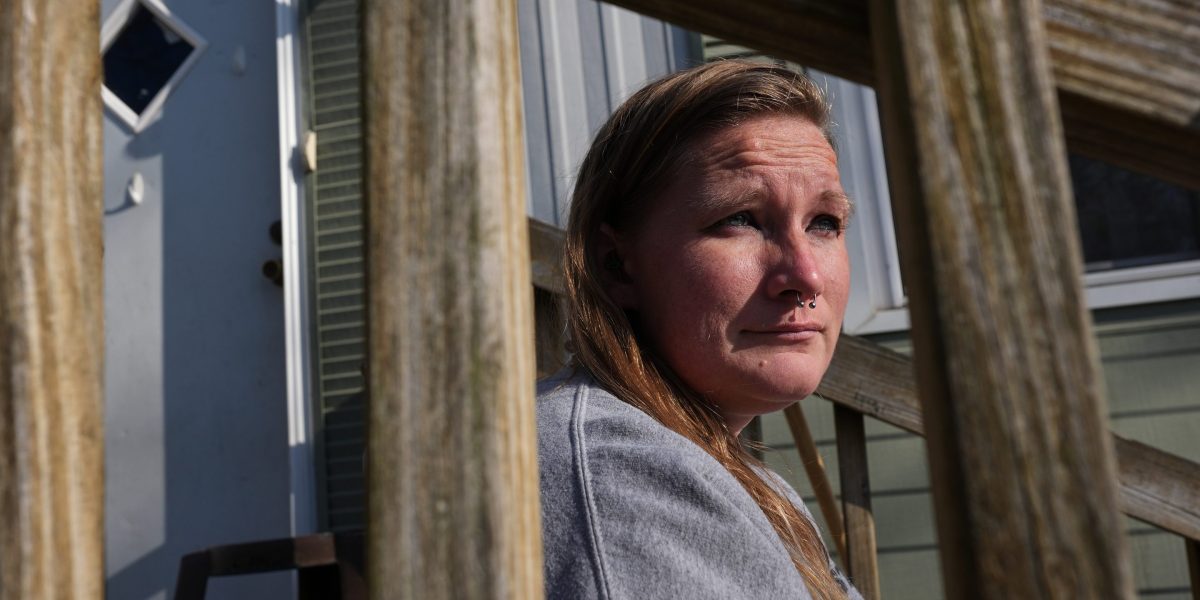
Finances already looked tight for Jade Grant and her three children as she entered the year’s final months.

“Everyone’s birthday is back-to-back,” the 32-year-old certified nursing assistant said. “You have holidays coming up. You have Thanksgiving. Everything is right there. And then, boom. No (food) stamps.”

Grant is among the nearly 42 million lower-income Americans who get help buying groceries from the Supplemental Nutrition Assistance Program, or SNAP. When the federal shutdown began in October, she wasn’t worried about losing her benefits — she said she is used to government “foolishness.”

But circumstances got dicey when the budget impasse entered its second month and President Donald Trump took the unprecedented step of freezing November SNAP payments. With one child who eats gluten free and another with many allergies, specialty items already drove up her grocery bill. Now Grant wondered how she’d put food on the table — especially with her youngest’s 6th birthday approaching.

Then Grant logged into Propel, an app used by 5 million people to manage their electronic benefits transfers, where she saw a pop-up banner inviting her to apply for a relief program. Within a minute she’d completed a survey and about two days later she got a virtual $50 gift card.

The total didn’t come close to her monthly SNAP allotment. But the Palm Bay, Florida, resident said it was enough to buy a customized “ Bluey ” birthday cake for her son.

Nearly a quarter of a million families got that same cash injection from the nonprofit GiveDirectly as they missed SNAP deposits many need to feed their households. The collaboration with Propel proved to be the largest disaster response in the international cash assistance group’s history outside of COVID-19; non-pandemic records were set with the $12 million raised, more than 246,000 beneficiaries enrolled and 5,000 individual donors reached.

Recipients are still recovering from the uncertainty of last month’s SNAP delays. Company surveys suggest many are dealing with the long-term consequences of borrowing money in early November when their benefits didn’t arrive on time, according to Propel CEO Jimmy Chen. At a time when users felt the existing safety net had fallen through, they credit the rapid payments for buoying them — both financially and emotionally.

“It’s not a lot. But at the same time, it is a lot,” Grant said. “Because $50 can do a lot when you don’t have anything.”

A ‘man-made disaster’ forces partners to try something new

It’s not the first partnership for the antipoverty nonprofit and for-profit software company. They have previously combined GiveDirectly’s fast cash model with Propel’s verified user base to get money out to natural disaster survivors — including $1,000 last year to some households impacted by Hurricanes Milton and Helene.

“This particular incident with the shutdown we saw as akin to a natural disaster,” Chen said, “in the sense that it created a really sudden and really acute form of hardship for many Americans across the country.”

The scope differed this time. The “man-made disaster,” as GiveDirectly U.S. Country Director Dustin Palmer put it, was not geographically isolated. The benefits freeze impacted more people than they usually serve. SNAP costs almost $10 billion a month, Palmer said, so they never expected to raise enough money to replace the delayed benefits altogether.

But 5,000 individual donors — plus $1 million gifts from Propel and New York nonprofit Robin Hood, as well as other major foundations’ support — provided a sizable pot. Palmer found that the issue resonated more than he expected.

GiveDirectly reports that the median donation was $100. Palmer took that response as a sign the issue hit close for many Americans.

“You and I know SNAP recipients. Maybe we’ve been SNAP recipients,” Palmer said. “So that was not a disaster in Central Texas where I’ve never been, but something in our communities.”

The greatest question revolved around the total sum of each cash transfer. Should they reach more people with fewer dollars or vice versa? Los Angeles wildfire survivors, for example, got $3,500 each from a similar GiveDirectly campaign. But that’s because they wanted to provide enough to cover a month’s worth of lodging and transit to those who lost their houses.

They settled on $50 because Palmer said they wanted a “stopgap” that represented “a meaningful trip to the grocery store.” To equitably focus their limited resources on the that would be missing the most support, Palmer said they targeted families with children that receive the maximum SNAP allotment. Propel’s software allowed them to send money as soon as the app detected that a family’s benefits hadn’t arrived at the usual time of the month.

Recipients decided whether their prepaid debit cards arrived physically, which might allow them to take cash out of an ATM, or virtually, which could be used almost immediately. The split is usually pretty even, according to Palmer, but this time more than 90% of recipients went with the virtual option.

“To me, that speaks to the speed and need for people,” Palmer said. “Just saying, ‘Oh yeah, I just need food today. I don’t want to wait to get it mailed.’”

Recipients lost trust when closely watched benefits were disrupted

Dianna Tompkins relies on her SNAP balance to feed her toddler and 8-year-old child.

“I watch it like a hawk, honestly,” she said.

But she said she entered “panic mode” when she missed what is usually a $976 deposit last month. She’s a gig worker, completing DoorDash and Uber Eats orders when she finds the time.

Her pantry is always stocked with non-perishables — canned goods, pastas, sauces — in case her unreliable van stops working and she can’t get to the store. But she couldn’t risk running out as uncertainty continued over the shutdown’s length and future SNAP payments.

GiveDirectly’s $50 bought her milk and bread — not much but a “big help,” she said. Her local food pantries in Demotte, Indiana, had proven inconsistent. One week they gave far more than expected, she said, but the following week they were “so overwhelmed” that it almost wasn’t worth visiting.

She said it’s “scary” the government “can just decide to not feed so many people.”

“At least I have my safety net but not everybody’s lucky,” she said. “I’ve never trusted the government and that’s just a new solid reason why I don’t trust them.”

Chen, the Propel CEO, said his company’s research suggests that November’s freeze damaged many recipients’ confidence in the government. Even with SNAP funded through the next fiscal year, Chen said, many respondents are concerned about another shutdown.

“Now it’s introduced this seed of doubt for people that this really fundamental thing that they use to pay for food may not be there when they need it,” Chen said.

The gap persists for many. Propel estimates that just over half of SNAP recipients got their benefits late last month. GiveDirectly launched an additional “mop-up” campaign to distribute cash retroactively for more than 8,000 people still reeling.

The delay disrupted the financial balancing act that Grant had going. She put off payments for her electricity bill and car insurance.

“Government shuts down and that just throws everything completely off,” she said.

___

Associated Press coverage of philanthropy and nonprofits receives support through the AP’s collaboration with The Conversation US, with funding from Lilly Endowment Inc. The AP is solely responsible for this content. For all of AP’s philanthropy coverage, visit https://apnews.com/hub/philanthropy.


Source link

Continue Reading

Business

Former Obama economic advisor feels ‘a tiny bit bad’ for Trump on affordability crisis

Published

on


As President Donald Trump struggles to address Americans’ growing affordability concerns, he has gotten some sympathy from one of former President Barack Obama’s former top economists.

Jason Furman, Harvard Kennedy School of Government professor and former chair of the Council of Economic Advisers under Obama, told CNBC’s “Squawk Box” on Wednesday pessimistic consumers have overlooked gas prices that have remained affordable, making Trump’s job of addressing the affordability crisis more challenging.

Gas prices in December marked the lowest they’ve been all year, according to data from motor club AAA, with unleaded gasoline $0.18 cheaper nationally this year compared to last. National average prices reached their cheapest on Monday, hitting $2.85 a gallon. That hasn’t stopped consumer confidence falling to its lowest level since April, and approval ratings indicating more Americans disagree with how Trump is handling the economy.

“I’ve been puzzled,” Furman said. “When you’re in government, you’re told, politically, the one price that matters is the price of gasoline. That’s the one price that’s been great this year. And I sort of feel a tiny bit bad for President Trump that he doesn’t get any credit for that.”

Trump has continued to offer his own mixed signals on the affordability crisis, including saying in a primetime address last week he inherited an economic “mess” from the Biden administration, offering to cut checks for millions of military personnel for housing supplements, while simultaneously calling the economy the strongest it’s been. 

According to Furman, Trump also has a bit of a tough crowd: Consumers have been concerned about inflation and the price of groceries, which have increased nearly 30% over the past five years, making it more difficult to assuage economic anxieties, even when there are other optimistic signals.

“Consumers are just in this sort of, whatever the highest price is, is the price they’re going to focus on and be upset about,” he said. “And that’s a really hard problem to solve economically or politically.”

Mixed economic signals muddy K-shaped economy

Conflicting economic indicators extend beyond prices, Furman said. The U.S. saw its strongest economic growth in two years last quarter with a 4.3% GDP growth, exceeding past analysts’ estimates. Meanwhile, the unemployment rate creeped up to 4.6% in November, according to the Bureau of Labor Statistics, markedly higher than last November’s 4.2% and above 4%, which is considered reasonable.

“If all you had were the jobs numbers, we’d all be doing our recession probabilities right now—Is it 30%? Is it 50%? Is it 70%?” Furman questioned. “But then we have this GDP growth number, and that just gives us our boom probability.”

Unlike many economists who see a lopsided, K-shaped economy of the rich getting richer while the poor get poorer, Furman isn’t so sure. He noted that on top of some consistently low prices, such as gas, wage growth is still strong, a metric associated with increased spending and productivity. To be sure, data from the Federal Reserve Bank of Atlanta Fed indicates wage growth for the quartile of lowest-wage Americans went from a high of 7.5% in 2022 to about 3.5% today, its lowest in 10 years.

“I’m less convinced about this K-shaped recovery than other people are,” Furman said. “Everyone wants prices to be 25% lower. Nobody wants their wages to be 25% lower.”

Other economists, such as KPMG chief economist Diane Swonk, see the connection between economic growth, rising unemployment, and the K-shaped economy. Swonk told Fortune the strong GDP growth was indeed reflective of a K-shaped economy where—in addition to resilient consumer spending and skyrocketing corporate profits—businesses have learned to grow without hiring, padding margins without expanding their team, a trend that could be exacerbated by AI displacing jobs.

“We are seeing most of the productivity gains we’re seeing right now as really just the residual of companies being hesitant to hire and doing more with less,” she said.


Source link

Continue Reading

Business

Tricolor paid CEO $30 million in year before alleged fraud

Published

on


Tricolor Holdings founder Daniel Chu collected nearly $30 million in compensation in the year leading up to the subprime auto lender’s collapse amid alleged fraud, according to a lawsuit filed by the trustee overseeing the company’s liquidation.

Chu “defrauded Tricolor by using corporate funds to pay for lavish personal expenses and by forcing the company into paying him tens of millions of dollars in bonuses (on top of his executive salary),” trustee Anne Burns said in a court filing last week. That compensation was “premised on his ability to deliver exceptional financial results — results that were the product of the fraud.”

The payments helped finance what the trustee described as an extravagant lifestyle, including luxury homes in Dallas, Beverly Hills and Miami worth about $38 million combined, as well as private-jet travel and European vacations.

“Many of the allegations that have been made against Mr. Chu in recent days are inaccurate and seriously misguided, as will be clear when the real facts come out,” Matthew Schwartz, an attorney for Chu, said in a statement. “We look forward to a full and fair hearing in the courtroom.” 

US prosecutors charged Chu and the company’s former chief operating officer last week with running Tricolor through “systemic fraud.” Two other former executives have pleaded guilty to fraud charges.

Read More: Tricolor’s Excel Guy Failed to Fix Numbers in Alleged Fraud

Chu charged millions of dollars to his business American Express card over the years, the trustee alleged, including for skin revitalization treatment, vitamin infusions and dental work. He also frequented high-end restaurants including Nobu in New York and Carbone in Dallas, according to the filing.

He continued using corporate funds to pay for personal expenses even after it was clear to him the company was in financial distress, the trustee alleged. For instance, as late as August 2025 Chu charged $18,000 to his American Express card to pay for membership to Core Club, a social club in New York, according to the suit. 

In emails attached to the suit, Chu told an auditor and board members in 2023 that he was experiencing “over the top” stress, when questions arose over his personal spending. “So with respect to expenses for my family to accompany me on travel, household expenses like a nanny, or IV treatments, this is some of my context,” Chu wrote in one email.

“I do feel like I’ve exercised good judgment on these expenses,” Chu said in another email cited in the suit.

Compensation Fight

Chu pitched the board on compensation increases for years, citing the company’s revenue and sales growth since 2018, the trustee alleged.

In 2022, a consultancy retained by Tricolor’s board found Chu’s compensation to be in line with the average for private US companies. But Chu wanted to be paid on par with the 10th percentile of public companies, even though Tricolor wasn’t one.

The board pushed back, according to emails cited in the lawsuit. Chu called the compensation committee process “grossly mismanaged” and referred to one board member as a “top imbecile” for challenging the pay package, filings show.

Chu used his role as the sole manager of Tricolor’s majority shareholder to remove three board members that opposed his compensation requests, the trustee alleged.

Days after the board approved his compensation in February, Chu agreed to buy a ski chalet in Aspen, Colorado, for $25 million, according to the lawsuit. The deal collapsed after Tricolor filed to liquidate, with Chu forfeiting a $1.75 million deposit.

(Updates with detail on Core Club in seventh paragraph.)


Source link

Continue Reading

Trending

Copyright © Miami Select.