Connect with us

Politics

Mike Davey ends challenge of Maria Elvira Salazar in CD 27, endorses Robin Peguero
Published

on


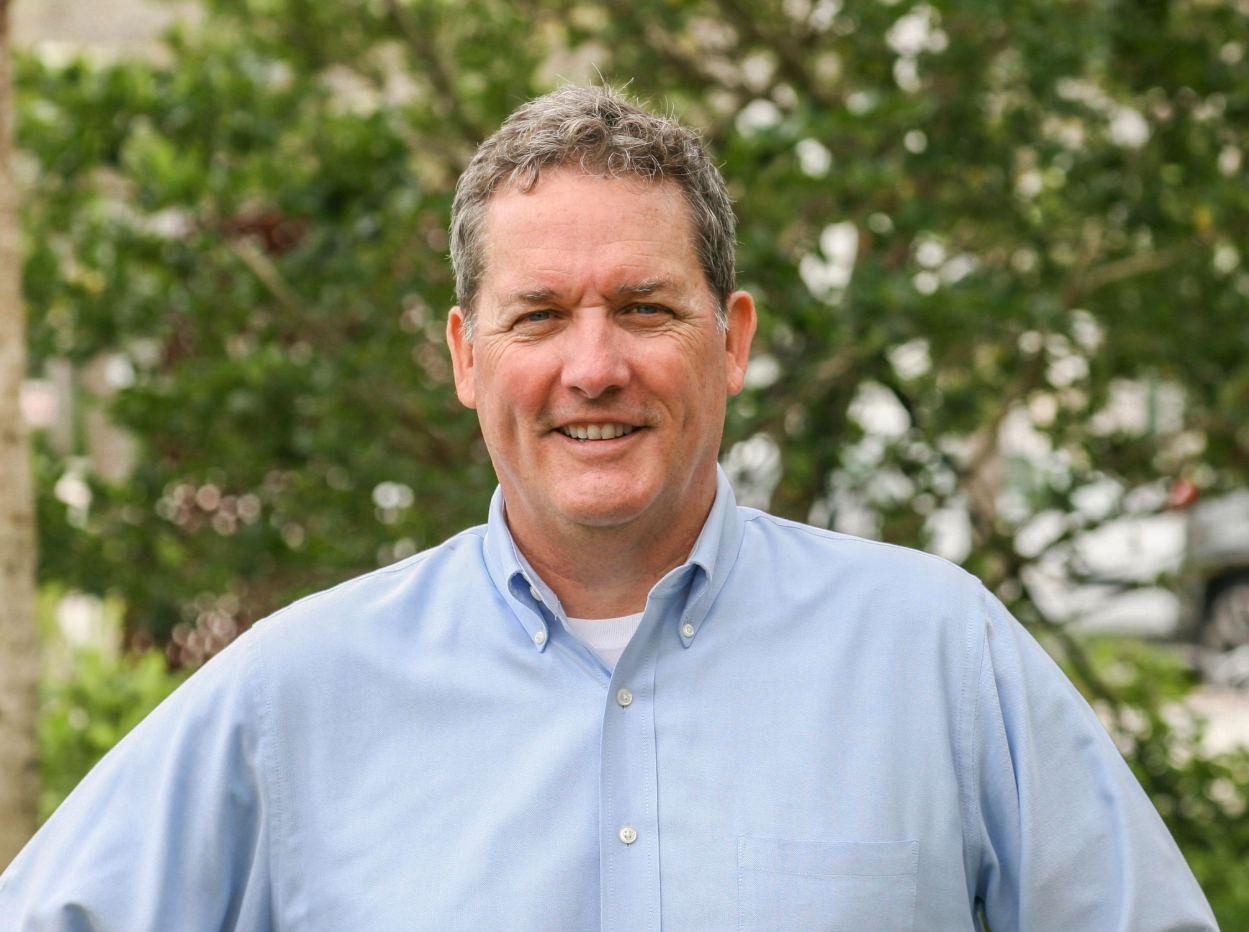
Former Key Biscayne Mayor Mike Davey announced he is withdrawing from a congressional race in South Florida.

Instead, he is endorsing former Primary opponent Robin Peguero as the best Democrat to challenge U.S. Rep. María Elvira Salazar in Florida’s 27th Congressional District.

Meanwhile, Davey said he will launch a PAC, Defend the Dream, that will amplify immigrant voices in politics and seek fixes for America’s broken immigration system.

“I entered this race because of our broken immigration system, and that fight is more urgent than ever. For me, immigration isn’t abstract — it’s personal,” Davey said. “My wife, Maria, came here from Peru seeking safety and opportunity, and together we built our life here. Yet today’s administration vilifies families like mine. When my daughter asked why Trump hated her for being ‘brown,’ it became my clearest call to action.”

That’s part of why he now supports Peguero, a first-generation American.

“We need someone who understands the legal process inside and out, who comes from an immigrant family, who converses with ease in a district where people speak to you first in Spanish, then English,” Davey said. “I know that we have the right candidate to defeat Congresswoman Salazar in November 2026 — and that candidate is Robin Peguero. I will be supporting him in this race to elect a true champion for our community.”

Peguero welcomed the support from his former Democratic opponent.

“I’m proud to have the endorsement of a respected leader and longtime fighter for immigrant families across South Florida. Mike has consistently denounced María Elvira Salazar’s lack of advocacy for our communities and rubber-stamp for the actions of this administration, all while our neighbors are plucked off the street and thrown into prison camps without due process,” Peguero said.

“Mike’s support is a powerful sign of our momentum right out of the gates. Miamians are ready for the right leader who can take out María Elvira Salazar and put hardworking families first. I’m prepared to prosecute the case against her in every corner of the district, in Spanish and English, and pull no punches. Let’s get to work.”

Salazar, a Cuban American and Spanish speaker, is one of three Republican incumbents in Florida being targeted this cycle by the Democratic Congressional Campaign Committee. That’s familiar territory, as Salazar has faced nationally backed opposition each year since she unseated Democratic U.S. Rep. Donna Shalala in 2020.

Despite that, Salazar won re-election in November with over 60% of the vote over Democrat Lucia Báez-Geller, who had defeated Davey in a Democratic Primary.


Post Views: 0


Source link

Continue Reading

Politics

Eileen Higgins shatters glass ceiling with runoff victory in Miami Mayor’s race

Published

on


Eileen Higgins just made history, becoming the first woman ever elected Miami Mayor.

With 108 of 139 precincts reporting and full tallies of mail-in and early votes, Higgins — a former Miami-Dade County Commissioner — had 59% of the vote to defeat ex-City Manager Emilio González.

Higgins is a Democrat, while González is a Republican, though their party affiliations did not appear on Tuesday’s runoff ballot; still, most voters no doubt knew which side of the aisle the candidates stood on, considering the activity and interest that surrounded the race ahead of Election Day.

Pete Buttigieg, U.S. Sen. Ruben Gallego of Arizona, and Orange County Mayor-turned-gubernatorial candidate Jerry Demings and his wife, former U.S. Rep. Val Demings.

Meanwhile, high-profile Republicans like President Donald Trump, Gov. Ron DeSantis, U.S. Sens. Rick Scott and Ted Cruz, and U.S. Rep. Byron Donalds, who is running to succeed DeSantis, lined up behind González.

For many, Tuesday’s outcome in a city where growth, climate challenges and governance failures remain top concerns for nearly 500,000 residents will be viewed as a bellwether heading toward what is expected to be a volatile 2026 cycle.

The two candidates rose from a 13-person field Nov. 4, with Higgins winning about 36% of the vote and González taking 19.5%. Because neither surpassed 50%, they advanced to a runoff, each pitching their visions for a city grappling with affordability, rising seas, political dysfunction and rapid growth.

Both promised to bring more stability and accountability to City Hall. Both said Miami’s permitting process needs fixing.

Higgins, 61-year-old mechanical engineer by training and eight-year County Commissioner with a broad, international background in government service, emphasized affordable housing — urging the city to build on public land and create a dedicated housing trust fund — and backed a plan to expand the City Commission from five to nine members, which she said would improve neighborhood representation.

She also backed more eco-friendly and flood-preventative infrastructure, faster park construction and better transportation connectivity and efficiency.

She opposed Miami’s 287(g) agreement with U.S. Immigration and Customs Enforcement (ICE), calling recent enforcement “inhumane and cruel,” and pledged to serve as a full-time Mayor with no outside employment while replacing City Manager Art Noriega.

González, a 68-year-old retired Air Force colonel, former Director of U.S. Citizenship and Immigration Services and ex-CEO of Miami International Airport, argued Miami needs an experienced administrator to fix what he calls deep structural problems.

He made permitting reform a top priority, labeling the current system as barely functioning, and said affordability must be addressed through broader tax relief rather than relying on housing development alone.

He supported limited police cooperation with ICE and said Miami must prepare for the potential repeal of property taxes. He vowed to replace Noriega, but opposed Higgins’ effort to expand the City Commission.

He also promised, if elected, to establish a “Deregulation Task Force” to unburden small businesses, prioritize capital investments that protect Miamians, increase the city’s police force, modernize city services with technology and a customer-friendly approach, and rein in government spending and growth.

Notably, Miami’s Nov. 4 election this year might not have taken place if not for González, who successfully sued in July to stop officials from delaying its election until 2026.

Last year, Higgins was re-elected unopposed to the County Commission seat she first won in a 2018 upset before choosing to vacate her seat three years early to run for Mayor — a move that drew criticism from González.

Before winning elected office, she worked for years in the private sector, overseeing global manufacturing in Europe and Latin America. She also held lead marketing posts at Pfizer and Jose Cuervo.

In 2006, Higgins took a Director job with the Peace Corps in Belize, after which she served as a foreign service officer for the U.S. State Department under President Barack Obama, working in Mexico and in economic development areas in South Africa.

Since filing for the Mayor’s race in April, Higgins raised $386,500 through her campaign account. She also amassed close to $658,000 by the end of September through her county-level political committee, Ethical Leadership for Miami. Close to a third of that sum — $175,000 — came through a transfer from her state-level PC.

She also spent about $881,000.

González, an immigrant from Cuba, brought the most robust government background to the race. After leaving the military, he served as Miami’s City Manager from 2017 to 2020, CEO of Miami International Airport from 2013 to 2017 and as Director of Citizenship and Immigration Services at the U.S. Department of Homeland Security under President George W. Bush from 2005 to 2008.

He also served as Director of Western Hemisphere Affairs at the National Security Council under Bush.

In private life, he works as a partner at investment management firm RSMD Investco LLC. He also serves as a member of the Treasury Investment Council under the Florida Department of Financial Services.

Since filing to run for Mayor in April, he raised nearly $1.2 million and spent about $1 million.


Source link

Continue Reading

Politics

Proposal to reform how the Florida PSC sets energy rates advances in Senate

Published

on


A bill directing the Florida Public Service Commission (PSC) to justify rate increases for investor-owned utilities and consider affordability advanced in its first committee stop Tuesday ahead of the 2026 Legislative Session.

The bill (SB 126) was introduced just weeks after the PSC approved a nearly $7 billion rate increase for Florida Power & Light’s (FPL) 12 million customers, the largest rate hike in history.

Sen. Don Gaetz, a Crestview Republican, introduced a “strike-all” amendment Tuesday before the Senate Regulated Industries Committee revising Florida law regarding the PSC, including:

— Expanding the number of PSC Commissioners from five to seven and requiring one Commissioner to be a certified public accountant and another a chartered financial analyst.

— Requiring the PSC, when issuing orders, to provide adequate support for its conclusions.

— Requiring the PSC to provide reasoned explanations when accepting or denying a settlement agreement.

— Requiring the PSC to submit an annual report on public utility rates that includes benchmarking and analysis on economics, costs, return on equity and executive compensation.

One provision that the amendment drops from Gaetz’s original bill would have capped a utility’s return on equity (ROE). That represents the utility’s allowed profit. FPL’s recently approved rate increase includes an ROE of 10.95%.

The removal of that provision upset two members of the public who spoke about the legislation during the hearing.

“The bill as amended has altered a critical tool — a cap that would limit shareholder profits, which is necessary to keep utilities from passing executive costs on to taxpayers,” said Brian Lee of Reclaiming Florida’s Future.

“The strike-all amendment weakens its ability to deliver real relief for Florida families,” added Taylor Brown. “Housing costs, insurance, and utility bills are pushing people to a breaking point.”

Florida law requires the rates of regulated utility companies to be “fair, just and reasonable.”

Gaetz’s bill says that the PSC should consider affordability in any proceeding before the agency that has the potential to affect rates.

“The reason affordability got into this bill is because when the latest case came before the PSC, associated with FPL, Commissioners were asked to consider affordability and they said, ‘We can’t because it wasn’t in the statute.’ We’re going to help them with that, I hope,” he told the committee.

Committee Chair Jennifer Bradley, A Fleming Island Republican, asked Mark Futrell, Deputy Executive Director with the PSC, whether the agency could define affordability.

“I think more certainty, more clarity as far as definitions from the intent of the Legislature is always helpful, but I think that we can work through that,” Futrell said. “Affordability is something that — we get the sentiment of it. I think we understand that part of it.”

Sen. Debbie Mayfield, a Melbourne Republican, said she had a number of concerns about the legislation, including the provisions about adding two new members to the PSC.

“If we have a problem with the PSC board, I don’t think increasing it would solve their problem,” she said. “We are the ones who do confirm them, so if we have a problem with the commission, it’s just as much our fault for confirming people that we don’t think are going to do a good job.”

Sen. Jason Pizzo, a Sunny Isles Beach independent, said he appreciated that Gaetz had removed the provision that would have capped a utility’s ROE.

“I am not for caps,” he said. “I think that’s socialism.”

Gaetz told the committee his intent was “not to tie the hands of the utility companies.”

“The intent of the bill is to direct the Commission to justify their decisions,” he said. “And to explain how they made their decisions and the effect that those decisions have on ratepayers.”

The bill was ultimately unanimously approved by the committee, 9-0, and moves to the Senate Committee on Agriculture, Environment, and General Government.

___

Reporting by Mitch Perry. Florida Phoenix is part of States Newsroom, a nonprofit news network supported by grants and a coalition of donors as a 501c(3) public charity. Florida Phoenix maintains editorial independence. Contact Editor Michael Moline for questions: [email protected].


Source link

Continue Reading

Politics

James Uthmeier files suit against 3 organizations to block ‘gender-affirming care’

Published

on


Attorney General James Uthmeier says his Office has filed a lawsuit against three organizations to stop “gender-affirming care” for minors.

Uthmeier filed the 75-page lawsuit in the 19th Judicial Circuit Court in St. Lucie County against the World Professional Association for Transgender Health, Endocrine Society and the American Academy of Pediatrics.

The lawsuit was not filed to stop treatment for any specific individual, but rather due to the three organizations’ general practices. The suit seeks declaratory and injunctive relief, along with civil penalties in violation of Florida’s Deceptive and Unfair Trade Practices Act and the Florida RICO Act.

The lawsuit specifically targets the organizations for addressing “gender dysphoria,” which is a condition that causes anxiety about “one’s sexed body and/or associated social expectations.”

Uthmeier’s main complaint in the legal filing is that pediatric gender dysphoria was a rare condition as little as a decade ago. His complaint says diagnoses of gender dysphoria should not be equated with transgender procedures prescribed for minors because “it is natural for children and adolescents to feel anxious about their changing bodies, these feelings usually ‘disappear’ after they reach puberty.”

The suit said gender dysphoria is really a symptom of psychological needs, and that a “holistic psychosocial” approach would be better equipped to deal with the pediatric condition. The lawsuit added that family therapy and individual counseling would likely lead to a more balanced approach to dealing with the condition rather than more aggressive procedures.

“So, rather than attempting to resolve the underlying causes of psychological distress, defendants developed a treatment protocol that irreversibly alters children’s bodies to conform to their anxieties,” the lawsuit said.

In a recorded video statement published Tuesday, Uthmeier said the three organizations named as defendants in the lawsuit didn’t really exhaust other methods of dealing with gender dysphoria and, therefore, misled patients who were minors.

“We believe these organizations failed to disclose the risks, limits and evidence in promoting so-called ‘gender-affirming care for children.’ For years, these groups have insisted the recommendations are settled science. But behind closed doors, they knew the evidence was weak, the outcomes uncertain and the risks very real,” Uthmeier said.


Source link

Continue Reading

Trending

Copyright © Miami Select.