Connect with us

Business

Microsoft, Google, Nvidia, OpenAI and others pledge $42 billion in U.K. AI investment

Published

on


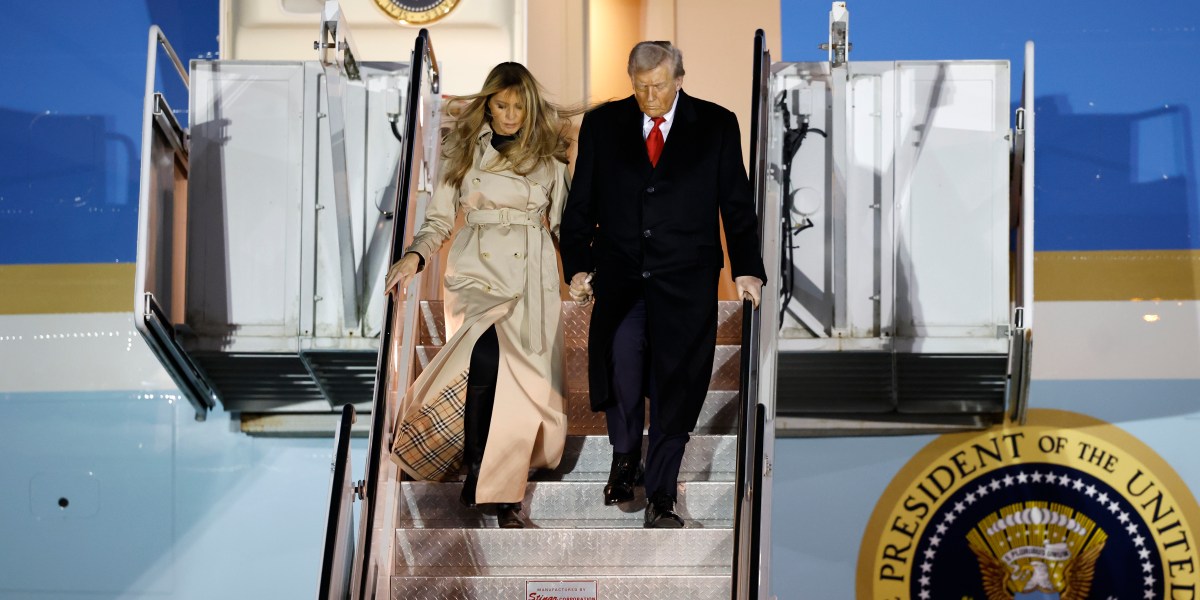
U.S. President Donald Trump touched down in the United Kingdom on Tuesday for an unprecedented second state visit. He was accompanied by American tech CEOs, who pledged $42.3 billion worth of investments in U.K. AI projects.

The investments from major players, including Microsoft, Google, Nvidia, and OpenAI, are part of a sweeping £31 billion ($42.3 billion) “Tech Prosperity Deal,” aimed at building out the UK’s AI infrastructure, funding data center projects and computer chips.

The bulk of this investment comes from Microsoft, which unveiled a plan to spend almost $30 billion (£22 billion) over the next four years. The investment package is the company’s largest outside the U.S. and is separate from OpenAI’s recent announcement of a smaller, U.K.-based version of Stargate.

At the heart of the company’s push is a supercomputer in Essex, which will house over 23,000 GPUs in partnership with British-based AI infrastructure company Nscale, a project that CEO Satya Nadella says could accelerate the UK’s economic growth by 10% within just five years. “As we make these investments, we are guided by a clear and bold vision, ensuring that both the United States and the United Kingdom remain at the forefront of cloud and AI innovation,” Nadella said in a video statement.

According to the company, $15.5 billion would be spent on capital investments, such as the data center project, while a further $15.1 billion would be directed towards maintaining and growing its U.K. operations. Microsoft President Brad Smith said during a Tuesday press briefing that the company already had contracts in place or had pre-purchased the electricity needed to power the new data centers it plans to build.

“We will be good for every cent of this investment,” Smith said in the press briefing. “We care about British pounds, not empty tech promises.”

Microsoft isn’t the only U.S. company committing to major AI infrastructure investments in U.K. Google pledged $6.8 billion for AI research and infrastructure, which includes a new $1 billion AI data center that is set to open this week, and more funding for research at Google DeepMind, its advanced AI lab that continues to be headquartered in London.

DeepMind co-founder and CEO Demis Hassabis celebrated the investment as demonstrating “the strength of the US–U.K. partnership.”

“Combining the unique strengths of both countries will help to ensure our scientists continue to lead on the breakthroughs and innovations that will define the future. In particular, we look forward to working with both governments to advise on how scientists can harness the latest AI tools, as well as building on our partnership with the U.K. Atomic Energy Authority to advance fusion energy research in the US and the U.K.,” Hassabis said in a post on LinkedIn.

U.S. chip giant Nvidia also pledged to contribute up to £11 billion ($15 billion) for what it calls the largest AI infrastructure rollout in U.K. history. The company plans to use the investment to build out new UK “AI factories.”

The chipmaker will also partner with UK.-based Nscale to build data centers containing up to 300,000 Grace Blackwell GPUs worldwide, including up to 60,000 will be deployed physically in the U.K. The number includes GPUs Nvidia is supplying as part of the Microsoft-Nscale project as well as GPUs it will be supplying to OpenAI’s new Stargate U.K. project, a scaled-down version of its $500 billion plan to build new AI data centers for running and training ultra-large AI models in the U.S.

Beyond the Stargate AI initiative, Nvidia is also expanding into quantum, working with Oxford Quantum Circuits to build a quantum-GPU AI supercomputing centre, while teaming with techUK to launch an R&D hub aimed at advancing Britain’s AI and robotics ecosystem.

In the northeast of the country, the U.K. government has designated a new “AI growth zone” expected to deliver more than 5,000 jobs and billions in private capital, including the Stargate UK project.

That project will start with 8,000 GPUs in 2026, scaling to 31,000, powered by Nvidia’s Grace Blackwell chips. CEO Sam Altman said the initiative will accelerate scientific breakthroughs and productivity, while the new OpenAI Academy aims to help upskill 7.5 million workers by 2030.

“By teaming up with world-class companies from both the U.K. and US, we’re laying the foundations for a future where together we are world leaders in the technology of tomorrow, creating highly skilled jobs, putting more money in people’s pockets and ensuring this partnership benefits every corner of the United Kingdom,” British Prime Minister Keir Starmer said in a statement.

The investments and partnerships with major U.S. tech firms are a significant vote of confidence in U.K.-based Nscale from tech leaders across the pond. Founded in 2018, Nscale is a U.K.-based AI infrastructure company specializing in large-scale data centers and high-performance computing for AI workloads.

However, in the U.K., some are concerned that the implicit qui pro quo for all of this investment will be the British government agreeing to a light-touch when it comes to AI regulation and policing Big Tech in general. Unlike the European Union, the U.K.—much like the U.S.—currently has almost no AI-specific national regulation. In addition, the Trump Administration has complained that the U.K.’s newly-enacted Online Safety Act as well as its Digital Markets, Competition and Consumers Act, as well as its Digital Services Tax, which came into force in 2020, unfairly target American tech giants and represents an erosion of free speech rights.

Longer term, there are broader AI “sovereignty” concerns around the U.K. government and defense sector becoming increasingly reliant on U.S. technology and investment. A shift in U.S. policy or a deterioration in the bilateral relationship, for example, could make it difficult for Britain to pursue an independent approach to AI or broader foreign affairs.

The Computer & Communications Industry Association, a tech trade group, told the Financial Times that there was still “vital work to be done” to resolve outstanding issues highlighted by the Trump administration regarding the UK’s online safety rules, competition enforcement, and digital services tax.

Fortune Global Forum returns Oct. 26–27, 2025 in Riyadh. CEOs and global leaders will gather for a dynamic, invitation-only event shaping the future of business. Apply for an invitation.


Source link

Continue Reading

Business

Ford CEO Jim Farley said Trump would halve the EV market by ending subsidies. Now he’s writing down $19.5 billion amid a ‘customer-driven’ shift

Published

on


Several months ago, Ford CEO Jim Farley said ending the nearly two-decade-long EV tax credit would halve America’s electric vehicle market. Now, his company is facing its own reality check.

Ford said this week it would cease production for the original electric F-150 Lightning, which was once touted as a breakthrough for the industry, and shift some of its existing workforce to producing a hybrid version of the pickup with a gas-powered generator called an EREV‚ or an extended range electric vehicle. The automaker said it would be taking a $19.5 billion charge in 2026 as a result of this “customer-driven shift.” 

With that in mind, it’s worth reviewing what Farley said at the Ford Pro Accelerate summit in Detroit in September. EVs will remain a “vibrant industry” going forward, he said, but also “smaller, way smaller than we thought.” The end of the $7,500 consumer incentive would be a game-changer, Farley added, before predicting that EV sales in the U.S. could plummet from to 5% from a previous 10%-12%.

Speaking to CNBC on Monday about Ford’s electric pivot, Farley claimed the EV market had, in fact, already shrunk to around 5% of the U.S. vehicle market. The automaker’s EV lineup was simply out of sync with consumer demand, he said.

“More importantly, the very high end EVs, the 50, 60, 70, $80,000 vehicles, they just weren’t selling,” Farley told CNBC.

Farley had established Ford’s Model E division in 2022 to innovate on electric vehicles and operate as a startup within the more-than-100-year-old automaker. At the same time, Farley told CNBC that he knew when he established Model E, it would be “brutal business-wise.” That may have been an understatement. In under three years, the Model E division has lost $13 billion, more than double Ford’s net income for 2024

As part of its pivot, Farley said the company is listening to consumers.

“We’re following customers to where the market is, not where people thought it was going to be, but to where it is today,” he said. 

This means prioritizing hybrid and semi-gas-powered EREVs over pure-play EVs. These categories are what customers are still interested in, Farley said. 

To be sure, the company says its Model E division will still be profitable, but in 2029, three years after the 2026 date it had previously targeted. By 2030, the company is also predicting that hybrids, semi-gas-powered EREVs, and pure-play EVs will make up half of Ford’s global sales, a stark increase from about 17% now. And most of that, Farley told CNBC, will be “hybrid and EREV.”

This story was originally featured on Fortune.com


Source link

Continue Reading

Business

A SpaceX IPO could be the largest public offering of all time—and Elon Musk’s biggest headache

Published

on


The SpaceX public offering could very well be the largest public offering of all time—bringing in even more money than Saudi Aramco’s cosmic $29 billion public listing in 2019. And with the rocketing costs (pun intended) that SpaceX would rack up as it paves the way for more test flights for the mega-rocket Starship it wants to send to Mars, the thousands of additional satellites it intends to send to orbit, and the artificial intelligence data centers it may decide to construct in outer space, some extra billions in cash sure wouldn’t hurt.

But the multibillion-dollar question is: Does Elon Musk really want the headaches that would come with all that money?

Since reports of the potential IPO emerged, would-be buyers have been acting like Christmas came early. Investors—from Wall Street mainstay institutions to the Elon fan-boys who trade shibu inu meme coins in their basements—will clamor to purchase shares in SpaceX on the public markets. The company, which Musk founded in 2002 with a large portion of the money he had made off PayPal, has quite literally built the foundation of America’s private space ecosystem. It is the leading space company in the world and is one of the U.S. government’s most important—and well-paid—private contractors.

Reporting has, thus far, pegged a potential market capitalization at $1.5 trillion, meaning that a public debut would immediately catapult SpaceX into the ranks of the 10 most valuable public companies in the world. Payload Space, which publishes detailed annual revenue research and estimates on SpaceX, forecasted that SpaceX will generate around $15 billion in revenue this year, and between $22 billion to $24 billion in 2026. Musk said earlier this month that SpaceX has been cash flow positive for “many” years. “The SpaceX IPO will be the most anticipated and successful IPO ever, in my opinion,” says Andrew Rocco, a stock strategist at Zacks Investment Research.

Early shareholders who have had to wait for their turn to sell shares in SpaceX’s liquidity events will finally get all the liquidity their hearts desire. And journalists like myself will finally have real visibility into the company’s business and profit breakdowns, and an explanation of what SpaceX has determined are key risks to the business. 

In short, pretty much everyone has a legitimate reason to get excited about a SpaceX IPO—except for Elon Musk.

It’s hard at first to grasp why Musk has suddenly become convinced that taking SpaceX public is worth the scrutiny, criticism, and regulatory burden he has long said he wanted to avoid. He was the leader who took Twitter private, after all, so he could instill sweeping layoffs and changes without the criticisms of the public markets. And, in earlier business history lore, he famously tweeted he was considering taking Tesla private in 2018—a tweet that prompted an SEC investigation and litigation with shareholders. Keeping his other companies private—including Neuralink, xAI, and the Boring Co.—has allowed Musk to run his businesses the way he likes without much public scrutiny.

Tesla—the only one of Musk’s six companies that is publicly traded—has, on several occasions, attracted more short sellers than any other stock in the last several years; Musk’s pay package has been ridiculed and challenged; his tweets have been investigated; and his improbable timelines for product delivery have been picked apart by analysts. Investors punished Tesla stock when Musk stepped away to work in the White House earlier this year, even as SpaceX, thanks to being private, was able to avoid much of the fallout. Indeed, quite the opposite: A share sale this summer pegged SpaceX’s value at $400 billion, while an impending tender offer will double that valuation, according to the Wall Street Journal

The fickle tendencies and demands of public investors haven’t only been inconvenient for Musk at Tesla; he’s sometimes taken them as a personal affront. In a 2017 interview, Musk described a heaping $9 billion short position into Tesla as “hurtful.” In March, during the heat of Musk’s episode running President Trump’s Department of Government Efficiency, Musk admitted on Fox News the personal toll the vandalism to Tesla vehicles and showrooms and Tesla’s plummeting stock price had taken on him.

If SpaceX goes public next year, it will be immediately thrown into the frenzy of Wall Street scrutiny over short-term financials, product delays, and costs. Few analysts will be asking Musk about his long-term plans for colonizing Mars. Surely Musk would never subject SpaceX—the beating heart of his broader cosmic ambitions—to the scrutiny that Tesla endures. That is: unless he felt it was the only option. 

Hitting the ceiling of private markets

It’s hard to imagine that Musk would ever take SpaceX public unless the math depended on it. And, to be sure, the math may not, at least in the short term. SpaceX’s CFO has reportedly told employees that whether and when an IPO would take place was “highly uncertain.”

To date, SpaceX has managed to reel in more capital than most other private companies in history. The company has raised more than $10 billion, according to PitchBook, a figure that, just a decade ago, would have sounded absurd. 

Of course, this is 2025, and—as the private markets have exploded as institutional investors like endowments, pension funds, mutual funds, and sovereign wealth funds have sought outsized returns in venture capital funds—companies like the AI juggernaut Musk cofounded, OpenAI, and TikTok-owner ByteDance have reached valuations in the hundreds of billions that are well above those of most public companies. An $800 billion tender offer would put SpaceX among the 20 most valuable public companies in the U.S., right alongside JPMorgan Chase, which has an $880 billion market cap, and Walmart, which was worth $931 billion at market close on Monday. 

But the private markets have their limits. While there may be some $2 trillion to $3 trillion in capital sitting on the sidelines, available to deploy into private companies—which is nothing to sneeze at—there is somewhere around $100 trillion to $150 trillion that has been invested in global equities, according to PitchBook emerging technology analyst Ali Javaheri. 

“SpaceX has effectively hit the ceiling of what private markets can support,” Javaheri says. “Financing a multi-decade, industrial-scale roadmap simply doesn’t map cleanly onto private fund structures.”

In pure numbers, reports peg discussions for a more than $30 billion raise for SpaceX, which would be—in a single listing—about three times the capital the company has raised since its inception in 2002. To be clear, not all that money would go to fund future SpaceX operations. In an IPO, it all comes down to which shareholders choose to float shares, and it remains to be seen how many shares—if any—SpaceX would list itself.

But it’s hard to imagine a scenario where SpaceX didn’t raise any money at all, or was simply under pressure from shareholders to give them an opportunity to cash out. The company does regular liquidity events, and there is never a shortage of demand. SpaceX’s board includes personal confidants as well as investors who have already made a fortune off of Musk’s various companies, and it would seem unlikely they’d be putting any kind of pressure on Musk to take the company public.

Given that SpaceX is already profitable, and therefore likely doesn’t need immediate cash to continue operation, SpaceX must need capital for some of its impending priorities.

If you follow Musk’s X account and public comments closely, he has suggested a series of places that money might go: the rollout of Starlink for mobile devices, data centers in space, Starlink factories on the moon, and a Starlink-esque satellite network around Mars. There’s the whole defense business, Star Shield, which we know so little about. SpaceX is also working on new Starship launch pads.

All of this will cost money—and a lot of it.

More scrutiny going public

Preparing SpaceX for an IPO would be a headache for Musk. For one, SpaceX would probably need to make some adjustments to its board. As we learned with Tesla early last year, there will be skepticism over whether its members are adequately independent—or if their ties are too close to the founder.

In the heat of the litigation over Musk’s compensation package agreement with Tesla, a judge determined that the process for approval for Musk’s compensation was “deeply flawed,” due to Musk’s close personal and financial ties with the members of the compensation committee, which included SpaceX board member Antonio Gracias.

Based on Fortune’s reporting, SpaceX’s board currently has six members. In addition to Musk and Tesla board member Gracias, who is an investor at Valor Equity Partners and a close friend of Musk; there is Luke Nosek, who was also a PayPal cofounder; Steve Jurvetson, one of the original SpaceX investors and a longtime friend of Musk; and Gwynne Shotwell, who is an insider as president and COO of SpaceX. The only truly independent board member seems to be Donald Harrison, who is president of global partnerships and corporate development at Google. That board composition could expose SpaceX to pressure from investors and potential litigation if it went public.

It’s “heavily weighted toward insiders and Musk loyalists,” PitchBook’s Javaheri says. “I would expect a meaningful expansion of truly independent board members ahead of any listing.”

There’s also ongoing litigation that would draw scrutiny should SpaceX start having to explain it in annual reports. The company is currently fighting a case with the National Labor Relations Board, over allegations from eight engineers who say they were fired for contributing to and signing an open letter that criticized Musk. In March 2025, an appeals court determined that the case could proceed, after SpaceX had attempted to block the Board from pursuing its claims.

Musk’s compensation plan at SpaceX—along with the compensation of all the other top executives, like Shotwell—will become public, too. And, depending on what those plans look like, they could end up provoking more public, and legal, attention.

To infinity and beyond

In 2018, Musk had the phrase “DON’T PANIC” written on the touchscreen of a Tesla Roadster that SpaceX launched into space on board the Falcon Heavy it was testing. It was in homage to one of his favorite books, A Hitchhiker’s Guide to the Galaxy, in which that message was written on the cover of a  guidebook meant to reassure confused space travelers who might be frightened by the chaotic universe they suddenly found themselves in.

As companies graduate from the private markets to the public, executives must start spending as much time reassuring their shareholders as they do running their businesses. There is a slowdown that happens when you have to explain and answer for the decisions you make, versus just looping in a few people on your board. For people like Musk—someone who will sometimes demand that engineers figure out how to catch a rocket with chopstick arms—there is a constant tension between the predetermined rules and bureaucracy of regulation and the desire to move faster, dream bigger.

At Tesla, Musk must balance his ultimate vision for humanoid robots and self-driving vehicles with quarterly metrics and manufacturing costs. A SpaceX IPO will almost certainly hinder the speed at which his plans for Mars become a reality. At the same time, it may be the money and financing generated via that IPO that is the only means to make it possible.

But, for Musk, it will be a sacrifice. He will have to spend an increasing amount of his time saying the same thing to his investors, over and over: DON’T PANIC.


Source link

Continue Reading

Business

Down Arrow Button Icon

Published

on


It was the week before Christmas, and Americans got one more dispiriting look at the jobs market. 

After a year of stalled hiring and “ghost jobs,” Americans are going back to school, retraining, and trying to get off the sidelines. But they’ve been flying blind after the longest federal government shutdown in history clouded the picture on job growth and unemployment. Finally, the October and November figures confirmed what most of them seem to feel already: The labor market has no room for them.

The unemployment rate rose to 4.6% in November, the highest since 2021. But this isn’t a standard recession: The BLS isn’t seeing layoffs happen as much in the private sector. Instead, it continues to see a virtual hiring freeze, two-thirds of a year after the bottom fell out of employment growth in April.

Jeffrey Roach, chief economist at LPL Financial, wrote in a note the jump in unemployment reflects a “transformation” in the labor force. Rather than unemployment being driven by layoffs, he said, “it was driven by an increase of individuals formerly not in the labor force.” In other words, people who had been without work for so long they weren’t considered to be in the labor force started looking during the holiday, and didn’t find any takers. 

Changes could be driven by ‘idiosyncratic spikes’

That shift is becoming increasingly visible in the data. During the past year, the total number of unemployed Americans has risen by more than 700,000. The fastest-growing segment isn’t people who lost jobs, but “re-entrants,” or workers returning after a period of inactivity. That number spiked roughly 20% year-over-year, outpacing every other category of unemployed, according to a note from Nicole Bachaud, ZipRecruiter’s labor economist. 

Bank of America Research, in a note by U.S. economist Shruti Mishra and her team, noted this increase was “noisy,” driven by one-time effects and “idiosyncratic spikes.” One such example she noted was the indirect impacts of DOGE. These “furloughed employees,” she said, likely drove this spike in unemployment. Leisure and hospitality jobs also fell in November, “likely due to slower air travel” as the FAA struggled with staffing. Air-traffic controllers were ordered to work without pay for over a month and the government slashed hundreds of flights, a situation the Trump administration addressed by only giving post-shutdown bonuses to the 776 workers who had perfect shutdown attendance, leaving out nearly 20,000 others. 

Bachaud wrote she saw the increase of re-entrants as a “positive” signal, though, for the labor market, since it counteracts the dual negative forces of “an aging population and lower immigration.” It suggests people who were previously sidelined—by caregiving, health issues, or discouragement—are willing or compelled to try again, “rebalancing the labor force,” Bachaud wrote. 

But in many cases, re-entry might not be a sign of optimism so much as a necessity. Pandemic savings are gone, inflation has strained household budgets, and higher borrowing costs have made living on one income more difficult to sustain. As financial cushions thin, the rebalancing Bachaud referenced is a function of the economy pushing more Americans back into the job search.

The Department of Government Efficiency (DOGE), Elon Musk’s short-lived effort to reduce the size of the federal government, also clearly drove a sharp federal payroll drop: The federal government shed 162,000 jobs in October alone as government employees’ “fork in the road” buyout offers took effect. Data suggests when Uncle Sam moves to aggressively shed headcount, it has a chilling effect on the entire private sector.

How the job search is changing 

The average job search is also lengthening, another sign the hiring door is locked. The number of people unemployed for 27 weeks or more has climbed more than 15% during the past year, now accounting for nearly one-in- four unemployed workers, Bachaud calculated. At the same time, the ranks of marginally attached and discouraged workers—those hovering at the edge of the labor force—are also growing, suggesting some re-entrants may be cycling back out after failing to land work.

Wages are also no longer providing much of a cushion. Average hourly earnings rose just 0.1% in November, slowing annual growth to 3.5%, the weakest pace since 2021. This slowing down in wage growth, Roach wrote, “may turn out to be a big story for the job market in the coming months.”

Slower wage gains have the positive of easing inflation pressures—beneficial in a time in which more Americans complain about affordability—but they also limit income growth for households already facing tighter job prospects.

Industry data reinforces the imbalance. Outside of health care, social assistance, and construction, hiring has been flat to negative in recent months. Seasonal hiring—which typically helps absorb marginal workers over the holidays—has “disappointed this year,” particularly in retail, leisure, hospitality, and transportation, Bill Adams, chief economist for Comerica Bank, wrote in a note.

Adams described the labor market as having “hit an air pocket” in the fourth quarter. Federal job losses amplified the slowdown, but private-sector hiring outside a narrow set of industries has also failed to keep pace with rising labor-force participation.

The S&P 500 greeted the news with a disappointed shrug, down 0.8% intraday, as the jobs report was balanced by an October retail sales report that surprised to the upside, showing Americans are still splashing the cash, driving the all-important consumer spending that powers two-thirds of GDP. But as a general lump of coal in the stocking, Mishra concluded after so many months of strong spending that appears bifurcated by income cohort and a “low-hire, low-fire” jobs market, “the consumer labor conundrum remains.”


Source link

Continue Reading

Trending

Copyright © Miami Select.