
Politics
Miami-Dade Dems accuse Elections Supervisor of pro-GOP bias, trying to ‘steal’ local elections

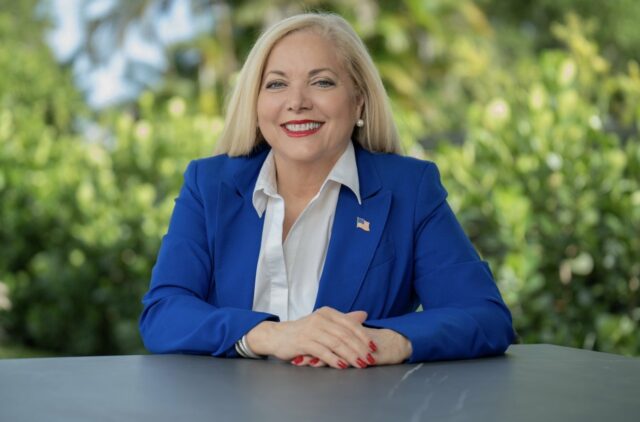
Leaders of the Miami-Dade Democratic Party are accusing recently elected Supervisor of Elections Alina Garcia, a longtime Republican operative and former state lawmaker, of using her new post to tilt the county’s voter composition in her party’s favor.
They’re now diving into public records, they say, to determine whether — and to what extent — the Supervisor of Elections (SOE) Office has manipulated voter rolls since November.
More than a quarter-million Miami-Dade voters have been removed from the county’s active voter rolls in recent months, and Democratic and non-party affiliated voters (NPA) made up a disproportionate share of the reduction.
A side-by-side comparison of active voter numbers from February and those from July, after an off-year voter roll maintenance that occurred statewide, shows Miami-Dade shed a 106,435 Democratic and 105,183 NPA voters — 41% each of the net total 259,606-voter reduction — while removing just 47,988 Republicans (18% of the total) over the same period.
Sue Whitman-Helfgot, the Miami-Dade Democratic Party’s Finance Chair, said in a Saturday fundraising email that the party is now “investigating Garcia’s antics” and have a plan to “combat her attempt to steal the upcoming Miami mayoral election.”
“Our staff of hardworking volunteers has a state-of-the-art tech stack,” she said. “But they need deep material support so they can knock on thousands of doors, make even more phone calls, and run voter registration drives. All before the election this Fall.”
Miami-Dade’s red wave
Whitman-Helfgot’s email came nearly eight months after a seismic election shook Miami-Dade, a long-dependably blue county that has increasingly trended redder in recent cycles. The proverbial dam broke in November, when Miami-Dade voters sided with a GOP presidential nominee for the first time this century.
President Donald Trump outpaced then-Vice President Kamala Harris by 11.4 percentage points in Miami-Dade. The last Republican at the top of the ticket to take the county was George H.W. Bush in 1988, and he won by 11 points.
The effect trickled down, with the Miami-Dade GOP sweeping all five county constitutional office races — including the contest for SOE, which Garcia won with 56% of the vote — while not losing a single congressional or state legislative seat.
Garcia told Florida Politics by text Tuesday that the change in Miami-Dade’s voter numbers is hardly due to treachery and is instead reflective of a shift that occurred in compliance with Florida Statutes.
“These are voters who have had mail returned as undeliverable and who have not voted or had any contact with our office in the past four years or two General Election cycles,” she said. “To avoid being removed from the rolls, it is important that voters update their address when moving and maintain contact with their Supervisors of Elections Office.”
Miami-Dade Republican Party Chair Kevin Cooper said the swing wasn’t an overnight phenomenon but the result of a nearly decade-long GOP push.
“The reality is, Miami-Dade would have flipped regardless of this,” he said by text. “Over the last eight years Miami-Dade County flipped 22 points from Democrat to Republican. … In March 2020, Democrats held a lead of 228,000 voters. In March 2025, that lead shrank to just under 19,000.”
Two Democrat-aligned consultants — Matt Isbell of Tallahassee, who is known for constructing data-driven political maps; and Miami political strategist Vanessa Brito — scoffed on X at the suggestion that malfeasance contributed to the party’s losses.
Isbell called it a “fake scandal.”
“The party split here is driven (by) poor Democratic turnout in past years (and) that there are far more Democrats who haven’t voted in years,” Isbell said. “The last thing Democrats need to do is embrace conspiracy. Also distracts from real issues.”
Brito pointed out, as Florida Politics reported in May, that “inactive” isn’t the same thing as removed and that Democratic voters technically still outnumber Republicans in Miami-Dade, even if it isn’t reflected on county and state websites.
“Instead of doing the hard work to re-engage them and actually invest in long-term infrastructure in what used to be one of Florida’s biggest blue strongholds,” she said, “they’d rather pretend the problem doesn’t exist.”
‘We need to make sure’
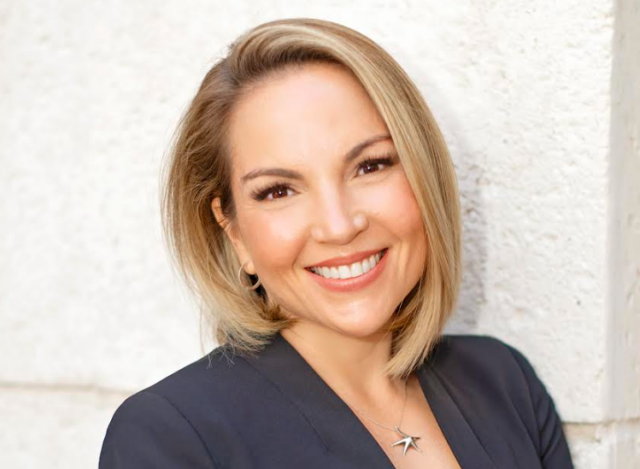
But that assessment isn’t accurate, according to Miami-Dade Democratic Party Chair Laura Kelley, who pushed back on what she called an “unfair” narrative that her party idly stood by while its advantage in Florida’s most populous county eroded.
And it certainly hasn’t been the case since the party’s leadership changed in December, she said.
“This administration is actively doing things differently. We’ve made almost 100,000 calls to voters, and we’ll be reaching out to people who had their vote-by-mail in 2022 and didn’t re-enroll or didn’t vote,” she said. “We’ll also be reaching out to NPAs to make sure they understand they have the right to vote in municipal elections. We have various tiers of how we’re reaching out to voters, and we’re not going to stop until we contact them and ensure they’re reactivated.”
Several municipal elections in the coming months will be affected by the shifting voter rolls. Homestead has its Primary Election on Oct. 7. Its General Election is on Nov. 4, alongside those for Miami Beach and, depending on the outcome of a legal battle over a City Hall attempt to delay its election to 2026, Miami. Hialeah’s Primary and Special Elections are also on Nov. 4, with its General Election coinciding with potential Miami and Miami Beach runoffs Dec. 9.
Kelley said that unlike Republicans in past election cycles, Miami-Dade Democrats aren’t clinging to discredited theories about plots to throw away ballots or hack voting machines. But the “alarming number of purged voters” with D or NPA next to their name should raise concerns, she said, “and it’s our responsibility to double-check that.”
“We’re talking about approximately 210,000 voters, and we have to ask the critical questions about voter suppression and what protocols, documentation and criteria were used to make these determinations to remove them,” she said by phone Monday. “I want to be fair in saying that it’s entirely possible that Democratic and NPA voters may be more transient. But more transient to the number we’re seeing? That’s not something we can just assume happened because everything is being followed correctly, and we need to make sure that what’s being done is being done correctly.”
Kelley said Miami-Dade Democrats are collaborating with the Florida Democratic Party — led by ex-Agriculture Commissioner Nikki Fried, the last Democrat to win a statewide race — to get answers.
Both submitted public records requests roughly a month ago. The county party has since received “a number of lists” that includes a partial register of people whom the SOE purged from its voter rolls, Kelley said, but queries the state party sent in and paid for still haven’t been answered.
Kelley said the current mechanism for removing voters from the rolls lends itself to error. People often ignore or throw out mail, or it can get lost. But when a voter learns they’ve been removed or marked as inactive, she said, it can deter them from reengaging with the electoral process.
There’s also a question of whether Garcia’s Office has been unbiased when contacting voters at risk of losing their active status, Kelley continued.
“Let’s be completely transparent: Alina Garcia is an election denier,” she said, referring to Garcia’s equivocation last year when asked whether Trump, who endorsed her, lost the 2020 election to Joe Biden.
“We need to know what efforts are being made to reach out to voters to ensure they’re correctly being removed, and are they being made equally across the board and in all parts of the county, whether they’re highly Democratic or highly Republican?” Kelley said.
Mail and money issues
Kelley also noted the steep drop in requests for mail-in ballots, which Democrats have historically favored far more than Republicans, following a measure (SB 90) the GOP-controlled Legislature passed in 2021 to cancel all standing vote-by-mail requests.
By July 2024, according to POLITICO, 46% fewer Florida voters requested mail-in ballots than they did during the 2022 Midterm. That rate tracked in Miami-Dade, whose Elections Department — then under SOE Christina White, a Democrat whom Republican U.S. Rep. Carlos Giménez appointed in 2015 when he was county Mayor — said its ballot mailouts fell from 392,000 in July 2022 to 215,000 the same month last year.
“If they can send out postcards to voters to tell them they’ve been deactivated, where are the postcards saying, ‘Hey, you previously enrolled in vote-by-mail and here’s how you can re-enroll,” Kelley said. “Why aren’t they trying to do that? Which political party would that help?”
In the last reporting period, the Miami-Dade Democratic Party’s fundraising and operational arm raised about $28,000 through more than 200 direct donations. Its Republican counterpart amassed $12,000 over the same period through fewer than 100 contributions.
Both relied mostly on direct donations of three figures or less.
At the state level, the parties’ gains were the converse and far starker. Last quarter, the Florida Democratic Party raised close to $606,500, bringing its total gains this year to about $974,000. The Republican Party of Florida, meanwhile, added $1.87 million to its coffers in the second quarter and has stacked more than $6.46 million since New Year’s Day.
Post Views: 0