Connect with us

Business

Mexican scientists are creating mass graves of pigs in the hope they’ll someday lead to cartel victim discoveries

Published

on


First the scientists dress dead swine in clothes, then they dispose of the carcasses. Some they wrap in packing tape, others they chop up. They stuff the animals into plastic bags or wrap them in blankets. They cover them in lime or burn them. Some are buried alone, others in groups.

Then they watch.

The pigs are playing an unlikely role as proxies for humans in research to help find the staggering number of people who have gone missing in Mexico during decades of drug cartel violence.

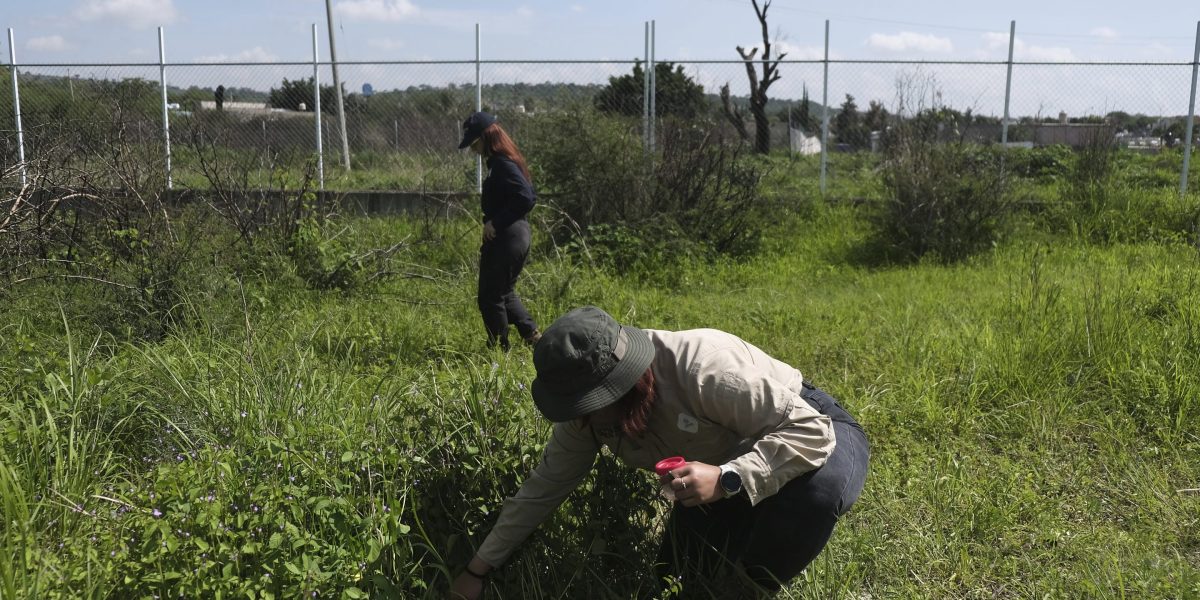
Families of the missing are usually left to look for their loved ones with little support from authorities. But now, government scientists are testing the newest satellite, geophysical and biological mapping techniques — along with the pigs — to offer clues that they hope could lead to the discovery of at least some of the bodies.

130,000 missing and counting

The ranks of Mexico’s missing exploded in the years following the launch of then-President Felipe Calderón’s war against drug cartels in 2006. A strategy that targeted the leaders of a handful of powerful cartels led to a splintering of organized crime and the multiplication of violence to control territory.

With near complete impunity, owing to the complicity or inaction of the authorities, cartels found that making anyone they think is in their way disappear was better than leaving bodies in the street. Mexican administrations have sometimes been unwilling to recognize the problem and at other times are staggered by the scale of violence their justice system is unprepared to address.

Mexico’s disappeared could populate a small city. Official data in 2013 tallied 26,000 missing, but the count now surpasses 130,000 — more than any other Latin American nation. The United Nations has said there are indications that the disappearances are “generalized or systematic.”

If the missing people are found — dead or alive — it is usually by their loved ones. Guided by information from witnesses, parents and siblings search for graves by walking through cartel territory, plunging a metal rod into the earth and sniffing for the scent of death.

Around 6,000 clandestine graves have been found since 2007, and new discoveries are made all the time. Tens of thousands of remains have yet to be identified.

Testing creative solutions

Jalisco, which is home to the Jalisco New Generation Cartel, has the largest number of people reported missing in Mexico: 15,500. In March, human bone fragments and hundreds of items of clothing were discovered at a cartel ranch in the state. Authorities denied it was the site of a mass grave.

José Luis Silván, a coordinator of the mapping project and scientist at CentroGeo, a federal research institute focused on geospacial information, said Jalisco’s disappeared are “why we’re here.”

The mapping project, launched in 2023, is a collaboration by Guadalajara University, Mexico’s National Autonomous University and the University of Oxford in England, alongside the Jalisco Search Commission, a state agency that organizes local searches with relatives.

“No other country is pushing so strongly, so creatively” to test and combine new techniques, said Derek Congram, a Canadian forensic anthropologist, whose expertise in geographic information systems inspired the Mexican project.

Still, Congram warns, technology “is not a panacea.”

“Ninety percent of searches are resolved with a good witness and digging,” he said.

Plants, insects and decomposing pigs

Silván walks by a site where scientists buried 14 pigs about two years ago. He says they may not know how well the technology works, where and when it can be used, or under what conditions, for at least three years.

“Flowers came up because of the phosphorous at the surface, we didn’t see that last year,” he said as he took measurements at one of the gravesites. “The mothers who search say that that little yellow flower always blooms over the tombs and they use them as a guide.”

Pigs and humans are closely related, famously sharing about 98% of DNA. But for the mapping project, the physical similarities also matter. According to the U.S. National Library of Medicine, pigs resemble humans in size, fat distribution and the structure and thickness of skin.

A big Colombian drone mounted with a hyperspectral camera flies over the pig burial site. Generally used by mining companies, the camera measures light reflected by substances in the soil, including nitrogen, potassium, phosphorus, and shows how they vary as the pigs decompose. The colorful image it produces offers clues of what to look for in the hunt for graves.

“This isn’t pure science,” Silván said. “It is science and action. Everything learned has to be applied immediately, rather than wait for it to mature, because there’s urgency.”

Researchers also employ thermal drones, laser scanners and other gadgets to register anomalies, underground movements and electrical currents. One set of graves is encased behind a pane of transparent acrylic, providing a window for scientists to observe the pigs’ decomposition in real time.

The Jalisco commission compares and analyzes flies, beetles, plants and soil recovered from the human and pig graves.

Each grave is a living “micro ecosystem,” said Tunuari Chávez, the commission’s director of context analysis.

Science to serve society

Triggered by the disappearance of 43 students in 2014, Silván and his colleagues started gathering information about ground-penetrating radar, electric resistivity and satellite imagery from around the world. They studied University of Tennessee research on human corpses buried at a “body farm.” They looked at grave-mapping techniques used in the Balkans, Colombia and Ukraine.

“What good is science or technology if it doesn’t solve problems?” he said.

They learned new applications of satellite analysis, then began their first experiments burying pigs and studying the substances criminals use to dispose of bodies. They found lime is easily detected, but hydrocarbons, hydrochloric acid and burned flesh are not.

Chávez’s team worked to combine the science with what they knew about how the cartels operate. For example, they determined that disappearances in Jalisco commonly happened along cartel routes between Pacific ports, drug manufacturing facilities and the U.S. border, and that most of the missing are found in the same municipality where they disappeared.

Expert relatives

The experience of the families of the missing also informs the research.

Some observed that graves are often found under trees whose roots grow vertically, so those digging the graves can remain in the shade. Mothers of missing loved ones invited by researchers to visit one of the pig burial sites were able to identify most of the unmarked graves by sight alone, because of the plants and soil placement, Silván said.

“The knowledge flows in both directions,” he said.

Maribel Cedeño, who has been looking for her missing brother for four years, said she believes the drones and other technology will be helpful.

“I never imagined being in this situation, finding bodies, becoming such an expert,” she said of her quest.

Héctor Flores has been searching for his son since 2021. He questions why so much time and effort has been invested in methods that have not led to concrete discoveries, when the families have proven track records with little official support.

Although the research has not yet concluded, the Jalisco Search Commission is already using a thermal drone, a laser scanner and a multispectral camera to help families look for their missing relatives in some cases. But it is unclear whether authorities across Mexico will ever be willing to use, or able to afford, the high-tech aides.

Congram, the forensic scientist, said researchers are aware of the limitations of technology, but that “you always have to try, fail, fail again and keep trying.”


Source link

Continue Reading

Business

Singapore tries to give its flagging stock market a kickstart with a link to the NASDAQ, allowing firms to easily list in both places

Published

on


Firms will soon get the opportunity to list in both the U.S. and Singapore in a first-of-its kind partnership. The SGX-NASDAQ dual listing bridge, which will commence later this year, is part of Singapore’s drive to revitalize its stock exchange, which has persistently lagged other regional bourses like the Hong Kong Stock Exchange in attracting IPOs and other deals. 

The bridge will likely appeal to Southeast Asian companies who want to draw on the U.S.’s deep capital market, yet still tap “strong brand recognition” in Southeast Asia, says Chan Yew Kiang, the ASEAN IPO leader at accounting firm EY.

Tay Hwee Ling, capital service markets leader of Deloitte Southeast Asia, adds that U.S. firms might also take the opportunity to extend their trading hours beyond the close of U.S. markets, as well as strengthen their presence in Southeast Asia. 

The partnership also broadens investment options for Asian investors looking to diversify amid geopolitical uncertainty, says Clifford Lee, global head of banking at DBS.

“With the Global Listing Board, companies can access the best of both worlds—U.S. market depth and Asian growth in a streamlined pathway,” an SGX spokesperson said. 

A boost to Singapore?

Singapore’s stock exchange has long suffered from low liquidity. Average daily turnover on the SGX is just $1.4 billion, compared to $29 billion on the HKEX. 

“China and Hong Kong have massive populations of active retail speculators who drive high daily turnover, while Singapore’s retail base is smaller, more conservative and prefers dividends and bonds,” says Glenn Thum, a research manager at Singapore-based stockbroker Philips Securities. “The higher liquidity and volumes in HKEX attract high-frequency traders, creating a cycle that boosts valuations and attracts more IPOs.”

Hong Kong also benefits from a steady pipeline of Chinese companies hoping to tap global investors by listing in the financial center. Exchanges in mainland China “benefit from the depth and breadth of the local investor base and market size,” says Chan of EY.

Then there’s the U.S., which offers deeper pools of capital than other Asian exchanges. That’s led several Southeast Asian companies, like ride-hailing firm Grab and e-commerce company Sea, to list in the U.S. instead of their home base of Southeast Asia. More recently, Filipino food conglomerate Jollibee Foods Corporation (JFC) announced that it would list its international business in the U.S. by 2027.

Singapore’s market is improving. In 2025, the SGX’s IPO proceeds also surged to its highest level since 2019, topping Southeast Asia’s IPO market. The turnover value of securities traded on the SGX in December climbed by 29% year-on-year. 

Still, Singapore’s IPOs are still much smaller than Hong Kong’s. Singapore’s largest IPO, NTT DC REIT, raised $773 million; by comparison, CATL’s secondary listing in Hong Kong raised over $5 billion.

Not a ‘silver bullet

But Thum of Philips Securities warns that the bridge isn’t a “silver bullet,” as companies will still face a local liquidity crunch unless U.S. investors really start trading during Singapore hours.

Also, only companies with a market capitalization greater than 2 billion Singapore dollars ($1.6 billion) qualify for the dual listing bridge, meaning only a small number of Southeast Asian businesses will qualify. For example, QAF Limited, a Singaporean food conglomerate housing bakery brands like Gardenia and Bonjour, has a market capitalization of approximately $546 million, which means it would not be able to file for a dual listing on the Nasdaq.

By comparison, the HKEX’s threshold for a secondary listing is just $385 million in market capitalization. 

This story was originally featured on Fortune.com


Source link

Continue Reading

Business

Ford CEO Jim Farley: Trump administration will ‘always answer the phone’

Published

on


Ford CEO Jim Farley has the ear of President Donald Trump—and he has a lot to say about what the administration needs to do to support the U.S. auto industry.

Farley said in an interview with Bloomberg Television on Thursday the White House has been “great” to work with, but has several asks for how the administration can improve trade to bolster U.S. automakers.

“They always answer the phone,” Farley said. “But there is a long list of things we got to work through.”

Trump visited Ford’s Dearborn, Mich., facility on Tuesday, touring production of the F-150 truck factory, in an effort to show support for U.S. manufacturing amid growing concerns of a weak labor market. Even as American carmakers have poured billions of dollars into reshoring jobs and expanding U.S. production, domestic manufacturing jobs have continued to dwindle. Ford is making a $19.5 billion pivot away from some larger electric vehicle production in favor of less expensive and more hybrid models as it navigates lower EV demand and consumers’ affordability concerns. The move follows Trump’s killing an EV tax credit which went into effect at the end of September.

Addressing threats from Chinese rivals

The administration has made an effort to address some of these concerns, according to Farley. He praised Trump’s decision to rollback fuel economy standards and ease some auto tariffs, but said his automaker continues to be impacted by the levies—particularly those affecting aluminum, a common material in auto manufacturing. In February 2025, Farley said the tariffs would cost Ford billions of dollars, all the while serving as a “bonanza” for Asian auto manufacturing competitors.

Indeed, Farley has identified China as a top competitor to U.S. autos, posing an “existential threat,” not just because of the country’s technology prowess, but also in its labor infrastructure that supports manufacturing, explaining last September that American manufacturing is lagging behind Chinese rivals in the “essential economy,” or industries that manufacture physical goods. He called on American businesses and policymakers to invest in building a blue-collar workforce.

Farley said on Thursday China has been able to nab meaningful market share in Europe—as much as 10% in the EV market—as a result of lower prices, which he attributed to Chinese government subsidies.

“They pose a lot of threat to labor locally, they have huge subsidies from the government that they’re exporting,” Farley said. “As a country, we need to decide what is a fair playing field.”

Differing trade deal visions

Chief among Farley’s ongoing concerns was the continuation of the Canada-United-States-Mexico-Agreement (CUSMA), a trade deal that replaced the North American Free Trade Agreement (NAFTA) and which is subject to review this year. It will either be left to expire or be renewed for 16 years.

“We built our entire vehicle business as an industry between Canada, Mexico, and the U.S.,” Farley said. “We have to get this revised.”

While Trump imposed a 25% tariff on autos from Mexico and Canada last year, CUSMA has allowed workarounds for those countries to ease the burden of the levies. Farley said he wants to protect the deal, as so much of the auto industry in North America is interconnected and relies on the openness of cross-border supply chains, which is both efficient and cost-saving.

Trump, who signed the agreement in 2020, has undermined the deal, eschewing the need for cars manufactured in other parts of North America. The president’s most recent criticisms of the agreement came amid comments shortly following his tour of the Ford plant.

“We could have it or not. It wouldn’t matter to me,” Trump said. “I don’t really care about it.”


Source link

Continue Reading

Business

Protect your agentic AI before you wreck your agentic AI

Published

on


Artificial intelligence? It’s no mere tool, but a capability. And just like a superhero discovering their powers for the first time, you can’t expect an employee or organization to master that newfound capability without rethinking everything—and making a bit of a mess along the way.

At the annual Fortune Brainstorm Tech dinner during CES in Las Vegas, a panel of senior technology executives deliberated the nuances of AI-driven change management—and in particular, where humans must remain “in the loop” as agentic AI sweeps across the corporate world.

“[With] any technology adoption, it’s tempting to … [take] the things we’ve always done and see how we can do it a little bit differently and a little bit better,” said Deloitte CTO Bill Briggs. “What we’ve found with AI is, that’s a trap.”

Sure, impact and value have been demonstrated in more “bounded” places within organizations, Briggs added. But “we can’t use how we’ve always thought about the world” to define the approach, he said. “We’ve gotta really fundamentally challenge what the outcomes are that we’re seeking and work backwards from there.”

You’ve also got to be realistic and design the system for failure, said Hari Bala, CTO of Health Information Systems at Solventum, the name of the healthcare company spun off from 3M in 2024. Dot your Is; cross your Ts.

“How do you make sure you have kill switches? How do you make sure you have audit-ability?” he asked. “How do you do it in an automated way while infusing AI through the reasoning and orchestration layer?”

And you certainly don’t want to make an even bigger mess than the one you’re trying to clean up. Several executives on the panel, which was moderated by Fortune’s Allie Garfinkle, agreed that there is a fine line to walk between embracing a revolutionary vision for future change and critically evaluating the efficiency of a present operation.

“We watched the [technology] sprawl happen in the past,” said Lauri Palmieri, SVP of solution engineering for Salesforce, citing service-oriented architecture and microservices, two software development models that promised better ways to build. “If you let it get out of control, you’re literally just putting more of a mess in place that you’re going to have to go back and clean up later.”

Disney chief information and data officer Susan Doniz concurred.

“An AI-first mindset is firstly about simplification,” she said. “If you’re just automating what you have, you might just be industrializing waste across what you’re trying to do.”

“‘Industrializing waste’ or ‘weaponizing inefficiency,’” Briggs interjected with a grin. “Both things are terrible.”

So what’s the solution?

Get a bold leadership team, for starters. “There’s something to be said to having strong leadership at the top that says, ‘Just go,’” said Palmieri of Salesforce.

Then get your data sorted. “The data is the fuel and the foundation,” Disney’s Doniz said. “If you don’t have well orchestrated, integrated, safe, secure data, you’re not going to have anything to ingest that will actually [make] your process better.”

And don’t let perfection be the enemy of the good, said Briggs of Deloitte. “My all-time favorite quote is Lorne Michaels from Saturday Night Live: ‘We don’t go on because we’re ready; we go on because it’s 11:30.’ So how do we force some urgency?”

For more from the 2026 Fortune Brainstorm Tech dinner in Las Vegas, read “From factory floors to offices: Physical AI is ‘going to be massive’” by Sheryl Estrada.

This story was originally featured on Fortune.com


Source link

Continue Reading

Trending

Copyright © Miami Select.