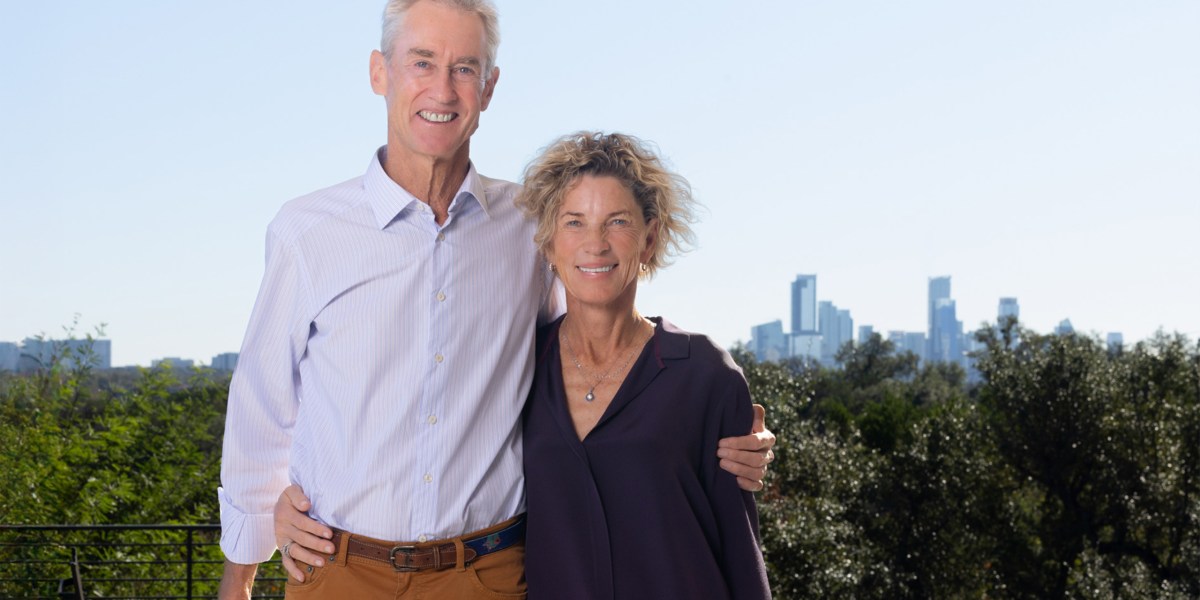
Billionaire Nvidia board member Tench Coxe and his wife Simone are donating $100 million to the University of Texas Medical Center in Austin.
The donation, one of the largest gifts in the university’s history, was driven by the couple’s personal history and values aligning with the university’s goal of improving healthcare access in Central Texas, where they live.
The medical center will include a new hospital to treat complex and serious conditions and an expansion of the UT MD Anderson Cancer Center, according to a statement from the university. It is expected to open in 2030.
“I hope in 25 years that people will say that UT has one of the best medical centers in the world, and it’s benefiting the whole community,” Coxe said in a video.
Coxe was managing director of Sutter Hill Ventures from 1989 to 2020, and joined the Nvidia board in 1993, an early supporter of Jensen Huang. Coxe is the third largest individual shareholder of Nvidia, behind founder Huang and board member and venture capitalist Mark Stevens, and has an estimated net worth of $7.7 billion, according to Forbes.
The couple relocated to Austin from Silicon Valley in 2020, and Coxe is also a part-owner of Austin FC. They are also Democratic supporters, and each donated $1 million to Beto O’Rourke’s 2022 gubernatorial campaign against Gov. Greg Abbott.
Investing in the future of healthcare
The couple’s personal experiences also influenced their choice to donate to the University of Texas. Their six-year-old son successfully underwent treatment for Burkitt lymphoma at the Lucile Packard Children’s Hospital at Stanford Medicine in 2003, which inspired them to pay it forward, Simone said. They also saw the need for more healthcare infrastructure in their own community.
“We have a close friend who had to travel to Houston [from Austin] for care she should have been able to get here at home,” Coxe said. As much as 25% of people in the region leave the area to seek care for serious medical needs, according to the university.
A key part of the Coxes’ decision to donate was speaking with the dean of UT’s Dell Medical School, Claudia Lucchinetti, and hearing her vision to change the model of healthcare by integrating university research with a modern healthcare system.
“Having spent my career backing strong leaders, meeting Claudia made it clear: Supporting the vision for the UT medical center is exactly the opportunity Austin needed,” Coxe said. The gift is unrestricted and the university says they will prioritize hiring world-class staff, construction, technology investments, and expanding access to healthcare.
The couple typically gives quietly or anonymously. In September 2025, Coxe gifted 1 million Nvidia shares, valued at more than $168 million, to undisclosed recipients, Bloomberg reported.
“One of the things that happens with bigger gifts is that it de-risks it a bit for some people,” Simone said. “Our approach to philanthropy is to invest and believe, knowing that there’s a risk and not everything’s going to be perfect. We hope by making this gift, we can help encourage others to take that same view.”
This story was originally featured on Fortune.com
Source link