
Business
Meet the ‘incubators’ behind Hollywood’s celebrity-owned brands
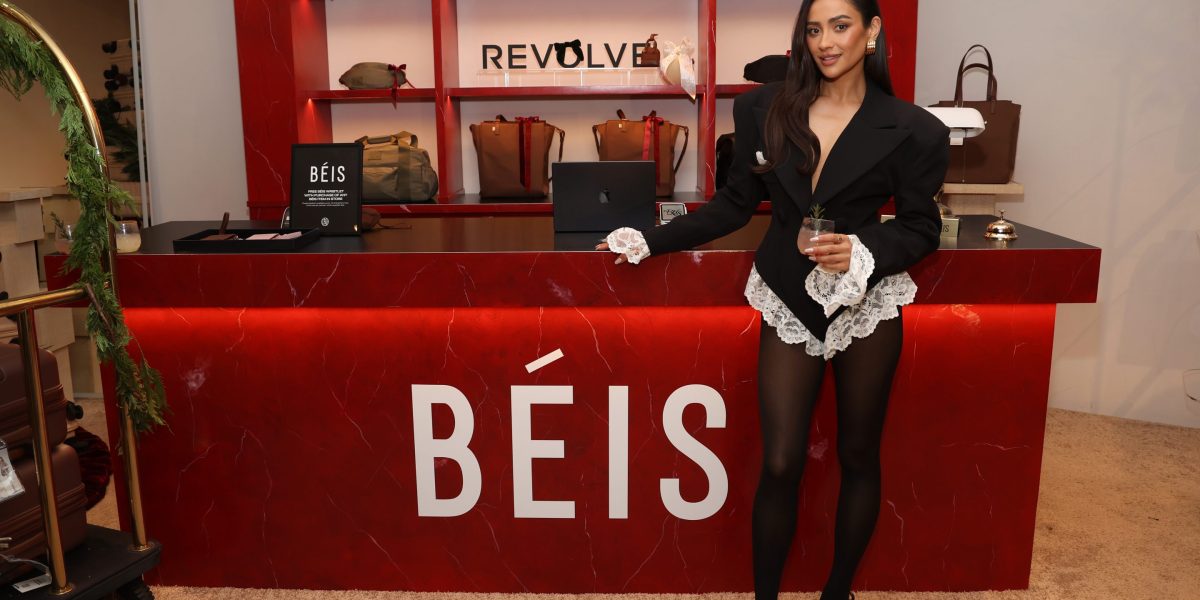
In the mid-2010s, the actor Shay Mitchell began to spend as much time at 30,000 feet as she did on land, which is to say she had a lot of free time to consider the inconveniences of life as a frequent flier. The subject of her ire? Luggage, which was either too cheap to look good or, perhaps even worse, too expensive to be so impractical.
So on one of her flights, she grabbed the cocktail napkin that came with her complimentary beverage and began to sketch her own designs. “I was creating items that weren’t out there for me that I wanted for myself,” Mitchell told Women’s Wear Daily in 2019. “I looked up these pieces to see if they existed and they didn’t.”
For most people, that would have been the end of that, but not for Mitchell. She already had a thriving career as an actor, a popular YouTube channel, and a production company—why not add entrepreneur to her resume? But Mitchell, who broke out on small screens during her seven-season arc on hit teen soap Pretty Little Liars, needed help turning her rough napkins sketches into a business.
Enter Beach House Group, a brand incubator launched about a decade ago by veteran business builders PJ Brice and Shaun Neff. They were just getting their new partnership off the ground when Mitchell came in for a meeting.
“Shay came out of nowhere,” recalls Neff, Beach House’s bleached blonde public spokesman. “She was already on an entrepreneurial journey. You could tell her juices were flowing and she wanted to build a company.”
Beach House set up a joint venture with Mitchell; installed one of its own executives, Target veteran Adeela Hussain Johnson, as a co-founder, and used Brice’s connections making private label makeup bags and other accessories to get a line of duffles, backpacks, passport holders and other travel essentials into production. Béis—that’s beige in Spanish, a nod to the color of an old bag Mitchell used to travel everywhere with—launched in 2018 and, per Neff, “it was lightning in a bottle.” It hit $200 million in revenue in 2023, according to the company, and Neff tells me that number topped $300 million last year.
As celebrity-founded brands become an obsession in Hollywood, where a billion-dollar valuation is the hot new status symbol, Beach House has carved out a niche as a startup factory. It’s part of a growing number of brand incubators that help celebrities turn great ideas into very real businesses by connecting them with capital, experienced executives, back-end resources like human resources, legal and logistics, and suppliers. A lot of these incubators are small and selective: Beach House, for example, currently has just four brands in its portfolio, including oral hygiene company Moon Beauty launched in partnership with Kendall Jenner and curly hair care line Pattern with Tracee Ellis Ross. But their cultural reach can be significant.
Says Neff, a sort of Willy Wonka in Balenciaga who clearly knows how to sell anything, “Our magic sauce is that we can create ideas out of nowhere and blow them up.”
Pairing talent with retail ideas
Before Neff co-founded Beach House, he made his name as the founder of ski and skate apparel brand Neff, which sold to wholesaler Mad Engine in 2017 for an undisclosed price. He then invested in sunscreen startup Sun Bum before its 2019 sale to SC Johnson for a reported $400 million. Which perhaps explains the two code-protected gates I pass through before arriving at his modern, light-filled home in the hills high above Malibu.
Steven Ferdman/WireImage
After Neff, dressed casually in camo pants and a black Pirelli baseball cap, hands me a can of Monster Tour Water, he settles in to tell me how Beach House evolved out of conversations he was having with talent looking to start their own brands. Back then, the talent agencies were more focused on landing their clients starring roles in the next blockbuster movie than helping them become founders.
Neff, meanwhile, had developed a reputation as a partner for celebrities through collaborations at his eponymous apparel brand with everyone from Scarlett Johansson to Snoop Dogg. “For close to 100% of consumer products, the only path to sell is through influencing people,” says Neff, who teamed with retail veteran Brice, founder of disposable tableware brand Cheeky, on Beach House. “That’s why we’re huge believers in talent.”
Beach House got off the ground around the same time George Clooney sold Casamigos for a cool $700 million, Rihanna launched Fenty Beauty and grew it into a nearly $3 billion business, and Ryan Reynolds invested in Mint Mobile ahead of its $1.35 billion sale. These companies added to the growing pile of evidence that the right celebrity could help supercharge the right business. Jennifer Aniston had done it in 2007, when she signed on to become the face of Smartwater in what her agent, Todd Shemarya, says was one of the first equity cash deals of the modern endorsement age.
“I knew they were very close to a sale,” Shemarya says. “And I knew that someone like Jennifer could help them sell faster, so she was worth the equity.” His bet turned out to be correct. Smartwater owner Glaceau sold to Coca Cola for $4.1 billion in 2007 in a deal that, based on conservative estimates, likely netted Aniston tens of millions. She’s since launched vegan hair-care line LolaVie, partnered with fitness company Pvolve, and become chief creative officer of supplement brand Vital Proteins.
The rise of social media—and the direct connection it fosters between star and fan—has created an environment ripe for the evolution of the endorsement deal. Once upon a time you got paid to appear in a commercial for a brand; now you own it. “It’s the idea that you should be creating equity for yourself in spaces where you traditionally created equity for others,” says Mahmoud Youseff, who helps clients at management firm Range Media launch their own ventures, like the Philly cheesesteak shop Bradley Cooper opened in New York City’s East Village late last year.
Yes, you read that right. Bradley Cooper is now a cheesesteak-preneur. Today, practically every A-lister has a brand of their own. Conservative estimates suggest there are more than 300 celebrity-affiliated alcohol brands on the market today. And celebrity beauty brands alone generated $1 billion in sales in 2023, according to the most recent available data from Nielsen. The one-two punch of the pandemic and the Hollywood actors’ and writers’ strikes gave a lot of celebrities a lot of free time in which to launch businesses. JLL Research reports that more than a third of all celebrity brands launched in 2020 or later. There’s Selena Gomez’s Rare Beauty, Dwayne “The Rock” Johnson’s Teremana Tequila, Blake Lively’s Blake Brown Beauty, Jennifer Garner’s Once Upon a Farm, Katy Perry’s De Soi, Naomi Osaka’s Kinlo, and the list goes on and on and on.

Mike Windle/Getty Images for smartwater
The space has gotten so crowded that Golden Globes host Nikki Glaser got big laughs from a ballroom full of actors in January when she quipped, “If you do lose tonight, please just keep in mind that the point of making art is not to win an award. The point of making art is to start a brand of tequila that’s so popular you never have to make art again.” It was funny because it was true. As working in Hollywood has become more precarious, the jobs less prolific, creating a business has become an attractive backup plan—what one executive in the space, Ari Bloom, calls “their 401k”—albeit one that comes with significantly more risk.
“Every time you see Ryan Reynolds sell one of his companies or Kim Kardashian get some crazy valuation or Selena Gomez be announced as a billionaire, we do see a lot of increased inbound because folks are like, ‘Now that they’re worth more than their day job, I should do that too,’” says Bloom, who works with John Legend, Naomi Osaka and others on their business ventures via his incubator A-Frame.
‘Not everyone can pull this off’
When Shaun Neff is looking for inspiration, he heads to his local Target. “I walk aisles,” he says. “I’ll just go there for an hour or two at a time.” That’s how he discovered an opening for Moon, the oral hygiene company he launched with Kendall Jenner that sells toothbrushes, toothpastes and whitening pens in sleek, attractive packaging. “It was glaring to me in the oral care aisle that it was a sea of sameness,” he says. “It was red, white and blue, Crest and Colgate. There was nothing there that was aesthetically pleasing.”
Neff calls himself the “brand guy, the one that creates stuff, locks in the vision.” It’s his job to help Beach House identify products that fill a void in the market. Take Pattern, which entered the historically overlooked Black haircare market with a suite of natural products designed for curly hair. “It’s got to be an incredible product,” says Neff. “When you start a brand, first and foremost, the product wins every time.”

TheStewartofNY/GC Images
It’s often after the concept is locked into place that Neff goes searching for a celebrity partner to plug into the brand. With Moon, he happened to run into Jenner at a party and asked for her number. She gave him the info for her mom, Kris Jenner, and a deal was born. “What’s crazy about Hollywood,” says Neff, “it’s like there are a handful of parties every year where everyone’s at. So if you’re in the scene, you’ve kind of rubbed shoulders with the majority of everyone.”
Finding the right talent partner isn’t always so easy. Neff says he’s met with hundreds of celebrities over the years about turning their ideas into companies. “It doesn’t take me more than 30 to 45 minutes to make the decision whether it’s a good idea or not,” he says.
Part of Beach House’s “magic sauce” is that it’s incredibly selective about who it brings on as partners. “Not everyone can pull this off,” says Neff, who looks for passion and commitment from any celebrity-turned-entrepreneur. “You can find out really quickly how much they want to be involved.” Mitchell—who declined an interview request for this story—is the source of many of Béis’s product innovations, like the retractable bag strap built into every piece of luggage. Before launching Béis, she also had already built, per Neff, “a credible character around travel” through her YouTube series, Shaycation, and had millions of devoted social media followers ready to buy her luggage.
When launching a brand with a celebrity, things like social media followers and an aspirational lifestyle are table stakes. “Just because you have nice hair doesn’t mean that you can sell haircare; Just because you have nice skin doesn’t mean that you can sell skincare,” says the agent Shemarya. “You have to have a connection with your consumer. There has to be something that is relatable.”
The most crucial component of any of these businesses is authenticity. If your personal brand is all about the laid-back California lifestyle, for example, maybe say yes to the CBD-infused seltzer rather than the high-proof vodka. “A lot of consumers have gotten inundated with celebrity endorsements and have gotten a little bit tired of it because they just look like a money play,” adds Shemarya. “So when there’s actually a celebrity doing something and it’s really organic, it stands out more and it works.”
Trading equity for expertise
When Sara Foster and Erin Foster, the sisters behind the Netflix series Nobody Wants This and podcast The World’s First Podcast, began exploring the idea of launching their own fashion line, a lot of people told them they should do it on their own. Why cut in a partner when they could own the vast majority of the business they were building? They ignored that advice and partnered with Centric Brands, which manufactures and distributes dozens of brands including Joe’s Jeans and Juicy. “We didn’t want to own 100% of something that we had to be 100% responsible for,” Erin Foster tells me. “The smartest thing we have done in our career is pair ourselves with people who know what they’re doing.”
The combination of the Fosters’ vision for the brand and Centric’s industry know-how has made the clothing line, Favorite Daughter, a staple of cool-girl wardrobes around the country. They say the company is now well on its way to $100 million in annual sales.

Stefanie Keenan/Getty Images for Nordstrom
Nowadays, there are dozens of ways a celebrity can become an entrepreneur, but for many of them, teaming up with an experienced partner is the obvious path. And there are no shortage of possible partners. All the major talent agencies have venture arms where, for their own slice of the equity pie, they’ll work with clients to get their vision off the ground. Then there are companies that specialize in building businesses across various categories, like Give Back Beauty and Maesa in the beauty and haircare space, Collab for coffee, and Ari Bloom’s A-Frame for socially responsible personal care and wellness brands.
No two deals are the same, but generally these are equity plays that don’t require talent to invest any of their own cash upfront. A celebrity joining an existing brand could get as little as 5% equity in a business, while someone launching their own business or joining one that is less established can get as much as 50%. Bloom tells me A-Frame likes to split the business 50-50 with its celebrity partners “so that we’re both seeing the same motivations and the same returns.”
While startups are a long-term play, celebrities will often get royalties or, in some cases, a cut of all sales associated with a specific capsule collection, to keep them incentivized until they can sell the company for a big payday.
At the 175-employee Beach House, all businesses are launched as joint ventures with the talent partner. There’s no set formula for the equity split, but because Beach House is often bringing the idea to the celebrity and providing shared services—legal, accounting, sales, compliance, distribution, etc.—it typically only doles out minority stakes. “We own ‘em, we operate ‘em,” says Neff. “We’ve created an absolute machine where we can incubate and create brands and rinse and repeat.”
But that doesn’t mean the celebrity can sit back and wait for an exit. If they want to be successful, they have to be willing to roll up their sleeves and get to work, from testing products to approving branding to promoting their brand every chance they get.
Before he was building a cheesesteak business with Cooper, Youseff helped put together Ryan Reynolds’s deal for Aviation Gin. “A big reference for that brand was watching George Clooney and Casamigos and how he lived that brand in every capacity of his life,” says Youseff. “He’d be on a boat wearing a Casamigos hat and serving Casamigos to his friends. He was not just selling it on a commercial, he was living it in his life. And you saw Ryan do the same throughout his journey with Aviation Gin to almost equal success. We want you to be doing something that doesn’t feel like a chore. This should come from your passion, it should be fun for you.”
The Foster sisters see the exits that some of their peers have had. They know they could probably sell Favorite Daughter for a lot of money. But Erin Foster says that’s not the only reason they launched the brand. “This is one of the most fun parts of our career,” she says. “I love this tactile thing that we get to create. The idea that you could go into a meeting and say, ‘I really need a shirt that’s kind of split open in the front because I’m sick of tucking it in.’ And 11 months later it’s in Nordstrom. That’s so cool to me.”
Successes and failures
The celebrity business bubble has been propped up on the belief that if you mix the right public figure with the right team and add the right support, you have a recipe for a successful business, one that one celebrity advisor says has a better chance at surviving than “just some random product that has to organically find its audience.”
But for every Hailey Bieber—who sold three-year-old beauty brand Rhode to e.l.f. Beauty for $800 million, plus earnouts that could boost the company’s total valuation to $1 billion—there’s Kristen Bell and Dax Shephard, whose diaper startup Hello Bello filed for bankruptcy in 2023. Last year, Sephora dropped TikToker Addison Rae’s line from its shelves. And before Blake Brown Beauty, Lively launched and quickly shuttered lifestyle website Preserve.
A year after launching Florence by Mills with Millie Bobby Brown, Beach House sold its stake back to the Stranger Things star. She’s since launched a fragrance with Give Back Beauty and a coffee with Collab under the Florence by Mills brand name. “The deal we struck with Millie was beauty centric, and I think she wanted to Florence a lot of things, so that didn’t really align with our core principle,” says Neff. “We did our job, we launched this thing very successfully at Ulta and we had a good run.” He adds, “knock on wood, we haven’t had a dud yet.”
So many startups have launched over the last five years that many close observers in the space expect there to be a shakeout soon. “The last few years before this were taking advantage of a trend,” says Youseff. “This year is definitely much more focused on finding real opportunities to connect both with the talent who’s launching these ventures and with the audience they’re trying to serve.”
Neff is still a big believer in launching brands with celebrity partners. But in perhaps a sign of the times, Beach House launched its most recent product without a celebrity founder by its side. Fragrance brand Noyz dropped last summer with sleek black and white packaging and scents like Unmute, which has hints of black plum, madagascar vanilla and crisp amber. “Fragrance is very magical, everyone’s riding a white horse and their hair’s perfect and the dude’s doing a hair flip with an 18-pack; none of it’s believable,” he says. “We felt like there was no one telling real and raw authentic stories.”
Ulta was a launch partner. “It was their biggest fragrance buy for a first-time brand ever,” Neff boasts. And the marketing campaign featured dozens of TikTokers, including Tara Yummy, Madeline Argy and the Kalogeras Sisters — all of whom got paid but none of whom got equity.
A full year later, TikTok still appears to be crazy for Noyz. Did Beach House just disprove its own thesis of the celebrity brand? Perhaps it created a new one: Why limit yourself to just one famous partner when you can harness the power of many instead.