Connect with us

Politics

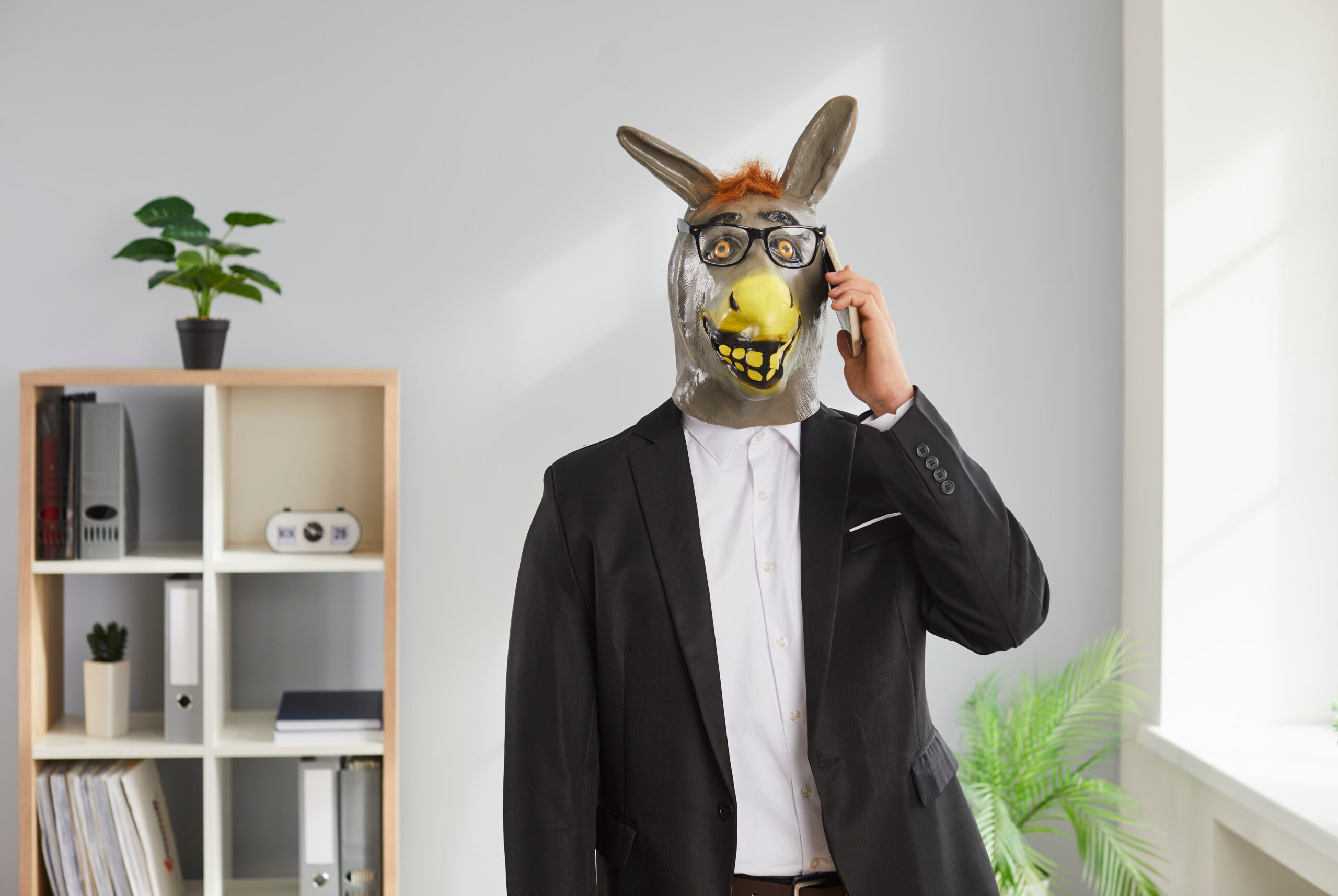
Meet the Florida Congressional candidate masquerading as a Democrat

Published

on


Let me offer a lesson in unforced errors.

Some campaign blunders are harmless. Others are educational. And then, every so often, a candidate comes along who blends audacity with incompetence so seamlessly you almost have to admire the craftsmanship.

Enter congressional hopeful Mark Davis, currently running to unseat U.S. Rep. Vern Buchanan in Florida’s 16th Congressional District.

He has zero chance. But honestly, that’s not the interesting part, because now it looks like he has less than zero chance, if that’s even a thing.

Davis has somehow managed to build his entire campaign on a lie — and he’s been so committed to the performance he even managed to fool ActBlue, the nation’s Democratic fundraising platform. That alone deserves some kind of participation trophy for creativity.

Here’s the setup: Davis is telling Southwest Florida voters that he is a registered Democrat, as he runs in a Democratic Primary that includes repeat candidate Jan Schneider, among others. His website even spells it out for the handful of people who click: “Paid for by Mark Davis, Democrat, for US House of Representatives Florida Congressional District 16.”

Now, if we were being charitable (we’re not), we could chalk this up to a “misprint” by the website guy. But Davis removes all doubt.

Less than two months ago, Davis posted a lengthy screed on X explaining why he’s running “as a Democrat,” comparing himself to “the other Democrats in the race,” and lecturing voters that failing to choose him would mean ignoring “what the Democratic Party needs right now.”

Cute speech. Inspiring, even.

Except for one important detail. Mark Davis is not a Democrat.

Filings with both the Federal Elections Commission and Florida Supervisor of Elections show, in black and white, that Davis is registered as No Party Affiliation (NPA). In other words, he’s lying.

But Davis doesn’t stop at simple misrepresentation — he goes for the deluxe package. He’s actively raising money on ActBlue, a platform that explicitly restricts access to Democrats. ActBlue’s rules aren’t complicated: If you’re independent or undeclared, and there’s a Democrat in the race, you’re not allowed. Davis is an independent. Democrats are in the race.

Let’s be honest: Davis’s campaign was over before it began. Every cycle we see the same parade of gadflies who file paperwork, launch a website, and pretend they’re running for Congress. Normally we just smile, nod, and move on.

But Davis isn’t just blurring lines, he’s redrawing them in crayon. And when a candidate has to invent his party affiliation just to stay relevant, the campaign stops being a campaign and starts being community theater.


Source link

Continue Reading

Politics

Byron Donalds supports ban on stock trading for Congress — except through a broker

Published

on


U.S. Rep. Byron Donalds will support a stock trading ban for members of Congress, but still wants to keep his broker.

The Naples Republican, who is running for Governor, discussed the issue with the Fox News radio affiliate in his district, 92.5 FM WFSX. The topic came up as U.S. Rep. Anna Paulina Luna, a St. Petersburg Republican, presses for a floor vote on a stock trading ban through a discharge petition.

“Luna and I talked about this, actually, yesterday on the (House) floor. But when it comes up for a vote, I’m voting for it,” Donalds said. “I have always been opposed to members trading positions.”

But notably, he put conditions that aren’t included in the legislation Luna favors right now. Donalds, a former private wealth manager before his election to Congress, said members should still be allowed to own stocks, just not to direct trades.

“Let me just get it out there because I know people say, ‘Well, Byron, you own stocks.’  I do, but my stocks are traded by my financial advisor, Tom Moran, in Naples. They’ve been my financial advisor since I got to Congress. I actually worked there before I got to Congress. I do not initiate trades. That is done by my broker, (and) he has third-party authorization to trade on my behalf. We have no contact about this stuff,” Donalds said.

“The only thing with what I told Anna was, I think you do have to make an allowance for members who give third-party authorization to a financial professional because then the financial professional is the one that’s doing the trading, not the member of Congress. I have always been opposed to members trading. I’ve never supported it because you do have access to information that could be manipulated.”

Donalds has regularly reported stock trades, most recently a series of trades done between Oct. 9 and Nov. 1, with all trades handled in a Moran Wealth IRA.

The website Quiver Quantitative, which flags reported congressional trading, pegs Donalds’ net worth at $4.38 million, with about $456,000 of that tied to stocks and $84,000 as cash in his IRA, with another $33,000 in pensions.

The majority of his worth comes from stake in OptimaEd, the online learning company run by his wife, Erika Donalds, not in stocks.


Source link

Continue Reading

Politics

Add new Coast Guard training center in Florida

Published

on


Moody points out there are already some two dozen military installations in Florida and a Coast Guard training facility would be natural addition.

U.S. Sen. Ashley Moody wants to build upon Florida’s quiver of military installations by adding a new U.S. Coast Guard facility.

The Sunshine State is certainly not short of any Coast Guard activity. But Moody is arguing the U.S. Department of Homeland Security (DHS) needs to add a new Coast Guard training facility in Florida.

Moody said in a press release that the new Coast Guard training base would add to the already formidable military presence in Florida and strengthen national security, as DHS has issued requests for information to states about a possible new Coast Guard training facility. DHS announced a call for requests last month.

Moody drafted a letter to the DHS Secretary Kristi Noem outlining, she said, the many benefits that adding such a Coast Guard training facility would bring to Florida. She pointed out that adding a Coast Guard training facility would be a natural progression.

“Florida already plays a substantial role in securing our country — we’re the proud home of 21 military installations and three combatant commands,” Moody said. “It just makes sense that our nation’s next U.S. Coast Guard training facility join these bases here in the Sunshine State, where we have a proven military infrastructure, available capacity, and strong interagency partnerships.”

There are already about a combined 50 Coast Guard offices, units and installations in Florida. Moody said in her letter to Noem that the state is a good fit for a training base, though she did not indicate where such a facility would be located.

“At a time when the Coast Guard is attempting to meet increasing military demands, Florida is proud to offer not only land and infrastructure, but communities that deeply value the Coast Guard’s mission,” Moody said in her letter. “The Sunshine State offers Coasties and their families the best chance for a boost in morale in their personal lives, given our lack of state income tax, military pension exemptions, numerous VA facilities, and a high appreciation rate in home values and affordability.”

The Coast Guard’s main training center has traditionally been based in Cape May, New Jersey. The Coast Guard’s website said it considers Cape May to be the service’s “hometown.”


Source link

Continue Reading

Politics

House committee OKs Linda Chaney bill to create dental therapist role

Published

on


A House panel has advanced a bill that would add a mid-level dental provider in Florida, setting off a debate over whether the new role would expand access to care or allow irreversible procedures by non-dentists.

HB 363, sponsored by Republican Rep. Linda Chaney of St. Pete Beach, would create a dental therapist position to work between hygienists and dentists on the dental care team. 

Chaney told the House Health Professions and Programs Subcommittee that the therapists would provide preventive and routine restorative care such as filling cavities, placing temporary crowns and extracting “badly diseased or lose teeth” under collaborative agreements with supervising dentists.

She and other supporters argue that the expanded dental care team would grow access to dental care. Opponents warn about the need for the more experienced dentist’s hands on the wheel in case a simple extraction is not so simple.

The subcommittee approved the bill 13 to 3. It is the third time Chaney has submitted the measure for approval from the Legislature.

“Sixty-six of our 67 counties are federally designated as Health Professional Shortage Areas (HPSA’s),” Chaney said. “Fifty-nine million Floridians live in these 274 dental HPSA’s. … The need is significant.”

Chaney explained that the bill is driven by a statewide shortage of about 1,300 dentists, and that 66 of 67 counties are federally designated health professional shortage areas. She said dental therapy programs already operate in other states and that colleges in Florida are prepared to launch tailor made programs for the position.

Chaney said therapists could practice only within their training and licensure, and under a collaborative management agreement that dentists can mold. 

“The goal of the bill is to increase access, reduce costs, allow dentists to do more advanced procedures and see more patients,” she said.

Catherine Cabanzon, a licensed dental hygienist and former Chair of the Florida Board of Dentistry, said she has seen access challenges across the state.

Cabanzon pushed back on concerns about training, saying dental therapy programs are developed by the same accrediting commission that oversees dental and dental hygiene standards. She said that therapists take the same exam as dentists for the procedures they perform.

“We have been going through this cycle over and over and over again, it is time for us to look at different tools and the tool box,” Cabanzon said. “There’s not one answer to this problem. There’s multiple answers to it.”

Opponents urged lawmakers to reject the bill, arguing that irreversible procedures should remain in the hands of fully trained dentists. Retired Navy and general dentist Merlin Ohmer, who served 30 years on active duty, said that in his experience, even seemingly simple extractions can become complicated.

“I can tell you there’s no such thing as a simple extraction until the tooth is out and laying on the table,” he said. “You don’t know, and you can’t tell, until the procedure is complete.” 

Chaney said dentists would retain authority to decide what procedures therapists can perform, and that their licenses remain on the line. 

She argues the bill fixes a specific problem with access to care in Florida: that low Medicaid participation leaves many people without options.

“The dentist’s license is going to be on the line, that their therapist is performing procedures that they are comfortable with,” Chaney said. “Only 18%, or 1 in 5 dentists, take Medicaid. So there’s a whole lot of patients out there that don’t have access to dental care, they end up in the ER.”

The bill has one more committee stop in front of the House Health & Human Services Committee.


Source link

Continue Reading

Trending

Copyright © Miami Select.