Connect with us

Business

Meet the Chanel chief who hires for personality over talent or skills

Published

on


Breaking into the notoriously competitive world of luxury and fashion has always been somewhat of a mystery. But if you don’t have a big ego or short-term motives, you’re already one step ahead—that’s at least according to Chanel’s chief people officer.

The 115-year-old luxury fashion house may be synonymous with heritage and exclusivity. But in her first-ever sit-down interview, Chanel’s CPO and COO Claire Isnard says the brand is far less interested in where candidates come from than who they are.

“When we look for talent, the first thing that we look for is personalities. You know, values,” Isnard exclusively tells Fortune

“The first thing that we look for is personality and the fit for the culture. Are they going to be a good fit with our high standards of excellence, integrity, collaboration, and long-term?”

“If people have big egos and want to work solo or are mercenaries doing things only for the short-term, they’re not going to fit,” Isnard says. 

The second thing she’s looking out for is a learning mindset. Skills, she says, come last. “But the other two are absolutely necessary.”

And unlike many of its competitors, Isnard stresses that Chanel doesn’t handpick talent from “one or two” elite schools. Instead, the company intentionally recruits from a broad range of backgrounds to ensure a diverse mix of perspectives and personalities at HQ.

How Chanel tests for personality

Isnard doesn’t rely on sneaky coffee cup tests or trick questions to assess character. Instead, she listens closely to how candidates tell their own story.

“I always ask, what is your story? What has shaped you, what has helped you to become the person that you are today?” she says.

From there, she’s looking for authenticity—especially around how you’ve dealt with any setbacks.

“You hear so much. You can already see if the person has learned from the failure, if people are vulnerable enough to tell you that they had a difficult moment or not.”

And if they give surface-level responses, she’s not afraid to probe deeper: “You can ask them also to describe who they are, what people think of them, and how the feedback they have received has been.”

Isnard says the way candidates tell their story reveals a lot about them: whether they can admit their faults, handle life’s inevitable ups and downs, and bounce back after.

Everybody wants to work at Chanel—Isnard’s words. So another big telltale sign that they’re a good egg (and not just wanting to add the glossy brand name to their LinkedIn profile) is whether they ask any questions. She says that’s a sure-tale sign that the candidate is actually interested in the job at hand, beyond the brand.

“There is almost an emotional attachment to this brand. That’s why you need to go deeper.”

The CEOs of Duolingo and Eventbrite are fans of personality tests too

Job-seekers already have to jump through flaming hoops to land a gig, navigating dinner tests and a mountain of ‘ghost’ postings. Now they’re increasingly being handed personality tests. 

As performance personality testing company Hogan Assessments told Fortune, personality tests aren’t new, but they’re currently trending as bosses double down on quality over quantity when it comes to talent. And it could actually be a good thing for young workers.

The CEO of Sweet Loren’s gives every new hire a personality test—and they don’t get the job if they’re too corporate, giving a perhaps unintended boost to Gen Z, who happen to be more entrepreneurial than previous generations. Meanwhile, Eventbrite’s CEO, Julia Hartz, told Fortune she is analyzing workers’ personalities to help reduce bias.

The shift comes as millions of Gen Zers find themselves unemployed. With more than 1.2 million applications submitted for fewer than 17,000 open graduate roles in the U.K. alone last year, personality tests could level the playing field in assessing workers, rather than it being about who went to the most prestigious school or has the snazziest experience under their belt. 

And some firms really are just hiring for vibes: “We’re looking for people who have fun working,” Luis von Ahn, CEO of Duolingo, said of the company’s hiring plans.

That’ll be music to Gen Z’s ears, many of whom are set on being the company’s “chief vibes officer” and bringing the joy back into the office amid gloomy RTO mandates, constant layoffs, and increased workloads. 


Source link

Continue Reading

Business

Notorious crypto conman Sam Bankman-Fried has a prison passion project: giving legal advice to other inmates

Published

on


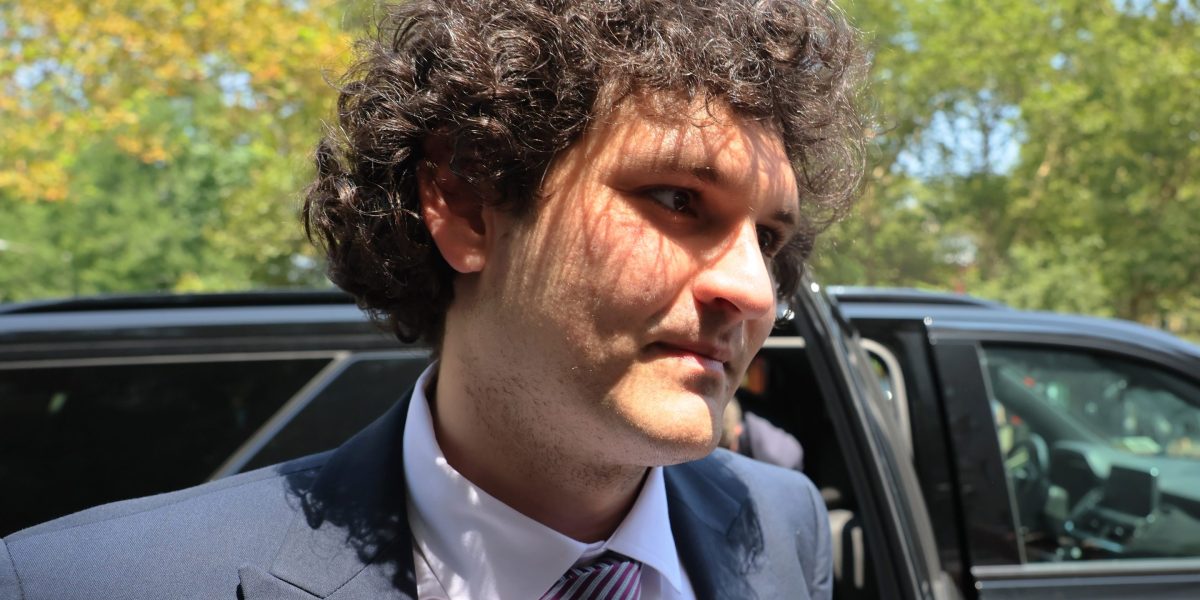
The founder of FTX has brought his entrepreneurial spirit behind bars. He has advised several high-profile inmates, like former Honduran president Juan Orlando Hernandez and rapper Sean Combs, according to reporting by the New York Times.

Bankman-Fried is currently serving 25 years in prison for misappropriating funds at the crypto exchange he founded, FTX, which was once valued at over $30 billion. The company’s collapse stands as the largest fraud in the crypto industry, and led to an extended period of stagnation for the sector. While in prison, Bankman-Fried has crossed paths with several celebrity inmates and is giving them his two cents on what they should do in court. 

He encouraged Hernandez to testify in his own defense during his trial in New York City in 2024. The strategy did not go according to plan as the former Honduran president was later sentenced to 45 years in prison for importing more than 400 tons of cocaine into the United States. Hernandez was released from prison earlier in December following a pardon from President Donald Trump. 

Another one of Bankman-Fried’s legal advisees was Sean Combs, more commonly referred to as Diddy. The two were cellmates at the Metropolitan Detention Center in Brooklyn, New York, and the crypto fraudster prepared the rapper for the prosecution’s strategy. The jury later found Combs not guilty of the most severe charges of racketeering and sex trafficking, but he was convicted of transportation for prostitution and was sentenced to four years in prison. 

On Twitter, several people questioned the logic of a convicted felon giving guidance to other inmates. One user quipped, “SBF might seem intelligent but clearly he lacks the fundamental qualities of a good lawyer, which is sober judgment, you know, being detail-oriented. This guy is an idiot.” And another user was even harsher in his criticism of Bankman-Fried’s latest hobby: “Why would anyone take legal advice from this obvious f___ dunce?”

During FTX’s rise, Bankman-Fried was very public about his alleged altruism and emphasized that he was doing the most possible good with his resources. His father, the Stanford law professor, Joseph Bankman, seems to think that spirit of benevolence is behind his helping other inmates: “Sam gave most of his income to charity every year he had income. Now all he has is his time to give,” he told The New York Times.

Join us at the Fortune Workplace Innovation Summit May 19–20, 2026, in Atlanta. The next era of workplace innovation is here—and the old playbook is being rewritten. At this exclusive, high-energy event, the world’s most innovative leaders will convene to explore how AI, humanity, and strategy converge to redefine, again, the future of work. Register now.


Source link

Continue Reading

Business

Billionaire Castel’s daughter seeks CEO ouster in bitter split

Published

on


An increasingly acrimonious dispute over the direction of French billionaire Pierre Castel’s drinks conglomerate burst into full public view after a pair of heirs demanded the group CEO’s resignation and organized a vote aimed at ousting him.

Romy Castel, daughter of the 99-year-old founder, and Alain Castel, his nephew, told Bloomberg News they deeply disagree with the way Chief Executive Officer Gregory Clerc is running the wine and beer conglomerate and the power they say he’s amassed. 

Clerc “is attempting to take control,” Romy Castel, 51, said in a telephone interview, referring to a move by the CEO earlier this month to remove Alain Castel from two company boards.

In a separate statement, Alain Castel, 65, questioned Clerc’s strategic vision and ability to effectively run the group, which has a workforce of 43,000.

“For me and my family, it has become vital that Mr. Clerc fully appreciate the situation and realize that his resignation is the best solution,” he said. 

The closely held Castel Group, which had sales of about €6.5 billion ($7.6 billion) last year from its globe-spanning wine, beer and agricultural operations, has been torn in recent months by internal strife that has pitted key members of the family against Clerc. As the first outsider to oversee operations within the secretive empire, the dispute highlights the risks of generational change within family-controlled companies. 

In a statement, the eponymous Castel Group said that Clerc rejects the family members’ claims and added that he remains focused on his mandate to develop and grow the company “within a framework of demanding and responsible governance.” 

The website of another company in the group, Castel Afrique, posted a message saying that the board of Castel Group had met in Luxembourg on Dec. 11 and backed Clerc. 

The acrimony is escalating at a time when the founder’s health has been faltering. Pierre Castel remained the public face of the businesses until a few years ago, and Clerc was named CEO in 2023 after serving as the founder’s tax lawyer in Switzerland. 

The extent of the Castel fortune and the group’s labyrinthine corporate structure came to light through a tax dispute that the billionaire lost on appeal. A Swiss federal court ruled in a July 2023 decision that the businessman had evaded taxes as a longstanding resident in the country. Castel was fined more than €350 million.

Tax Probe

While the Swiss legal procedure is over, a tax probe by French authorities is ongoing, according to Romy Castel. 

The power struggle within the conglomerate surfaced earlier this month when Alain Castel, who heads the wine arm of the group, Castel-Vins, said he was removed from the board of a Luxembourg-based holding company, D.F. Holding, as well as Cassiopee Pte. Ltd., a Singapore-based entity that is higher up in the corporate structure. Clerc has seats on both boards. 

D.F. Holding is wholly owned by Cassiopee, which is ultimately controlled by Investment Beverage Business Fund, also in the city state. 

In his statement, Alain Castel said “deep disagreement” with Clerc has been simmering since his arrival as CEO, adding that one trigger was a survey carried out that he claims hurt a number of projects. 

Romy Castel said she has convened an extraordinary general meeting in Singapore on Jan. 8 of Investment Beverage Business Management, or IBBM, the fund management vehicle, to seek Clerc’s removal as director. 

A recent filing for that company lists Romy Castel, a French national based in Switzerland, as a shareholder, alongside another of her father’s nephews, Michel Palu. The other shareholders on the list are from outside the family: Two former longstanding French executives, Guy de Clercq and Gilles Martignac, as well as CEO Pierre Baer.  

Alain Castel described Romy as a “majority shareholder” of IBBM. The filing shows her having a 24% stake.

With the two former executives as allies “I have the majority,” to remove Clerc, Romy Castel said in the interview. “I am very, very confident.”

Pierre Castel’s empire spans the wine business that started in France and includes chateaus, vineyards, the Nicolas brand of stores and online seller Vinatis. The much bigger brewing and soda operation is focused on Africa, with some 61 brands of beer. 

D.F. Holding, which includes both beer and wine operations, reported sales of €6.5 billion in 2024, little changed from the year before. Dividends paid to shareholders rose about eight-fold to €350 million compared with €43 million. 

Since Clerc came on board, the firm has consolidated results across a swath of Castel operations. These include factories in 22 African countries as well as sugar plantations, flour and distillery activities.

This year it warned about lower wine consumption in France, political tension in a number of African countries and the war in Ukraine.


Source link

Continue Reading

Business

CEO of Boeing and Lockheed rocket joint venture ULA resigns

Published

on


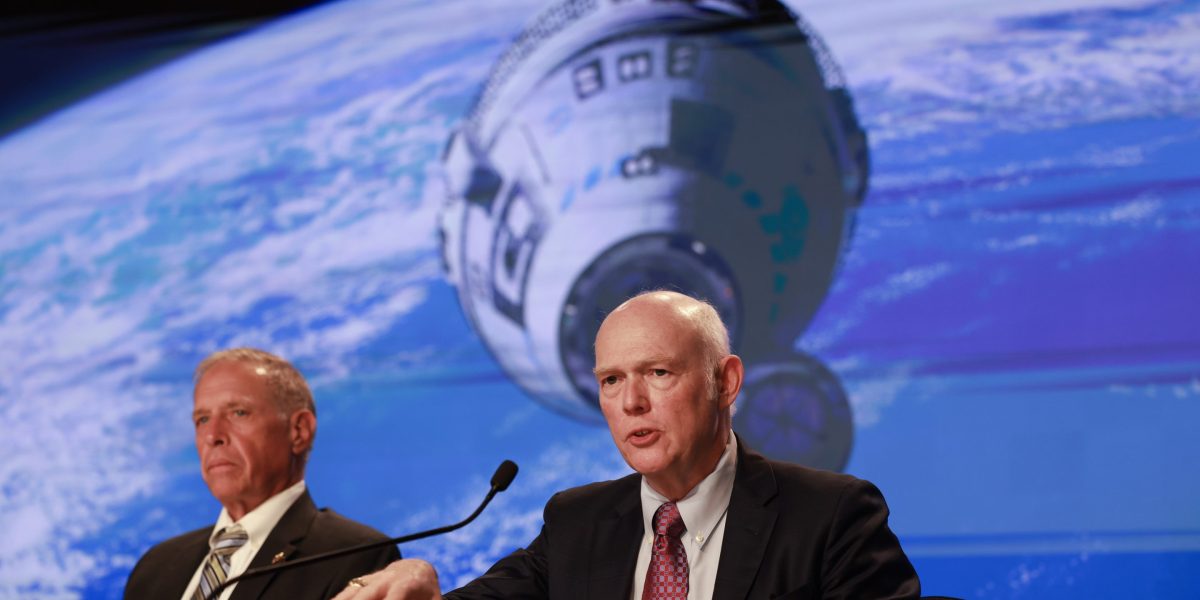
Tory Bruno, the chief executive officer of Boeing Co. and Lockheed Martin Corp.’s rocket joint venture United Launch Alliance, has resigned after serving in the position for nearly 12 years.

Chief Operating Officer John Elbon will serve as interim CEO, ULA’s board of directors announced on Monday.

One of SpaceX’s biggest rivals, ULA is one of an elite group of companies that is authorized to launch the most sensitive satellites for the US military. During his tenure leading ULA, Bruno oversaw the retirement and phasing out of the company’s older Delta and Atlas rockets, while spearheading the development of a new rocket called Vulcan.

“We are grateful for Tory’s service to ULA and the country, and we thank him for his leadership,” the ULA board said in a statement. Bruno is leaving to pursue another opportunity, the statement said.

Join us at the Fortune Workplace Innovation Summit May 19–20, 2026, in Atlanta. The next era of workplace innovation is here—and the old playbook is being rewritten. At this exclusive, high-energy event, the world’s most innovative leaders will convene to explore how AI, humanity, and strategy converge to redefine, again, the future of work. Register now.


Source link

Continue Reading

Trending

Copyright © Miami Select.