Victoria’s Secret had tried everything. It killed the famous runway show. It rolled out a splashy campaign of accomplished celebrity women advisors to promote female empowerment—which was widely derided as “woke-washing.” As the singer Jax put it in her popular 2022 song “Victoria’s Secret,” the mall-staple lingerie store was “made up by a dude,” and it has been widely seen as “Cashin’ in on body issues/Sellin’ skin and bones with big boobs.”
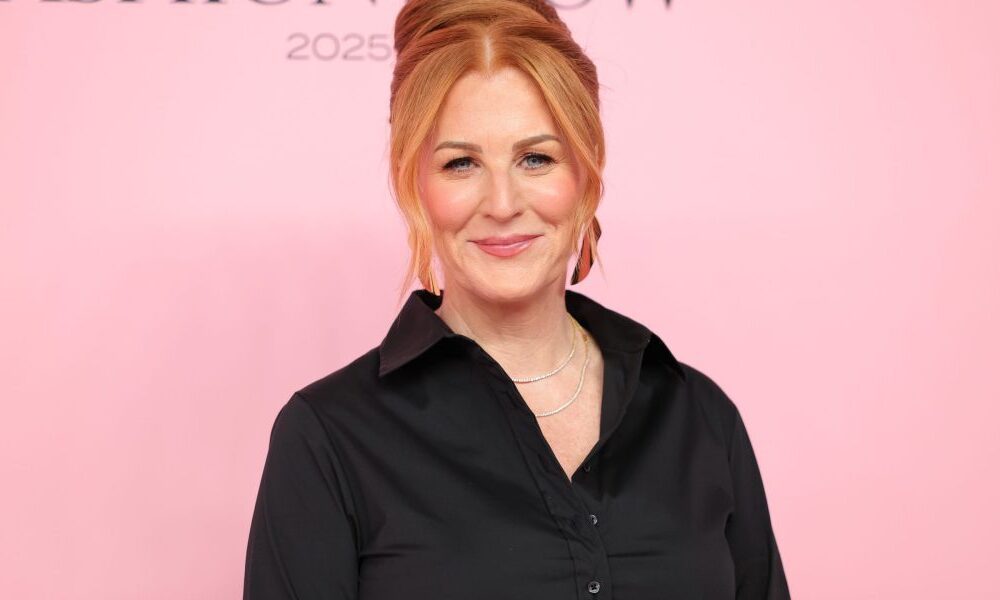
Enter CEO Hillary Super. She joined the company in 2024 after successful stints running Anthropologie and Savage X Fenty, which became an edgy lingerie competitor to Victoria’s Secret. Super, 53, remembers that when she got the call, she was “keenly aware of what the perceptions of the brand were, positive and negative.” But her “first reaction was, ‘That’s the biggest transformation opportunity in retail,’” she says. “That was really appealing to me.”
In her tenure so far, the CEO has fostered a self-assurance absent from the brand in recent years. Her eye as a merchant has clearly been helpful, following a stretch of leadership that was more focused on business operations. Perhaps even more crucially, she can talk authentically about and to women. While Victoria’s Secret has had female leaders before, they were largely overshadowed by powerful male execs—and Super is the first female CEO of the new parent company Victoria’s Secret & Co. after a 2021 spinoff from L Brands. “It’s hard to have an intuition about a category that you cannot put on your body,” Super remarks.
Super also likes to remind critics of the many women who have never had a problem with Victoria’s Secret and its particular brand of sexy. Under her guidance Victoria’s Secret has embraced this heritage—the glamour and spectacle of it all, without the body-shaming. There is still a focus on diversity, but “without being performative, [where] we have to check every box and make sure every single thing someone could think of is covered,” Super says, “because to me that lacks authenticity.”
Super’s plan to turn the company around seeks to address long-standing shortcomings and identifies some more ambitious opportunities. It has four pillars: owning the bra category; recommitting to the Pink brand; doubling down on Victoria’s Secret beauty products (a $1 billion business in North America known for scents like Love Spell and Bombshell); and evolving the brand and go-to-market strategy. She aims to reach double-digit operating income and build a younger customer base.
Read more about her plan to remake the retailer in Fortune‘s exclusive behind-the-scenes story here.
Join us at the Fortune Workplace Innovation Summit May 19–20, 2026, in Atlanta. The next era of workplace innovation is here—and the old playbook is being rewritten. At this exclusive, high-energy event, the world’s most innovative leaders will convene to explore how AI, humanity, and strategy converge to redefine, again, the future of work. Register now.
Source link