Connect with us

Business

Meet Sequoia Capital’s new stewards

Published

on


Lin—famed as the thoughtful backer of companies like DoorDash, Airbnb, and Citadel Securities—said something I’ve thought about many times since: That it’s important to be able to hold ideas in “extreme tension,” because that’s, in effect, the only path to truth, to knowing what your options truly are.

“The thing about holding things in tension, in extreme tension, is that the right answer is almost definitely somewhere in the middle,” Lin told me in an interview in 2024 about how he thinks about founders. “If you start in the middle and radiate out from there, you think ‘Oh, this is obvious, it makes sense.’ Then you limit the number of solutions you look at. If you look at the extreme and work towards the center, you traverse almost every single possibility. That’s why when people hold things in tension, they tend to come up with more options.”

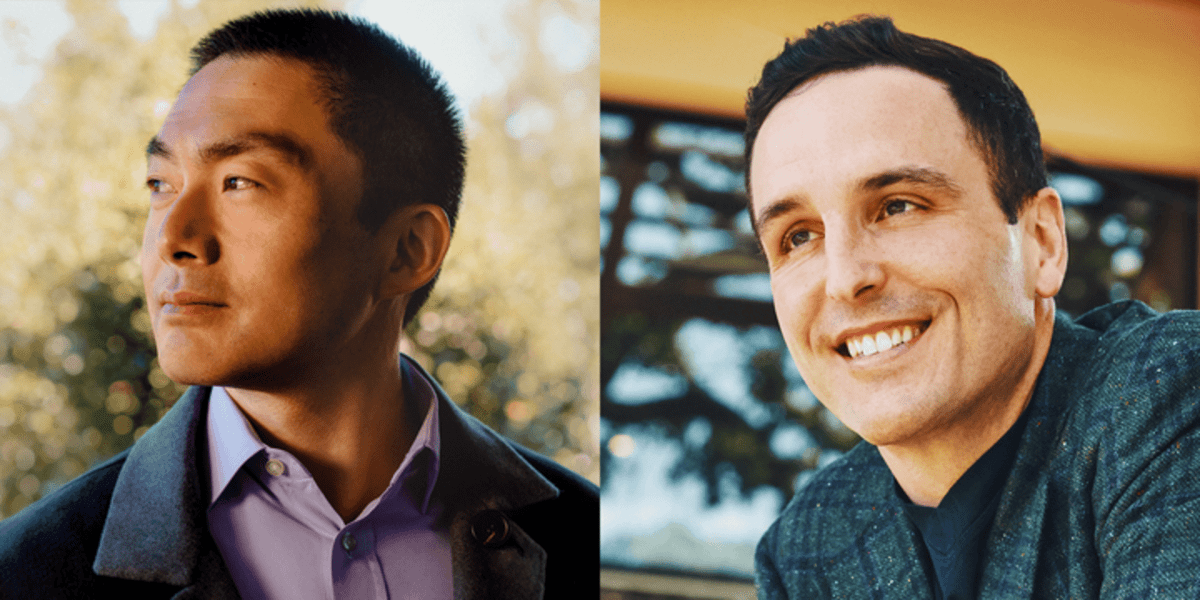
Lin has long been regarded as the best of the best among Silicon Valley VCs, and yesterday he came to the fore in a way I consider (yes, in somewhat contradictory terms) surprising but inevitable: Sequoia announced that Roelof Botha would step down as the firm’s steward, and that Lin and Sequoia partner Pat Grady would take up the mantle as co-stewards. 

Now, this is surprising on some level: Botha is only 52, and the YouTube and Instagram investor has been leading Sequoia for nearly a decade (he’s been on his own as sole steward since 2022). At the same time, there’s a layer of inevitability: Sequoia has conducted generational transfers five times over its 53 years, has previously had co-stewards more often than not, and Grady and Lin are both uniquely suited to the task.

While Lin has led the firm’s early stage investing since 2017, Grady has steered Sequoia’s growth stage investing practice since 2015, leading deals in Snowflake, Zoom, ServiceNow, Harvey, and OpenEvidence. Both have longstanding reputations as excellent investors, proven over time in a business that even at its very best can be fickle. Lin is also on the board of Kalshi, and both led Sequoia’s investments in OpenAI. 

If you aren’t familiar with Lin and Grady, some facts and throughlines: Lin’s early career was defined by his time as chairman, COO, and CFO at Zappos up until its blockbuster acquisition by Amazon. Meanwhile, Grady, the younger of the two, started his career at Summit Partners, landing at Sequoia in 2007. (Lin would join the firm in 2010.) Their backstories have some parallels, as both have personal histories that start far from the top of Silicon Valley: Lin’s parents immigrated from Taiwan when he was a kid, and Grady grew up in a Wyoming coal mining region. 

Sequoia has its own contradictions to contend with moving forward—despite its more than $50 billion in assets under management, Sequoia’s long said it remains focused on generating best-in-class returns, and embodying the kind of excellence that implies in an unstable, long-game industry. (Sequoia has a little more than 20 investors, a number that’s remained consistent over time.)

This also happens at a moment where the venture capital goalposts are moving—the industry is bifurcating into asset managers and smaller shops, while politics is becoming an increasingly complicated flashpoint. Some firms, like a16z, have leaned into it, while others have tried to stay away from political issues entirely. Sequoia has kept to a philosophical middle path, maintaining the firm’s “institutional neutrality” while allowing partners to be personally vocal about politics. (There’s history here: Famously, Moritz was a vocal Democrat; Leone was prominently Republican.) That worked for years, but there’s evidence of cracks in that approach.

As Lin and Grady take the wheel—becoming the people who now tend to the most famous tree in venture capital—it’s a time of extremes and contradictions. As they look to keep Sequoia at the top of the startup investing game, they’ll have to consider those extremes and, in doing so, perhaps find the best possible vision for the future of venture capital.  

Term Sheet Podcast…This week, I talked to Cityblock Health cofounder and CEO Dr. Toyin Ajayi. A former physician, Ajayi saw how the system can sometimes work against patients, driving burnout and increasing costs. In 2017, she cofounded Cityblock Health, a tech-forward health care startup that provides care to underserved communities. We talked about doctors as entrepreneurs, health care reform, and AI. Listen and watch here. 

See you tomorrow,

Allie Garfinkle
X:
@agarfinks
Email: alexandra.garfinkle@fortune.com
Submit a deal for the Term Sheet newsletter here.

Allie Garfinkle curated the deals section of today’s newsletter. Subscribe here.

Venture Deals

Beacon Software, a Toronto-based company that acquires software businesses, has raised a $250 million Series B. General Catalyst, Lightspeed, and D1 Capital led the round. 

Parable, a New York-based AI impact measurement startup, has raised $16.5 million in seed funding. HOF Capital led the round, joined by Story Ventures, InMotion Ventures, Lasagna, Panache, Supercharge, and Tripe Impact Capital. 

Other

Arctic Wolf announced plans to acquire ransomware detection company UpSight Security. Financial terms were not disclosed.

This is the web version of Term Sheet, a daily newsletter on the biggest deals and dealmakers in venture capital and private equity. Sign up for free.


Source link

Continue Reading

Business

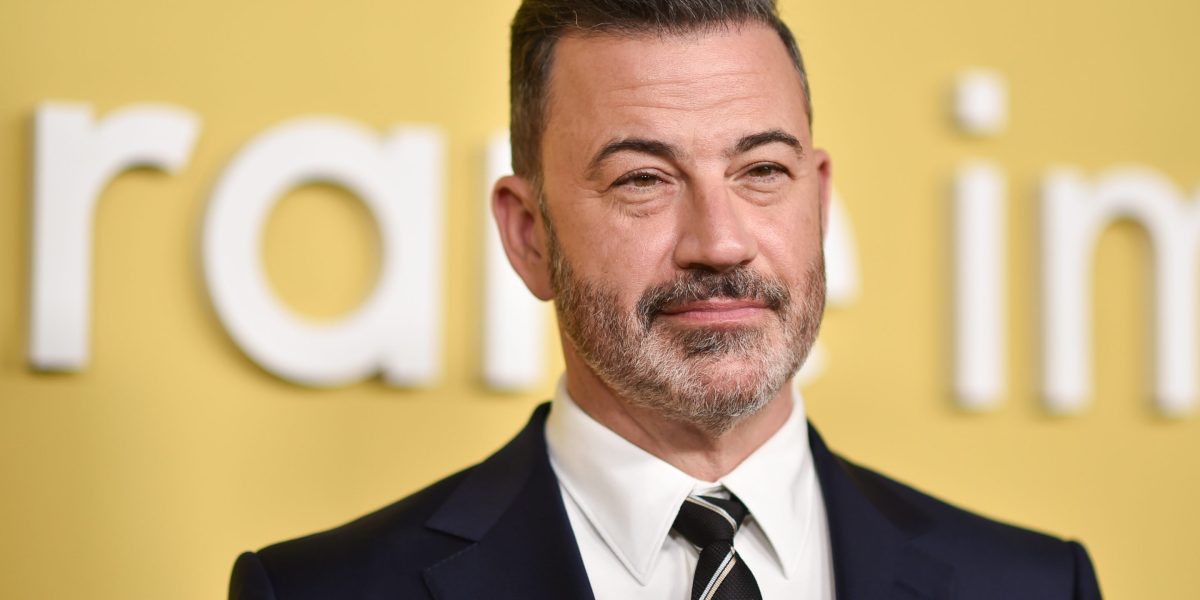
Jimmy Kimmel signs ABC extension through 2027

Published

on


Kimmel’s previous, multiyear contract had been set to expire next May, so the extension will keep him on the air until at least May 2027.

Kimmel’s future looked questionable in September, when ABC suspended “Jimmy Kimmel Live!” for remarks made following the assassination of conservative activist Charlie Kirk. Following a public outcry, ABC lifted the suspension, and Kimmel returned to the air with much stronger ratings than he had before.

He continued his relentless joking at the president’s expense, leading Trump to urge the network to “get the bum off the air” in a social media post last month. The post followed Kimmel’s nearly 10-minute monologue on Trump and the Jeffrey Epstein files.

Kimmel was even on Trump’s mind Sunday as the president hosted the Kennedy Center Honors in Washington.

“I’ve watched some of the people that host,” Trump said. “I’ve watched some of the people that host. Jimmy Kimmel was horrible, and some of these people, if I can’t beat out Jimmy Kimmel in terms of talent, then I don’t think I should be president.”

Kimmel has hosted the Oscars four times, but he’s never hosted the Kennedy Center show.

Just last week, Kimmel was needling Trump on the president’s approval ratings. “There are gas stations on Yelp with higher approval ratings than Trump right now,” he said.

Kimmel will be staying longer than late-night colleague Stephen Colbert at CBS. The network announced this summer it was ending Colbert’s show next May for economic reasons, even though it is the top-rated network show in late-night television.

ABC has aired Kimmel’s late-night show since 2003, during a time of upheaval in the industry. Like much of broadcast television, late-night ratings are down. Viewers increasingly turn to watching monologues online the day after they appear.

Most of Kimmel’s recent renewals have been multiyear extensions. There was no immediate word on whose choice it was to extend his current contract by one year.

Bill Carter, author of “The Late Shift” and veteran chronicler of late-night TV, cautioned against reading too much into the length of the extension. Kimmel, at age 58, knows he’s getting close to the end of the line, Carter said, but when he leaves, he doesn’t want it to appear under pressure from Trump or anyone.

“He wants to make sure that it’s on his terms,” Carter said.

Kimmel has become one of the leading voices resisting Trump. “I think it’s important for him and for ABC that they are standing up for him,” Carter said.

Following Kirk’s killing, Kimmel was criticized for saying that “the MAGA gang” was “desperately trying to characterize this kid who murdered Charlie Kirk as anything other than one of them and doing everything they can to score political points from it.” The Nexstar and Sinclair television ownership groups said it would take Kimmel off the air, leading to ABC’s suspension.

When he returned to the air, Kimmel did not apologize for his remarks, but he said he did not intend to blame any specific group for Kirk’s assassination. He said “it was never my intention to make the light of the murder of a young man.”


Source link

Continue Reading

Business

Trump says he’ll allow Nvidia to sell advanced chips to ‘approved customers’ in China

Published

on


President Donald Trump said Monday that he would allow Nvidia to sell an advanced type of computer chip used in the development of artificial intelligence to “approved customers” in China.

There have been concerns about allowing advanced computer chips to be sold to China as it could help the country better compete against the U.S. in building out AI capabilities, but there has also been a desire to develop the AI ecosystem with American companies such as chipmaker Nvidia.

The chip, known as the H200, is not Nvidia’s most advanced product. Those chips, called Blackwell and the upcoming Rubin, were not part of what Trump approved.

Trump said on social media that he had informed China’s leader Xi Jinping about his decision and “President Xi responded positively!”

“This policy will support American Jobs, strengthen U.S. Manufacturing, and benefit American Taxpayers,” Trump said in his post.

Nvidia said in a statement that it applauded Trump’s decision, saying the choice would support domestic manufacturing and that by allowing the Commerce Department to vet commercial customers it would “strike a thoughtful balance” on economic and national security priorities.

Trump said the Commerce Department was “finalizing the details” for other chipmakers such as AMD and Intel to sell their technologies abroad.

The approval of the licenses to sell Nvidia H200 chips reflects the increasing power and close relationship that the company’s founder and CEO, Jensen Huang, enjoys with the president. But there have been concerns that China will find ways to use the chips to develop its own AI products in ways that could pose national security risks for the U.S., a primary concern of the Biden administration that sought to limit exports.

Nvidia has a market cap of $4.5 trillion and Trump’s announcement appeared to drive the stock slightly higher in after hours trading.


Source link

Continue Reading

Business

Google Cloud CEO lays out 3-part AI plan after identifying it as the ‘most problematic thing’

Published

on


The immense electricity needs of AI computing was flagged early on as a bottleneck, prompting Alphabet’s Google Cloud to plan for how to source energy and how to use it, according to Google Cloud CEO Thomas Kurian.

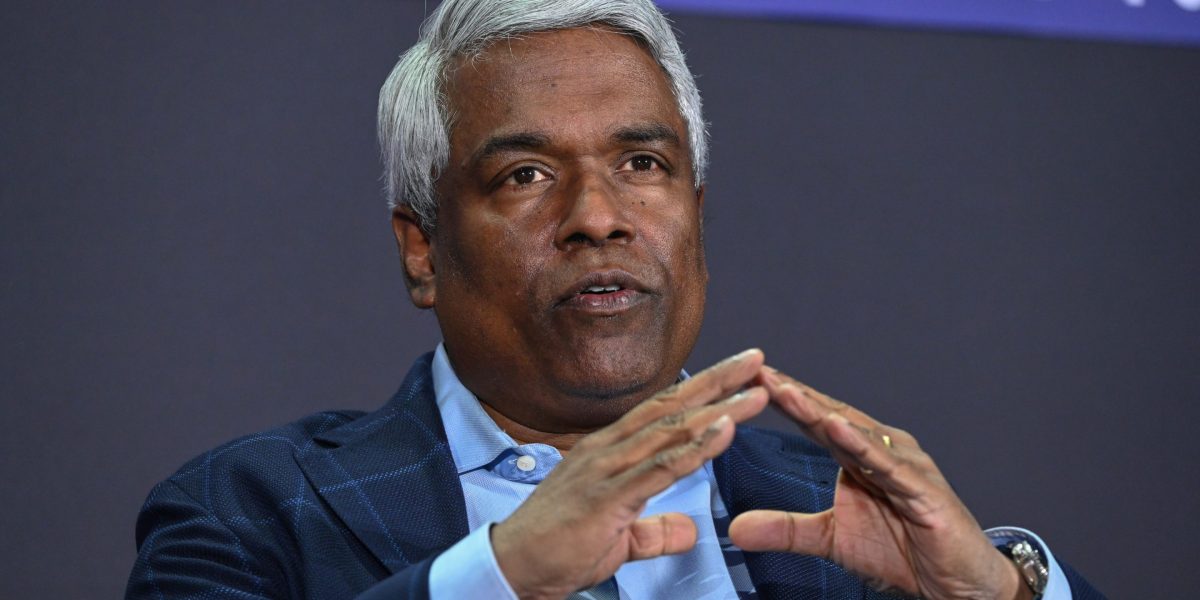
Speaking at the Fortune Brainstorm AI event in San Francisco on Monday, he pointed out that the company—a key enabler in the AI infrastructure landscape—has been working on AI since well before large language models came along and took the long view.

“We also knew that the the most problematic thing that was going to happen was going to be energy, because energy and data centers were going to become a bottleneck alongside chips,” Kurian told Fortune’sAndrew Nusca. “So we designed our machines to be super efficient.”

The International Energy Agency has estimated that some AI-focused data centers consume as much electricity as 100,000 homes, and some of the largest facilities under construction could even use 20 times that amount.

At the same time, worldwide data center capacity will increase by 46% over the next two years, equivalent to a jump of almost 21,000 megawatts, according to real estate consultancy Knight Frank.  

At the Brainstorm event, Kurian laid out Google Cloud’s three-pronged approach to ensuring that there will be enough energy to meet all that demand.

First, the company seeks to be as diversified as possible in the kinds of energy that power AI computation. While many people say any form of energy can be used, that’s actually not true, he said.

“If you’re running a cluster for training and you bring it up and you start running a training job, the spike that you have with that computation draws so much energy that you can’t handle that from some forms of energy production,” Kurian explained.

The second part of Google Cloud’s strategy is being as efficient as possible, including how it reuses energy within data centers, he added.

In fact, the company uses AI in its control systems to monitor thermodynamic exchanges necessary in harnessing the energy that has already been brought into data centers.

And third, Google Cloud is working on “some new fundamental technologies to actually create energy in new forms,” Kurian said without elaborating further.

Earlier on Monday, utility company NextEra Energy and Google Cloud said they are expanding their partnership and will develop new U.S. data center campuses that will include with new power plants as well.

Tech leaders have warned that energy supply is critical to AI development alongside innovations in chips and improved language models.

The ability to build data centers is another potential chokepoint as well. Nvidia CEO Jensen Huang recently pointed out China’s advantage on that front compared to the U.S.

“If you want to build a data center here in the United States, from breaking ground to standing up an AI supercomputer is probably about three years,” he said at the Center for Strategic and International Studies in late November. “They can build a hospital in a weekend.”


Source link

Continue Reading

Trending

Copyright © Miami Select.