Connect with us

Business

Meet David Joyner, the professor who cloned himself with an AI avatar named ‘DAI-vid,’ as part of an experiment to ‘democratize’ online learning

Published

on


As AI sweeps through higher education, a growing number of professors have been drawing a line in the sand—banning AI tools from the classroom and returning to classic “blue book” exams to ensure authentic, human-driven learning. David Joyner of Georgia Tech told Fortune that he’s heard blue-book sales are up something like 50% nationwide. In fact, The Wall Street Journal reported in May that they they’ve risen even higher at some colleges, such as the University of California, Berkeley, whose bookstore reported an 80% surge over the last two years.

But Joyner, who among other things is Georgia Tech’s executive director of online education, where he’s long been a leader in the online education space with an ultra-cheap $7,000 computer science Masters degree, has other ideas. He and Anant Agarwal, an award-winning professor at the Massachusetts Institute of Technology, have cloned Joyner in cyberspace and created an artificial intelligence (AI) professor.

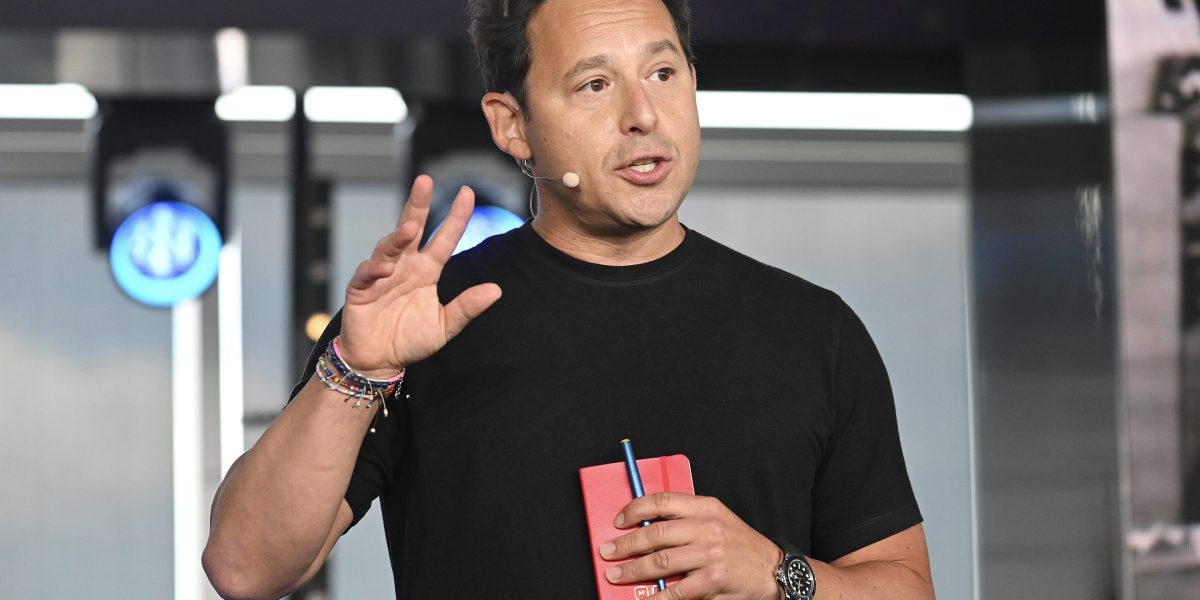
Joyner’s latest project on the online education platform edX, an experimental pilot titled “Foundations of Generative AI,” is something new, Fortune can exclusively reveal. It uses a virtual avatar named DAI-vid, modeled after Joyner’s own appearance and voice. The avatar delivers lectures while wearing a signature binary-coded bracelet. Joyner explained that if you see him onscreen wearing a bracelet, that’s actually DAI-vid talking.

The rise of the ‘super teacher’

Agarwal became CEO of edX in 2012 for exactly this outcome, when Harvard and MIT co-founded the nonprofit based off Agarwal’s MITx initiative. Ever since, he has been using the platform to teach far-reaching “open courses” (also known as MOOCs, or massive online open courses) for years, with the first edX course being an MIT lecture on circuits and electronics that drew 155,000 students from 162 countries within one year, according to edX, and has now surpassed 1 million. The open courses offered by edX have since grown to over 2,000 online courses reaching over 17 million people.

The organization has grown from a nonprofit, jointly founded by Harvard and MIT with $30 million investments from each, into a for-profit entity following its acquisition by 2U for $800 million in 2021, when Agarwal became 2U’s chief academic officer. With edX now firmly in the for-profit area of open courses, competing against players such as Coursera, profit is a consideration but edX reiterated to Fortune that this AI pilot is not part of monetization efforts.

In the years since, Agarwal told Fortune, edX has grown to reach millions of people, in line with its mission. For instance, he noted that Harvard’s David Malan has taught an online course on edX that has drawn over 7 million users, while Agarwal’s own circuits course has been taken by at least a million students worldwide. Agarwal said he strongly believes that AI technology will help more professors reach similar millions of people, and that’s why he approached Joyner about the idea of an AI-generated open course.

Agarwal said Joyner is his “go-to person for things like this” and mentioned how much Joyner has done to democratize online learning, including his computer science degree recognized by, among others, Fast Company for its low-cost accessibility. Stressing that the course was developed as an experimental pilot, they said rhey want to harvest feedback and learnings.

At the time, Joyner was developing a new generative AI module for the aforementioned online computer science program, specifically the Master of Science degree. He had two bad options: a text-based format that could be easily updated but boring, and a filmed course that would be outdated within months, at the rate of technological progress. Using AI tools offered a way for him to do both, he realized. The result is Foundations of Generative AI: a three-week course on edX that feels like a timely video course but can be edited and updated by Joyner with the help of AI tools at any point.

The course introduces Joyner’s avatar—DAI-vid—upfront, so students know they’re watching AI-generated instruction. The avatar is clearly identified with a visible indicator: a bracelet created by Joyner’s daughter (which spells AI in binary digits) ensures students always know when the presenter is the AI. Joyner used HeyGen, a generative AI video platform, to create his avatar, training it with a five-minute studio recording that captured his appearance and speech patterns.

Agarwal said he was excited by the results: “AI is augmenting the teacher and turns teachers into super teachers.” Far from eliminating teachers, it is multiplying their reach and impact, he said. “It democratizes teaching.” Everybody can be a great teacher with these AI tools, he insisted, but there’s a catch: these AI tools still don’t substitute for human skills and knowhow.

“If you’re a bad teacher, this isn’t going to make you a good teacher,” Agarwal said. “But if you’re a good teacher, this is going to make it so you can teach a lot more people and teach a lot more subjects and teach in a lot more contexts. But you still have to have that expertise.”

Joyner agreed, clarifying that AI gets added to the relationship after all the intellectual heavy lifting by (the human version of) him is done: “This is an AI assisting an instructor, but the instructor ultimately [is] the author and responsible party for everything.” He said it’s definitely not the case that he’s telling a robot to design his course, it’s more like he’s working with robots to amplify the course delivery once he’s done designing it himself.

Agarwal said he knows many professors “who can write quite well, but are tongue-tied in front of a camera,” lacking the kind of hand gestures, enthusiasm, and even voice inflection that makes for a successful instructor. He explained that he sees AI as part of a natural progression in teaching, noting the huge advances in course instruction from even 10, 20 years ago. The richest colleges and universities were able to improve education, taking one professor’s wonky scribblings and turning them into slick presentations with the help of “graphic designers, video editors, text writers, amazing teaching assistants, all kinds of people—a professor could have a huge team,” Agarwal said. A lot of those functions can now be done by AI, he added, “and every teacher at every college, poor or rich, can have an amazing team and a supporting cast.” He said that instead of harming education, AI will “democratize” it.

For Joyner, working with AI has made course creation a more personal process: “The analogy I have is when I do a traditional course production, it feels like a Marvel big-budget movie production… This [AI process] feels more like an auteur indie film.” He said he feels like this course “captures” him much more—even though it’s DAI-vid talking, not David.

AI-assisted grading

Fortune has previously reported on the thorny question of education in the age of AI. Jure Leskovec, a computer science professor at Stanford and himself a startup founder, told Fortune that he shifted two years ago to completely hand-written and hand-graded essays. Students, especially his teaching assistants, were asking for it because they wanted to be sure they were really learning about the subject and that required a manual process given AI’s capabilities. He said that instead of saving him time, AI has made it so exams take “much longer” to grade, creating “additional work” and “fewer trees in the world” from all the paper he’s printing out.

To be sure, an intensive, semester-long course at Stanford like this one is very different from a three-week open course like Joyner’s. Still, Joyner is taking nearly the opposite tack, prioritizing scale and efficiencies through AI-assisted grading, with safeguards built into the process. Essays are evaluated through a tool called “GradyAI,” and the key thing, according to Agarwal, “is that students learn better from rapid feedback cycles.” He explained that traditionally, students submit an essay, wait a week, and get feedback, but GradyAI makes feedback nearly instant. “And anything a TA would need to escalate, a human can still take over. We see this as a crucible to experiment with the best of both AI and human teaching.”

When asked about potential mistakes or even hallucinations in the grading of papers through AI technology, Agarwal explained that the grading tool provides very detailed feedback, and students can ask for a regrade if they disagree. “Within a minute, GradyAI will have regraded them based on the feedback. And the students can escalate to a faculty member for a live look, if they want to.”

Regarding the subject of cheating and whether students might use AI to write essays, edX told Fortune that GradyAI has cheating detection built into its algorithms that can be turned on or off depending on the application. This works by extracting a student’s skills from their submitted assignments and flagging inconsistencies with the skills that are subsequently displayed. It uses the same skills extraction algorithms to report a student’s skill development over a course as a demonstration of learning progress. 

Agarwal said the system was also designed to accommodate privacy laws and newly emerging regulations in areas like Europe, and this is a bit difficult as it’s such a nascent space. “The laws are changing so fast.”

One of the most transformative aspects is accessibility. The tools allow courses to be instantly translated and altered to fit many different learning styles and needs—including learners with disabilities, or those needing support in different languages. “With one course, I can explode it exponentially a million-fold and truly customize learning to each student,” Agarwal said. He said he envisioned a future where every learner can “zap” a course into their preferred level, language, or pace—radically personalizing education at scale.

The coming tsunami

In a separate interview, Agarwal made clear that he’s a big believer in AI, having spent decades exploring its potential, from building energy-efficient “organic computing” models in the early 2000s to pioneering online learning with edX’s nearly 100 million global learners today. He is incredibly bullish on AI, telling Fortune that this will be “the decade to beat all decades” in terms of technological advancement.

He acknowledged the recent finding from colleagues at MIT that 95% of corporate AI pilots are failing to generate a return on investment, but added that that’s just part of how science works: “I’m not surprised. I mean, I’ve been a technologist long enough [to wonder] why is that even news? Remember, I was becoming an MIT professor in the mid-’80s when the first mobile phone just came out, and it was as big as a coffee machine.” The real breakthrough came decades later. Agarwal said he was able to access the internet in 1987 through his research and “it was crappy, crummy, text-based.” AI, he added, is going to be “bigger than microwave ovens. It’s bigger than the automobile. It’s bigger than, probably the thing that comes closest would be the computer.”

Agarwal also acknowledged the chaos unleashed in job markets and among students, pointing to coding as a specific example. “The boot-camp business completely imploded and … does not exist anymore, pretty much. And it’s because all those entry-level coding jobs went away because coding moved to a higher level.”

Agarwal predicted a “tsunami of people that are coming who are hell-bent on upskilling with AI,” and said he’s working with major corporate clients who “want to upskill tens of thousands of people within their own company … It is much, much easier to upskill an existing employee than try to lay off and hire somebody else. So my sense is that this upskilling tsunami is coming.” (Agarwal declined to name the client, citing confidentiality.)

In other words, millions of people will need new skills, and they might be getting them from a professor’s avatar, wearing a bracelet, with a name like DAI-vid.



Source link

Continue Reading

Business

Shopify president says some of the greatest workers he knows only clock in 40-hour weeks

Published

on


There’s no question that the explosion of ChatGPT and other AI-powered technology has ushered in a new era of productivity, with some leaders even predicting that a four-day work week is closer than ever before. At the same time, the pressure is only intensifying on workers to maximize every advantage

And some business leaders have set extreme examples. Take Nvidia’s CEO, Jensen Huang. Just last week, he admitted that both he and his two children, who also work for the semiconductor manufacturer, work every day of the week—including holidays.

But not everyone believes the future belongs to the workaholics. In fact, some of the best workers Shopify President Harley Finkelstein knows stick to traditional work schedules.

“You don’t have to work 80 hours a week to perform well, to be a high performer,” he said on the Aspirewith Emma Grede podcast. “I know people that work 40 hours a week that are some of the greatest performers ever. They’re just incredibly efficient with their time.”

While most people will still face the occasional late night or weekend email, Finkelstein said real balance comes from tailoring your work rhythm to your life.

“I think this idea of work-life balance is a little bit of a misnomer. I think actually what we’re all searching for is like some sort of harmony,” he added. “There are some Saturdays where I have to work, and there are some Thursday afternoons that I go for a walk with my wife. That’s my version of harmony.”

Be a ‘Swiss army knife’—and work hard when the moment calls

For Finkelstein, hard work has long been part of his DNA. As a teenager with dreams of becoming a DJ, he couldn’t land gigs without experience, so he created his own opportunities.

Later, as a student at the University of Ottawa, he launched a side-gig selling T-shirts to cover rent and support his family. That venture brought him into contact with Tobias Lütke, who was then selling snowboards online using software he had built—software that would eventually become Shopify.

With a law degree, Finkelstein didn’t fit the stereotypical startup mold. But when Lütke invited him to join the fledgling company, he embraced what he later called a “Swiss army knife” role.

“Anything that needed to get done on the legal or business side? I would do it. I made my skills from law school extremely transferable,” he wrote on LinkedIn in 2022.

Even for Finkelstein, 80-hour workweeks weren’t uncommon in those early years. But once his family started to grow, he made adjustments to establish balance in what feels like “one big, meaningful pursuit.”

“Someone asked me how I know I’ve found mine. My answer? Because Monday mornings feel like Saturday mornings,” Finkelstein wrote. “Whatever your mission is, I hope you find the thing that makes Monday feel like Saturday. Because that’s when you know you’re building something that really matters.”

Fortune reached out to Finkelstein for further comment.

Work-life balance isn’t constant

Finkelstein’s view of work-life balance isn’t far from what many other high-performing leaders have argued: harmony isn’t fixed—it shifts with circumstance.

Cisco’s chief product officer Jeetu Patel, for instance, works 18-hour days, seven days a week. But even he insists that balance is possible as long as it is designed intentionally. For Patel, that means making sure his daughter can reach him anytime and never compromising his physical health.

“You have to figure out a way to make sure that it works for you, and you have to make sure that the people around you think that that’s okay,” Patel previously told Fortune. “You have to create that system for yourself. I don’t think anyone else can create it for you.”

Even former President Barack Obama echoed a similar idea earlier this year on The Pivot Podcast, noting that balance often comes in phases and that temporary imbalance can be a necessary part of achieving goals.

“If you want to be excellent at anything—sports, music, business, politics—there’s going to be times of your life when you’re out of balance, where you’re just working and you’re single-minded.”


Source link

Continue Reading

Business

Borrowing by AI companies represents a ‘mounting potential threat to the financial system’: Zandi

Published

on


Tech companies are issuing more debt now than before the dot-com crash as a rapid infrastructure buildout unfolds in the AI boom, Moody’s Analytics Chief Economist Mark Zandi said in a LinkedInpost on Sunday.

Even after adjusting for inflation, big tech companies are issuing more bonds than during the late 1990s. And the companies aren’t just refinancing existing debt—they’re taking on additional debt.

“While the increasingly aggressive (and creative) borrowing by AI companies won’t be their downfall, if they do fall short of investors’ expectations and their stock prices suffer, their debts could quickly become a problem,” Zandi wrote. 

“Borrowing by AI companies should be on the radar screen as a mounting potential threat to the financial system and broader economy.”

The 10 largest AI companies, including Meta, Amazon, Nvidia and Alphabet, will issue more than $120 billion this year, Zandi said in a LinkedIn analysis last week.

And this time is different from dot-com era debt issuance, as internet companies back then didn’t have a lot of debt, he pointed out. Instead, they were funded by stocks and venture capital.

“That’s not the case with the AI boom,” Zandi added.

Even though hyperscalers like Amazon, Google, Meta, and Microsoft could pay for the AI buildout with their profits, bond issuance is the “cheapest and cleanest” way to finance an infrastructure buildout of this scale, which will likely last more than a decade and be worth trillions of dollars, Shay Boloor, chief market strategist at Futurum Equities, told Fortune.

“These companies are a lot more comfortable issuing 10- to 40-year papers, for example, at very low spreads, because the market now views them as quasi-utility names—because they’re building all this infrastructure—not just a pure tech company anymore,” Boloor said.

He added that in the previous six months, tech companies have shown “proof in the pudding” that future demand for AI is booming.

Despite AI bubble concerns, Nvidia delivered a strong earnings report for its third quarter last month, saying its AI data center revenue increased by 66% from last year. 

Still, critics warn that the buildout may not keep up with how rapidly AI is developing.

Computer hardware, which makes up most AI data centers’ cost, may be more susceptible to becoming obsolete and replaced by more advanced technology during the AI boom as opposed to wireless and internet buildouts, much of which still runs today, George Calhoun, professor and director of the Hanlon Financial Systems Center at Stevens Institute of Technology, told Fortune.

“The cycle of innovation in the chip industry is much faster than for wireless technology or fiber optics,” he said explained. “There is a real risk that much of that hardware may become competitively disadvantaged by newer technologies in a much shorter timeframe,” before being fully paid off.

At the same time, big players in the AI boom—namely OpenAI—do not have the profits currently to cushion their massive investments at the moment, increasing their risk, Calhoun said.

“If OpenAI fails, the snowball effect of that is gonna be substantial,” Futuruum Equities’ Boloor said. Though larger tech companies won’t likely be impacted much by a potential OpenAI bust, companies that largely rely on its business like Oracle could, he added.

Still, Boloor is optimistic about the AI buildout, saying the main bottleneck for its success is U.S. energy capacity.

“I think that the risk is that trillions of dollars of AI capacity gets built faster than the North American grid can support it, which could slow realization,” he warned. 


Source link

Continue Reading

Business

International deals race forward to end China’s hold on critical minerals since US can’t do it alone

Published

on


Pini Althaus saw the signs. In 2023, he left the company he founded, USA Rare Earth, to develop critical minerals mining and processing projects in central Asia, after realizing that the U.S. will need all the international help it can get to end China’s supply chain dominance.

“I realized we only have a handful of large critical minerals projects that were going into production between now and 2030,” Althaus, chairman and CEO of Cove Capital, told Fortune. “I understood that we’re going to have to supplement the United States critical minerals supply chain with materials coming in from our allied and friendly countries.”

Over a series of decades, China built up its stranglehold on much of the world’s critical minerals supply chains, including the 17 rare earths, used to make virtually all kinds of high-performance magnets and parts for vehicles, computers, power generation, military defense, and more. The rest of the world deferred to Beijing in exchange for cheap prices.

Amid an ongoing tariff war with the U.S.—and a temporary truce—the Trump administration is racing to build up domestic mining and processing capabilities, while also developing the global partnerships necessary to eventually undermine China, which controls 90% of the world’s rare earths refining.

In October, Trump inked a deal with Australia for both countries to invest $3 billion in critical minerals projects by mid-2026. Australia is home to the largest publicly traded critical minerals miner in the world, Lynas Rare Earths. Trump then signed a series of bilateral critical minerals deals in eastern and southeastern Asia, including Japan, Malaysia, Thailand, Indonesia, and Cambodia. The U.S. also has new deals with Ukraine, Argentina, the Democratic Republic of Congo, Rwanda, Kazakhstan, and more.

Althaus is specifically developing mining and processing facilities for tungsten—a heat-resistant metal used in electronics and military equipment—and rare earths in Kazakhstan and Uzbekistan. He sees the most potential in former Soviet Union nations in central Asia.

“The Soviets spent many decades exploring and developing mines. Many of their databases have been left and are quite meticulous,” Althaus said. “This gives companies looking to develop projects in central Asia a jumpstart compared to what would be here in the United States, where most of the opportunities are greenfield—very early stages, very high risk, and very little appetite for investment.”

In November, the Ex-Im Bank offered Cove Capital a $900 million financing letter of interest for the $1.1 billion Kazakh tungsten projects. A separate letter of interest was received from the U.S. International Development Finance Corporation.

Jeff Dickerson, principal advisor for Rystad Energy research firm, said only a long-term, coordinated effort—essentially a “wartime” approach—both domestically and with international partnerships can lead to success. But it cannot be done without new projects with foreign allies. “The challenge is that the U.S. doesn’t have a strong pipeline of mature mineral projects that are shovel ready,” he said. 

“The cycle of China extracting concessions on the back of mineral geopolitics and weakening the U.S. strategic negotiating position will likely continue without a coordinated, long-term response during the current moment of heightened attention to critical minerals,” Dickerson said, questioning whether the U.S. will maintain a concerted focus for years to come.

New emphasis

The Trump administration is increasingly making financial partnerships with critical minerals developers—even becoming a majority shareholder of U.S. rare earths miner MP Materials—and offering deals for floor-pricing mechanisms to offset China’s recurring dumping practices that aim to eliminate competition.

A native Australian turned New Yorker, Althaus is, naturally, a big fan of this approach. Chinese price dumping has crippled global competition and scared away potential investors, he said.

“By providing a price floor, it removes the question marks; it removes the instability; it removes the most significant risk in funding a project that’s about to go into production,” Althaus said. “It creates a predictability where you can take geology all the way through to profitability. I think there should be a global effort to create transparent markets and prices for the key critical minerals.”

Critical minerals are increasingly included in U.S. negotiations for all foreign deals. In the tariff agreement with Indonesia, for instance, the Asian nation agreed to lift export bans on nickel. The White House leveraged its military support for Ukraine by demanding the rights to its critical minerals in return. And the recent U.S. bailout of Argentina included a partnership on critical minerals mining.

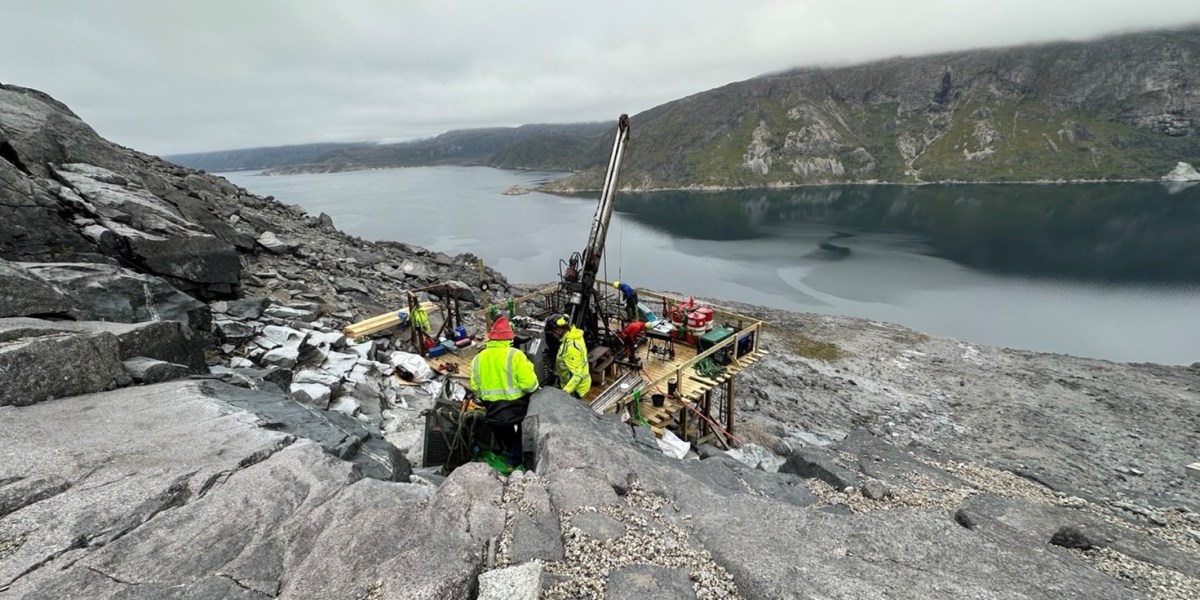
In addition to its strategic defense location, rare earths are even a reason Trump continues to show interest in annexing Greenland from Denmark.

Veteran geologist Greg Barnes, who founded the massive Tanbreez mining project, which remains in development, briefed Trump at the White House during his first presidential term. This year, Critical Metals acquired 92.5% ownership of the Tanbreez project.

Critical Metals CEO Tony Sage is keen to supply the U.S. with desired rare earths, and the company recently received a letter of intent for a $120 million Ex-Im Bank loan. The goal is to start construction by the end of 2026.

“There’s an absolute need to make sure that more than 50% of the supply of these heavy rare earths come from outside of China—mined and processed outside of China,” Sage told Fortune.

Regardless of any long-shot annexation bids, Sage said Greenland can and should be a key ally to the U.S. for critical minerals. “They definitely don’t want to be part of the U.S., but I think they’ll be pro-U.S.,” he said.

For his part, Althaus said he sees all the international deals as progress, and not as competition for his Cove Capital.

“I think it’s a positive, and I think we’ll start to see a lot more happen in the coming months in terms of the U.S. and collaboration with other countries.”


Source link

Continue Reading

Trending

Copyright © Miami Select.