Connect with us

Business

Medicaid paid over $200 million to dead people in 2021 and 2022, federal watchdog says

Published

on


Medicaid programs made more than $200 million in improper payments to health care providers between 2021 and 2022 for people who had already died, according to a new report from the independent watchdog for the Department of Health and Human Services.

But the department’s Office of Inspector General said it expects a new provision in Republicans’ One Big Beautiful Bill requiring states to audit their Medicaid beneficiary lists may help reduce these improper payments in the future.

These kinds of improper payments are “not unique to one state, and the issue continues to be persistent,” Aner Sanchez, assistant regional inspector general in the Office of Audit Services told The Associated Press. Sanchez has been researching this issue for a decade.

The watchdog report released Tuesday said more than $207.5 million in managed care payments were made on behalf of deceased enrollees between July 2021 to July 2022. The office recommends that the federal government share more information with state governments to recover the incorrect payments — including a Social Security database known as the Full Death Master File, which contains more than 142 million records going back to 1899.

Sharing the Full Death Master File data has been tightly restricted due to privacy laws which protect against identity theft and fraud.

The massive tax and spending bill that was signed into law by President Donald Trump this summer expands how the Full Death Master File can be used by mandating Medicaid agencies to quarterly audit their provider and beneficiary lists against the file, beginning in 2027. The intent is to stop payments to dead people and improve accuracy.

Tuesday’s report is the first nationwide look at improper Medicaid payments. Since 2016, HHS’ inspector general has conducted 18 audits on a selection of state programs and had identified that Medicaid agencies had improperly made managed care payments on behalf of deceased enrollees totaling approximately $289 million.

The government had some success using the Full Death Master File to prevent improper payments earlier this year. In January, the Treasury Department reported that it had clawed back more than $31 million in federal payments that improperly went to dead people as part of a five-month pilot program after Congress gave Treasury temporary access to the file for three years as part of the 2021 appropriations bill.

Meanwhile, the Social Security Administration has been making unusual updates to the file itself, adding and removing records, and complicating its use. For instance, the Trump administration in April moved to classify thousands of living immigrants as dead and cancel their Social Security numbers to crack down on immigrants who had been temporarily allowed to live in the U.S. under programs started during the Biden administration.

Join us at the Fortune Workplace Innovation Summit May 19–20, 2026, in Atlanta. The next era of workplace innovation is here—and the old playbook is being rewritten. At this exclusive, high-energy event, the world’s most innovative leaders will convene to explore how AI, humanity, and strategy converge to redefine, again, the future of work. Register now.


Source link

Continue Reading

Business

Pennsylvania nursing home rocked by deadly explosion on Christmas Eve

Published

on


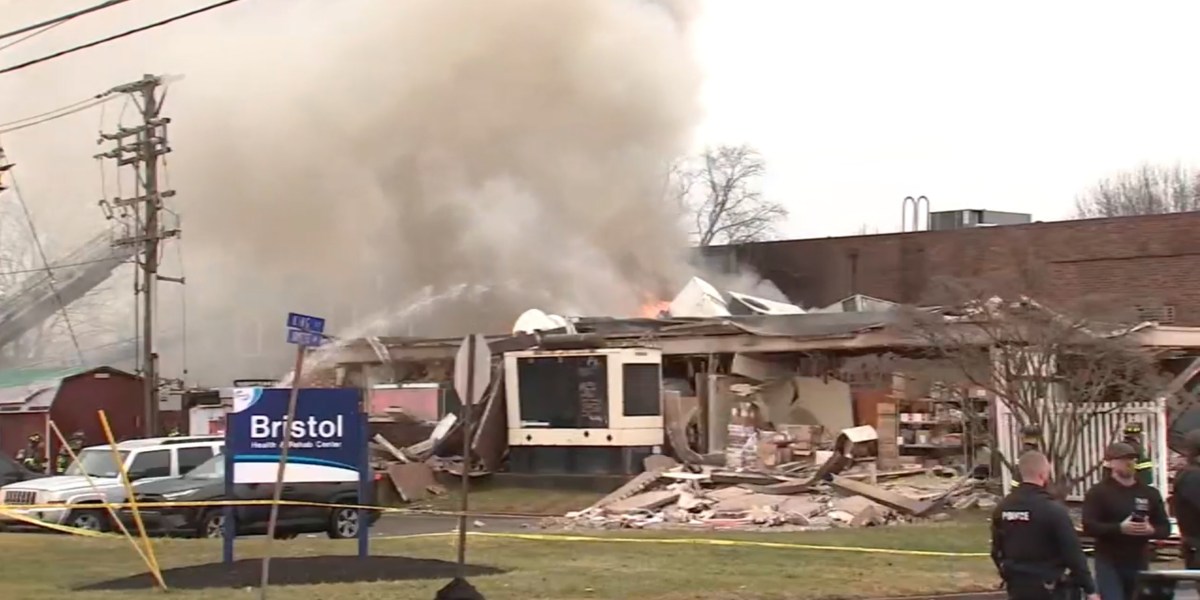
A thunderous explosion Tuesday at a nursing home just outside Philadelphia killed at least two people, collapsed part of the building, sent fire shooting out and left people trapped inside, authorities said.

Pennsylvania Gov. Josh Shapiro said in a later news conference that emergency responders braved the flames, a heavy odor of gas and a second explosion to evacuate residents and employees.

Fire officials said they were in “rescue mode” five hours later, with responders still digging by hand and using search dogs, earth-moving equipment and sonar to locate potential victims.

The explosion happened at Bristol Health & Rehab Center in Bristol Township, just as a utility crew had been on site looking for a gas leak.

Shapiro said a finding that a gas leak caused the explosion was preliminary.

A plume of smoke rose from the nursing home as emergency responders from across the region rushed there.

Authorities did not identify those who died and did not immediately know the total number of people injured.

The town’s fire chief, Kevin Dippolito, said at the Tuesday evening news conference that five people were still unaccounted for, but he cautioned that some may have left the scene with family members.

Shapiro asked his fellow Pennsylvanians to take a moment to pray “for this community, for those who are still missing, for those who are injured, and for those families who are about to celebrate Christmas with an empty chair at their table.”

Dippolito described a chaotic rescue where firefighters found people stuck in stairwells and elevator shafts and pulled residents out of the fiery building through windows and doors. Two people were rescued from a collapsed section of building, he said.

Firefighters handed off patients to waiting police officers outside, including one “who literally threw two people over his shoulders,” Dippolito said. “It was nothing short of extraordinary.” A second explosion erupted during the rescue, he said.

Bucks County emergency management officials said they first received a report of an explosion at approximately 2:15 p.m.

Willie Tye, who lives about a block away, said he was sitting at home watching a basketball game on TV when he heard a “loud ka-boom.”

“I thought an airplane or something came and fell on my house,” Tye said.

He got up to go look and saw “fire everywhere” and people escaping the building. “Just got to keep praying for them,” Tye said.

The local gas utility, PECO, said while its crews were responding to reports of a gas odor at the nursing home, an explosion happened.

“PECO crews shut off natural gas and electric service to the facility to ensure the safety of first responders and local residents. It is not known at this time if PECO’s equipment, or natural gas, was involved in this incident,” the utility said in a statement.

One worker sustained non-life-threatening injuries, the utility said.

Investigators from the Pennsylvania Public Utility Commission’s went to the scene. Finding that the explosion was caused by a gas leak won’t be confirmed until the agency can examine the scene, a utility commission spokesperson said.

Musuline Watson, who said she was a certified nursing assistant at the facility, told WPVI-TV/ABC 6 that, over the weekend, she and others there smelled gas, but “there was no heat in the room, so we didn’t take it to be anything.”

The 174-bed nursing home is about 20 miles (32 kilometers) northeast of Philadelphia. It is newly affiliated with Saber Healthcare Group and had been known until recently as Silver Lake Healthcare Center.

In a statement, Saber called the explosion “devastating.” It said facility personnel had promptly reported a gas smell to PECO before the explosion and that it was working with authorities to ensure the safety and well-being of staff, residents and the community.

The latest state inspection report for the facility was in October, and the Pennsylvania Department of Health found that it was not in compliance with several state regulations.

The inspection report said the facility failed to provide an accurate set of floor plans and properly maintain several stairways.

It said the facility failed to maintain portable fire extinguishers on one of the three levels and failed to provide the required “smoke barrier partitions,” which are designed to contain smoke on two floors.

According to Medicare.gov, the facility underwent a standard fire safety inspection in September 2024, during which no citations were issued. Medicare’s overall rating of the facility is listed as “much below average,” with poor ratings for health inspections in particular.

___

Levy and Scolforo reported from Harrisburg, Pennsylvania. Associated Press reporters Holly Ramer in Concord, N.H., Michael Casey in Boston and Hannah Schoenbaum in Salt Lake City contributed.


Source link

Continue Reading

Business

‘Never seen such heroism’: Christmas Eve bravery on display as rescuers rush into burning nursing home that rocked Pa. city for miles around

Published

on


Rescuers braved shooting flames, falling debris and the threat of more explosions to evacuate dozens of nursing home residents after a blast ripped through a Pennsylvania facility, killing a resident and an employee, and setting off a frantic search of the wreckage.

Officials said Wednesday they’d located everybody after hours of looking.

The police chief of Bristol Township said he’d “never seen such heroism,” and a speech therapist working there described feeling the building shake in Tuesday’s blast and hurriedly wheeling out a bed-bound resident, bed and all.

“They were running into a building that I could — from 50 feet away — could still smell gas, and walls that looked like they were going to fall down,” Police Chief Charles Winik told reporters Wednesday.

Responders spent hours digging through the badly damaged building and checking with hospitals into the night Tuesday to locate the missing. But officials said they didn’t yet know the cause of the explosion, even though a utility crew had been on site investigating a reported gas leak.

The blast sent 20 others to hospitals, including one person in critical condition. The rest of the 120 residents were transferred to nearby nursing homes, officials said.

The Bucks County coroner’s office said the employee who died was 52-year-old Muthoni Nduthu. Authorities didn’t immediately identify the resident who died at a Philadelphia hospital. Both victims were women.

Nduthu’s sister said she was a great mother to her sons, a great wife, a devout Catholic and very involved in the community. A Kenyan immigrant, she went to nursing school, loved to cook and was a hard worker, her sister, Rose Muema, said.

“She was an immigrant who came to make a difference in this country, and she did that,” Muema said.

Nineteen people were still hospitalized Wednesday, Winik said.

The explosion was so powerful that it shook nearby houses for blocks in Bristol, about 20 miles (32 kilometers) northeast of Philadelphia.

A wing of the facility with the kitchen and cafeteria was almost entirely destroyed, leaving the roof caved in, sections of walls completely missing and windows on adjoining walls blown out. Debris littered the grounds.

Winik said the scale of the casualties could have been much worse. Police and firefighters flooded in from the area, as staff from a hospital next door, nursing home employees and neighbors rushed to help evacuate people. One person was resuscitated at a hospital, officials said.

They found people trapped in stairways and elevator shafts and under rubble, authorities said. Some residents couldn’t walk, and some were in wheelchairs or bed-bound. A second explosion happed as rescues were underway.

Speech therapist Julia Szewczyk described the experience as terrifying and devastating.

She was in a group therapy session in another part of the building when it began to shake. She and other staff rushed to evacuate residents across a street to safety.

“And then the next thing was, to go inside and grab more people,” Szewczyk, 25, said.

They dragged out a bed-bound resident into the cold, then Szewczyk ran back into the burning building twice to grab blankets from a supply closet. One coworker got trapped inside an elevator when the power went out, she said.

Outside, during the rescue, employees had been looking for Nduthu, Szewczyk recalled.

Federal agencies were set to assist in the investigation, but the collapsed walls and roof needed to be cleared first, Winik said.

A utility crew was responding to reports of a gas odor when the explosion happened, authorities have said. The local gas utility, PECO, said the crew shut off natural gas and electric service to the facility, but didn’t know if utility equipment or gas was involved in the blast.

Musuline Watson, who said she was a certified nursing assistant at the facility, told WPVI-TV that staff smelled gas over the weekend, but did not initially suspect a serious problem because there was no heat in that room. Other employees told Szewczyk they smelled gas earlier in the day Tuesday, Szewczyk said.

The nursing home recently became affiliated with Ohio-based Saber Healthcare Group, which called the explosion “devastating” and said in a statement that facility personnel promptly reported the gas odor to the local gas utility before the blast.

Willie Tye, who lives about a block away, said he was watching a basketball game when he heard a loud boom.

“I thought an airplane or something came and fell on my house,” he said.

___

Levy and Scolforo reported from Harrisburg, Pennsylvania. Associated Press reporters Mingson Lau in Bristol, Pennsylvania; Holly Ramer in Concord, New Hampshire and Michael Casey in Boston contributed to this report.


Source link

Continue Reading

Business

Down Arrow Button Icon

Published

on


After a half-century immersed in the world of trade, customs broker Amy Magnus thought she’d seen it all, navigating mountains of regulations and all sorts of logistical hurdles to import everything from lumber and bananas to circus animals and Egyptian mummies.

Then came 2025.

Tariffs were imposed in ways she’d never seen. New rules left her wondering what they really meant. Federal workers, always a reliable backstop, grew more elusive.

“2025 has changed the trade system,” says Magnus. “It wasn’t perfect before, but it was a functioning system. Now, it is a lot more chaotic and troubling.”

Once hidden cogs in the international trade machine, customs brokers are getting a rare spotlight as President Donald Trump reinvents America’s commercial ties with the world. If this breathless year of tariffs amounts to a trade war, customs brokers are its front lines.

Few Americans have been exposed as exhaustively to every fluctuation of trade policy as the customs broker. They were there in the opening days of Trump’s second term, when tariffs were announced on Canada and Mexico, and two days later, when those same levies were paused. They were there through every rule on imports of steel and seafood, on cars and copper, on polysilicon and pharmaceuticals, and on and on. For every tariff, for every carve-out, for every order, brokers have been left to translate policy into reality, line by line and code by code, in a year when it seemed every passing week brought change.

“We were used to decades of a certain way of processing, and from January to now, that universe has been turned kind of upside-down on us,” says Al Raffa, a customs broker in Elizabeth, New Jersey, who helps shepherd containerloads of cargo into the U.S. packed to the brim with everything from rounds of brie to boxes of chocolate.

Each arrival of products imported to the country requires filings with U.S. Customs and Border Protection and often, other agencies. Importers often turn to brokers to handle the regulatory legwork and, with a spate of new trade rules unleashed by the Trump administration, they’ve seen their demand grow alongside their workloads.

Many shipments that entered duty free now are tariffed. Other imports that had minimal levies that might cost a company a few hundred dollars have had their bills balloon to thousands. For Raffa and his crew, the ever-expanding list of tariffs means a given product could be subjected to taxes under multiple separate tariff lines.

“That one line item of cheese that previously was just one tariff, now it could be two, three, in some cases five tariff numbers,” says 53-year-old Raffa, who has had jobs in trade since he was a teenager and who has a button emblazoned with “Make Trade Boring Again.”

Government regulations have always been a reality for brokers, and the very reason for their existence. When thick tomes of trade rules changed in the past, though, they typically were issued long ahead of their effective dates, with periods for comment and review, each word of policy crafted in an attempt to project clarity and definition.

With Trump, word of a major change in trade rules might come in a Truth Social post or an oversized chart clutched by the president in a Rose Garden appearance.

“You’d be remiss not to be looking at the White House website on a daily basis, multiple times a day, just to see what executive order is going to be announced,” Raffa says.

Each announcement sends brokerage firms into a scramble to attempt to dissect the rules, update their systems to reflect them and alert their customers who may have shipments en route and for whom any shift in tariffs could mean a major hit to their bottom line.

JD Gonzalez, a third-generation customs broker in Laredo, Texas, and president of the National Customs Brokers and Forwarders Association of America, says the volume and speed of changes have been challenging enough. But the wording of White House orders has often left more unanswered questions than brokers are accustomed to.

“The order is kind of vague sometimes, the guidance that’s being provided is sometimes murky, and we’re trying to make the determination,” 62-year-old Gonzalez says.

Gonzalez rattles off 10-digit tariff codes for alcohol and doors and recites the complicated web of rules that determine the duties on a chair with a frame made of steel produced in the U.S. but processed in Mexico. As brokers’ work has grown tougher, he says some of their firms have begun charging customers more for their services because each item they’re responsible for tracking on a bill of lading takes longer.

“You double the time,” he says.

Brokers can’t help but see the imprints of their work everywhere they go. Gonzalez looks at a T-shirt tag and thinks of what a broker did to get it into the country. Magnus sees Belgian chocolate or Chinese silk and is awed, despite all the things that could have kept something from landing on a store shelf, that it still arrived. Raffa walks through the supermarket, picks up a can of artichoke hearts, and considers every possible regulation that might apply to secure its import into the country.

It has been heartening for brokers, who existed in the gray arcana of hidden bureaucracy unseen by most Americans, to now earn a bit more recognition.

“It was maybe taken for granted how that wonderful piece of gourmet cheese got on the shelf, or that Gucci bag,” says Raffa. “Up until this year, people were clueless what I did.”

Magnus, who is in her 70s and based on Marco Island, Florida, spent 18 years at U.S. Customs before starting at a brokerage in 1992. She came to find comfort in the precision of rules governing every import she cleared the way for, from crude oil to diamonds.

“We don’t like to have any doubt, we don’t like to leave anything up to interpretation,” she says. “When we ourselves are struggling, trying to interpret and understand the meaning of some of these things, it is a very unsettling place to be.”

It’s not just the White House orders that have complicated her work.

The Department of Government Efficiency cost-cutting blitz under billionaire Elon Musk led to layoffs and retirements of trusted government workers that brokers turn to for guidance. A shutdown slowed operations at ports. And fear of being out of step with the administration has some federal employees cautious about decoding trade orders, making answers on interpretation of tariff rules sometimes tough to come by.

Magnus was befuddled by moves that seemed at odds with everything she knew of trade policy. Canada as adversary? Switzerland subjected to 39% tariffs? It defied how she had come to see the choreography of cargo and what it says about the world.

“It’s like an incredible ballet to be able to trade with all these countries all over the world,” she says. “In my own mind, I always felt that as long as we were trading and we were friendly with each other, we were reducing the chance of war and killing each other.”

Work has been so hectic this year that Magnus hasn’t managed to take a vacation. Weekends have so frequently been upended by Friday afternoon edicts announcing a tariff is going into effect or being taken away that it has become an inside joke with colleagues.

“It’s Friday afternoon,” she says. “Is everybody watching?”

A couple hours after Magnus repeats this, the next White House order is posted, undoing a slew of tariffs on agricultural products and sending brokers into another scurry.



Source link

Continue Reading

Trending

Copyright © Miami Select.