Connect with us

Business

Medicaid paid more than $200 million to dead people, and Trump is rewriting privacy laws to fix it

Published

on


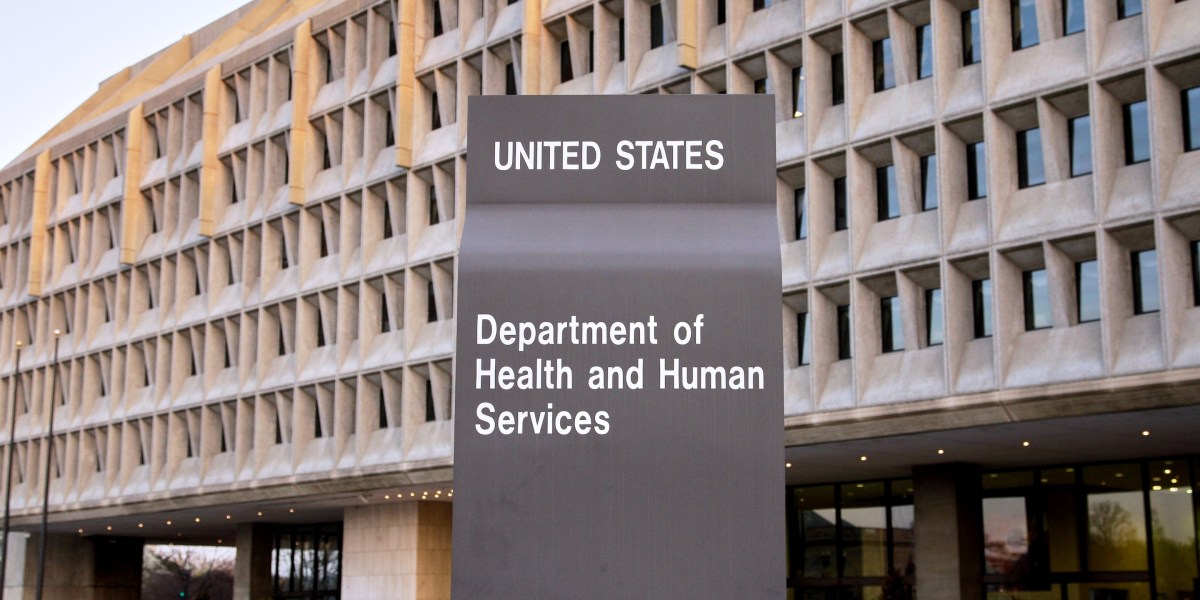
Medicaid programs made more than $200 million in improper payments to health care providers between 2021 and 2022 for people who had already died, according to a new report from the independent watchdog for the Department of Health and Human Services.

But the department’s Office of Inspector General said it expects a new provision in Republicans’ One Big Beautiful Bill requiring states to audit their Medicaid beneficiary lists may help reduce these improper payments in the future.

These kinds of improper payments are “not unique to one state, and the issue continues to be persistent,” Aner Sanchez, assistant regional inspector general in the Office of Audit Services told The Associated Press. Sanchez has been researching this issue for a decade.

The watchdog report released Tuesday said more than $207.5 million in managed care payments were made on behalf of deceased enrollees between July 2021 to July 2022. The office recommends that the federal government share more information with state governments to recover the incorrect payments — including a Social Security database known as the Full Death Master File, which contains more than 142 million records going back to 1899.

Sharing the Full Death Master File data has been tightly restricted due to privacy laws which protect against identity theft and fraud.

The massive tax and spending bill that was signed into law by President Donald Trump this summer expands how the Full Death Master File can be used by mandating Medicaid agencies to quarterly audit their provider and beneficiary lists against the file, beginning in 2027. The intent is to stop payments to dead people and improve accuracy.

Tuesday’s report is the first nationwide look at improper Medicaid payments. Since 2016, HHS’ inspector general has conducted 18 audits on a selection of state programs and had identified that Medicaid agencies had improperly made managed care payments on behalf of deceased enrollees totaling approximately $289 million.

The government had some success using the Full Death Master File to prevent improper payments earlier this year. In January, the Treasury Department reported that it had clawed back more than $31 million in federal payments that improperly went to dead people as part of a five-month pilot program after Congress gave Treasury temporary access to the file for three years as part of the 2021 appropriations bill.

Meanwhile, the SSA has been making unusual updates to the file itself, adding and removing records, and complicating its use. For instance, the Trump administration in April moved to classify thousands of living immigrants as dead and cancel their Social Security numbers to crack down on immigrants who had been temporarily allowed to live in the U.S. under programs started during the Biden administration.

Join us at the Fortune Workplace Innovation Summit May 19–20, 2026, in Atlanta. The next era of workplace innovation is here—and the old playbook is being rewritten. At this exclusive, high-energy event, the world’s most innovative leaders will convene to explore how AI, humanity, and strategy converge to redefine, again, the future of work. Register now.


Source link

Continue Reading

Business

Larry Ellison’s $40 billion pledge to son’s Paramount deal shows a shift in billionaire giving

Published

on


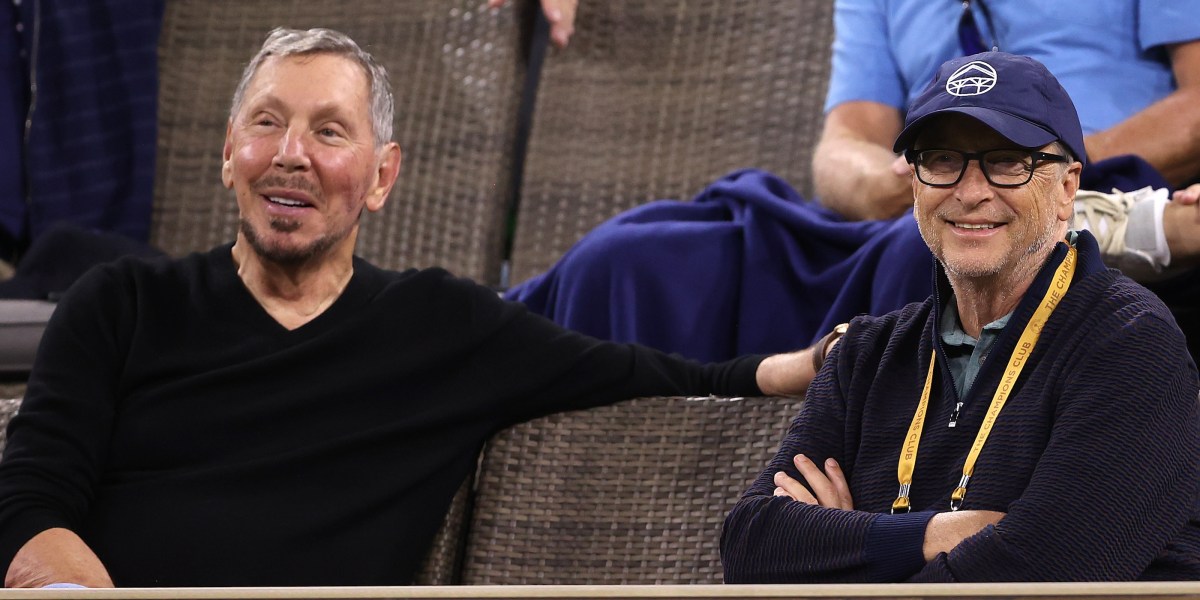
Larry Ellison, the 81-year-old Oracle co-founder and longtime mogul of tech and sport, recently sent ripples through the business and philanthropic worlds by revealing plans to devote $40 billion of his own fortune to the Paramount–Skydance merger — a deal that redefines not only Hollywood’s future but Ellison’s own legacy.

Ellison’s $40 billion promise to personally back his son’s Paramount deal is not a charitable donation in the classic sense. It is something more emblematic of this billionaire era: philanthropic capitalism, where vast personal fortunes are deployed through markets rather than around them, and “giving it away” increasingly means reshaping industries instead of writing checks to traditional charities.

It lands at the exact moment that the older model of billionaire philanthropy—epitomized by Warren Buffett and Bill Gates—is visibly winding down, creating a stark contrast between giving that flows through foundations and giving that rides on deal sheets.

Ellison’s move is as audacious as it is intimate. His son, David Ellison, runs Skydance, the upstart studio that has been circling Paramount and now aims to fuse old‑line Hollywood assets with a tech‑forward, streaming‑native strategy. Ellison’s commitment, structured as a personal guarantee of more than $40 billion in equity and debt support for Paramount’s bid, effectively turns a hostile takeover into a family‑backed capital project. It is a father’s show of confidence, but it is also a data‑era mogul’s attempt to wire his worldview into the next generation of media infrastructure.

This would be notable even if Ellison had never uttered a word about philanthropy. But the Oracle cofounder has publicly pledged to give away at least 95% of his fortune over time, joining the cohort of mega‑donors who say they do not intend to die with most of their wealth. In that context, the Paramount guarantee looks less like a side bet and more like a preview of how he intends to fulfill that promise: not primarily through anonymous grants to charities, but by moving enormous sums into entities he believes can “fix” big systems—medicine, software, and now entertainment.

Growing divide in billionaire giving

That philosophy distinguishes Ellison from someone like MacKenzie Scott, who has become the avatar of a more traditional, community‑centered model of billionaire giving. Scott has directed tens of billions of dollars in largely unrestricted donations to thousands of nonprofits, with a deliberate emphasis on organizations serving marginalized communities—ranging from housing and food security groups to HBCUs and grassroots racial‑justice networks. Her theory of change is straightforward: transfer resources quickly to on‑the‑ground organizations, trust local leaders to allocate them, and avoid the overhead and power concentration of a large foundation.

Ellison, by contrast, has long preferred to seed institutions that look more like extensions of his professional life. His largest publicized gifts have gone into cutting‑edge medical research and institutions that blend science and technology, such as cancer and AI‑driven medicine initiatives. The Paramount commitment extends that pattern into culture. Rather than funding media literacy programs or journalism nonprofits, Ellison is putting his thumb on the scale of who owns the pipes themselves: the studios, libraries, and platforms that produce and distribute stories worldwide.

He is not alone in this shift. Mark Zuckerberg and Priscilla Chan’s Chan Zuckerberg Initiative is following a similar arc. After an early phase that encompassed education reform and policy‑adjacent work, CZI has doubled down on scientific research, AI‑enabled biology, and large‑scale research infrastructure. Structurally, it operates less like a traditional foundation and more like a hybrid of investment fund and lab network, with a focus on building tools and platforms that other scientists and institutions will use. When these donors talk about “impact,” they are usually referring to rewiring how core systems operate, not simply amplifying the budgets of organizations operating within those systems.

Call it the billionaire bifurcation. On one side are philanthropists like Scott, whose giving resembles turbocharged versions of 20th‑century philanthropy: extensive checks to nonprofits, universities, and community groups, often with fewer strings attached and more attention to equity. On the other hand, are Ellison and Zuckerberg, who are pioneering a model in which philanthropy is almost indistinguishable from industrial strategy. The money may technically sit in philanthropic vehicles. Still, it flows into companies, labs, and platforms that donors help control, and that operate squarely inside the markets where their fortunes were made.

The limitations of traditional philanthropy

That raises uncomfortable questions about power and accountability. When $40 billion is pledged to underpin a media merger, framed in part as a long‑term contribution to cultural and technological progress, who gets to decide what counts as a public benefit? Shareholders will certainly have a say. Regulators may weigh in. But unlike a conventional grant to a food bank or a legal‑aid nonprofit, the social returns of a fortified Hollywood empire are diffuse, contested, and mediated through subscription prices, content strategies, and labor negotiations.

Yet philanthropic capitalism also speaks to a real anxiety among today’s richest founders: the sense that traditional philanthropy is too incremental for problems they perceive as structural and technological. For Ellison, building a stronger, AI‑savvy studio system may feel more consequential than funding a scattershot portfolio of media nonprofits. If you believe the future is written in code and distributed through a handful of global platforms, owning a bigger piece of that machinery can look like the most responsible way to spend a fortune you’ve vowed to surrender.

Ellison’s $40 billion bet on Paramount and his son’s vision may ultimately be judged as a savvy business maneuver, a risky act of paternal devotion, or a bold experiment in legacy‑building. But in the emerging playbook of billionaire giving, it already has a clear place. This is what it looks like when “giving it away” means never really letting it leave the ecosystem that created it—when philanthropy moves off the foundation ledger and onto the deal sheet, and capitalism itself becomes the main instrument of charity.

For this story, Fortune journalists used generative AI as a research tool. An editor verified the accuracy of the information before publishing. 


Source link

Continue Reading

Business

Americans enjoy one refuge from inflation: The cheapest gas prices in years

Published

on


This holiday season, many U.S. drivers are getting the gift of lower gas prices.

According to data from motor club AAA, December has been the cheapest month for prices at the pump this year. The national average for unleaded gasoline has stayed below the $3 mark since Dec. 2, falling to its lowest level of about $2.85 a gallon on Monday.

That figure has inched up slightly since, sitting at closer to $2.86 a gallon Tuesday — but overall, consumers hitting the road ahead of the Christmas holiday will likely continue to see mild prices.

As always, some states have cheaper averages than others, due to factors ranging from nearby refinery supply to local fuel requirements. Hawaii had the highest average of about $4.44 a gallon on Tuesday, per AAA — followed by $4.30 in California and $3.92 in Washington. Meanwhile, Oklahoma had the lowest average at about $2.30 per gallon, followed by nearly $2.42 in both Arkansas and Iowa.

Still, nationwide, unleaded gasoline is down more than 18 cents than it was at this time last year, and 21 cents from a month ago. So far, AAA says that prices seen this month mark the cheapest December for gas prices since 2020, when the COVID-19 pandemic roiled the economy.

The travel organization notes that this month’s cheaper prices arrive as supply remains strong. Crude oil, the main ingredient in gasoline, has also been at a relatively mild level — with West Texas Intermediate remaining below the $60 per barrel mark for most of December.

Relief at the pump is welcome for consumers who have been feeling higher prices in other parts of their budgets — as worries about the costs of goods ranging from groceries to holiday gifts rise amid ongoing inflation and U.S. President Donald Trump’s tariffs on foreign imports.

Government data actually showed that consumer prices cooled in November, rising at just 2.7% from a year earlier. But year-over-year inflation still remains well above the Federal Reserve’s 2% target — and economists quickly warned that last month’s numbers were suspect because of delays and possible distortions from the 43-day federal shutdown.

Most Americans have continued to express anger and frustration about the high cost of living — as well as an uncertain job market. On Tuesday, the Conference Board said that its consumer confidence index fell in December to its lowest level since April.


Source link

Continue Reading

Business

Republican lawmaker and notable Trump critic Ben Sasse announces stage 4 cancer

Published

on


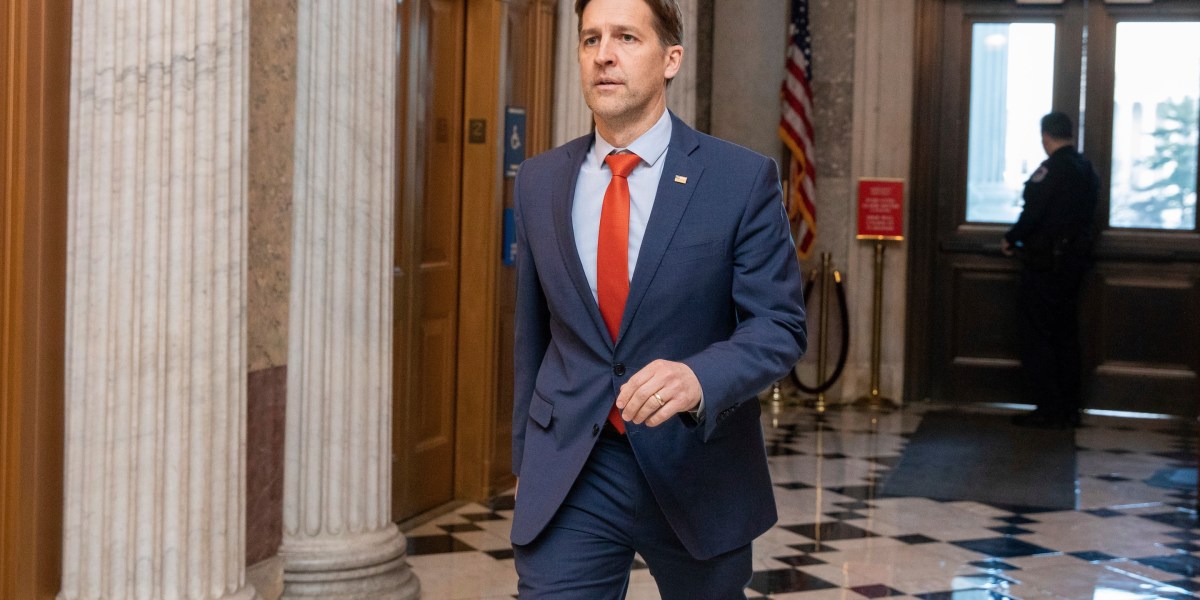
Former Nebraska U.S. Sen. Ben Sasse, a conservative who rebuked political tribalism and stood out as a longtime critic of President Donald Trump, announced Tuesday said he was diagnosed with advanced pancreatic cancer.

Sasse, 53, made the announcement on social media, saying he learned of the disease last week and is “now marching to the beat of a faster drummer.”

“This is a tough note to write, but since a bunch of you have started to suspect something, I’ll cut to the chase,” Sasse wrote. “Last week I was diagnosed with metastasized, stage-four pancreatic cancer, and am gonna die.”

Sasse was first elected to the Senate in 2014. He comfortably won reelection in 2020 after fending off a pro-Trump primary challenger. Sasse drew the ire of GOP activists for his vocal criticism of Trump’s character and policies, including questioning his moral values and saying he cozied up to adversarial foreign leaders.

Sasse was one of seven Republican senators to vote to convict the former president of “ incitement of insurrection ” after the Jan. 6, 2021, attack on the U.S. Capitol. After threats of a public censure back home, he extended his critique to party loyalists who blindly worship one man and rejected him for his refusal to bend the knee.

He resigned from the Senate in 2023 to serve as the 13th president of the University of Florida after a contentious approval process. He left that post the following year after his wife was diagnosed with epilepsy.

Sasse, who has degrees from Harvard, St. John’s College and Yale, worked as an assistant secretary of Health and Human Services under President George W. Bush. He served as president of Midland University, a small Christian university in eastern Nebraska, before he ran for the Senate.

Sasse and his wife have three children.

“I’m not going down without a fight. One sub-part of God’s grace is found in the jawdropping advances science has made the past few years in immunotherapy and more,” Sasse wrote. “Death and dying aren’t the same — the process of dying is still something to be lived.”

Join us at the Fortune Workplace Innovation Summit May 19–20, 2026, in Atlanta. The next era of workplace innovation is here—and the old playbook is being rewritten. At this exclusive, high-energy event, the world’s most innovative leaders will convene to explore how AI, humanity, and strategy converge to redefine, again, the future of work. Register now.


Source link

Continue Reading

Trending

Copyright © Miami Select.