Connect with us

Business

Matthew Dowd cites ‘right wing media mob’ in firing from MSNBC

Published

on


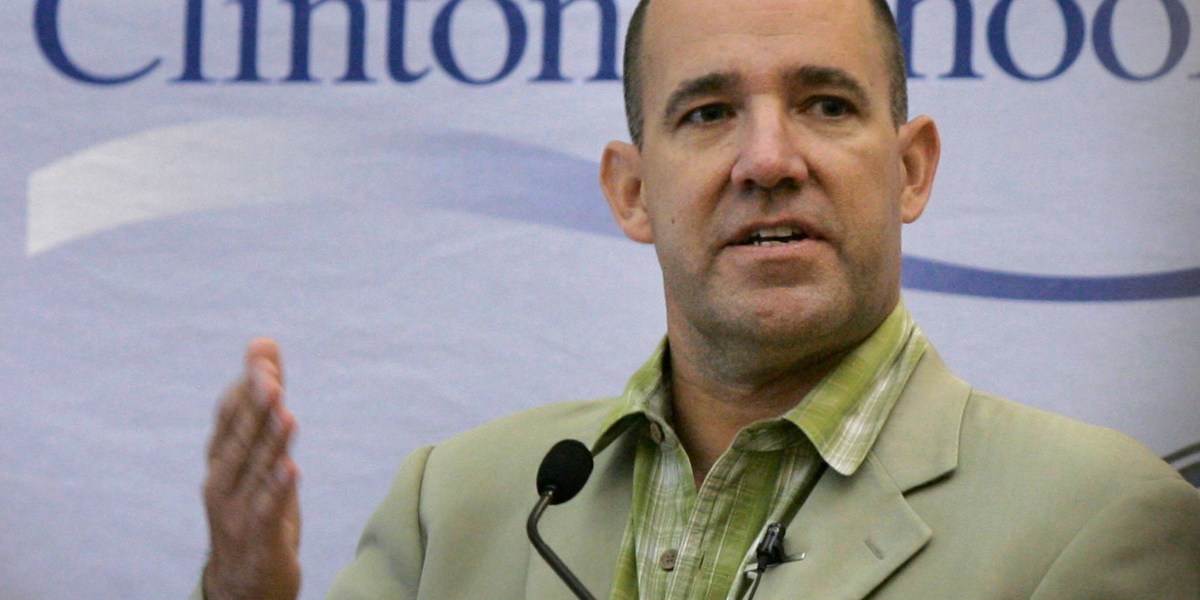
Political analyst Matthew Dowd says MSNBC reacted to a “right wing media mob” in firing him for commentary about hateful rhetoric that aired on the network shortly after early reports this week that conservative activist Charlie Kirk had been shot.

In a Substack post Friday, Dowd admitted to being “down and a bit disheartened.” The former aide to George W. Bush, who was a political analyst at ABC News for nearly 15 years before joining MSNBC in 2022, detailed a long-running grudge that President Donald Trump had against him since his first term.

Dowd was fired after his commentary on Kirk, in which he said “hateful thoughts lead to hateful words which ultimately lead to hateful actions.” MSNBC President Rebecca Kutler called the remarks insensitive and apologized to viewers. Dowd apologized, too, saying he didn’t mean to imply Kirk was to blame for the violence that killed him.

At the time he spoke, Dowd wrote, he was responding to reports of a shooting at Kirk’s appearance, when it wasn’t even clear that Kirk has been hit. He said on the air that Kirk was a divisive and polarizing figure. He thought “how could anyone disagree with this?” he wrote on Substack. “I guess I was naive.”

“The right wing media mob ginned up, went after me on a plethora of platforms, and MSNBC reacted to that mob,” Dowd wrote on Substack. “Even though most at MSNBC knew my words were being misconstrued, the timing of my words forgotten … and that I apologized for any miscommunication on my part, I was terminated by the end of the day.”

But people at MSNBC knew right away that his words were inappropriate, and the decision to fire Dowd was not the result of outside pressure, said an executive at the network, who spoke under condition of anonymity because the person was not authorized to talk about personnel issues.

A corporate message on Dowd’s firing

Reverberations over the firing continued Friday, with a memo sent to Comcast employees by Brian Roberts, CEO of the company that owns MSNBC; Comcast President Mike Cavanagh; and Mark Lazarus, CEO of Versant, the spinoff company that is to take over MSNBC ownership — if it receives Trump administration approval.

Without using Dowd’s name, it referred to the firing and said his comments were “at odds with fostering civil dialogue and being willing to listen to the points of view of those who have differing opinions. We should be able to disagree, robustly and passionately, but, ultimately with respect. We need to do better.”

The letter urged employees to “engage with respect, listen, and treat people with kindness.”

The dismissal and Trump’s previous criticisms of Comcast and MSNBC raise questions about whether he will take further actions to constrain TV networks he views as adversarial. In an August social media post, the president wrote that it was “so much fun to watch their weak and ineffective owner, ‘Concast,’ headed by dopey Brian Roberts, hopelessly and aimlessly flailing in the wind in an attempt to disassociate itself from the garbage that they created!”

In his Substack post, Dowd said he had been very critical of Trump and the Republican party while at ABC News, and said Trump and White House staff called the head of ABC News to try and get him fired. “ABC News folks came to me a number of times after that and tried to get me to not be so critical,” he said.

Asked about that, White House communications director Steven Cheung said, “Matthew Dowd is an irrelevant piece of s-— loser who has debased himself for what he disgustingly said in the aftermath of Wednesday’s tragedy.”

___

AP writer Josh Boak in New York contributed to this report.

Fortune Global Forum returns Oct. 26–27, 2025 in Riyadh. CEOs and global leaders will gather for a dynamic, invitation-only event shaping the future of business. Apply for an invitation.


Source link

Continue Reading

Business

AI is taking over managers’ busywork—and it’s forcing companies to reset expectations

Published

on


AI isn’t just a new tool for the modern workplace; it’s already quietly reshaping how some companies are organized. Companies including Amazon, Moderna, and McKinsey are already eliminating management layers, working to flatten organizations, and deploying AI agents to automate routine work. 

As AI rewrites the corporate org chart, humans can avoid some managerial drudgery, according to industry leaders at Fortune’s Brainstorm AI conference. Managers currently spend a lot of time bogged down with digital tools and administrative tasks, Danielle Perszyk, a Cognitive Scientist at Amazon’s AGI SF Lab, said: “Whether you are a manager or an IC, you are tethered to your computer screen, and all of the productivity apps that we are using are actually undermining our productivity.”

AI agents functioning as “universal teammates” and doing some of these tasks could help managers escape this cycle, Perszyk said, allowing them to focus on strategy. Aashna Kircher, Group General Manager in the Office of the CHRO at Workday, said this could free up managers’ time for other kinds of work. “The role of the manager will very much be as a coach and enabler and a team work director, which theoretically has always been the role,” she said.

Toby Roberts, SVP of Engineering and Technology at Zillow, said that the shift toward AI agents could fundamentally change management structure. Escaping day-to-day minutiae could allow managers to oversee larger teams, he said.

However, as AI automates more of managers’ work, companies may need to reset expectations around what management means in the AI age.

“Historically, we’ve measured management by the output of their teams, not necessarily by the human qualities of being a manager,” Kircher said. Organizations need to build “accountability and incentive structures around rewarding the things that are going to be absolutely critical moving forward for people leaders.”

What AI can’t do

AI can also have negative downstream effects on interpersonal relationships if it is overused or misused. When managers over-rely on AI for collaborative work, organizations risk deteriorating people’s ability to work together effectively, said to Kate Niederhoffer, Chief Scientist and Head of BetterUp Labs.

“Direct reports’ perceptions of managers go down the more they perceive AI and agents to be used in moments of recognition or providing constructive feedback,” Niederhoffer said. “People perceive that humans are better at these empathetic and more essentially human tasks.”

Some managers already struggle with the emotional side of leadership, with many becoming “accidental managers”—employees who were promoted for their professional talents rather than people skills. 

But AI’s “synthetic empathy”—even if it’s sometimes more consistent than human interactions—is not the answer, said Stefano Corazza, Head of AI Research at Canva. “The more AI there is, the more authenticity is valued,” he said. “If your manager really shows that he will spend time with you and cares, that goes a long way.”


Source link

Continue Reading

Business

Jeff Williams, who just retired from Apple after 27 years, got called to join Disney’s board

Published

on


The Walt Disney Company is looking to expand its board of directors, and it’s nominated Jeff Williams, the former Apple COO once considered heir apparent to CEO Tim Cook, to join. Williams, who served as Apple’s chief operating officer from 2015 until stepping down in July and finally retiring on Nov. 15, will stand for election as an independent director at Disney’s 2026 annual shareholders meeting.

“Jeff Williams is a highly accomplished executive who for decades helped steward one of the most innovative and admired companies that serves billions of consumers across the globe,” James Gorman, chairman of the board at Disney, said in a press release. “Jeff’s proven leadership and unique experience at the intersection of technology, global operations and product design make him a valuable nominee to our board as the company continues to focus on creative storytelling and groundbreaking innovation.”

​Adding Williams, an Apple veteran of 27 years, would expand Disney’s board from 10 to 11 members. The current board includes James Gorman as chairman, along with GM CEO Mary Barra; former Cisco executive Amy Chang; former Sky CEO Jeremy Darroch; Permira senior advisor Carolyn Everson; Michael Froman, president of the Council on Foreign Relations; Disney CEO Bob Iger; WE Family offices CEO and managing partner Maria Elena Lagomasino, Lululemon CEO Calvin McDonald, and former CVS president Derica Rice.

The nomination comes at a critical time for Disney. The company is investing heavily in AI, mixed-reality experiences, and streaming technology as it works to modernize its business model. Disney has established an Office of Technology Enablement to pioneer AI-driven personalization across its platforms, while Iger has described plans to transform Disney+ into “a portal to all things Disney” using AI.

Williams brings a track record that aligns closely with these priorities. During his nearly three decades at Apple, he was responsible for launching the Apple Watch and architecting the company’s health and fitness strategy. He also oversaw Apple’s design team after its longtime chief Jony Ive retired in 2019, while also managing the company’s global supply chain, service, and support functions.

“I have long admired Disney’s legacy of pairing imagination with innovation—leveraging new technologies in bold, creative ways to bring to life timeless stories and entertain its guests,” Williams said in a statement. “It is an honor to be nominated to the board of this storied company. I look forward to working with Disney’s talented leadership team and contributing to the company’s ongoing journey of creativity and excellence.”

Williams joined Apple in 1998 as head of worldwide procurement and played a key role in rescuing the very first iPhone launch in 2007 from becoming a total disaster. He was promoted to vice president of operations in 2004 and became COO in 2015. Two years prior to that, in 2013, he began leading the Apple Watch project, which launched in 2015, and subsequently spearheaded the company’s expansion into health and fitness.

His retirement from Apple was announced in July, with Williams saying he wanted to “spend more time with friends and family, including five grandchildren and counting.” He officially left the company last month after a transition period during which he continued overseeing Apple’s design team directly under Cook. Sabih Khan, who had been serving as senior vice president of operations, succeeded Williams as COO.

Disney shareholders will vote on Williams’ election, along with the re-election of the company’s current 10 directors, at the 2026 annual meeting, which will likely be in March or April. The board is also leading the succession process for Iger. Last October, Gorman said the company expects to name his successor in early 2026; his current contract runs through December 2026. ​


Source link

Continue Reading

Business

Instacart may be jacking up grocery prices using AI, study shows—a practice called ‘smart rounding’

Published

on


Instacart tried to replace “Yesterday’s price is not today’s price” with “Today’s price might not be the same price for everyone.” The online grocery giant is experimenting with algorithmic pricing that can cost shoppers an extra $1,200 per year, a study released yesterday found.

The methodology: In September, Consumer Reports and the progressive think tank Groundwork Collaborative used ~200 volunteers to check prices on 20 items in four cities. The volunteers simultaneously chose the same product from the same store and found price differences in ~75% of items. Costco, Kroger, Safeway, and Target were among the retailers included.

The price is not right for everyone

  • Instacart uses pricing tools from Eversight, an AI company it purchased in 2022, that can create as much as a 23% increase in prices for customers and 2%–5% jump in profit for stores, according to CR.
  • Experts told CR that Instacart was testing customers’ price sensitivity. This was confirmed when an email between Instacart and Costco that called the practice “smart rounding” was accidentally sent to CR by Costco.

Shop of horrors: This type of dynamic pricing, which has proliferated in the age of AI, can contribute to steeper costs, according to an academic paper released this year. And Instacart is all in on AI: The company and OpenAI just announced a partnership that will allow customers to cook up recipes in ChatGPT and pay for groceries without leaving the chat interface.—DL

This report was originally published by Morning Brew.

Join us at the Fortune Workplace Innovation Summit May 19–20, 2026, in Atlanta. The next era of workplace innovation is here—and the old playbook is being rewritten. At this exclusive, high-energy event, the world’s most innovative leaders will convene to explore how AI, humanity, and strategy converge to redefine, again, the future of work. Register now.


Source link

Continue Reading

Trending

Copyright © Miami Select.