
Politics
Martin Luther King Jr. was ahead of his time in pushing for universal basic income

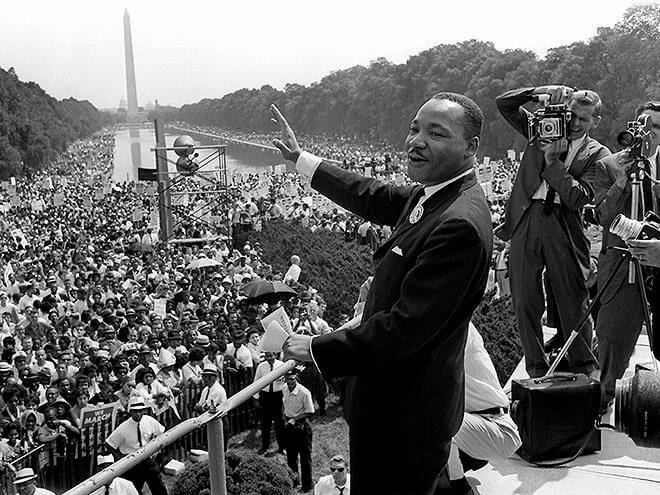
Each year on the holiday that bears his name, Martin Luther King Jr. is remembered for his immense contributions to the struggle for racial equality. What is less often remembered but equally important is that King saw the fight for racial equality as deeply intertwined with economic justice.
To address inequality — and out of growing concern for how automation might displace workers — King became an early advocate for universal basic income. Under universal basic income, the government provides direct cash payments to all citizens to help them afford life’s expenses.
In recent years, more than a dozen U.S. cities have run universal basic income programs, often smaller or pilot programs that have offered guaranteed basic incomes to select groups of needy residents. As political scientists, we have followed these experiments closely.
One of us recently co-authored a study which found that universal basic income is generally popular. In two out of three surveys analyzed, majorities of White Americans supported a universal basic income proposal. Support is particularly high among those with low incomes.
King’s intuition was that White people with lower incomes would support this type of policy because they could also benefit from it. In 1967, King argued, “It seems to me that the Civil Rights Movement must now begin to organize for the guaranteed annual income … which I believe will go a long, long way toward dealing with the Negro’s economic problem and the economic problem with many other poor people confronting our nation.”
But there is one notable group that does not support universal basic income: those with higher levels of racial resentment. Racial resentment is a scale that social scientists have used to describe and measure anti-Black prejudice since the 1980s.
Notably, in our research, Whites with higher levels of racial resentment and higher incomes are especially inclined to oppose universal basic income. As King well knew, this segment of Americans can create powerful opposition.
Economic self-interest can trump resentment
At the same time, the results of the study also suggest that coalition building is possible, even among the racially resentful.
Economic status matters. Racially resentful Whites with lower incomes tend to be supportive of universal basic income. In short, self-interest seems to trump racial resentment. This is consistent with King’s idea of how an economic coalition could be built and pave the way toward racial progress.
Income is not the only thing that shapes attitudes, however. Some of the strongest supporters of universal basic income are those who have higher incomes but low levels of racial resentment. This suggests an opportunity to build coalitions across economic lines, something King believed was necessary. “The rich must not ignore the poor,” he argued in his Nobel Peace Prize lecture, “because both rich and poor are tied in a single garment of destiny.” Our data shows that this is possible.

This approach to coalition building is also suggested by our earlier research. Using American National Election Studies surveys from 2004-2016, we found that for White Americans, racial resentment predicted lower support for social welfare policies. But we also found that economic position mattered, too.
Economic need can unite White Americans in support of more generous welfare policies, including among some who are racially prejudiced. At a minimum, this suggests that racial resentment does not necessarily prevent White Americans from supporting policies that would also benefit Black Americans.
Building lasting coalitions
During his career as an activist in the 1950s and 1960s, King struggled with building long-term, multiracial coalitions. He understood that many forms of racial prejudice could undermine his work. He therefore sought strategies that could forge alliances across lines of difference. He helped build coalitions of poor and working-class Americans, including those who are White. He was not so naïve as to think that shared economic progress would eliminate racial prejudice, but he saw it as a place to start.
Currently, the nation faces an affordability crisis, and artificial intelligence poses new threats to jobs. These factors have increased calls for universal basic income.
Racial prejudice continues to fuel opposition to universal basic income, as well as other forms of social welfare. But our research suggests that this is not insurmountable.
As King knew, progress toward economic equality is not inevitable. But, as his legacy reminds us, progress does remain possible through organizing around shared interests.
___
Mary Dzon, Associate Professor of English, University of Tennessee. This article is republished from The Conversation under a Creative Commons license. Republished by the Florida Phoenix. Florida Phoenix is part of States Newsroom, a nonprofit news network supported by grants and a coalition of donors as a 501c(3) public charity. Florida Phoenix maintains editorial independence. Contact Editor Michael Moline for questions: [email protected]. Read the original article.

Several local and state-level Democratic leaders are pushing Disney to investigate allegations being raised about how workers are being treated at Patina Group’s independently-operated restaurants at Disney Springs and Epcot.
“We are sure you would agree that subcontracting should not be an excuse for lower standards or inadequate treatment of workers,” said a letter signed by Sens. LaVon Bracy Davis and Carlos Guillermo Smith, as well as Reps. Jose Alvarez, Anna Eskamani, Rita Harris and Johanna López.
“We wouldn’t allow a company operating on our property, representing our legacy, to violate our own standards — and we would expect to be held accountable. We call on Disney to investigate these issues that may have occurred on your property operating under your name. We know with your high level of excellence, that sets the standard for Central Florida, we are right to have a high level of expectation for what happens on your property.”
Even though Patina workers are not employed by Disney, the state lawmakers asked The Mouse to investigate whether Patina broke the law by surveilling employees’ union activity and threatening employees if they supported the union. The lawmakers also asked to make sure sexual harassment is not happening in Patina’s restaurants.
Orange County Commissioners Kelly Martinez Semrad and Nicole Wilson held a community forum last week at the Orange County Commission building where advocates publicly released the letters signed by the elected officials in Summer and Fall of 2025.
“We encourage transparency in this process and ask that you publicly share the steps being taken to ensure accountability and compliance,” Semrad wrote in her letter to Disney Government Relations.
Patina leases space at Disney World for its Space 220 restaurant in Epcot, as well as Enzo’s Hideaway, Morimoto Asia, the Edison in Disney Springs and others.
Three of Patina’s restaurants, Tutto Italia, Via Napoli and Tutto Gusto in Epcot’s Italy Pavilion, unionized last year and are now represented by Unite Here 737. United Here, which represents Disney restaurant and beverage employees, is fighting to get them better working conditions.
For years, Patina employees have complained they are paid less than other Disney employees and are stuck in part-time status so they miss out on benefits and paid time off, even as they work up to six days a week.
“I was astounded by what they were encountering in the workplace,” Wilson said in a statement. “In District 1, we are in absolute reliance on the success of our hospitality workers. … They are the smiles that make a family vacation meaningful.”

Unite Here has filed several unfair labor practices complaints against Patina which are still pending at the National Labor Relations Board.
During labor talks, Patina union employees were considering going on strike last year until Disney intervened. An independent arbitrator then shut down what would’ve been a historic strike on Disney property, the Orlando Weekly reported.
Disney and Patina did not respond to a request for comment for this story.
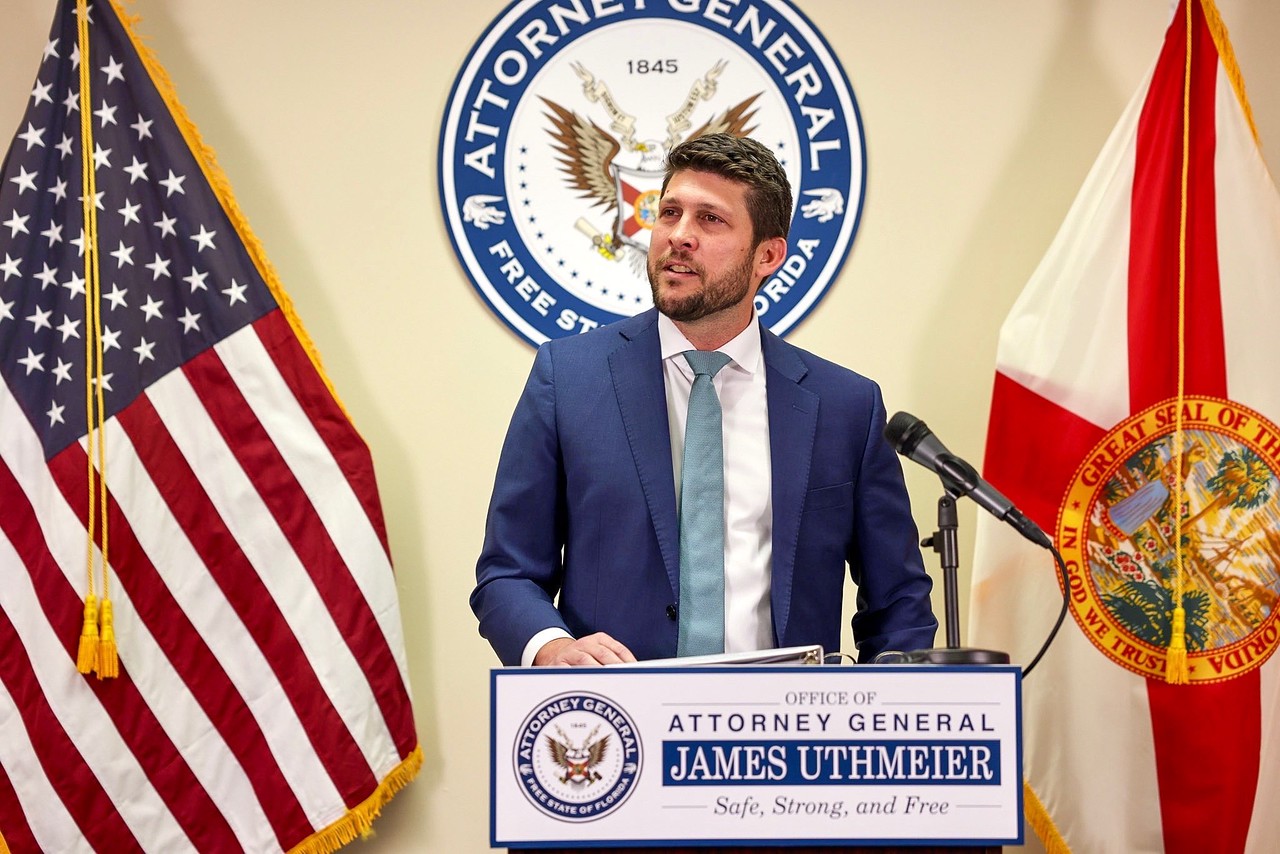
Attorney General James Uthmeier has published an opinion stating that Florida laws requiring state institutions to engage in affirmative action measures while hiring are unconstitutional.
Uthmeier issued his opinion that the state is violating the 14th Amendment of the U.S. Constitution and elements of Florida’s Constitution. “Florida maintains several laws on its books that promote and require discrimination on its face,” Uthmeier’s opinion says.
The 14th Amendment of the U.S. Constitution stipulates, “(N)o state shall… deny to any person within its jurisdiction the equal protection of the laws.” He added that Article 1, Section 2, of the Florida Constitution states: “No person shall be deprived of any right because of race, religion, national origin, or physical disability.”
Uthmeier specifically cited an “egregious” Florida statute that mandates statewide participation in “programs of affirmative and positive action” and stipulates that every executive agency “develop and implement an affirmative action plan” that includes goals for race-based hires.
“Because enforcing and obeying these discriminatory laws would violate those bedrock legal guarantees, those laws are unconstitutional,” Uthmeier said in his conclusion. “My office, therefore, will not defend or enforce any of these discriminatory provisions.”
He also said his opinion covers “race-based preferences in government contracting.”
“Florida’s discriminatory contracting provisions earmark certain opportunities for minority contractors without providing any ‘strong basis in evidence’ to support this race-based action,” Uthmeier said.
The 14-page opinion also criticizes race-based quotas in Florida hiring practices and stipulations for minority representation on different boards, councils and other panels.
“The (U.S.) Supreme Court has addressed race-based quotas in the past and held that such quotas cannot satisfy strict scrutiny review,” Uthmeier said.
Uthmeier’s opinion is only a stated position from the Attorney General and is not binding on any other office in the state of Florida.

It’s the second opinion issued from Uthmeier’s Office in the past week. On Wednesday, Uthmeier published an opinion saying Nassau County can’t hike impact fees beyond Florida limits just because its population growth has increased substantially in the past half decade.
Uthmeier issued the opinion at the behest of Rep. Richard Gentry, a DeBary Republican, who worried Nassau County’s interpretation of impact fee increases approved in December would undermine the authority of the Legislature, which sets impact fee laws.


NFL Officials Got Bills-Broncos INT Call Right, Ex-Head Of Officiating Says

Tod’s boss Della Valle says new law against labour exploitation needed

Central Florida Democrats urge Disney to investigate restaurant owner
-

 Politics8 years ago
Congress rolls out ‘Better Deal,’ new economic agenda
-
Entertainment9 years ago
New Season 8 Walking Dead trailer flashes forward in time
-
Politics9 years ago
Poll: Virginia governor’s race in dead heat
-
Politics8 years ago
Illinois’ financial crisis could bring the state to a halt
-
Entertainment8 years ago
The final 6 ‘Game of Thrones’ episodes might feel like a full season
-
Entertainment9 years ago
Meet Superman’s grandfather in new trailer for Krypton
-
Business9 years ago
6 Stunning new co-working spaces around the globe
-
Tech8 years ago
Hulu hires Google marketing veteran Kelly Campbell as CMO