Connect with us

Politics

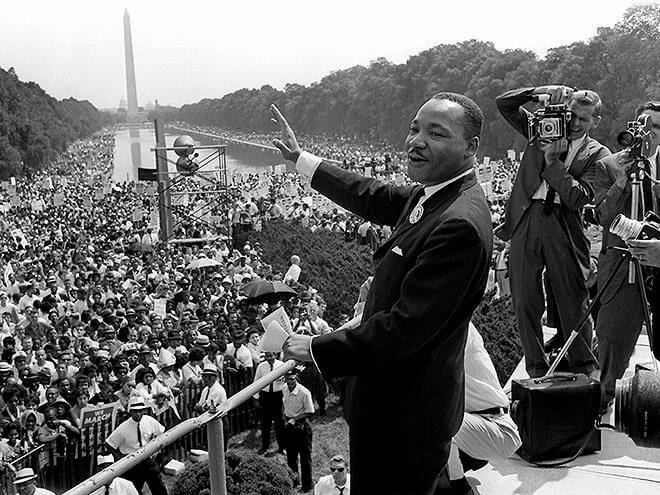
Martin Luther King Jr. was ahead of his time in pushing for universal basic income
Published

on


Each year on the holiday that bears his name, Martin Luther King Jr. is remembered for his immense contributions to the struggle for racial equality. What is less often remembered but equally important is that King saw the fight for racial equality as deeply intertwined with economic justice.

To address inequality — and out of growing concern for how automation might displace workers — King became an early advocate for universal basic income. Under universal basic income, the government provides direct cash payments to all citizens to help them afford life’s expenses.

In recent years, more than a dozen U.S. cities have run universal basic income programs, often smaller or pilot programs that have offered guaranteed basic incomes to select groups of needy residents. As political scientists, we have followed these experiments closely.

One of us recently co-authored a study which found that universal basic income is generally popular. In two out of three surveys analyzed, majorities of White Americans supported a universal basic income proposal. Support is particularly high among those with low incomes.

King’s intuition was that White people with lower incomes would support this type of policy because they could also benefit from it. In 1967, King argued, “It seems to me that the Civil Rights Movement must now begin to organize for the guaranteed annual income … which I believe will go a long, long way toward dealing with the Negro’s economic problem and the economic problem with many other poor people confronting our nation.”

But there is one notable group that does not support universal basic income: those with higher levels of racial resentment. Racial resentment is a scale that social scientists have used to describe and measure anti-Black prejudice since the 1980s.

Notably, in our research, Whites with higher levels of racial resentment and higher incomes are especially inclined to oppose universal basic income. As King well knew, this segment of Americans can create powerful opposition.

Economic self-interest can trump resentment

At the same time, the results of the study also suggest that coalition building is possible, even among the racially resentful.

Economic status matters. Racially resentful Whites with lower incomes tend to be supportive of universal basic income. In short, self-interest seems to trump racial resentment. This is consistent with King’s idea of how an economic coalition could be built and pave the way toward racial progress.

Income is not the only thing that shapes attitudes, however. Some of the strongest supporters of universal basic income are those who have higher incomes but low levels of racial resentment. This suggests an opportunity to build coalitions across economic lines, something King believed was necessary. “The rich must not ignore the poor,” he argued in his Nobel Peace Prize lecture, “because both rich and poor are tied in a single garment of destiny.” Our data shows that this is possible.

This approach to coalition building is also suggested by our earlier research. Using American National Election Studies surveys from 2004-2016, we found that for White Americans, racial resentment predicted lower support for social welfare policies. But we also found that economic position mattered, too.

Economic need can unite White Americans in support of more generous welfare policies, including among some who are racially prejudiced. At a minimum, this suggests that racial resentment does not necessarily prevent White Americans from supporting policies that would also benefit Black Americans.

Building lasting coalitions

During his career as an activist in the 1950s and 1960s, King struggled with building long-term, multiracial coalitions. He understood that many forms of racial prejudice could undermine his work. He therefore sought strategies that could forge alliances across lines of difference. He helped build coalitions of poor and working-class Americans, including those who are White. He was not so naïve as to think that shared economic progress would eliminate racial prejudice, but he saw it as a place to start.

Currently, the nation faces an affordability crisis, and artificial intelligence poses new threats to jobs. These factors have increased calls for universal basic income.

Racial prejudice continues to fuel opposition to universal basic income, as well as other forms of social welfare. But our research suggests that this is not insurmountable.

As King knew, progress toward economic equality is not inevitable. But, as his legacy reminds us, progress does remain possible through organizing around shared interests.

___

Mary Dzon, Associate Professor of English, University of Tennessee. This article is republished from The Conversation under a Creative Commons license. Republished by the Florida Phoenix. Florida Phoenix is part of States Newsroom, a nonprofit news network supported by grants and a coalition of donors as a 501c(3) public charity. Florida Phoenix maintains editorial independence. Contact Editor Michael Moline for questions: [email protected]. Read the original article.


Source link

Continue Reading

Politics

Florida initial unemployment claims show sharp spike for week ending Jan. 10

Published

on


As the busy holiday season gets further in the rearview mirror, new jobless claims in Florida are spiking significantly.

The U.S. Department of Labor (DOL) reports there were 6,827 unemployment filings in the Sunshine State for the week ending Jan. 10. That’s up substantially from the previous week’s figure of 4,205, a jump of 2,622 claims.

The latest report is the biggest increase in Florida in months. It’s also the first time there have been more than 6,000 claims since well before the holiday hiring rush, as stores prepared for the shopping season.

Florida’s increase in claims reflected the national picture. There were 330,684 new filings across the country last week. That’s a 10.7% jump from the previous week’s number.

But the national figure didn’t increase as much as DOL analysts expected. Economists projected an increase of 45,652 claims, or a 15.3% climb.

While the national numbers rose week to week, new claims are down from the same time last year. During the comparable week in 2025, there were 353,357 claims. The most recent report is a drop of 22,673 claims from a year ago.

Unemployment filings typically increase following the holidays as businesses no longer have an increased need for workers. But the news is still unwelcome for Florida, which saw steady declines in new jobless filings in the months leading up to the holidays.

FloridaCommerce, the state’s economic development bureau, reports the November general unemployment rate was 4.2%. That’s a jump of 0.3 percentage points over the September figure of 3.9%. The bureau didn’t have figures for October due to the federal government shutdown, which prevented employment data collection.

The December report is expected to be issued by the end of this month.


Source link

Continue Reading

Politics

Dr. Martin Luther King’s warnings seem more prescient than ever

Published

on


Dr. Martin Luther King Jr.’s words from his “Beyond Vietnam” speech still ring true.

“When machines and computers, profit motives, and property rights are considered more important than people,” he warned, “the giant triplets of racism, extreme materialism, and militarism are incapable of being conquered.”

Those words, delivered in 1967, still summarize today’s political moment. Instead of putting the lives of working Americans first, our leaders in Congress and the White House have prioritized advancing corporate profits and wealth concentration, slashing government programs meant to advance upward mobility, and deploying military forces across the country, increasing distrust and tension.

This historic regression corresponds with a recessionary environment for Black America in particular. That’s what my organization, the Joint Center, found in our report, “State of the Dream 2026: From Regression to Signs of a Black Recession.”

The economic landscape for Black Americans in 2026 is troubling, with unemployment rates signaling a potential recession. By December 2025, Black unemployment had reached 7.5% — a stark contrast to the national rate of 4.4%. This disparity highlights the persistent economic inequalities faced by Black communities, which have only been exacerbated by policy shifts that have weakened the labor market. The volatility in Black youth unemployment, which fluctuated dramatically in the latter months of 2025, underscores the precariousness of the situation.

The Donald Trump administration’s executive orders have systematically dismantled structures aimed at promoting racial equality. By targeting programs such as Lyndon Johnson’s 1965 Equal Employment Opportunity executive order and defunding agencies like the Minority Business Development Agency, the administration has shifted federal support away from disadvantaged businesses.

As a result, Black-owned firms risk losing contracts and resources tied to federal programs, potentially resulting in job losses and reduced economic growth. These changes threaten billions in federal revenue for Black-owned firms and undermine efforts to move beyond racial inequality in the workforce.

The GOP’s so-called “Big Beautiful Bill,” passed in 2025, further entrenches inequality by providing tax cuts that disproportionately benefit high-income households and corporations — while simultaneously slashing investments in programs like Medicaid and SNAP, limiting access to essential services for low-income households.

The technology sector, a critical component of the American economy, is also affected by this disregard for civil rights. Executive orders like “Removing Barriers to American Leadership in Artificial Intelligence” have stripped away protections that could advance inclusion in this rapidly growing field. As a result, the future of the American economy risks reinforcing past inequalities.

Dr. King’s call for strong, aggressive federal leadership in addressing racial inequality remains highly relevant. However, instead of eradicating structures of inequality, our current leadership is implementing policies that destroy government jobs and dismantle agencies responsible for preventing predatory economic practices. These choices undermine longstanding efforts to combat racial and economic disparities — and exemplify the regressive economic policies that coincide with rising Black unemployment.

As Dr. King stated, “we refuse to believe that the bank of justice is bankrupt.” But urgent action is required. Unless we act deliberately, economic and racial inequalities will become entrenched, resulting in generational loss. The core question is whether we will move beyond our nation’s history of racism, materialism, and militarism, and — as Dr. King urged — embrace “the fierce urgency now” to advance equity.

___

This article is republished from OtherWords, a free editorial service published by the Institute for Policy Studies. Reposted by the Florida Phoenix. Florida Phoenix is part of States Newsroom, a nonprofit news network supported by grants and a coalition of donors as a 501c(3) public charity. Florida Phoenix maintains editorial independence. Contact Editor Michael Moline for questions: [email protected].


Source link

Continue Reading

Politics

Johanna López gains quick fundraising advantage in Orange County Commission race

Published

on


Since jumping into the race for Orange County Commission, Democratic Rep. Johanna López has quickly built up a fundraising advantage ahead of the August election, according to her campaign.

López entered the race with $35,000 in cash after announcing her candidacy shortly after the new year. Sitting lawmakers are barred from raising money while the Legislature is meeting, but her campaign says she raised $35,000 in the eight days between her campaign announcement and the start of the 2026 Session.

López raised that money through her campaign account and via two political committees, Friends of Johanna López and Pa’lante Together. More details on those funds will be available by April 10, the campaign finance reporting deadline for the first quarter of 2026.

“She becomes the highest-fundraising candidate for the Orange County Commission in 2026, by far,” her campaign said recently in a press release. “With overwhelming grassroots support and a commanding early financial advantage, the López campaign enters the race with strong momentum.”

“This outpouring of support is incredibly humbling,” López added in a statement. “I’m deeply grateful to everyone who believes in our vision for Orange County. From day one, this campaign has been powered by people who want leadership that puts working families and our communities first, and I’m honored to earn their trust.”

On Jan. 6, López announced she was not running for re-election for House District 43 and instead would run in the nonpartisan contest for Orange County Commission’s District 4. The only other candidate running in District 4 is telecommunications professional Brian Jones.

District 4 covers an eastern part of Orange County, including the Union Park, Rio Pinar and Alafaya neighborhoods.

López also endorsed Orange County Democratic Chair Samuel Vilchez Santiago, who is running for her House seat.

López is one of several politicians who have won statewide office before and are now turning their sights on the county level.

Former Sen. Victor Torres is up for Orange County District 8 in August, while former Sen. Linda Stewart is running for Orange County’s District 3 in 2028.

Central Florida is undergoing a political transformation to replace several key leaders, including Orlando Mayor Buddy Dyer and Orange County Mayor Jerry Demings.


Source link

Continue Reading

Trending

Copyright © Miami Select.