A verified fashion brand with a black-and-white bunny logo called @forbiddenclothes, with a little under half a million followers, is lurking on Instagram. One of its most-watched posts, pinned to the top of the feed, shows a Nazi SS officer from the movie Inglourious Basterds sitting stiffly at a table, the caption floating above him:
“When the family is arguing about politics and they ask for my expert opinion.”
Thirty-one million people have viewed the clip. More than 1.6 million liked it. The comments are full of adoration: “My time to shine.” “They’re not ready for the truth.” A verified user asks why everyone is “glorifying fascism” and is drowned out by replies.
And if you linger on that reel—or anything like it—you’ll quickly find that it’s almost quaint compared to what comes next.
A swipe later, you’ll get a different accounts’ reel: an AI-generated “translation” appears of what is ostensibly an Adolf Hitler speech. Over audio footage of Hitler warning of a “satanic power” infiltrating the country’s intellectual and economic life, onscreen graphics tally the number of Jewish people in Trump’s cabinet and in major media organizations, showing portraits of those people with Jewish stars photoshopped on their faces.
Roughly 1.4 million people watched that video; 142,000 liked it. Comments include lines like: “We owe the big man an apology” and “He was right about everything.”
After Fortune brought these clips to Meta’s attention, but before the company offered an official comment, the company scrubbed the clips.
Scroll again and you’ll land on some Holocaust denialism: a small-brain figure saying, “He gassed millions of people. Read a history book,” and a smug, larger-brain figure replying, “Who wrote the history books?” A follow-up image attempts to trace a media ownership conspiracy.
This got 3.2 million views. More than 250,000 likes and shares.
Within minutes, a clear pattern emerges. This content is not isolated, and it’s not niche. It’s ambient. It’s seemingly everywhere. And it’s algorithmically arranged to look like you’re the one “discovering” the truth; a feed that, once nudged in a certain direction, abruptly begins to resemble antisemitic and racist propaganda.
Instagram’s algorithm rewards whatever maximizes watch time and shares, and in 2025 that has included conspiratorial, racist, or antisemitic memes packaged as humor or even a kind of aesthetic. Monetization programs, clip-farm networks, and incentives to sponsor with third-party products fuel that dynamic, turning extremist-flavored content into a profitable engagement strategy for creators.
But it doesn’t just seem to be creators who profit. For this Fortune reporter, those reels appeared right above and below ads from major brands—JPMorgan Chase, Nationwide Insurance, SUNY, Porsche, the U.S. Army, and many, many others. Extremist content and blue-chip advertising run back-to-back, suggesting that the monetization pipes remain open and that advertisers either don’t know or don’t view the adjacency as reputationally dangerous. Fortune reached out to all the companies mentioned above for comment, but did not receive any responses.
In a statement to Fortune, Meta said that “We don’t want this kind of content on our platforms and brands don’t want their ads to appear next to it.” They added that they included “the relevant violating content in our database” so that they could remove “copies” if someone tries to upload them again.
Yet, minutes after Meta sent its statement, this reporter opened Instagram Reels and saw another ad from JPMorgan Chase sitting directly above a reel from the antisemitic meme account @goyimclub. The reel used a familiar Holocaust-denial setup—“If I have 15 ovens baking cookies 24/7, how many years would it take to bake 6 million cookies?”—a favorite trope of these sorts of accounts, designed to mock the death toll of the Holocaust and suggest the real number was far lower, often falsely claimed to be 271,000.
Immediately after the JPMorgan Chase ad, another reel surfaced—this one from the antisemitic account @gelnox.exe. It showed what looked like a ChatGPT conversation asking, “When did Spain expel the Jews?” (with “Jews” censored), followed by “1492.” Then: “When did the Spanish Golden Age start?” Again: “1492.” The implication, obviously, was that Spain’s prosperity began only after removing Jewish people. That reel had more than 5 million views and 316,000 likes.
Meta’s own community standards prohibit nearly every trope in these reels. Its “Hateful Conduct” policy bans “Holocaust denial,” as well as “claims that Jewish people control financial, political, or media institutions,” and calling a group “the ‘devil.’” Its “Dangerous Organizations and Individuals” policy bars content glorifying dangerous figures, giving the example: “Hitler did nothing wrong.” All of this is Tier 1 prohibited content. Yet reels containing each of these elements remain live and algorithmically promoted on Instagram today.
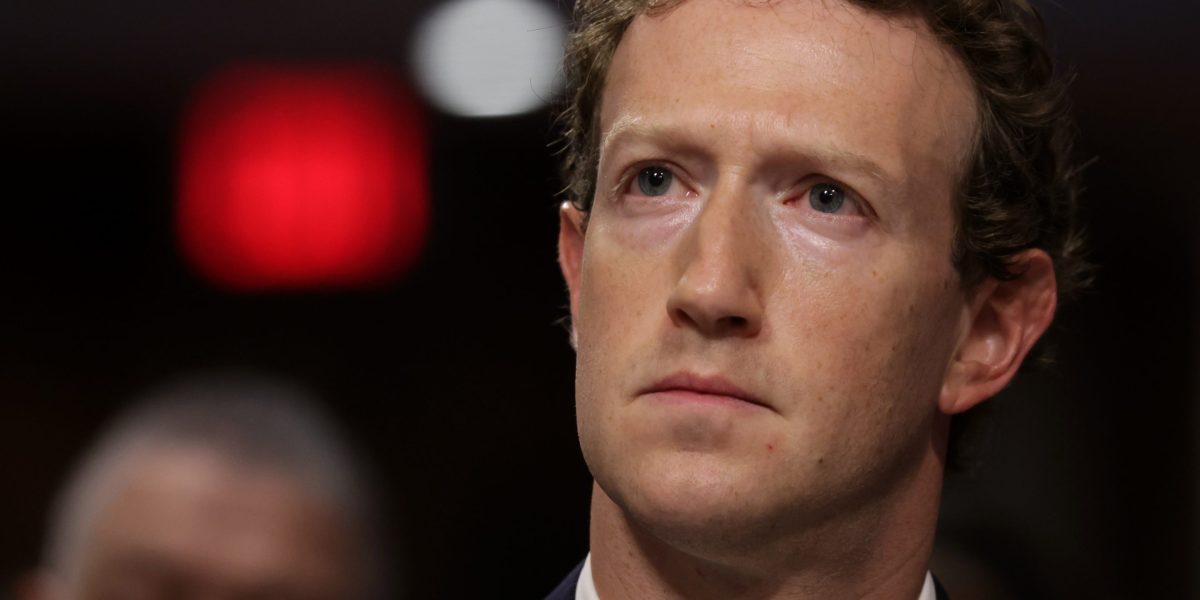
The reason is structural: in January, Meta CEO Mark Zuckerberg ended third-party fact-checking in the U.S, and loosened political-content rules. These changes included raising the confidence threshold for removing hate speech, Zvika Krieger, Meta’s former (and first) Director of Responsible Innovation, told Fortune. “Whatever creates the most engagement is going to get rewarded in this algorithm,” Krieger said, and after the rule change, the systems meant to catch dangerous content “were intentionally made less sensitive.”
Or, as one Pakistani Gen Z creator who earns money posting antisemitic reels told Fortune, “Those videos don’t get banned anymore.”
In a statement, Meta said that “[w]hile this story makes a number of claims, the facts are clear: in just the first half of 2025, we actioned nearly 21 million pieces of content for violating our prohibition on Dangerous Organizations and Individuals.” At first, Meta said that it had proactively detected nearly 99% of this content, before saying the actual percentage is in the low 90s. Meta added that their commitment to tackling antisemitism is “unchanged,” and that they removed the “violating content and accounts flagged to us.”
Meta did not address Fortune‘s questions about how the posts Fortune flagged had been able to generate millions of views, or how they had been able to stay up for so long.
Bigger than Groypers
Washington has spent the past week arguing over a number: whether “30 to 40 percent” of young Republican Hill staffers are groyper-aligned, meaning they’re fans of Nick Fuentes, the white-nationalist streamer who infamously had a White House dinner with Kanye West and Donald Trump, and more recently went on Tucker Carlson’s podcast and repeated antisemitic rhetoric. The 30%-40% number came from conservative pundit Rod Dreher, who said he had interviewed several Gen Z conservatives and verified it, which other pundits have contested.
But the antisemitism and racism that Fuentes champions can hardly be called fringe when Instagram reels trafficking in the same tropes routinely reach millions of views.
The creators behind these videos were clear in conversations with Fortune about why they make them: money. Henry, a 26-year-old tech worker in the U.K. who runs a far-right meme page with 90,000 followers (@notchillim), who asked to withhold his last name to avoid retaliation at work, told Fortune he has made “over £10,000” from T-shirt sales and shoutouts, and that posts referencing Hitler or the Holocaust “always get more traction.”
A teenage high-school student in Pakistan, who Fortune kept anonymous out of privacy concerns and who operates a similar meme page called @perryperrymemes, told Fortune he earns $800–$900 a month, paid at $0.10 per thousand views by Whop, a clip-farm platform that gives creators logos to paste onto whatever memes perform best. For “open-category” campaigns, he can post anything he wants — and he said the reels that reliably hit payout thresholds are the racist or Hitler-themed ones.
Fortune reached out to Whop for comment but received no response.
A U.S. tech worker in his 20s, who makes similarly antisemitic content and requested to be anonymous to avoid retaliation at work, says he made nearly $3,000 from Instagram’s bonus and referral programs before being demonetized. He said his most “offensive and political” posts drove the fastest audience growth. He added that he is Jewish and did not believe the content himself, but said he had posted it in hopes of gaining enough followers to eventually delete the posts and then remonetize.
In fact, none of the three creators interviewed by Fortune claimed to have strong ideological motives beyond finding the memes vaguely amusing. All said controversial content is one of the only reliable, and easiest, paths to visibility — and therefore income. (Fortune was unable to independently verify the creators’ claims of their income.)
Every creator that Fortune spoke with said their reach had increased sharply after Meta’s January policy shift, which came just a few months after President Donald Trump threatened to imprison Zuckerberg over claims that he attempted to influence the 2024 election. In the aftermath, Zuckerberg sought to repair his relationship with the President, donating $1 million to Trump’s inauguration fund and attending the inauguration itself.
Several said the change was immediate: reels that once got flagged or throttled were suddenly hitting millions of feeds. The Pakistani clip-farmer said those videos no longer “get banned,” and the British meme-page owner said his reach “jumped way higher.”
That shift wasn’t accidental. Meta has openly moved to lighten enforcement, personalize political content, and potentially even automate, according to internal documents, up to 90% of the privacy and integrity reviews that once slowed harmful material before it reached billions of users.
“During the early 2020s, these companies poured enormous resources into moderation,” Krieger said. “What we’re seeing now is the opposite, a conscious pullback, plus a redirecting of talent toward consumer AI.”
Krieger said he doesn’t believe that Meta is trying to platform hateful content; rather, they’re optimizing for “freedom of speech,” at the expense of other values. “I would say that is an ethical value: autonomy, people’s decision to choose,” Krieger said. “But it’s certainly coming at the cost of other ethical values, like safety and fairness.”
Krieger’s argument – that Meta has elevated freedom of speech above all other values – mirrors a common political refrain. Ever since Twitterbanned Trump in the aftermath of the Jan. 6 riots, the President and his allies have insisted that they were victims of a massive censorship scheme by Big Tech. But the landscape has changed dramatically since then: major platforms like X and Youtube have rolled back guardrails,reinstated banned accounts and adopted “free speech” framing.
At the same time, following the start of the Israel-Hamas war in October 2023, antisemitism has surged; and new AJC data shows 33% of Jewish Americans were personally targeted in the past year.
The business of hate
These antisemitic reels are now so common that there are meta-jokes about their ubiquity: a reel from a movie clip of Nazis in uniform standing around captioned “POV: you’ve opened Instagram in 2025” (8.7M views, 610K likes). Another reel of a guy saying “I’ll go to bat for you, Hitler” is captioned “Gen Z after spending 5 minutes on IG reels,” (2.1M views, 216K likes).
And many of the biggest accounts pushing this content aren’t anonymous trolls — they’re influencers. One of the largest, @hermesdiditagain, with 280,000 followers, mixes racist and antisemitic “man-on-the-street” interviews with conspiratorial memes. Fortune had an interview scheduled with Hermes, until he asked whether the reporter was Jewish. After she said yes, he blocked her.
Most of the ecosystem, though, is built to avoid scrutiny. These accounts hide behind faceless branding or influencer shells, funneling traffic to crypto platforms, supplements, merch, or subscription services. In some cases, the creator isn’t even real: renowned disinformation scholar Joan Donovan told Fortune she thinks some accounts are entire “personas” that are built around clip-farmed content, using stock photos, semi-AI face sets, or lightly edited images to make racist reels appear tied to an attractive influencer. “Platforms don’t care about the quality of the content so much as the engagement it elicits,” Donovan said.
Engagement—especially angry, shocked, or provocative engagement—is what drives payouts, sponsorships, referral bonuses, follower growth, and off-platform monetization. And because so much of this material is now AI-generated, from voiceovers to visuals, the cost of production has collapsed. With a few prompts and a clip editor, a creator can churn out an endless stream of rage-bait that reaches millions, Donovan said.
Middle schoolers have embraced this content
The ambiguity of the content is part of its appeal. Many of the reels use codes: the juice-box emoji for Jewish people, the “Austrian Painter” as a nickname for Hitler. Much of it is wrapped in a hyper-ironic, esoteric aesthetic built from symbols called Vril or Agartha, a mythical underground kingdom associated with 20th century Nazism that’s become a running joke in far-right meme circles. Instagram is saturated with Agartha edits: White Monster Energy cans opening “portals,” blonde AI soldiers marching through glowing gates, Sora-style sequences overlaid with antisemitic tropes. Middle schoolers now make memes about which teachers would be “allowed in” to Agartha treating it as a kind of in-group language.
Meme scholar Aidan Walker described it as an “ironic dog whistle”—material that is plainly antisemitic, but stylized and self-referential enough that users can deny belief while still spreading the narrative.
The memes are so layered in jokes, edits, and esoteric references that “you actually can’t tell whether it’s racist or not … but if you know, you know,” Walker told Fortune.
The point isn’t that viewers literally believe in hollow-earth portals under Antarctica; it’s that by pretending to, they’re signaling a stance: Institutions are rigged, and only people fluent in this lore “really see through” reality.
The appeal, he argues, is emotional as much as ideological. The videos are competently edited, dense with references, and designed to feel like contraband.
“You watch one and think, ‘I shouldn’t be watching this. This is horrible,’” Walker said.
That transgression then becomes a bonding ritual—“we’ve gone there together, now you’re my brother because you get this and others don’t”—and a kind of “forbidden wisdom,” a dark explanation that makes the world feel like it secretly makes sense, he added.
From memes to real-world harm
But that esoteric world doesn’t just have the potential for violence — violence has already manifested from it.
Earlier this month, a 17-year-old set off explosives during Friday prayers at a Jakarta high school, injuring more than 50 students. When police recovered the toy submachine gun he brought into the mosque, they found phrases scrawled across it that come straight from the meme-lore circulating on Instagram Reels: “14 words. For Agartha.” Another inscription read, “Brenton Tarrant: Welcome to hell.”
The teen’s ideology is still under investigation. But his references weren’t invented in a vacuum: they’re the same symbols saturating Reels feeds today.
The U.S. has seen its own surge in antisemitic violence: firebombs thrown at a rally in Boulder, two Israeli embassy employees murdered outside a museum in Washington, and a sharp rise in harassment and threats documented by Jewish organizations. The ADL reports a 21% increase in antisemitic assaults in 2024 compared to the previous year. None of these incidents are caused by any single reel, but the worldview is familiar: conspiracies about Jewish power, an “us vs. them” frame, and a sense that violence is justified or inevitable.
The Jewish Gen-Z tech worker behind one of the meme accounts said he believed that that the violence was part of a pendulum effect.
“Everything was so anti-white people 10 years ago, and now there’s a bunch of pissed off white people,” he said. “So, I don’t really know how bad it’s going to get, but violence seems much more likely than in the past.”
Did he not feel a sense of responsibility?
“I’m kind of just taking other accounts’ stuff and reposting it, so I guess that makes me feel like I’m not contributing as much to the whole thing,” he said, his voice trailing off into nervous laughter. “But, I mean, yeah, objectively, it’s not a great thing.”
His account, @violent_autism, which had nearly 100,000 followers, went dark soon after the interview. It’s unclear if he took it down himself or if Instagram did.
These accounts reach far beyond Gen Z fans, too. @forbiddenclothes has a notable fan, who follows exactly 7,350 accounts on Instagram including fitness influencers to meme pages to hunting gear stores to crypto traders. And while there’s no way to prove he’s one of the millions watching Nazi-leaning content with “unclear intent,” Donald Trump Jr., the President’s son, is listed as a follower of @forbiddenclothes, too. He did not respond to Fortune’s request for comment.





 Politics8 years ago