Connect with us

Business

Mark Zuckerberg gifted noise-canceling headphones to his Palo Alto neighbors because of the non-stop construction around his 11 homes

Published

on


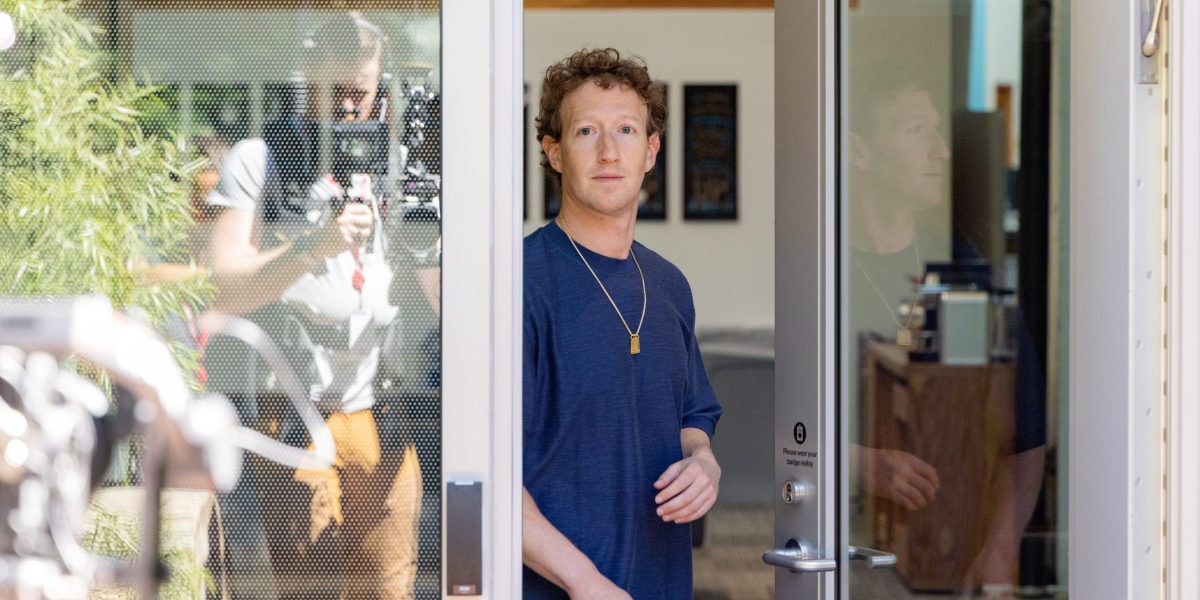
  • Billionaire Mark Zuckerberg has been rankling his neighbors in Palo Alto as he works on expanding and modifying the 11 homes that he has purchased in the area. To smooth over tensions, The New York Times says Zuckerberg gifted his next-door neighbors noise-canceling headphones as a peace offering.

Mark Zuckerberg, the billionaire cofounder of Facebook and CEO of Meta, reportedly gave noise-canceling headphones to his neighbors in the Crescent Park neighborhood of Palo Alto in an effort to address years of frustration over ongoing construction and disruption surrounding his expanding residential compound, according to The New York Times.

Zuckerberg has spent more than $110 million purchasing at least 11 homes on Edgewood Drive and Hamilton Avenue over the past 14 years, transforming this once-idyllic neighborhood of lawyers, business executives, and Stanford University professors into a zone dominated by construction equipment, surveillance, and frequent lavish parties.

Some of these properties that were recently purchased sit unoccupied, despite being in a region known for its acute housing shortage, while others have been converted into guest homes, lush gardens, a pickleball court, a pool with a hydrofloor, and—at least for a time—a private school for Zuckerberg’s children and several others (a use that appears not to comply with local zoning ordinances).

Underneath the compound, Zuckerberg added 7,000 square feet of space described as “basements,” which to area residents are more akin to “bunkers” or a “billionaire’s bat cave.” Zuckerberg similarly added a 5,000-square-foot underground structure to his compound in Hawaii, which he insists is not a “doomsday bunker.”

Much of the discontent centers on the nearly eight years of continual construction. Several neighbors cited street blockages, debris, and relentless noise as ongoing issues.

A spokesperson for Mark Zuckerberg provided the following statement to Fortune:

“Mark, Priscilla and their children have made Palo Alto their home for more than a decade. They value being members of the community and have taken a number of steps above and beyond any local requirements to avoid disruption in the neighborhood.”

Not Zuckerberg’s first property controversy

The noise-canceling headphones were among several gifts extended by Zuckerberg’s staff to appease neighbors during particularly loud periods, along with bottles of sparkling wine and boxes of Krispy Kreme doughnuts. These gestures, however, have not always been effective. Some of his neighbors say their community has been transformed—and not in a good way—by absentee ownership, strict privacy barriers, and heavy security presence, including cameras overlooking adjacent properties and frequent patrols by private security guards.

Meta didn’t immediately respond to a request for comment.

This is not Zuckerberg’s first clash with neighbors over real estate projects. In 2016, Palo Alto officials rejected a proposal to demolish four homes and replace them with smaller houses and large basements as part of a wider compound. While the city denied the specific application, Zuckerberg ultimately proceeded gradually, undertaking similar work in a piecemeal fashion to avoid further regulatory hurdles. The Palo Alto City Council and some residents have since criticized what they describe as the exploitation of zoning loopholes and the city’s regulatory inaction.

Zuckerberg’s residential portfolio extends far beyond Palo Alto. He owns a 2,300-acre estate in Kauai, Hawaii, where his land acquisitions and building plans have at times provoked local controversy as well. He also owns homes at Lake Tahoe and a mansion in Washington, D.C.

A version of this story was published at Fortune.com on Aug. 26, 2025.

More on Mark Zuckerberg:

Join us at the Fortune Workplace Innovation Summit May 19–20, 2026, in Atlanta. The next era of workplace innovation is here—and the old playbook is being rewritten. At this exclusive, high-energy event, the world’s most innovative leaders will convene to explore how AI, humanity, and strategy converge to redefine, again, the future of work. Register now.


Source link

Continue Reading

Business

Logan Paul auctions off $5.3 million Pokémon card

Published

on


We’ve all heard the traditional advice that the best investments are those made in the stock market, saving in a 401(k), and buying a house. But younger generations have started touting nontraditional investments like buying a Birkin bag or other collectibles as a surefire way to bring in extra bucks. 

Influencer and WWE wrestler Logan Paul recently said going beyond normal investments can be worth it.

“If you’re young, there are ways to spend and invest your money in ways that might mean more to you than in a traditional conservative environment like the stock market,” he said on Fox Business’s “The Big Money Show” on Tuesday.

And Paul has certainly gone down the nontraditional path for investing: He recently put up a rare Pokémon card for auction that he bought in 2022 for $5.3 million. The former WWE United States Champion actually used to wear the card—which he says is “the rarest card in the world” and the “Holy Grail”—around his neck during competitions. The card is a PSA-graded 10 Pikachu Illustrator, and only a few dozen copies exist worldwide. But Paul’s card is the only one to receive a 10/10 grade from Professional Sports Authenticator (PSA). 

Paul said he plans to auction the card in early 2026 and estimates it will sell for between $7 million and $12 million, which would bank him about $2 million to $7 million. He also argued collectibles like Pokémon cards have “outperformed” the stock market during the last two decades. 

“If you have the money, don’t be afraid to take a risk, especially if you’re young,” Paul said. 

Are collectibles really a good investment?

According to global wealth management firm AES, collectibles like wine, manuscripts, vintage cars, rare pieces of art, and more can produce a “reasonable” return for investors, but they often don’t come with the same long-term gains of investing in stocks. 

Between 1900 and 2012, collectibles produced a nominal annual return of 6.4% and a real return of 2.4%, according to the AES report.

“Although the return is reasonable, it’s far lower than the long-term rewards of investing in the equity market,” AES CEO Sam Instone wrote. But, “that’s not to say these collectible items are not for certain investors.”

Still, Gen Z men have become obsessed with investing in these collectibles, which some argue will beat Nvidia stock and the S&P 500. And they could have a point: Pokémon cards have seen the largest long-term increase in value among all card categories. They’re up 3,261% in the past 20 years, according to data provided to Fortune’s Preston Fore from Card Ladder. Even a one-year investment is up 46%, which is higher than Nvidia’s 35% jump and the S&P 500’s 17% year-to-date increase. 

“The trading card hobby has entered a new era, driven by technology, innovation, community, and a great balance of modern creativity–with new sets, storylines and characters–alongside good old nostalgia,” Adam Ireland, VP and GM of global collectibles at eBay, previously told Fortune. He also said eBay users searched for “Pokemon” nearly 14,000 times per hour in 2024.

Other collectibles like the Hermes Birkin bag have caught the attention of young investors, who have argued buying one can be more valuable than investing in gold. But recent reports have shown these rare handbags don’t have the same return-on-investment they once did. The average resale premium for Birkin and Kelly bags—a metric that compares the auction price to its retail cost—has fallen from 2.2 times its original value in 2022 to 1.4 times as of November, according to Bernstein Research’s Secondhand Pricing Tracker. To put that in perspective, a Birkin bag originally bought for $10,000 and resold in 2022 would have cost more than $22,000, but a bag originally retailing for the same price and resold today would be worth just $14,000.

Overall, although investing in collectibles can end in a big payday, they can also be a very risky investment because of liquidity risks, concentration risks, costs and upkeep, the potential for a bubble, and tax treatment, according to an analysis by The Economic Times.

“It’s also true that some people generate income regularly buying and selling collectibles,” according to Consumers Credit Union. “However, fortunes are determined by the whims of buyers along with the rising and falling popularity of particular items. While the stock market may have a down year, over time it trends to higher value.”


Source link

Continue Reading

Business

Amazon’s Alexa chief predicts an end to doom scrolling: the next generation is ‘going to just think differently’
Published

on


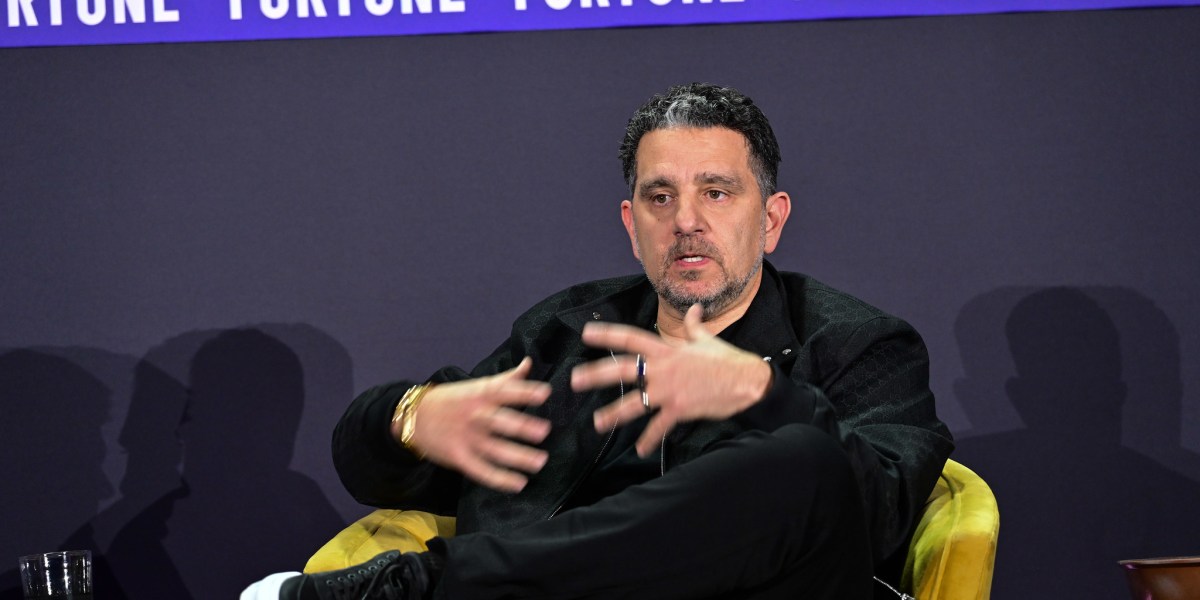
Panos Panay, Amazon’s head of devices and services, believes the reign of the smartphone screen may be nearing a tipping point. Speaking at Fortune Brainstorm AI in San Francisco, he suggested that a growing fatigue with social media “doom scrolling” is paving the way for a new era of “ambient intelligence”—one driven by a generation that interacts with technology in fundamentally different ways,.

According to Panay, the future of consumer technology isn’t about better apps, but about making the technology disappear into the background.

“There’s a whole younger generation coming up that I think at some point they get tired of doom scrolling,” he observed, noting that many young people feel “stuck” when it comes to social media. He argued that this demographic, having been raised in an emerging “AI world,” will demand interactions that bypass the friction of traditional computing.

“They’re going to just think differently,” Panay predicted. “You’ve got to make sure you have products in their pockets, on their bodies, in their homes that they don’t expect… [but] expect to connect seamlessly.”

The death of the ‘app’ experience

Panay described a user experience that eliminates the need to look at a screen to solve daily problems. “It’s such a joy because there’s no opening a phone, opening the app, clicking, finding … none of it,” he said. “You just ask the question and you get it back”.

He illustrated this shift with a personal anecdote about a family debate over which restaurant to visit. Rather than everyone retreating to their corners to stare at their phones—a moment that usually disrupts family connection—they simply asked Alexa. The AI recalled a conversation from months prior regarding a restaurant they had wanted to try, settling the debate instantly. “It’s such a simple, delightful moment of when ambient intelligence is around you,” Panay noted.

To support this screen-free future, Amazon is aggressively experimenting with new hardware. While Panay declined to get into specific product roadmaps, he hinted that the current smart speakers and phones are not the endgame.

“I don’t think we’ve seen the next form factor yet on where AI devices are going to go,” he said, adding that Amazon has a “lab full of ideas,” though most ideas won’t make it from prototype to reality.

When pressed on whether Amazon would release wearables or glasses to compete with recent partnerships like that of OpenAI and Jony Ive’s io, Panay pointed to Amazon’s portfolio, including the recent acquisition of a company that makes a wristband. “We have wearables, we have earbuds, we’ve had glasses in the past.” He added that he won’t reveal what’s coming next, but insisted, “I think you’re going to want your assistant with you everywhere you go.”

Security concerns come hand in hand with these sort of advances, too. When asked by an audience member about the risks of placing listening devices in homes, Panay described security as a non-negotiable agreement. “I feel like it’s a contract with our customers, period. We break that contract, we lose our customers.” He emphasized that Amazon does not “cut one corner” regarding security protocols, describing it as the “first premise” of their product design.

The New ‘Alexa Plus

The bridge to this ambient future is the newly updated “Alexa Plus,” which Panay describes as a shift from a command-based tool to a comprehensive “home manager” and “butler.” Unlike “legacy Alexa,” which often required users to navigate complex setups, the new AI possesses “unlimited depth of understanding” and contextual memory.

“If I’ve asked it two or three questions in the last couple of weeks … the understanding, the personality will just change and say it understands what I’m looking for,” he explained.

For Panay, the ultimate goal is to return time to the user, moving them away from the distraction of screens and toward meaningful activity. “I think learning is one of the finest arts on the planet … and I think reading does that,” he said, positioning the shift away from doom scrolling as not just a technological evolution, but a cultural one.

This story was originally featured on Fortune.com


Source link

Continue Reading

Business

Christmas 500 years ago was a drunken 6-week feast that may have been considerably better than the modern holiday, medieval historian says

Published

on


Beer and wine were major components of the meal. By our standards, peasants drank a lot, although the alcohol content of the beer and wine was lower than today’s versions. They often napped before returning to work. In the evening, they ate a light meal, perhaps only bread, and socialized for a while.

They went to bed within a few hours of darkness, so how long they slept depended on the season. On average, they slept about eight hours, but not consecutively. They awoke after a “first sleep” and prayed, had sex or chatted with neighbors for somewhere between half an hour and two hours, then returned to sleep for another four hours or so.

Peasants did not have privacy as we think of it; everyone often slept in one big room. Parents made love with one another as their children slept nearby. Married couples shared a bed, and one of their younger children might sleep with them, though infants had cradles. Older children likely slept two to a bed.

A musician entertains a group of peasant farmers. duncan1890/DigitalVision Vectors via Getty Images

Dreaming of a medieval Christmas

Life certainly wasn’t easy. But the stretches of time for rest and leisure were enviable.

Today, many people start thinking about Christmas after Thanksgiving, and any sort of holiday spirit fizzles by early January.

In the Middle Ages, this would have been unheard of.

Advent – the period of anticipation and fasting that precedes Christmas – began with the Feast of St. Martin.

Back then, it took place 40 days before Christmas; today, it’s the fourth Sunday before it. During this period, Western Christians observed a fast; while less strict than the one for Lent, it restricted meat and dairy products to certain days of the week. These protocols not only symbolized absence and longing, but they also helped stretch out the food supply after the end of the harvest and before meats were fully cured.

Christmas itself was known for feasting and drunkenness – and it lasted nearly six weeks.

Dec. 25 was followed by the 12 Days of Christmas, ending with the Epiphany on Jan. 6, which commemorates the visit of the Magi to Jesus, Mary and Joseph. Gifts, often in the form of food or money, were exchanged, though this was more commonly done on New Year’s Day. Game birds, ham, mince pies and spiced wines were popular fare, with spices thought to help warm the body.

Though Christmas officially celebrates the birth of Jesus, it was clearly associated with pre-Christian celebrations that emphasized the winter solstice and the return of light and life. This meant that bonfires, yule logs and evergreen decorations were part of the festivities. According to tradition, St. Francis of Assisi created the first nativity scene in 1223.

Christmas ended slowly, with the first Monday after Epiphany being called “Plough Monday” because it marked the return to agricultural work. The full end of the season came on Feb. 2 – called Candlemas – which coincides with the older pagan holiday of Imbolc. On this day, candles were blessed for use in the coming year, and any decorations left up were thought to be at risk of becoming infested with goblins.

Many people today gripe about the stresses of the holidays: buying presents, traveling, cooking, cleaning and bouncing from one obligation to the next. There’s a short window to get it all done: Christmas Day is the only day many workplaces are required to give off.

Meanwhile, I’ll be dreaming of a medieval Christmas.

Bobbi Sutherland, Associate Professor, Department of HIstory, University of Dayton

This article is republished from The Conversation under a Creative Commons license. Read the original article.


The Conversation


Source link

Continue Reading

Trending

Copyright © Miami Select.