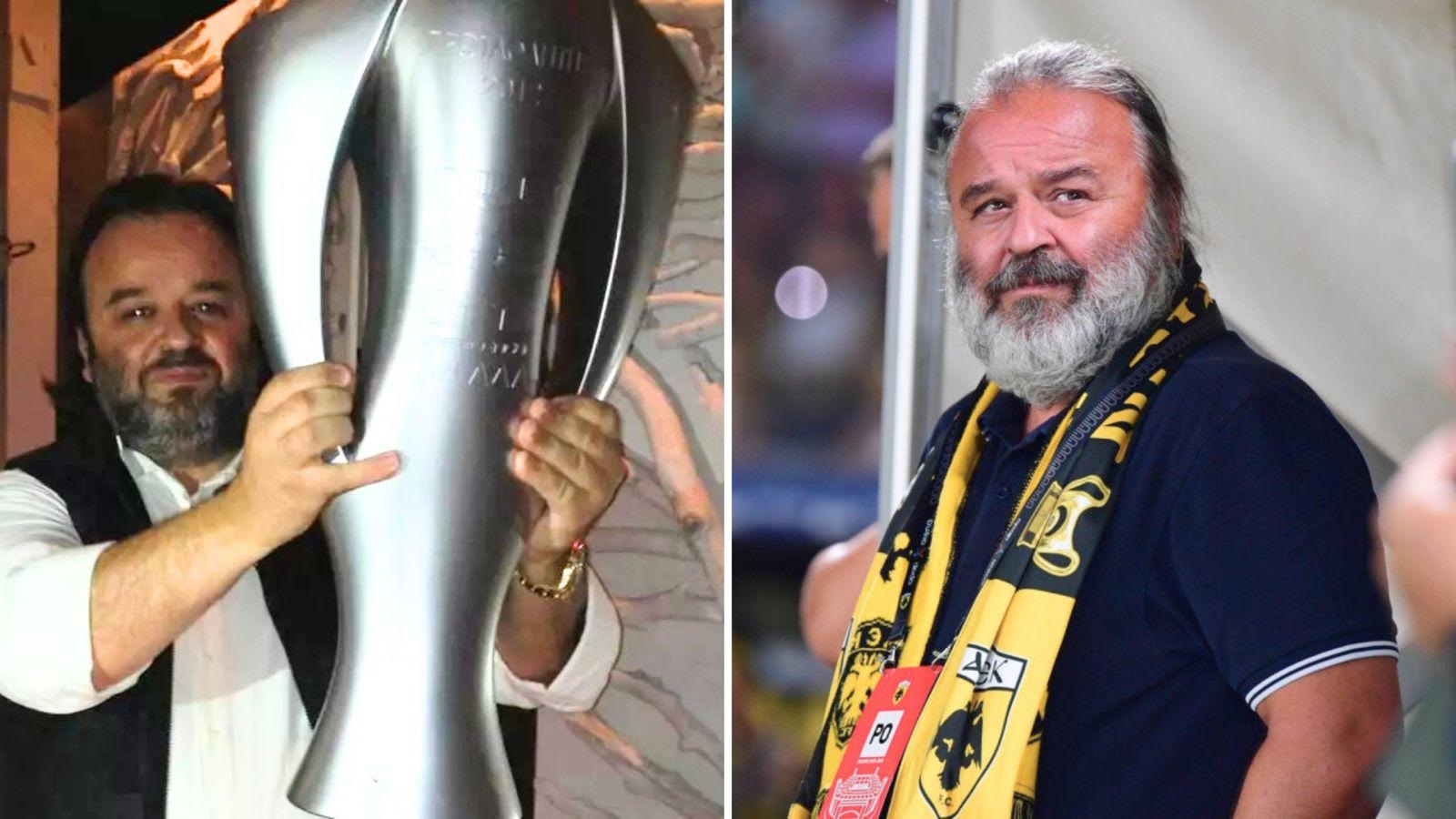
A photograph from 2012 has resurfaced showing Marios Iliopoulos holding aloft an Olympiacos league trophy during a title celebration in Athens.
Flashback photo raises questions over AEK owner Iliopoulos’ Olympiacos past
A photograph from 2012 has resurfaced showing Marios Iliopoulos holding aloft an Olympiacos league trophy during a title celebration in Athens.
The image, taken during Olympiacos’ championship festivities under then head coach Ernesto Valverde, appears to show Iliopoulos posing enthusiastically with the silverware, smiling and raising the cup in front of a crowd dressed in red. The moment captures the celebratory atmosphere that surrounded Olympiacos’ domestic dominance at the time, when the club was firmly established as a powerhouse of Greek football.
At the time, the photograph attracted little attention and circulated mainly as a snapshot of a public celebration. More than a decade later, however, its re-emergence carries different weight and has sparked renewed discussion among supporters and commentators.
Marios Iliopoulos is the owner of AEK Athens, a huge rival of Olympiacos
Iliopoulos is now the owner of AEK Athens, one of Olympiacos’ fiercest rivals. In Greek football, where rivalries are deeply rooted and loyalty is often seen as lifelong, such imagery inevitably prompts debate. Club identities in Greece extend beyond the pitch, intertwining with regional pride, history and fan culture. As a result, any perceived crossover between rival camps tends to draw strong reactions.
AEK and Olympiacos have long contested not only trophies but identity, influence and historical narrative. Their rivalry represents one of the defining tensions in Greek sport, shaped by decades of high-stakes encounters and passionate fan bases. Supporters on both sides remain acutely sensitive to perceived allegiances, and the resurfaced photograph has circulated widely on social media, where opinions range from dismissive to critical.
AEK have experienced a mixed spell in recent seasons, and with performances and management decisions under scrutiny, attention has turned to symbolism as much as strategy. For some supporters, the image is a harmless relic of a past celebration, taken before Iliopoulos assumed any formal role within AEK. Others view it as raising uncomfortable questions about long-standing loyalties and the expectations placed on club ownership.
Sports analysts note that figures in football often have complex personal histories as fans or stakeholders, particularly in a league as interconnected as Greece’s. Still, perception plays a powerful role in shaping narratives around club leadership.
Iliopoulos has not publicly commented on the photograph, and AEK have not issued an official response.
In Greek football, however, history rarely disappears — and sometimes a single image is enough to reopen old conversations and reignite enduring rivalries.