Connect with us

Politics

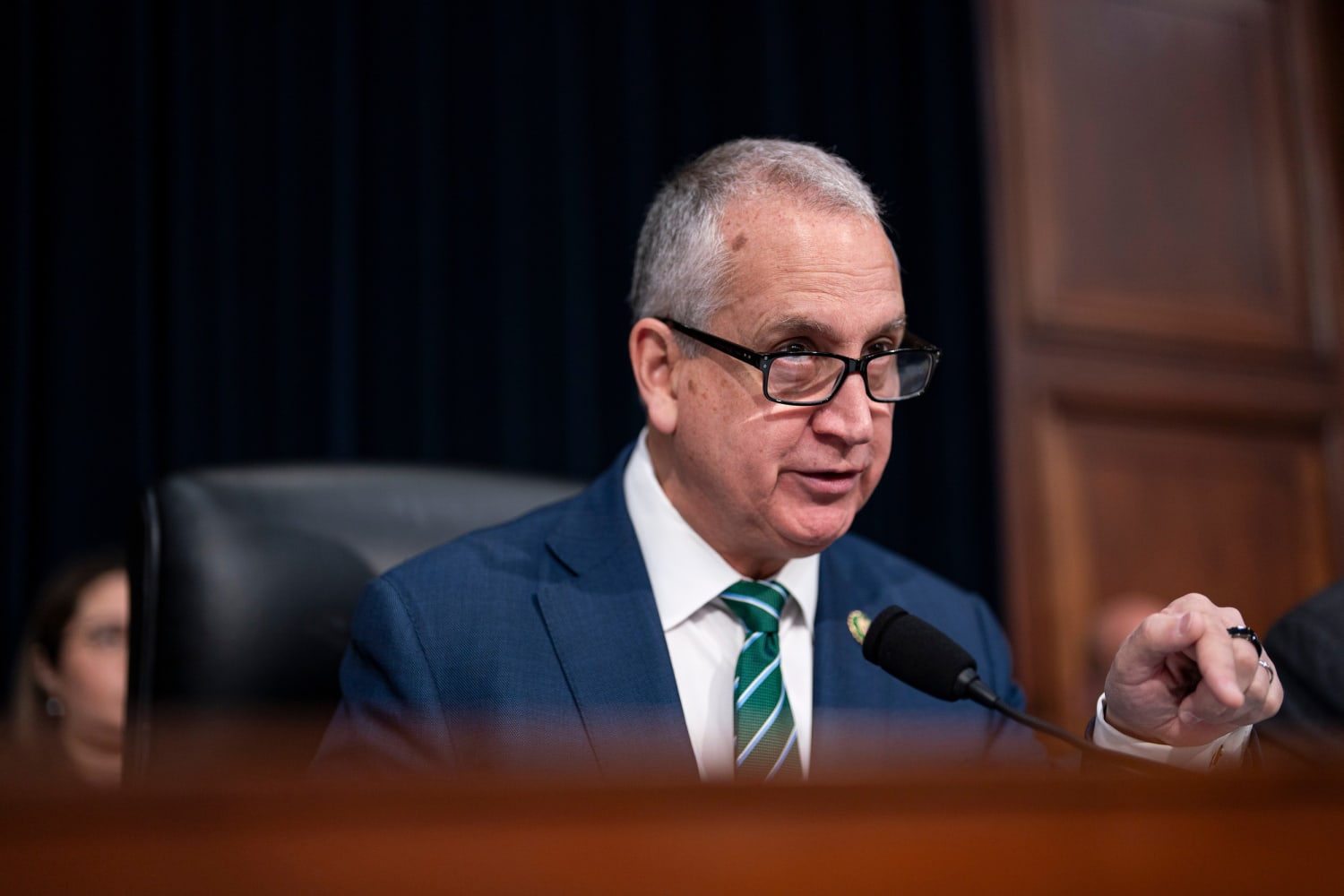
Mario Díaz-Balart says health care subsidies could be saved if Democrats let government reopen
Published

on


When the Affordable Care Act (ACA) passed in 2010, U.S. Rep. Mario Díaz-Balart voted against it. But today, he represents more Insurance Marketplace enrollees than any member of the U.S. House.

The Hialeah Republican wants to make sure subsidies set to expire at the end of the year don’t simply vanish. But he remains as concerned as ever that the program better known as Obamacare must see major changes or it will continue to drive insurance premiums up.

“We seriously have to make some reforms, not throw good money after bad,” he said.

The Kaiser Family Foundation released data this month verifying Florida has more at stake than any other state when it comes to ACA subsides. U.S. Rep. Frederica Wilson, a South Florida Democrat, said Miami-Dade could be the epicenter of a nationwide health care crisis, as four of the five congressional districts across the U.S. with the most ACA enrollees cover parts of Florida’s most populous county.

“It’s just alarming this is affecting one state so much, Florida, and one county, Miami-Dade,” she said.

But while Wilson and other Democrats point fingers at Republican leadership in Congress, Díaz-Balart scoffs at Republicans being blamed. House Republicans, he said, voted to keep the government open. But Senate Democrats, led by Senate Minority Leader Chuck Schumer, refuse to support a deal.

That, Díaz-Balart said, is why the nation now endures its third consecutive week of a federal shutdown with no clear end in sight.

“Schumer, who in the past said shutting down the government was irresponsible for any reason, voted against an extension to the 3rd of November,” Díaz-Balart said, referencing the House-passed budget resolution. He noted that the legislation would allow lawmakers to get back to work more than a month before ACA subsidies disappear.

“They don’t expire till December,” Díaz-Balart said. “That issue is still alive. It just proves this shutdown has nothing to do with health care.”

If the Senate were to just pass the House resolution to reopen the government, Díaz-Balart said, then conversations would start anew on what happens with subsidies.

He’s not the only Florida Republican making that argument. U.S. Rep. Carlos Giménez, a Miami-Dade Republican, said GOP-supported legislation can address the concern with ACA.

“I have cosponsored a bill to extend the subsidies for a year. It’s interesting that it was the Democrats who put the expiration date when they passed the original bill,” Giménez said. “A number of Republicans want to extend the subsidy. We need the Democrats to open so we can fix the mess they created.”

Díaz-Balart said there is still time to address some of the flaws with the current subsidy system, one that Democrats designed when they controlled Washington and which was always supposed to be temporary to address the coronavirus crisis. But that only happens if the government reopens and lawmakers engage in the messy business of legislating, he added.

Importantly, the subsidy-extending position held by Díaz-Balart and Giménez doesn’t reflect the will of the entire GOP caucus, or even all Florida colleagues. U.S. Rep. Byron Donalds, a Naples Republican running for Governor, told Fox Business the subsidies were always bad policy.

“This program has never worked. It’s always been more expensive,” Donalds said. “The Democrats just want more subsidies, and now they’re holding the government hostage because of it.”

Of note, not every district in Florida faces the same specter as Miami-Dade when it comes to subsidies expiring. While Díaz-Balart’s district has 300,000 ACA enrollees, Donalds’ Naples-based district next door has less than half that, around 119,000.

But importantly, Díaz-Balart doesn’t argue with Donalds’ fundamental argument that Obamacare, by taking the approach of subsidizing health care in the first place, has been the reason premiums leapt more than 50% over the course of the last decade.

Indeed, Díaz-Balart notes that the percentage of subsidies increased substantially during the COVID pandemic, and the subsidies expiring at the end of 2025 would simply return percentages to 2014 rates. That represents a massive cost increase for consumers because the price of insurance has risen dramatically.

“Let’s assume nothing happens on these subsidies and they expire. Does Obamacare go away? No way. We go back to — Obamacare. It’s Obamacare without the COVID increase,” he said.

But he acknowledges that a decade of subsidies has created a tough situation for his constituents and many others.

“Now Democrats are saying, if we go back to just Obamacare, it’s going to be too catastrophic for the American people,” he said. “The sad part is, because Obamacare dramatically increases health care costs, I think they have a valid point. But that’s only because they have lied to the American people since Day 1.”


Source link

Continue Reading

Politics

Gov. DeSantis releases $117B budget, prioritizing teacher and police raises

Published

on


Gov. Ron DeSantis unveiled a $117 billion budget proposal which he touted as a leaner spending plan than last year’s that still prioritizes pay increases for teachers and law enforcement officials.

“We’re still doing big things,” DeSantis said in Orlando as he released his 2026-27 fiscal year budget recommendations for his final year of office. “Florida has really led the way with fiscal responsibility.”

DeSantis’ priorities include $25 million for $5,000 recruitment bonuses for law enforcement officers, accelerating construction projects in congested areas, and $278 million for cancer research. The budget recommendations also set aside $118 million to max out the rainy-day fund and $1.4 billion for Everglades restoration projects, DeSantis said.

“What the budget does is it builds off the success that we’ve had,” DeSantis said. “This budget is entitled ‘Floridians First’ because that’s the focus of it. It’s putting our people first and making sure we’re good stewards.”

DeSantis’ press conference comes ahead of the start of the Legislative Session on Jan. 13. State lawmakers will ultimately approve the final budget, although DeSantis has line-item veto power.

For teacher raises, DeSantis is proposing $1.56 billion.

“We put our money where our mouth is. We did record funding for teacher pay increases for Florida. And this proposal today is the biggest by far,” DeSantis said.

The overall K-12 education $30.6 billion budget proposal includes $1.7 billion for early childhood education and would fully fund Bright Futures scholarships, which DeSantis said he is “a big believer in.”

DeSantis also wants to aside $20 million — a $14 million increase — for the Schools of Hope program to allow charter schools to take over traditional public schools with low enrollment.

Florida Education Commissioner Anastasios Kamoutsas was booed earlier this month by school officials concerned about charter schools taking over their buildings rent-free. On Wednesday, Kamoutsas went on the offense alongside DeSantis at the podium.

“I know there’s been all kinds of false attacks that have been taking place,” Kamoutsas lamented. He blamed the media for trying to sell papers and said some School Board members care more about running for higher office.

DeSantis also downplayed criticism of Schools of Hope. “We’re not going into Windermere … (or) Palm Beach and do a school. They are going to the toughest areas that we have where a lot of people have given up on some of these students. … They’re going to areas where no one else wants to go.”

In his budget recommendations, DeSantis also proposed nearly $2 billion for the state’s public colleges and $4 billion for Florida public universities.

In addition, DeSantis wants to support transportation and infrastructure, with $15.4 billion for the Florida Department of Transportation (FDOT) and $14.3 billion for the transportation work program. DeSantis said a priority is FDOT speeding up construction projects, especially in Central Florida, which is infamous for the congested Interstate 4.

“You get down near Disney and ChampionsGate and Polk on I-4,” DeSantis said of the traffic backups. “It’s not just rush hour. It could happen at any time.”

The Governor’s Office did not immediately provide a copy of the full budget recommendations after the press conference.

DeSantis’ critics took aim and accused him of ignoring Floridians’ affordability struggles.

“When Ron DeSantis slinks out of office next year for his new career as a bottom-tier podcast host for Blaze Media, these last eight years will be remembered as the final act of the Florida Dream of an affordable paradise,” said DeSantis Watch Communications Director Anders Croy.

“This finale was written by a self-serving politician who consistently prioritized the increasing wealth of his corporate donors over the needs of working Floridians.”


Source link

Continue Reading

Politics

Ron DeSantis says most Floridians won’t notice ‘schools of hope,’ as they will be in places most people don’t go

Published

on


Gov. Ron DeSantis is strongly advocating for the “Schools of Hope” model, which would co-locate charter schools in underused public school facilities.

And as DeSantis said in Orlando, the facilities primarily will cater to children whose parents aren’t doing as much as some others, in places most people wouldn’t even go, with tonier communities insulated from the concept.

“You’re really relieving burdens on the district, right? Because, you know, you’re creating a program where it is going to be targeted at … the least-advantaged students. And in areas where a lot of people say it’s not even worth trying,” DeSantis said.

It’s unclear which people are allegedly saying it’s not worth “trying” to educate some students but not others.

But worries that they will be in places like Windermere or Palm Beach are misplaced, DeSantis said.

“This is not going to be something where a school of hope is going to be coming in and descending on Palm Harbor or Destin or some of these places,” he said, singling out two wealthy communities where more than 80% of residents are White.

He reassured parents that these schools of hope won’t come in where “my Sally or my Johnny goes,” but instead would be in “some hard areas in Miami. Probably Fort Lauderdale, Broward County, probably Orlando, maybe Tampa, maybe Jacksonville.”

In these areas, DeSantis predicts the Schools of Hope will largely go unnoticed.

“I don’t think most Floridians are even going to know that there’s a school of hope. Because quite frankly, probably where they’re setting up, already a lot of Floridians aren’t spending a lot of time in some of these areas, but they’re going to go in,” DeSantis said.

Regardless of whether residents are aware of the schools, DeSantis made it clear his preferred vendor would be the Success Academies championed by arguably his leading political patron over the years, billionaire Ken Griffin.

Griffin has already pledged to devote $50 million to expanding the concept in Florida.

“It’s a difficult mission, but at least with Success Academy, you have an operator who’s been able to do some really, really great things,” DeSantis said.

He credits Success Academies with having “gone into the worst areas in terms of opportunity … the most at-risk … areas where no one else wants to go.”

Lots of vendors want into the taxpayer-subsidized space.

As of last month, 22 School Districts across the state have received at least 690 letters of intent from charter school operators, according to data gathered by the Florida Policy Institute, a member of the Florida Coalition for Thriving Public Schools.

School Districts reporting letters as of mid-November include Brevard, Broward, Collier, Duval, Hillsborough, Indian River, Lake, Lee, Manatee, Miami-Dade, Orange, Osceola, Palm Beach, Pasco, Pinellas, Polk, St. Johns, St. Lucie, Sarasota, Seminole, Sumter and Volusia counties.

The letters, sent by privately operated charter school organizations, seek to occupy portions of public schools the state considers underutilized. Under provisions added to the 2025–26 state budget, “Hope operators” may move into those spaces at no cost, leaving districts to absorb maintenance, custodial and other operational expenses.

South Florida had received the most letters at last check, with at least 224 between Broward and Miami-Dade counties. Miami-Dade officials said the district received at least 180 letters, though only 90 were considered valid because many came from Bridge Prep Academy, which is not yet an approved Schools of Hope operator.

The impact also was obvious across the Tampa Bay region, where Hillsborough, Pinellas, Pasco and Manatee counties collectively show some of the highest concentrations of claims in the state. Together, the four districts account for more than 80 campuses and more than 46,000 requested seats, according to data compiled by the coalition.

Even as those letters go out, state lawmakers are already working to pull the plug on the program’s most controversial rule that allows charter school operators to move into “underused” public school buildings rent-free. SB 424, filed by Democratic Sen. Darryl Rouson of St. Petersburg, would repeal that provision.

“By eliminating language requiring co-location in public schools, we are ensuring schools do not face the unintentional consequence of an unfunded mandate, and that students can continue thriving in their schools without losing access to spaces they need for academic success,” Rouson said in an earlier statement about the bill.

___

A.G. Gancarski and Jesse Mendoza of Florida Politics contributed to this report.


Source link

Continue Reading

Politics

State lawmakers greenlight sweeping audit of Miami Beach after request by Fabián Basabe

Published

on


Miami Beach is now bracing for a rare, top-to-bottom state audit after lawmakers quietly and unanimously approved a request by Republican Rep. Fabian Basabe.

The Joint Legislative Auditing Committee directed Florida Auditor General Sherill Norman to examine Miami Beach’s operations, a move lawmakers advanced without discussion after Basabe alleged chronic mismanagement and weak transparency.

An audit, he said, would “strengthen systems, reinforce public trust and support the residents we all serve.”

“This isn’t about fault-finding. It’s an opportunity, with the budget of our size and the responsibilities that we carry as a coastal community,” he said. “Transparency and partnership matter.”

Basabe detailed his concerns in an October letter to the panel’s Chairs, Sen. Jason Brodeur and Rep. Chase Tramont, accusing the city of mismanaging its nearly $1 billion budget, procurement irregularities and chronic delays on major capital projects.

Norman will now set the scope of the review, Audit Manager Derek Noonan told the Miami Herald, which first reported on the audit’s approval. Noonan said auditors will coordinate with the city in the coming weeks to begin document requests and arrange on-site work. A final report is expected roughly one year after the audit formally begins.

Miami Beach officials have pushed back on Basabe’s allegations. City Manager Eric Carpenter told the Herald that the city “undergoes comprehensive audits each year” and is prepared to “fully cooperate with the State to dispel any misinformation.”

Notably, those audits are conducted internally.

Commissioner Alex Fernandez — a Democrat with whom Basabe has differed on multiple matters, including the city’s homelessness ordinance, which the lawmaker has argued conflicts with state law — similarly told the Herald that Miami Beach is a “transparent, well-run, and fiscally strong government.” He noted that the city has reduced its millage rates and boasts strong bond ratings, record reserves and a year-end surplus.

Commissioner Laura Dominguez, also a Democrat and target of negative attention from Basabe in the form of a pay-for-play accusation she called a “baseless smear,” also cited the city’s bond ratings, balanced budget and annual audits in a statement to Florida Politics.

Basabe has called for the audit to probe a wide range of concerns, including a 45% increase in the city’s budgets since 2021, spending on international travel, allegedly opaque procurement contracts and what he calls a counterproductive pattern of repeatedly arresting and then releasing homeless people.

His October request also flagged alleged “inflated contracts, diversion of funds,” excessive reliance on outside consultants and favoritism in leases and contract awards. He further questioned delays in completing projects such as Bayshore Park, which he said “took thirty years” to build — contemporary reporting suggested the timeline for the project was closer to 10 years — and the Miami Beach boardwalk, which he said took 20 years to finish.

Though Miami Beach already maintains an independent Inspector General with broad subpoena authority, the Auditor General’s inquiry represents one of the most sweeping state-led examinations of a South Florida municipality in recent years.

It also lands after Gov. Ron DeSantis’ administration, through its separate Department of Government Efficiency initiative led by CFO Blaise Ingoglia, conducted audits of Miami-Dade County, Broward County, Palm Beach County, the city of Miami and other local governments that Ingoglia said have collectively overspent nearly $1.9 billion in one year alone.


Source link

Continue Reading

Trending

Copyright © Miami Select.