Connect with us

Politics

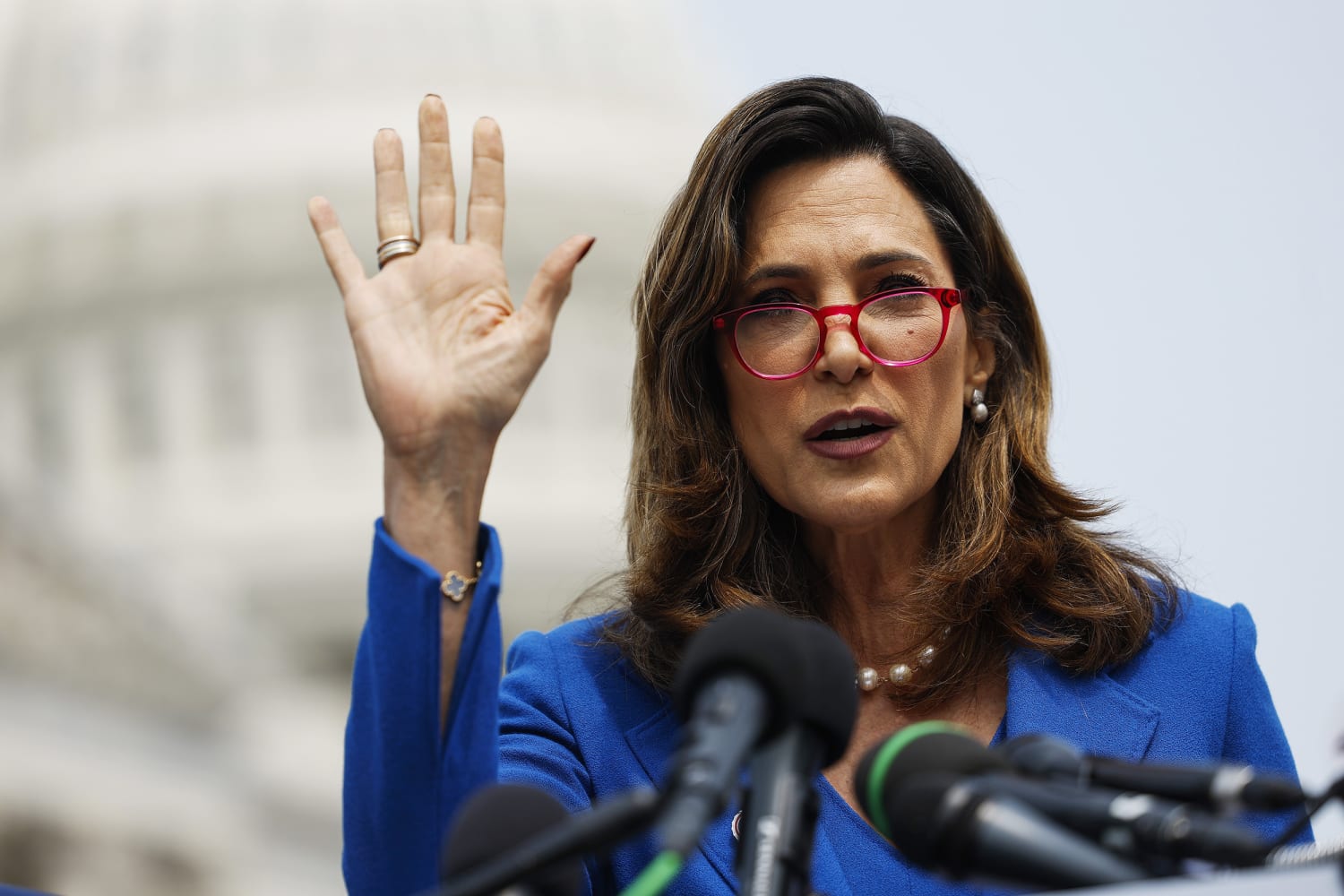
Maria Salazar says Maria Corina Machado wants Donald Trump by her side at Nobel ceremony

Published

on


President Donald Trump may not get a Nobel Peace Prize this year.

But a member of Congress from South Florida says he could be there anyway with the Venezuelan political leader who will be honored.

“December 10th in Oslo is when the Nobel Peace Price Award is going to be given to Maria Corina Machado. We certainly hope that she is the legitimate president of Venezuela. She will go and be able to receive it, and she’s told me that she wants President Trump to go with her to receive it,” said Rep. Maria Salazar on “Fox and Friends Weekend.”

Salazar is confident that if the United States can get strongman Nicolas Maduro to leave office, ending what she called his  “bad embrace,” Machado will be able to guide the country to economic prosperity.

She also believes that could be in America’s interest, with Machado, who is “currently hiding somewhere in Caracas,” ensuring the United States has access to Venezuela’s petroleum reserves.

“This is a country that can stand itself up. It has the resources to do that,” Salazar said. “She has told me, repeatedly that they want to work with … the American companies that do the oil. So this is the perfect moment for us to do business with them,” the Congresswoman said.

Machado has already dedicated the prize to Trump.


Source link

Continue Reading

Politics

WSRE Foundation pushes back on Pensacola State College power, money grab

Published

on


If your mental picture of the Public Broadcasting System (PBS) is still tote bags, New England accents, and politely liberal documentaries, WSRE — Northwest Florida’s homegrown public television station — is here to remind you that not every PBS affiliate fits that stale stereotype.

And now the station is taking a stand: WSRE’s nonprofit fundraising foundation just filed a first-in-the-nation federal lawsuit to stop Pensacola State College from taking control of millions in private donor dollars that have sustained the station’s community service for nearly 60 years.

The lawsuit alleges PSC didn’t just decide to walk away from its decades-old relationship with PBS, it formally terminated the Foundation as its partner and “Direct Support Organization.” It went even further, demanding the nonprofit dissolve and “that funds donated by private citizens be turned over to the government entity, PSC.”

That’s not exactly the “small government” model most Northwest Florida residents imagine when they think about how public institutions should work.

But to understand why this fight matters, you need to understand what WSRE actually is — and what it isn’t.

WSRE is NOT whatever your culture-war uncle thinks PBS looks like. 

This is a station with 1.2 million viewers that is rooted in the Gulf Coast’s true identity: military bases, hurricane seasons, local history, and the families who shape all three.

WSRE’s “Connecting the Community” series has spotlighted veterans, told the story of Air Force Gen. Daniel “Chappie” James Jr., and honored military families and memorials across the region. Two of its signature documentaries — “The 2 Sides Project” and “They Were Our Fathers” — follow Vietnam Gold Star children reckoning with the losses of war.

On the Gulf Coast, this isn’t niche content. It’s the lived experience of the community. It’s why WSRE is beloved by the community for its excellent programming that has informed and entertained for generations

And, as we approach the 250th ‘birthday’ of our American independence, what could be less woke than Ken Burns’ incredible documentary on the American Revolutionary War? 

And when the tropics start to spin, WSRE becomes something else entirely: a public safety asset. It produces long-form hurricane preparedness programming with the National Weather Service, Escambia County Emergency Management, and local school safety officials. Families trust it because it’s local — and because storm misinformation can be just as dangerous as the weather itself.

And then there are old friends like Big Bird, Elmo and the Cookie Monster (whose colors of yellow, red and blue belie the reality that they are completely apolitical). Sesame Street programming and its PBS program cousins have helped all of us raise our children the right way.

So, when PSC cut ties with PBS and then sought to raid the donor-raised funds for itself, the Foundation drew a legal line in the sand.

“This is about honoring donor trust,” Foundation Chair Amy Day said, in announcing the lawsuit. “People gave to support WSRE’s mission — not to bankroll a government entity’s shifting priorities.”

The politics around public broadcasting in Florida have been heating up for some time. Florida Department of Education leadership has made no secret of its ideological distaste for PBS, even though affiliates like WSRE look nothing like the unfair national caricature.

But the legal issue here isn’t ideology — it’s ownership.

When private citizens donate to a nonprofit mission, who controls that money? The donors who gave it? Or a government body that decides it wants to sweep the money and use it for something else?

If PSC prevails, what other ambitious money-hungry entities will see other nonprofits — including those far removed from public broadcasting — as potential treasures to raid?

Northwest Florida donors built WSRE. They funded the veterans programming, the hurricane prep shows, the documentaries, and the early-learning resources. These were gifts from families, not appropriations from a state budget.

PSC made a choice when it left PBS. Donors made a choice when they gave to WSRE. Now, a federal court will decide whether those donor choices still matter — and whether a local station that has been embraced by conservative Northwest Florida for decades can keep serving the community that shaped it.

Many of the people who love and have supported WSRE through the years are also likely fans of Pensacola State College. But this PSC plunder of WSRE’s donor funds provides too much sad irony when the college’s mascot is a pirate. 


Source link

Continue Reading

Politics

Let’s keep Christmas affordable — Mr. President, pause seasonal tariffs

Published

on


President Donald Trump has made it very clear: Americans can be excited about Christmas again.

His policies are feverishly working to fight inflation, which has been a stubborn problem to address, skyrocketing under former President Joe Biden’s stewardship.

He’s making the world safer. Look no further than the ceasefire he has managed to pull off in Gaza and help work towards peace for the Jewish and Palestinian people. He has also sought to end persistent fighting across Africa and Asia.

And here at home, he is seeking common sense deals that make America greater and stronger. Lowering prescription drug costs, bringing investment back into the United States, and fighting to rebalance trade deals that have long put American companies at a disadvantage.

As Americans pull boxes from the attic, string lights, and plan to give their kids a Christmas they’ll remember, they can look forward to a merry Christmas season.

There’s one issue to consider, however, and that is higher prices on seasonal décor, many tied to tariffs, which have the potential of turning a joyful season into a budgeting headache.

According to a recent nationwide survey, 84% of Americans say decorations have gotten more expensive and 63% worry that China’s failure to engage at the negotiation table fully will push costs even higher. When you’re stretching a paycheck between heating bills and a tree for the kids, an extra 10 or 20 dollars to deck the halls isn’t minor. It’s the difference between doing Christmas right and doing without.

There’s a conservative, common‑sense fix: targeted tariff relief on Christmas décor. We can keep pressure on bad actors abroad while easing pressure at home: around the kitchen table, under the tree, and at the checkout line. A timely holiday exemption would honor both our economic interests and our family priorities.

Trump understands this balance. During his last presidency, he delayed certain tariffs ahead of the holidays so American families wouldn’t feel the squeeze at Christmastime. That was smart, pro‑family leadership and it worked. We need him to save Christmas again this year and institute tariff relief on seasonal décor.

Some will worry about “mixed signals” or “policy complexity.” But there’s a clear difference between a narrow holiday exemption and a broader retreat. We can do both: defend American workers, push back on unfair practices abroad, and still give families a little breathing room during the season of giving. Christmas is the right moment to show that balance.

Let’s not make the most cherished season of the year more costly. Christmas should be about family, redemption, and generosity, not sticker shock. As the survey mentioned earlier reminds us, Americans treasure classics like “A Christmas Story,” “Home Alone,” “Elf,” and “It’s a Wonderful Life”… stories of resilience, joy, and community. Those values are worth protecting and highlighting this time of year.

I am confident that Trump agrees. We saw him save Christmas in 2019. Rolling back the tariffs on Christmas décor with a targeted holiday can save Christmas by making it more affordable. Turn the lights on, not the prices up.

___

Debbie Dooley is a prominent Georgia-based conservative activist and one of the founders of the Tea Party movement.


Source link

Continue Reading

Politics

‘Blue Ribbon’ land conservation bill clears first Committee stop

Published

on


A measure aimed at incentivizing private large-scale landowners to set aside conservation lands has cleared its first Committee stop, the Intergovernmental Affairs Subcommittee, with one minor amendment.

Rep. Lauren Melo’s measure (HB 299) aims to encourage Florida’s largest private landowners to serve as long-term stewards of both the natural and built environments. It would establish “Blue Ribbon” projects for landowners who control or own at least 10,000 contiguous acres. The measures would require participating landowners to conserve at least 60% of the property.

The adopted amendment to the House bill adds language granting easements to the Rural and Family Lands Protection Program through the Florida Department of Agriculture and Consumer Services and similar government entities to the definition of “reserve area,” the space that would be conserved under the program.

The bill would allow landowners to bypass the usual local government approval processes typically undertaken for development projects. However, landowners would still need approval from local governments based on compliance with applicable statutes, including development orders and concurrency requirements.

The stated Blue Ribbon project goals are to protect wildlife and natural areas; limit urban sprawl; provide a range of housing options, including missing middle and affordable housing; create quality communities designed to reduce vehicle trips and promote multiple mobility options; and enhance local economic development objectives and job creation.

The proposal is driven by a desire to implement smart growth strategies, ensuring growth occurs only where it can be supported. The proposal requires phased planning for water, wastewater, transportation, schools and utilities.

It also emphasizes sustainability beyond conservation lands by ensuring that new development supports population density in compact, multi-mobility-focused communities.

The measure also seeks to ensure the state is a good steward of taxpayer dollars by allowing conservation lands to be secured without public dollars.

“HB 299 creates a framework that secures large-scale private land conservation for the long term — without requiring state purchase or taxpayer subsidies,” Melo previously told Florida Politics of the bill.

Sen. Stan McClain is sponsoring an identical bill (SB 354) in the upper chamber. It has not yet been heard in Committee. The House version has two more Committee stops: Commerce and State Affairs.


Source link

Continue Reading

Trending

Copyright © Miami Select.