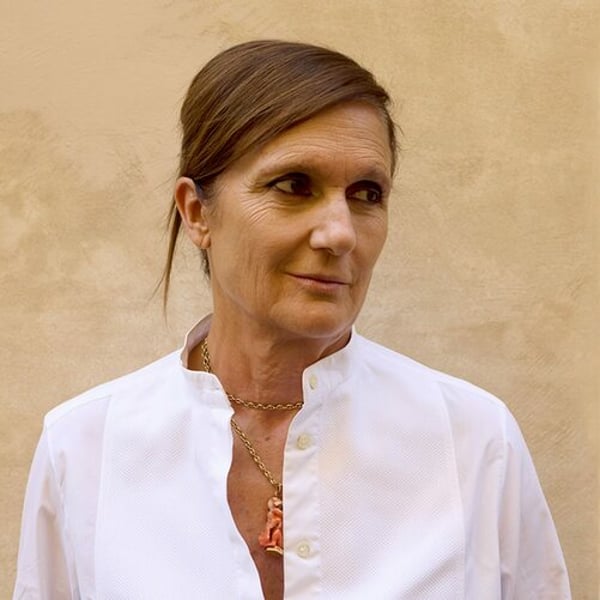
It’s official. On Tuesday, Fendi announced that it has named Maria Grazia Chiuri as its Chief Creative Officer, as the former Dior designer returns to the Italian fashion house where she began her career.
Maria Grazia will present her first collection for Fendi during the Fall/Winter 2026-2027 runway shows in Milan next February. Her appointment had been widely anticipated.
Maria Grazia Chiuri by Paolo Mattioli
“Maria Grazia Chiuri is one of the greatest creative talents in fashion today, and I am delighted that she has chosen to return to Fendi to continue expressing her creativity within the LVMH group, after sharing her bold vision of fashion,” said Bernard Arnault, Chairman and CEO of LVMH Group, the conglomerate that owns Fendi. “Surrounded by the Fendi teams and in a city that is dear to her, I am convinced that Maria Grazia will contribute to the artistic renewal and future success of the Maison, while perpetuating its unique heritage.”
Chiuri succeeds Silvia Venturini Fendi, who has led the creative direction of Fendi since the departure of Kim Jones last year. Last week, Venturini Fendi was named Honorary President of Fendi, a move which effectively announced that the Rome-based brand would name a new creative director. Chiuri had been the favourite to take up the position for the past several months.
“I return to Fendi with honour and joy, having had the privilege of beginning my career under the guidance of the House’s founders, the five sisters,” said Chiuri. “Fendi has always been a forge of talents and a starting point for many creatives in the industry, thanks to the extraordinary ability of these five women to foster and nurture generations of vision and skill. I am grateful to Mr. Arnault for entrusting me with the task of helping to write a new chapter in the history of this extraordinary women-founded company.”
Sixty one year-old, Rome born Chiuri began her career at Fendi in 1989, and she helped to develop the label’s famed Baguette bag. After joining Valentino, she then became the joint creative director of the label in 2008. Eight years later, she was named creative director Dior, a position she held until this spring.
“I’m thrilled to welcome Maria Grazia into the team,” underlined Ramon Ros, Fendi’s Chairman and CEO. “The role of a creative director is no longer to simply design beautiful clothes but to curate a culture and hold a mirror to the world we live in. Her talent and vision will be instrumental in fortifying Fendi’s heritage, shaping the future talent in the house and deepening our commitment to Italian craftsmanship.”
Poshmark on Tuesday announced the appointment of Elizabeth von der Goltz as its first chief revenue officer, as the resale platform looks to bolster its C-suite and drive organisational growth with the luxury veteran.
Matches Fashion
Joining Poshmark in January, Von der Goltz will oversee all commercial and marketing functions—including merchandising and sourcing, partnerships, customer acquisition and growth, brand and creative, and communications and social media. She will also “unite creative direction with commercial strategy into a cohesive revenue engine,” according to a press release from the U.S. firm.
“Elizabeth’s appointment marks a milestone moment for us,” said Namsun Kim, chief executive officer of Poshmark.
“We’ve always been a product and tech company at heart, but our next phase envisions pairing that DNA with commercial precision, creativity and brand strength. Elizabeth brings the rare combination of luxury fashion, digital retail strategy, and global merchandising and operational expertise. She is truly unique in her vision for channeling merchandising strategy into brand identity and translating brand equity into measurable growth and customer advocacy.”
With more than two decades of global experience in fashion, luxury, and e-commerce, Von der Goltz’s most recent roles include chief commercial officer at Matches Fashion; chief executive officer at Browns, and chief fashion and merchandising officer at Farfetch.
Earlier in her career, Von der Goltz held senior leadership roles at Bergdorf Goodman, before later serving as global buying director for Net-a-Porter.
“Throughout my career—from best-in-class brick-and-mortar to global e-commerce and luxury marketplaces—I’ve always focused on one question: what’s next for the consumer? As the industry evolves, the future is taking shape in social commerce, peer-to-peer connection, and circular fashion, and I’m thrilled to join Poshmark at this pivotal moment,” said Von der Goltz.
“The opportunity to merge world-class product and technology with strategic merchandising and brand creation is incredibly powerful. Resale and vintage have already become a mainstream part of shoppers’ closets and represent a structural shift in retail consumption. It’s an honor to join the leading fashion resale marketplace and its iconic community as chief revenue officer to help shape the next era of how people discover, buy, and sell fashion.”
The appointment of a chief revenue officer at Poshmark signals a shifting from a “purely product- and technology-led model to a more integrated and creative retail experience,” the company added.
With three days to go before a crucial deadline for BHV, Paris City Hall on Tuesday signalled its interest in the department store’s building, intensifying pressure on its boss, who is embroiled in the Shein controversy, as well as employees’ “uncertainty” about their future.
(AFP – Thibaud MORITZ)
“At a time when the situation at BHV is causing very serious concern for jobs and for the future of central Paris, I wanted the city to equip itself to act pre-emptively,” declared Socialist mayor Anne Hidalgo at the Paris Council, which is due to adopt a motion to this effect.
If the owner of BHV were to “vacate the premises”, the city would “explore all options to put itself in a position to acquire the building in order to safeguard commercial activity and jobs, while enabling the development of a mixed-use scheme also including social and affordable housing”, the executive’s motion states.
The Société des Grands Magasins (SGM), which has owned the Bazar de l’Hôtel de Ville (BHV) retail business since 2023, also wants to buy the building from the Galeries Lafayette group, as the two parties are bound by a sale agreement that expires on Friday. However, SGM co-founder Frédéric Merlin caused an uproar in early October by announcing the opening, within BHV, of the first physical Shein store, an Asian ultra-fast-fashion brand accused of numerous ills such as unfair competition, and pollution.
“Investment funds”
The Banque des Territoires, an entity of the Caisse des Dépôts (CDC), has withdrawn from negotiations begun in June with SGM to help it purchase the building, citing “a breakdown of trust.”
Numerous brands including Dior, Sandro, and Guerlain have also left BHV in recent months, due to mounting unpaid bills or opposition to Shein.
All of which further complicates the task of Merlin, who is supposed to have completed his funding round on December 19.
“On that date, exclusivity lapses and we reserve the right to explore all the options open to us,” a Galeries Lafayette spokeswoman told AFP.
Refusing to see its name associated with Shein, the group has also terminated its contract with SGM covering seven provincial stores – rebranded BHV. For its part, SGM says the project is “moving forward” and “should be finalised in the coming days or weeks.”
Appearing before the National Assembly at the end of November, Merlin referred to “extremely precise discussions” with foreign, non-Chinese “investment funds.”
Against this backdrop, Nicolas Bonnet-Oulaldj, the deputy mayor responsible for commerce, told AFP that City Hall was ready to “step in” from Friday.
300 million euros
Given the amount involved – 300 million euros, according to him – the city would not buy on its own but via, for example, a semi-public company with private shareholders, says Bonnet-Oulaldj, who would like to make it “a showcase for brands made in Paris and in France, and for young designers.”
Building housing would require a modification of the PLU (local urban plan), as the plot is “classified as a department store.”
This “announcement adds further uncertainty to the future of BHV”, which directly employs some 750 staff, its inter-union alliance responded, asking “to be received as soon as possible by Paris City Hall.”
“The future of BHV depends not only on the finalisation of the acquisition of the building” but also “on the continuity of commercial operations”, it warned, expressing alarm at the “dire situation” of the store, where Shein sales are “nowhere near making up for the shortfall across the rest of the store.”
Hidalgo’s surprise announcement drew criticism from the right. Aurélien Véron (LR), spokesman for Rachida Dati’s group on the Paris Council, condemned it as an “improvised PR stunt”, three months ahead of the municipal elections.
Recently, Merlin set out his plans in LSA magazine, including a new payment system for suppliers. But “nobody believes it”, scoffed Guillaume Nusse, CEO of Clairefontaine-Rhodia, which pulled out of BHV over “unpaid bills and broken promises,” speaking to AFP.
This article is an automatic translation. Click here to read the original article.
In 2025, South Korean fashion takes another step up on the global stage. In a sector where technological innovations are redefining production processes, South Korea stands out for its ability to turn these developments into drivers of growth and global appeal, according to a Spherical Insights study published in November.
South Korean menswear makes its mark internationally, seen here at Pitti Uomo – Pitti Uomo
According to the South Korean Ministry of Trade, Industry and Energy (MOTIE), almost $27 million is set to be invested in 2025 to strengthen the national textile value chain.
This policy forms part of a broader strategy that provides more than $19 billion in support for firms operating in industrial textiles, the creation of an Industrial Textile Alliance, and a certification centre for technical products. The aim is to lift digital transformation across the sector from 35% to 60% and increase South Korea’s share of the global markets for industrial and sustainable textiles from 2-3% to 10% by 2030.
A dynamic domestic market
These ambitions are underpinned by an already robust industry. In 2024, South Korea imported $12.37 billion worth of clothing, including $5.08 billion in menswear. Exports totalled almost $2 billion, of which $1.7 billion comprised synthetic textiles and crocheted fabrics. This momentum reinforces a domestic market characterised by diverse demand, rapid trend adoption and strong cultural influence.
South Korea invests in its textile industry – Shutterstock
At the heart of this evolution lies the global rise of Korean menswear. Korean brands stand out for their attention to detail, mastery of cut and tailoring, and a strong appetite for exploring experimental materials, bold silhouettes and assertive colours. This stylistic approach, oscillating between minimalism and exuberance, meets a growing demand for pieces capable of expressing individual identity, according to the study.
Exports to be developed
The trends for 2025 confirm this direction: oversized cuts, unique patterns, bright colours, sustainable materials, a fusion of traditional and contemporary styles, as well as layering, athleisure and gender-fluid fashion, are at the forefront. From oversized kimono-polos to two-tone pink shirts, the Korean aesthetic offers a balance of comfort, experimentation and sophistication.
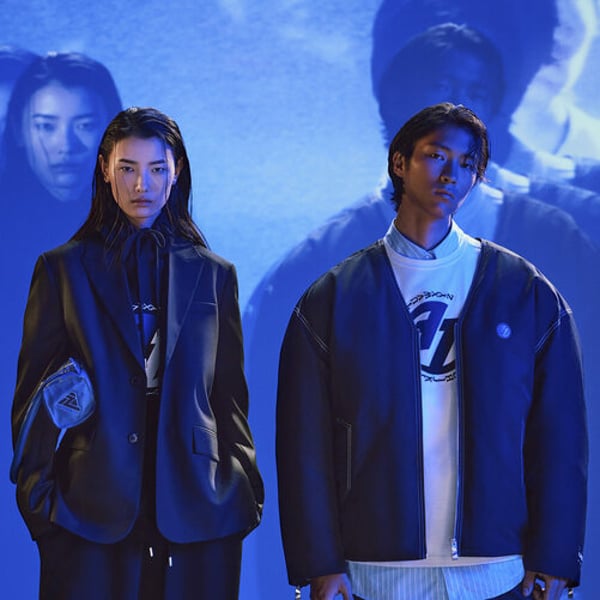
Ader Error is one of the young South Korean brands flourishing internationally (here, its collaboration with Zara) – Zara
This creative ecosystem is supported by a myriad of ‘flagship’ brands. Names already recognised worldwide such as Gentle Monster, Andersson Bell, Kusikohc, Hyein Seo and We11done fuel the country’s international aura through their distinct worlds, blending art, streetwear, craftsmanship and conceptual design. In 2025, other labels are taking centre stage: Ader Error and its deconstructivist streetwear, Wooyoungmi and its modern tailoring, ThisIsNeverThat and its distinctly Korean take on streetwear, as well as 87MM, Recto, Amomento, PushButton and Minjukim, whose gender-fluid offerings are gaining visibility.
By combining massive public investment, a capacity for innovation, cultural richness and creative power, South Korea is putting its fashion industry on an upward trajectory in 2025. It can be seen not only as an exporter of aesthetics, but also as a key player in technical and sustainable textiles, with the ambition of playing a central role in contemporary global fashion.