Connect with us

Fashion

Mapic trade show to stage redesigned 30th edition on November 4-6 in Cannes

Published

on


Translated by

Nicola Mira

Published


October 13, 2025

The Mapic commercial real estate show will be held at the Palais des Festivals in Cannes, France, on November 4-6. It is expected to host 160 exhibitors and to welcome some 4,000 visitors, including 1,800 representatives of retailers looking for new commercial premises. The organisers are keen to attract more international exhibitors, and have tweaked the show format for this 30th edition to adapt to new market conditions.

Mapic

The main event is scheduled on Tuesday November 4 and Wednesday November 5. On November 6, the invitation-only NextGen Retail Day will feature meetings and workshops focusing on Gen Z consumers’ expectations, attended also by students from three leading French business schools.

“Mapic’s role in promoting business opportunities is still highly recognised by retailers and real estate developers, but nowadays it’s harder to deploy human and budgetary resources to come and spend three days in Cannes,” said Francesco Pupillo, the show’s director. “Based on this observation, we have completely revised the event’s format … We refocused our value proposition on contacts relevance and quality, on a wide range of retail brands, and on ease of connections,” he added.

The Retail Leaders Cocktail, a networking event, is one of the show’s new features. It is set to bring together the senior executives of 50 of the largest retailers present at Mapic, as well as the CEOs of about 40 major developers specialised in commercial real estate. The show’s opening cocktail party and the gala dinner on November 4 will be combined into one large-scale event open to everyone.

Mapic

A special focus in this edition of Mapic will be new brands from Asia and the Americas. Additionally, retailers and real estate developers from new regions, notably the Middle East and India, will also feature at the show.

Regional expansion plans

A survey of some 1,000 retailers attending Mapic identified a number of preferred expansion regions. For example, Aesop is keen to expand in Europe, as are apparel brand Funky Buddha, childrenswear brand Flying Tiger, and yoga apparel specialist ALO.

Mapic

Primark, Parfois and L’Oréal are instead reportedly targeting Saudi Arabia, JD and Diesel are said to be focusing on North America, while H&M is setting its sights on South America. As well as Europe, India is a preferred destination for Danish brand Flying Tiger and it is for Swarovski too, while Deckers is very interested in the Chinese market. In Africa, Monoprix and Kiabi are keen to expand in Egypt, while Turkish apparel brands AC & co. and Avva are said to be targeting Algeria.

Copyright © 2025 FashionNetwork.com All rights reserved.



Source link

Continue Reading

Fashion

Louis Vuitton Foundation to stage major Calder retrospective

Published

on


Published


December 16, 2025

The Fondation Louis Vuitton will stage a novel Alexander Calder centennial retrospective in 2026, the latest in a series by the Paris art institute focused on leading artists of 20th and 21st centuries.

The striking silhouette of the Fondation Louis Vuitton in France – Fondation Louis Vuitton – Facebook

 
Previous monographic exhibitions at the Fondation Louis Vuitton have included Jean-Michel Basquiat, Joan Mitchell, Charlotte Perriand, Mark Rothko, David Hockney, and Gerhard Richter, its current show.
 
For Calder, a legendary artist known for his giant mobiles, sprawling mechanical kinetic sculptures moved by power and wind, the foundation will dedicate the entirety of its show space. And also, for the first time, the adjacent lawn, in a dialogue between Calder’s volumes, planes, and movements and those of the foundation’s famous sailboat silhouette.

The announcement by the Fondation Louis Vuitton on Tuesday, comes 11 days after the death of Frank Gehry, the master architect who designed its building. The art show will celebrate the centenary of Alexander Calder’s arrival in France in 1926 and the 50th anniversary of his death with a retrospective covering all aspects of his work. The son and grandson of two sculptors, Calder was born in Philadelphia in 1898 and died in New York in 1976.
 
Entitled ‘Calder: Rêver en équilibre,’ or ‘Calder: Dreaming in Balance,’ the exhibition covers half a century of creation, from the late 1920s and the first performances of the Calder Circus that captivated the Parisian avant-garde, to his monumental sculptures that redefined the idea of public art in the 1960s and 1970s.
 
The exhibition, one of the most important to date devoted to Calder, was conceived in close collaboration with the Calder Foundation, which is the main lender. It will also benefit from loans from international institutions and leading private collectors, bringing together nearly 300 works: mobiles and stabiles- to borrow Calder’s terminology for kinetic and static abstractions- as well as wire portraits, wooden sculptures, paintings, drawings, and even jewellery.
 
Works by his friends Jean Arp, Barbara Hepworth, Jean Hélion, and Piet Mondrian, as well as Paul Klee and Pablo Picasso, help to situate Calder’s radical inventiveness within the avant-garde movement. Thirty-four photographs taken by some of the most important photographers of the 20th century (Henri Cartier-Bresson, André Kertész, Gordon Parks, Man Ray, Irving Penn, and Agnès Varda) show an artist walking the tightrope between art and life.
 
After studying at the Art Students League in New York, Calder moved to Paris in 1926. In the Montparnasse district, the artist quickly became part of what was then the world’s leading artistic centre. There he presented unique forms, figurative and refined wire sculptures that attracted critical acclaim, and a miniature circus. Thanks to an exceptional loan from the Whitney Museum of American Art, the first in 15 years, Calder’s Circus is returning to Paris, the city where it was created. At the centre of this new kind of show, Calder manipulates acrobats, clowns, and miniature horsemen. Fernand Léger, Jean Hélion, Le Corbusier, Jean Arp, Joan Miró, and Piet Mondrian are among his spectators.
 
Calder’s visit to Mondrian’s studio in 1930 marked the abstract turning point in his work, first in painting, then in sculpture. Marcel Duchamp proposed the name “Mobiles” for the abstract and kinetic compositions that the artist presented in 1932 at the Galerie Vignon in Paris. Initially driven mechanically, then moved by slight breezes, these mobiles borrowed “their life from the vague life of the atmosphere,” as Jean-Paul Sartre wrote in 1946.
 
Calder returned to France after WW2 and set up a studio in the hamlet of Saché, in the Loire Valley in 1953. One of his sculptures still stands in the village’s square.
 
Like his swaying interconnected mobile art, the exhibition is a joint curation that includes input from Suzanne Pagé, artistic director of the Fondation Louis Vuitton; guest curators Dieter Buchhart and Anna Karina Hofbauer, assisted by Valentin Neuroth and Claire Deuticke; and Olivier Michelon, associate curator, assisted by Léna Lévy.
 

Copyright © 2025 FashionNetwork.com All rights reserved.



Source link

Continue Reading

Fashion

TikTok live shopping catches on in US with Kim Kardashian and cookies

Published

on


By

Bloomberg

Published


December 16, 2025

Kim Kardashian logged onto TikTok earlier this month and did something new: tried to sell pajamas, slippers, and matching sweat sets like the host of an old-fashioned TV infomercial. 

Kim Kardashian held a live shopping event for Skims on TikTok – Skims

“This is what we’re here for: the deals, the bundles, the sales,” said Kardashian, dressed in a white outfit with furry trim. The livestream- Kardashian’s first live shopping event on TikTok for her $5 billion loungewear empire, Skims- felt like a crossover between an infomercial and a daytime talk show. Set in a winter wonderland, it featured surprise celebrity guests and a ‘hot Santa’ urging viewers to keep buying. Roughly 30,000 people tuned in at its peak, and alerts flashed on the screen as orders rolled in.

Livestream shopping- where customers can buy products on the spot from online video broadcasts- has for years been a wildly successful, defining feature of e-commerce in China. While the medium feels similar to traditional TV infomercials, it has largely failed to take off in the US despite efforts by the world’s largest American tech companies, including Amazon.com Inc., Alphabet Inc.’s YouTube and Meta Platforms Inc.’s Facebook and Instagram. That’s partly because many US consumers simply aren’t accustomed to shopping that way, and sellers haven’t tried the format.

TikTok, owned by Beijing-based ByteDance Ltd., is starting to change that. The popular video app is working to replicate the shopping experience that ByteDance has championed on Douyin, its Chinese version of TikTok, for a US audience. Small businesses are increasingly making TikTok Live core to their sales strategy for everything from pastries to home goods. Some have started hiring full-time livestream hosts, and are turning to Chinese agencies that have mastered the form in Asia for advice. Sellers are even hiring production companies to turn their live feeds into high-quality spectacles in an effort to stand out in the burgeoning American market. 

TikTok declined to share live shopping figures, but the company expects to generate $77 billion globally from TikTok Live by 2027, Bloomberg previously reported. In November, the company said brands and sellers hosting TikTok livestreams during Black Friday and Cyber Monday saw an 84% jump in sales compared with last year. Appearances like those from Kardashian, one of the world’s most-followed celebrities, are further validating the format in the US. 

The strategy may be risky; shopping live on a whim is a departure from some of the biggest benefits of online commerce, like reading reviews and hunting for deals. And there’s no guarantee the trend will grow into a habit for US consumers. Live shows cater more to shoppers buying what they want- from novelty items to rare fashion finds- than what they need. To capture the sales, creators or actors need to entertain, making the broadcasts as much about grabbing attention as they are about encouraging spending.

Haley Walsh, vice president of talent at Digital Brand Architects, an influencer management firm owned by Hollywood heavyweight United Talent Agency, believes we’re “only really at the forefront” of what live shopping can be. Walsh’s roster includes creator Mikayla Nogueira, a top beauty influencer who live-sells makeup to her audience of 17.5 million followers on TikTok. “It’s a central part of the content strategy” for those with their own brand or products, Walsh added. The ability to offer tutorials and answer audience questions in real-time makes top social media stars more accessible. “Live shopping allows for a different level of connectivity,” Walsh said. 

TikTok, now used by half the country, has long been a dominant entertainment platform in the US, with a lucrative advertising business. Success in shopping means a separate powerful revenue stream. TikTok Shop launched in the US in 2023, and the company kept pushing it despite the potential for a nationwide ban of the app over national security concerns. In 2024, the company halted TikTok Shop’s expansion in other parts of the world to double down on growth in the valuable US market, eventually relocating top brass from ByteDance offices in China to the Seattle area to take the reins of its US e-commerce group in hopes of growing even faster. 

On Douyin and other Chinese apps, live shopping is already an overwhelmingly popular product. Livestream social commerce in China drove almost $540 billion in sales in 2025, according to research firm Emarketer, up more than $200 billion since 2023. Emarketer expects that number to jump to almost $700 billion by 2027. 

Creator economy experts like Walsh believe the US has similar potential. But TikTok’s app could still be banned, and the product is not without competition. Amazon and Ebay Inc. also offer live shopping products, and livestream shopping startup Whatnot Inc. is gaining traction, particularly with vendors of high-value luxury goods. Earlier this year, the TikTok Shop rival raised funds at a $5 billion valuation.

TikTok live shopping doesn’t require a brand name like Kardashian. Taylor Chip Cookie, a Pennsylvania-based cookie shop, started live-selling on TikTok just a few months ago, but the streams already account for about 80% of its revenue from the app, according to chief executive officer Doug Taylor. The company’s TikTok streams average just 200 viewers, but generate anywhere from $200 to $2,000 per hour, he added. Even on a slow day, Taylor Chip can make as much in a few hours livestreaming on TikTok as it does during a full day at one of its seven brick-and-mortar stores. Taylor called TikTok Live “the ‘on’ button for sales.” 

That success as an early adopter has spurred Taylor to invest more. Like TikTok Shop sellers in other categories, Taylor Chip has hired a full-time livestream host and plans to hire others- ideally with acting backgrounds- with the goal of expanding from its current four-hour daily streams to as much as 20 hours by early next year. It’s even building a new facility in Pennsylvania with two live video studios. “The smart people are going to see the opportunity and be the first ones to get that beachfront property,” Taylor said. 

New York-based 17th Street, a pre-owned luxury boutique that sells on TikTok, also hired a dedicated livestream host to promote handbags to prospective customers for five straight hours daily. The company sold an Hermès Birkin bag through TikTok Live for $20,000 earlier this year, and has occasionally brought in over $30,000 in a single day of livestreams, said Olivia Sperduto, 17th Street’s head of social media.

Megan Reep, the founder of Texas-based Mavwicks Fragrances, said that TikTok Shop “took our small business to the moon” in part because of shoppable livestreams. The company, which sells scented soaps, sprays, and detergents, expanded from $400,000 in annual sales to $32 million after just one year selling on TikTok, Reep said. She credits the platform for much of that growth, and the company featured Reep during an event at its New York office in November. 

“We try really hard to not just make our lives all about selling; we try to make it a show,” Reep said. Mavwicks featured a dunk tank on a recent broadcast and is planning to showcase a small zoo in another. “We’ll have monkeys and lemurs and things like that on Live with us to keep people engaged,” Reep added. 

This year, QVC– which pioneered the infomercial in the US in the 1980s and 1990s- also started hosting around-the-clock live shopping streams on TikTok daily. 

As live shopping has gained steam in the US, a cottage industry of talent agencies and content studios focused on the craft have cropped up across the country. Some are staffed by social e-commerce experts from China offering to teach sellers the tips and tricks that have worked overseas.

Among them is Greenwood Agency, which has offices across China and one in Los Angeles focused squarely on social shopping and livestreaming. Since starting in 2023, the agency has built a roster of more than a thousand clients it helps with livestream management, market analysis and brand strategy for TikTok Shop, said Kaiyue An, the firm’s LA-based chief marketing officer. Greenwood’s services include recruiting and training high-energy, sales-savvy hosts for livestreams. Being in Hollywood has been an asset, because they often tap aspiring actors looking for jobs.

In live commerce, An said, “it’s not just turning on the camera.”


Source link

Continue Reading

Fashion

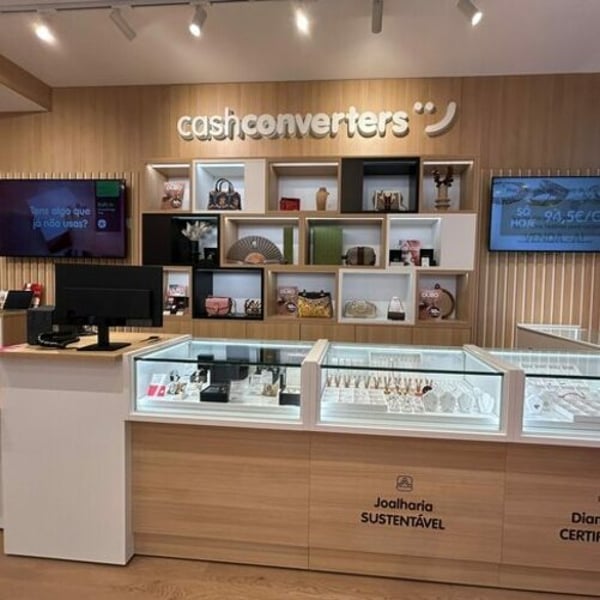
Second-hand retailer Cash Converters strengthens Portugal presence with new shop at UBBO Amadora
Published

on


Published


December 16, 2025

Australian multinational Cash Converters, a leading brand in the purchase and sale of second-hand items, founded in Perth, Australia, in 1984 by Brian Cumins and present in Portugal since 2003, has just opened a new store at the UBBO shopping centre in Amadora, the company said in a statement, adding that this new unit covers 72 square metres and features “an updated and distinctive concept,” broadening categories and focusing on “unique pieces, collectors’ items and discontinued products given a new lease of life”. This is the sixth opening in the Portuguese market.

Cash Converters

The main highlights are second-hand luxury items, “such as watches, bags, and jewellery from leading brands, as well as a space dedicated to the exclusive ‘Jewellery with a Soul’ collection, created by Cash Converters from 100% recycled gold and designed for those who value pieces with history and identity. Customers will also find IT, TV and audio equipment, consoles and video games, photography and video, sports, DIY and small domestic appliances,” the statement notes.

According to Francisco Parra, CEO of Cash Converters in Spain and Portugal: “The Portuguese market has shown a clear commitment to buying and selling second-hand products, and the results bear this out. In 2025, the average monthly number of items purchased in our stores in Portugal grew by 9% on the previous year, while the average ticket increased by 12%. These indicators reinforce our expansion strategy in the country for the coming years, with the aim of bringing more and more people closer to the circular economy through quality products.”

Cash Converters

The arrival at UBBO of the Australian chain specialising in the purchase and sale of second-hand items, which operates brick-and-mortar stores in Lisbon and Porto as well as through its official online store, “marks another step towards the democratisation of sustainable consumption in Portugal and the valuing of objects that deserve to continue to be used and appreciated,” the note stresses, adding that Cash Converters “now has 83 stores across the Iberian Peninsula, reinforcing its expansion strategy based on proximity and convenience.”

In Portugal, the brand currently has physical stores in Lisbon and Porto, located at Rua Pinheiro Chagas, 101B (near Lisbon’s El Corte Inglés), Rua José Rodrigues Migueis, 1, and Rua António Pereira Carrilho, 5 (central Lisbon); Rua Quinta do Paizinho, 2, Alfragide/Carnaxide, and at the UBBO Shopping Centre, Pontinha (Greater Lisbon); and Rua de Fernandes Tomás, 432 (downtown Porto).

Cash Converters

This article is an automatic translation.
Click here to read the original article.

Copyright © 2025 FashionNetwork.com All rights reserved.



Source link

Continue Reading

Trending

Copyright © Miami Select.