Connect with us

Business

Man says Goldman Sachs put him through a gauntlet of 39 one-on-one interviews

Published

on


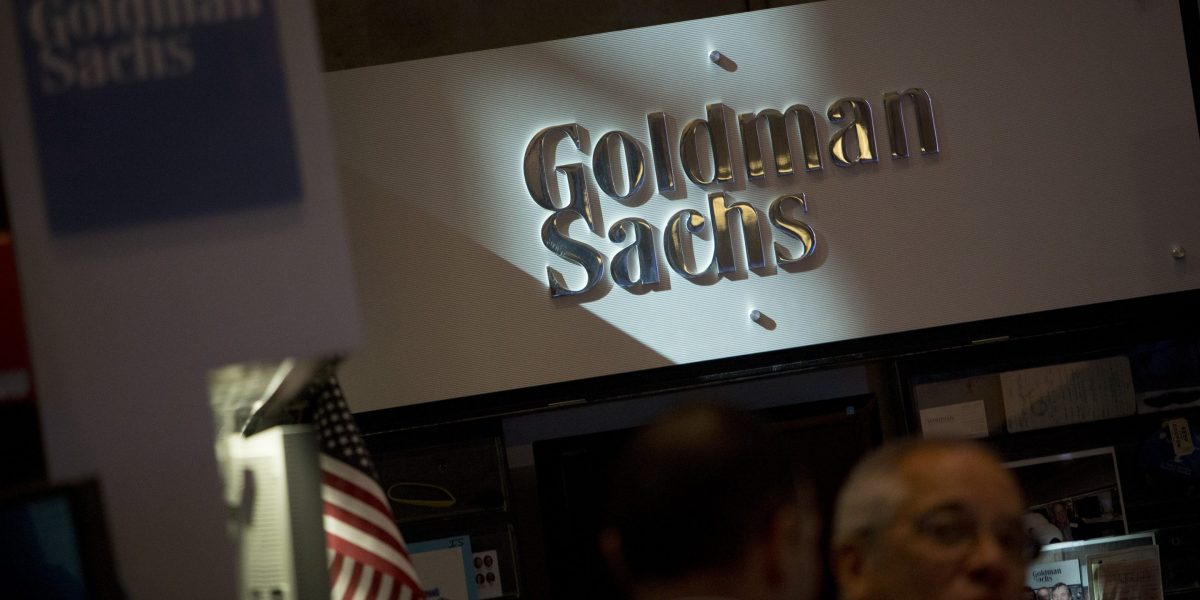
Sharran Srivatsaa, president of Acquisition.com and a former Goldman Sachs wealth manager, this fall shared a story on TikTok about how he managed to get hired at Goldman Sachs—a process that apparently required 39 one-on-one interviews, including one that lasted less than a minute but offered wisdom about what it takes to land a job at a prestigious Wall Street bank.

The entrepreneur, who has built a track record as a four-time Inc. 500 entrepreneur, recounted the unconventional interview experience that occurred during his post-MBA job search. According to Srivatsaa’s account, one particular interview involved a managing director who immediately challenged him with an unusual test.

“He shows up all frazzled. He puts, like, this big leather binder on the desk, and he says, ‘You’re a hotshot. I see hotshots come through here all the time. See if you can set me up a meeting,’” Srivatsaa said. The binder contained contact information, including names and phone numbers.

The twist came in Srivatsaa’s response. Unlike previous candidates, who apparently tried to demonstrate their sales prowess by immediately making cold calls, Srivatsaa asked a simple question that changed everything: “I’m happy to call her. Do you have a script or something? Because I just want to represent you well.” The managing director immediately packed up his belongings, shook Srivatsaa’s hand, and left after what he said amounted to around 46 seconds.

Srivatsaa, who worked in investment management at Goldman Sachs from 2007 to 2010, said he later saw his interviewer at a cocktail party and learned why their one-on-one was cut so short. “You‘re the first person that didn’t just pick up the phone and want to prove to me that they’re a hotshot,” the interviewer told him. “You asked me, ‘Hey, can you give me some guidance on what to do here?’ Because that made me believe that you’re coachable.”

To be clear, it is notoriously difficult to get a job at Goldman Sachs. The investment bank’s hiring process is widely regarded as one of the most competitive in finance, with acceptance rates that make admission to Harvard University seem accessible by comparison. Goldman Sachs says more than 360,000 applicants tried out for its 2025 internship program, but only 2,500 candidates were selected, resulting in an acceptance rate of around 0.7%. By contrast, Harvard’s undergraduate acceptance rate stands at 4.2%. Goldman Sachs CEO David Solomon said even he was rejected twice by the company.

Goldman’s “Superday” interview process typically involves multiple back-to-back interviews conducted over one or two days, with candidates facing anywhere from three to six different interviewers. The process can include a mix of technical questions, behavioral assessments, and case studies, all designed to evaluate both technical competency and cultural fit. However, Srivatsaa’s experience of 39 individual interviews appears to be exceptionally extensive, even by Goldman’s rigorous standards.

Goldman Sachs did not immediately respond to Fortune’s request for comment.

Solomon says Goldman Sachs looks for candidates who demonstrate “grit and determination” and the ability to “pick themselves up and dust themselves off and keep going” when they encounter setbacks. The bank actively recruits from a broad selection of schools worldwide and particularly values candidates with STEM backgrounds, given that Goldman employs over 10,000 engineers.

The investment bank’s competitive hiring environment reflects broader trends in elite finance recruiting, where major firms like JPMorgan Chase report similarly low acceptance rates of around 0.8% for their internship programs. This intense competition has made networking and demonstrating coachability increasingly important differentiators for candidates seeking to break into investment banking careers.

For Srivatsaa, the Goldman Sachs experience ultimately served as preparation for his entrepreneurial career, where he would go on to help scale the Real Brokerage to become what the company describes as the fastest-growing publicly traded real estate brokerage in the world. His current role at Acquisition.com, the investment firm cofounded by Alex and Leila Hormozi, puts him on the other side of the evaluation process, where the lessons learned from his own marathon interview experience continue to inform his approach to identifying coachable talent.

You can watch Srivastaa’s TikTok below:

@sharransrivatsaa

Can you give me a script? 3 reasons that question wins: • Admits you don’t know it all • Shows you’ll follow direction • Gives you confidence before you call Coachable beats cocky.

♬ original sound – Sharran Srivatsaa

For this story, Fortune used generative AI to help with an initial draft. An editor verified the accuracy of the information before publishing.

A version of this story was published on Fortune.com on October 7, 2025.

More on interviewing:


Source link

Continue Reading

Business

Oil prices rise as Iran crackdown suggests Tehran fears a ‘dire security threat to the regime’

Published

on


Crude oil futures pointed to continued gains on Sunday as markets weighed potentially transformative events in Iran, which has been wracked by protests across the country.

U.S. oil prices rose 0.56% to $59.45 a barrel, and Brent crude climbed 0.52% to $63.67 a barrel, as reports said President Donald Trump is weighing military options in Iran to follow through on his threats to attack if the government kills protestors.

Iran, which pumps 3 million-4 million barrels per day, has seen protests spread nationwide amid an economic crisis. Human rights groups estimate hundreds have died from the government’s crackdown, as the regime’s piecemeal attempts to appease Iranians have failed.

The government cut off internet access in the country last week, slowing the flow of information on the latest developments. But various reports and expert assessments indicate the unrest is posing a major threat to Tehran’s authority.

In particular, the security apparatus that keeps the leadership in power is showing cracks, according to the Institute for the Study of War (ISW).

“There are further indications that the ongoing protests are challenging the ability and willingness of Iranian security forces to crack down on the protests,” the think tank said in a recent report. “The IRGC Intelligence Organization released a statement on January 10 that it is ‘dealing with possible acts of abandonment.’ This statement suggests that some Iranian security forces may have already defected or that the regime is very concerned about this possibility.”

It cited additional reporting that pointed to some officers anticipating the regime’s collapse, forces in one city refusing to fire on protesters, and the possibility the government will deploy the regular army.

These rank-and-file troops, known as the Artesh, are less ideological and more representative of the Iranian population than the Islamic Revolutionary Guard Corps, ISW said. That raises the risk Artesh troops, who aren’t trained to handle civil unrest, could defect and indicates internal security forces are stretched thin, it added.

A separate analysis from ISW noted that the government is treating the protests as a military issue instead of a law enforcement one. It also said Tehran “has taken the rare step of using the IRGC Ground Forces to suppress protests because it has likely determined that these protests represent a dire security threat to the regime.”

Energy markets are digesting the implications of political upheaval in Iran, a top OPEC member with the world’s third largest proven oil reserves. In fact, anti-government protests have already spread to Iran’s oil sector with workers at a large refining and petrochemical complex going on strike.

Market tracker Kpler said in post on X on Saturday that Iran’s regime faces a tipping point and is under unprecedented strain.

“Though a full collapse remains a low-probability event, the rising risk is already lifting the geopolitical premium in oil markets. Any disruption—through factional conflict, export curbs or external intervention—could prompt near-term price spikes, despite global surpluses,” it added.

“Over the medium term, regime change could unlock sanctions relief and reshape trade flows, with European, Indian and Japanese refiners poised to benefit, while Chinese independents and Middle Eastern producers face stiffer competition.”


Source link

Continue Reading

Business

Anthropic debuts Claude for Healthcare, partners with HealthEx for patient electronic health records

Published

on


AI lab Anthropic is making a major push into healthcare with the launch of Claude for Healthcare and an expansion of its life sciences offerings.

The announcement, timed to coincide with the start of the JPMorgan Healthcare Conference in San Francisco this week, comes just days after OpenAI unveiled ChatGPT for Health. That’s no coincidence and reflects the growing competition among leading AI labs to build specialized products for lucrative industries like healthcare, finance, and coding.

The Claude for Healthcare announcements include a partnership with HealthEx, a startup that allows patients to see all of their electronic medical records in a single place and control access to that data. The partnership includes a way for users to connect their personal medical records to Anthropic’s Claude in order to use the chatbot to answer health-related questions.

“HealthEx lets people bring their health records into a conversation with Claude and ask important questions in everyday language—What does this lab result mean? What should I bring up with my doctor? How has this number changed over time?—and get answers grounded in their own health history,” Amol Avasare, product lead at Anthropic, said.

The announcements also include a similar set of connectors for Function Health, a company that helps patients schedule lab tests and interpret the results, as well as integrations with Apple Health and Android Health Connect that will be rolling out to beta testers next week. For now, the connectors to HealthEx and Function Health are available to Claude Pro and Max subscribers in the U.S.

Health-related queries are among the leading consumer use cases of AI chatbots. But so far, Anthropic has been less focused on serving the general consumer market than its rival OpenAI, which boasts more than 800 million weekly users. Anthropic is thought to have far fewer consumer users and has instead concentrated on specialized use cases, such as software coding, that more naturally appeal to enterprise customers. It has pulled ahead of OpenAI in enterprise marketshare according to several recent surveys. It has also recently been creating more tailored versions of Claude to serve other industry or professional verticals, such as Claude for Financial Services and Claude for Life Sciences.

Anthropic has said it is interested in serving consumers as well as large organizations, and today’s announcements were aimed at both consumers and enterprise customers, such as hospitals, insurers, and pharmaceutical companies.

New offerings for healthcare providers, insurers, and pharma

The company said it was adding connectors to industry-standard databases including the Centers for Medicare & Medicaid Services Coverage Database, the International Classification of Diseases (ICD-10), the National Provider Identifier Registry, and PubMed.

These connectors are designed to help healthcare providers with tasks like speeding up prior authorization requests, supporting claims appeals, coordinating care, and triaging patient messages.

For life sciences companies, Anthropic is expanding beyond its initial focus on preclinical research to support clinical trial operations and regulatory work. New connectors include Medidata for clinical trial data and ClinicalTrials.gov. It is also launching connectors to bioRxiv and medRxiv—which are repositories for medical and biological research papers, usually before their findings have been peer reviewed; Open Targets, a database of identified drug targets; and ChEMBL, a database of bioactive compounds that could be used to make drugs.

The company is working with major healthcare and pharmaceutical companies including AstraZeneca, Sanofi, Genmab, Banner Health, Flatiron Health, and Veeva, among others. In a video clip Anthropic provided to reporters, it showed how Claude can now help a pharmaceutical company design a protocol for a Phase II clinical trial of a hypothetical drug designed to treat Parkinson’s Disease. It reduced the time it takes to draft the protocol design from many days to just about an hour.

Letting Claude use medical records to answer patient queries

Among the centerpieces of the new consumer health offerings is the partnership with HealthEx, which can help patients consolidate medical records from more than 50,000 health systems.

Fortune talked with executives from both companies exclusively about the new offering.

“Personal health records today are scattered across providers, and it can be difficult to get a complete view,” Avasare told Fortune. “HealthEx built a way to use Claude to unify those records with user consent and strong controls. Users decide what to share and can revoke access at any time, and their health data is never used for model training.”

HealthEx cofounders Priyanka Agarwal, now the company’s CEO, and Anand Raghavan, its CTO.

Photo courtesy of HealthEx

Users enable the HealthEx connector inside Claude, verify their identity, and connect their patient portal logins. HealthEx then unifies records across providers. When users ask Claude health-related questions, Claude uses Model Context Protocol (MCP)—an open standard Anthropic developed for connecting AI to external data sources—to securely retrieve relevant portions of the record for each specific question.

To enhance data privacy, Claude requests only the categories of information most likely to be relevant to a question—such as medications, allergies, recent lab reports, or doctor notes—rather than pulling an entire medical record. If relevance isn’t obvious, Claude can prompt users to broaden the scope, asking if they want to look further back in their history, Avasare said.

Priyanka Agarwal, cofounder and CEO of HealthEx, said the partnership addresses a fundamental problem in American healthcare: making it easier for consumers to access and understand their own health data.

“We’re giving every American a safe, private way for them to use their health data with AI,” Agarwal told Fortune. “We know that AI based on personal context is going to be more effective at providing support.” She said that by connecting medical records to HealthEx and HealthEx to Claude, users will get “responses [that] are grounded in your health history, not generic advice.”

According to Anthropic, the healthcare and life sciences announcements are possible because of recent improvements to Claude’s underlying capabilities. When tested on simulations of real-world medical and scientific tasks, Claude Opus 4.5, Anthropic’s latest model, substantially outperforms earlier releases. The company also said Opus 4.5 with extended thinking shows improvements in producing correct answers on honesty evaluations, reflecting progress on reducing factual hallucinations.


Source link

Continue Reading

Business

Buddhist monks are walking barefoot from Texas to DC with their dog, drawing crowds across the South

Published

on


A group of Buddhist monks and their rescue dog are striding single file down country roads and highways across the South, captivating Americans nationwide and inspiring droves of locals to greet them along their route.

In their flowing saffron and ocher robes, the men are walking for peace. It’s a meditative tradition more common in South Asian countries, and it’s resonating now in the U.S., seemingly as a welcome respite from the conflict, trauma and politics dividing the nation.

Their journey began Oct. 26, 2025, at a Vietnamese Buddhist temple in Texas, and is scheduled to end in mid-February in Washington, D.C., where they will ask Congress to recognize Buddha’s day of birth and enlightenment as a federal holiday. Beyond promoting peace, their highest priority is connecting with people along the way.

“My hope is, when this walk ends, the people we met will continue practicing mindfulness and find peace,” said the Venerable Bhikkhu Pannakara, the group’s soft-spoken leader who is making the trek barefoot. He teaches about mindfulness, forgiveness and healing at every stop.

Preferring to sleep each night in tents pitched outdoors, the monks have been surprised to see their message transcend ideologies, drawing huge crowds into churchyards, city halls and town squares across six states. Documenting their journey on social media, they — and their dog, Aloka — have racked up millions of followers online. On Saturday, thousands thronged in Columbia, South Carolina, where the monks chanted on the steps of the State House and received a proclamation from the city’s mayor, Daniel Rickenmann.

The physical toll of the monks long walk

At their stop Thursday in Saluda, South Carolina, Audrie Pearce joined the crowd lining Main Street. She had driven four hours from her village of Little River, and teared up as Pannakara handed her a flower.

“There’s something traumatic and heart-wrenching happening in our country every day,” said Pearce, who describes herself as spiritual, but not religious. “I looked into their eyes and I saw peace. They’re putting their bodies through such physical torture and yet they radiate peace.”

Hailing from Theravada Buddhist monasteries across the globe, the 19 monks began their 2,300 mile (3,700 kilometer) trek at the Huong Dao Vipassana Bhavana Center in Fort Worth.

Their journey has not been without peril. On Nov. 19, as the monks were walking along U.S. Highway 90 near Dayton, Texas, their escort vehicle was hit by a distracted truck driver, injuring two monks. One of them lost his leg, reducing the group to 18.

This is Pannakara’s first trek in the U.S., but he’s walked across several South Asian countries, including a 112-day journey across India in 2022 where he first encountered Aloka, an Indian Pariah dog whose name means divine light in Sanskrit.

Then a stray, the dog followed him and other monks from Kolkata in eastern India all the way to the Nepal border. At one point, he fell critically ill and Pannakara scooped him up in his arms and cared for him until he recovered. Now, Aloka inspires him to keep going when he feels like giving up.

“I named him light because I want him to find the light of wisdom,” Pannakara said.

The monk’s feet are now heavily bandaged because he’s stepped on rocks, nails and glass along the way. His practice of mindfulness keeps him joyful despite the pain from these injuries, he said.

Still, traversing the southeast United States has presented unique challenges, and pounding pavement day after day has been brutal.

“In India, we can do shortcuts through paddy fields and farms, but we can’t do that here because there are a lot of private properties,” Pannakara said. “But what’s made it beautiful is how people have welcomed and hosted us in spite of not knowing who we are and what we believe.”

Churches, families and towns host the monks along their path

In Opelika, Alabama, the Rev. Patrick Hitchman-Craig hosted the monks on Christmas night at his United Methodist congregation.

He expected to see a small crowd, but about 1,000 people showed up, creating the feel of a block party. The monks seemed like the Magi, he said, appearing on Christ’s birthday.

“Anyone who is working for peace in the world in a way that is public and sacrificial is standing close to the heart of Jesus, whether or not they share our tradition,” said Hitchman-Craig. “I was blown away by the number of people and the diversity of who showed up.”

After their night on the church lawn, the monks arrived the next afternoon at the Collins Farm in Cusseta, Alabama. Judy Collins Allen, whose father and brother run the farm, said about 200 people came to meet the monks — the biggest gathering she’s ever witnessed there.

“There was a calm, warmth and sense of community among people who had not met each other before and that was so special,” she said.

Monks say peace walks are not a conversion tool

Long Si Dong, a spokesperson for the Fort Worth temple, said the monks, when they arrive in Washington, plan to seek recognition of Vesak, the day which marks the birth and enlightenment of the Buddha, as a national holiday.

“Doing so would acknowledge Vesak as a day of reflection, compassion and unity for all people regardless of faith,” he said.

But Pannakara emphasized that their main goal is to help people achieve peace in their lives. The trek is also a separate endeavor from a $200 million campaign to build towering monuments on the temple’s 14-acre property to house the Buddha’s teachings engraved in stone, according to Dong.

The monks practice and teach Vipassana meditation, an ancient Indian technique taught by the Buddha himself as core for attaining enlightenment. It focuses on the mind-body connection — observing breath and physical sensations to understand reality, impermanence and suffering. Some of the monks, including Pannakara, walk barefoot to feel the ground directly and be present in the moment.

Pannakara has told the gathered crowds that they don’t aim to convert people to Buddhism.

Brooke Schedneck, professor of religion at Rhodes College in Memphis, Tennessee, said the tradition of a peace walk in Theravada Buddhism began in the 1990s when the Venerable Maha Ghosananda, a Cambodian monk, led marches across war-torn areas riddled with landmines to foster national healing after civil war and genocide in his country.

“These walks really inspire people and inspire faith,” Schedneck said. “The core intention is to have others watch and be inspired, not so much through words, but through how they are willing to make this sacrifice by walking and being visible.”

On Thursday, Becki Gable drove nearly 400 miles (about 640 kilometers) from Cullman, Alabama, to catch up with them in Saluda. Raised Methodist, Gable said she wanted some release from the pain of losing her daughter and parents.

“I just felt in my heart that this would help me have peace,” she said. “Maybe I could move a little bit forward in my life.”

Gable says she has already taken one of Pannakara’s teachings to heart. She’s promised herself that each morning, as soon as she awakes, she’d take a piece of paper and write five words on it, just as the monk prescribed.

“Today is my peaceful day.”


Source link

Continue Reading

Trending

Copyright © Miami Select.