
Politics
Major disaster declarations are taking longer under Donald Trump
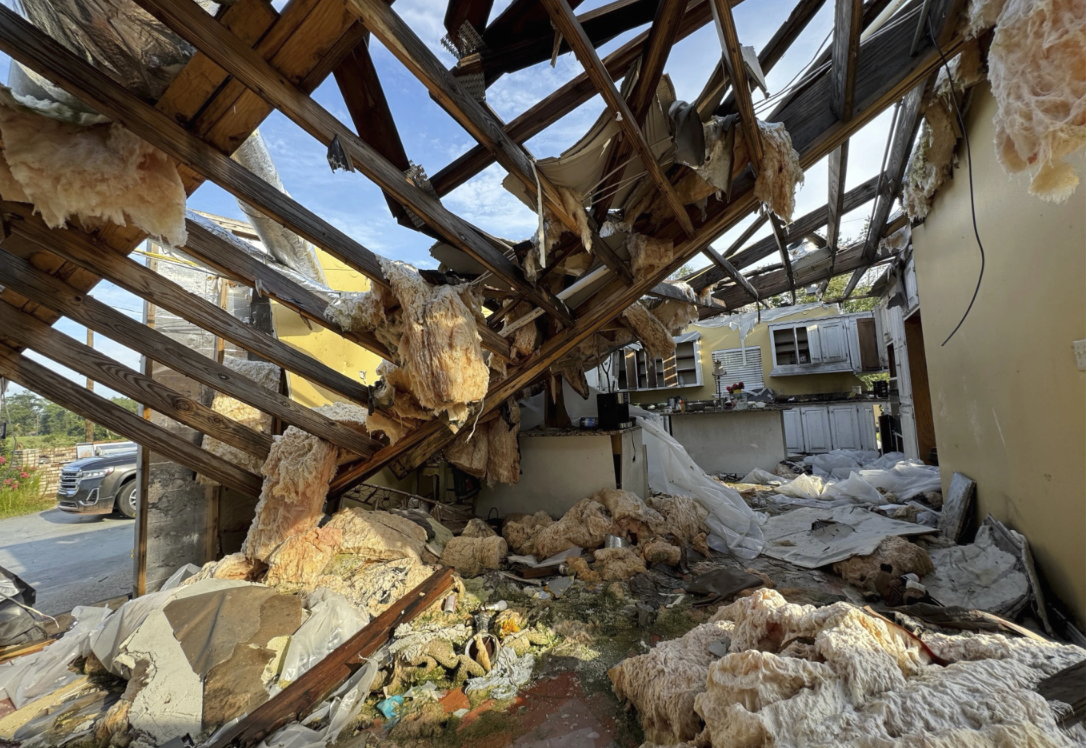
As an ominous storm approached Buddy Anthony’s new home, he took shelter in his Ford F-250 pickup parked under a nearby carport.
Seconds later, a tornado tore apart the one-story brick house and damaged the truck while lifting it partly in the air. Anthony emerged unhurt. But he had to replace his vehicle with a used truck that became his home while waiting for President Donald Trump to issue a major disaster declaration allowing federal money to flow to individuals reeling from loss. That took weeks.
“You wake up in the truck and look out the windshield and see nothing. That’s hard. That’s hard to swallow,” Anthony said.
Disaster survivors are having to wait longer to get aid from the federal government, according to a new Associated Press analysis of decades of data. On average, it took less than two weeks for a governor’s request for a presidential disaster declaration to be granted in the 1990s and early 2000s. That rose to about three weeks during the past decade under Presidents from both major parties. It’s taking more than a month, on average, so far during Trump’s current term, the AP found.
The delays mean individuals must wait to receive federal aid for daily living expenses, temporary lodging and home repairs. Delays in disaster declarations also can hamper recovery efforts by local officials uncertain whether they will receive federal reimbursement for cleaning up debris and rebuilding infrastructure. The AP collaborated with Mississippi Today and Mississippi Free Press on the effects of these delays for this report.
“The message that I get in the delay, particularly for the individual assistance, is that the federal government has turned its back on its own people,” said Bob Griffin, Dean of the College of Emergency Preparedness, Homeland Security and Cybersecurity at the University at Albany in New York. “It’s a fundamental shift in the position of this country.”
White House spokeswoman Abigail Jackson said Trump is making sure federal tax dollars “are spent wisely to supplement state actions, not replace them,” during disasters.
“President Trump provides a more thorough review of disaster declaration requests than any Administration has before him,” Jackson said in a statement to the AP. “Gone are the days of rubber stamping FEMA recommendations — that’s not a bug, that’s a feature.”
Americans expect government help after disasters. About three-fourths of people want the U.S. government to play a major role in providing aid to communities and helping them rebuild after natural disasters, according to a June poll from The Associated Press-NORC Center for Public Affairs Research.
The wait for disaster aid has grown as Trump remakes government

The Federal Emergency Management Agency (FEMA) often consults immediately with communities to coordinate their initial disaster response. But direct payments to individuals, nonprofits and local governments must wait for a major disaster declaration from the President, who first must receive a request from a state, territory or tribe. Major disaster declarations are intended only for the most damaging events that are beyond the resources of states and local governments.
Trump has approved more than two dozen major disaster declarations since taking office in January, with an average wait of almost 34 days after a request. That ranged from a one-day turnaround after July’s deadly flash flooding in Texas to a 67-day wait after a request for aid because of a Michigan ice storm. The average wait is up from a 24-day delay during his first term and is nearly four times as long as the average for former Republican President George H.W. Bush, whose term from 1989-1993 coincided with the implementation of a new federal law setting parameters for disaster determinations.
The delays have grown over time, regardless of the party in power. Former Democratic President Joe Biden, in his last year in office, averaged 26 days to declare major disasters — longer than any year under former Democratic President Barack Obama.
FEMA did not respond to the AP’s questions about what factors are contributing to the trend.
Others familiar with FEMA noted that its process for assessing and documenting natural disasters has become more complex over time. Disasters have also become more frequent and intense because of climate change, which is mostly caused by the burning of fuels such as gas, coal and oil.
The wait for disaster declarations has spiked as Trump’s administration undertakes an ambitious makeover of the federal government that has shed thousands of workers and reexamined the role of FEMA. A recently published letter from current and former FEMA employees warned the cuts could become debilitating if faced with a large-enough disaster. The letter also lamented that the Trump administration has stopped maintaining or removed long-term planning tools focused on extreme weather and disasters.
Shortly after taking office, Trump floated the idea of “getting rid” of FEMA, asserting: “It’s very bureaucratic, and it’s very slow.”
FEMA’s acting chief suggested more recently that states should shoulder more responsibility for disaster recovery, though FEMA thus far has continued to cover three-fourths of the costs of public assistance to local governments, as required under federal law. FEMA pays the full cost of its individual assistance.
Former FEMA Administrator Pete Gaynor, who served during Trump’s first term, said the extra scrutiny on requests for disaster declarations is “probably the right thing to do, because I think the declaration process has become the `easy button’ for states.”
In Mississippi, frustration festered during the wait for aid
The tornado that struck Anthony’s home in rural Tylertown on March 15 packed winds up to 140 mph (225 km/hr). It was part of a powerful storm system that wrecked homes, businesses and lives across multiple states.
Mississippi’s governor requested a federal disaster declaration on April 1. Trump granted that request 50 days later, on May 21, while approving aid for both individuals and public entities.
On that same day, Trump also approved eight other major disaster declarations for storms, floods or fires in seven other states. In most cases, more than a month had passed since the requests and about two months since the date of those disasters.
On July 22, Trump issued another big batch of major disaster declarations covering seven states. Those included requests related to March storms in Michigan and Oregon that took about two months for governors to submit and an additional two months to approve.
If a presidential declaration and federal money had come sooner, Anthony said he wouldn’t have needed to spend weeks sleeping in a truck before he could afford to rent the trailer where he is now living. His house was uninsured, Anthony said, and FEMA eventually gave him $30,000.
In nearby Jayess, Dana Grimes had insurance but not enough to cover the full value of her damaged home. After the eventual federal declaration, Grimes said FEMA provided about $750 for emergency expenses, but she is now waiting for the agency to determine whether she can receive more.
“We couldn’t figure out why the President took so long to help people in this country,” Grimes said. “I just want to tie up strings and move on. But FEMA — I’m still fooling with FEMA.”
Jonathan Young said he gave up on applying for FEMA aid after the Tylertown tornado killed his 7-year-old son and destroyed their home. The process seemed too difficult, and federal officials wanted paperwork he didn’t have, Young said. He made ends meet by working for those cleaning up from the storm.
“It’s a therapy for me,” Young said, “to pick up the debris that took my son away from me.”
Quick aid for individuals has long been a FEMA goal
Historically, presidential disaster declarations containing individual assistance have been approved more quickly than those providing assistance only to public entities, according to the AP’s analysis. That remains the case under Trump, though declarations for both types are taking longer.
About half the major disaster declarations approved by Trump this year have included individual assistance.
Some people whose homes are damaged turn to shelters hosted by churches or local nonprofit organizations in the initial chaotic days after a disaster. Others stay with friends or family or go to a hotel, if they can afford it.
But some insist on staying in damaged homes, even if they are unsafe, said Chris Smith, who administered FEMA’s individual assistance division under three Presidents from 2015-2022. If homes aren’t repaired properly, mold can grow, compounding the recovery challenges.
That’s why it’s critical for FEMA’s individual assistance to get approved quickly — ideally, within two weeks of a disaster, said Smith, who’s now a disaster consultant for governments and companies.
“You want to keep the people where they are living. You want to ensure those communities are going to continue to be viable and recover,” Smith said. “And the earlier that individual assistance can be delivered … the earlier recovery can start.”
After the Tylertown tornado, faith-based groups served food and laid tarps on homes while local residents helped each other with power saws to clear downed trees.
“That’s the only thing that got us through this storm, neighbors helping neighbors,” said Les Lampton, a volunteer firefighter and insurance agent in Walthall County, where Tylertown is located. “If we waited on the government, we were going to be in bad shape.”
Delays in federal aid can hamper local recovery efforts
Unlike individual assistance programs that provide cash upfront, FEMA’s public assistance programs reimburse governmental entities only after their bills are paid — and only if they followed guidelines for hiring and documenting the work.
Because that process can take months or years, a delay in a presidential disaster declaration may have little effect on when a local government ultimately gets reimbursed.
But delayed approvals still can carry consequences. Long waits can stoke uncertainty and lead cost-conscious local officials to pause or scale-back their recovery efforts.
In Walthall County, officials initially spent about $700,000 cleaning up debris, then suspended the cleanup for more than a month because they couldn’t afford to spend more without assurance they would receive federal reimbursement, said Royce McKee, the county emergency manager. Meanwhile, rubble from splintered trees and shattered homes remained piled along the roadside, creating unsafe obstacles for motorists and habitat for snakes and rodents.
When it received the federal declaration, Walthall County took out a multi-million-dollar loan to pay contractors to resume the cleanup.
“We’re going to pay interest and pay that money back until FEMA pays us,” said Byran Martin, an elected county supervisor. “We’re hopeful that we’ll get some money by the first of the year, but people are telling us that it could be (longer).”
The night before the Tylertown tornado, a twister also tore through Rolla, Missouri, a college town of about 20,000 people. It knocked out electricity for 80% of the municipal utility’s customers and damaged 120 power poles.
Crews worked to restore power within a couple weeks, racking up hefty bills paid from the utility’s reserve funds. As the wait for a presidential disaster declaration kept growing, “we were getting a little nervous,” said Rodney Bourne, general manager of Rolla Municipal Utilities.
The utility now is seeking FEMA reimbursement for about $1 million, intentionally holding its claim just under the agency’s large-project threshold in hopes of expediting the process, he said.
Delays in federal declarations also can force local officials to choose between needed repairs — perhaps fixing some roads and culverts washed out by floods while delaying other projects, said David Fogerson, a public safety consultant who retired last year as Nevada’s emergency management chief.
“For a lot of the smaller states and smaller jurisdictions, when you get that, `Yep, this is a disaster declaration, we’ve got federal money coming,’ it helps you feel better, more confident about spending that money,” he said.
___
Republished with permission of The Associated Press.
Post Views: 0