Connect with us

Business

MAGA’s ‘MyPillow Guy,’ Mike Lindell, challenges Tim Walz in run for Minnesota governor

Published

on


Mike Lindell, the fervent supporter of President Donald Trump known to TV viewers as the “MyPillow Guy,” officially entered the race for Minnesota governor Thursday in hopes of winning the Republican nomination to challenge Democratic Gov. Tim Walz.

“I’ll leave no town unturned in Minnesota,” Lindell told The Associated Press in an interview ahead of a news conference set for Thursday.

He said he has a record of solving problems and personal experiences that will help businesses and fight addiction and homelessness as well as fraud in government programs. The fraud issue has particularly dogged Walz, who announced in September that he’s seeking a third term in the 2026 election.

A TV pitchman and election denier

Lindell, 64, founded his pillow company in Minnesota in 2009 and became its public face through infomercials that became ubiquitous on late-night television. But he and his company faced a string of legal and financial setbacks after he became a leading amplifier of Trump’s false claims that the 2020 election was stolen. He said he has overcome them.

“Not only have I built businesses, you look at problem solution,” Lindell said in his trademark rapid-fire style. “I was able to make it through the biggest attack on a company, and a person, probably other than Donald Trump, in the history of our media … lawfare and everything.”

While no Republican has won statewide office in Minnesota since 2006, the state’s voters have a history of making unconventional choices. They shocked the world by electing former professional wrestler Jesse Ventura as governor in 1998. And they picked a veteran TV pitchman in 1978 when they elected home improvement company owner Rudy Boschwitz as a U.S. senator.

Lindell has frequently talked about how he overcame a crack cocaine addiction with a religious conversion in 2009 as MyPillow was getting going. His life took another turn in 2016 when he met the future president during Trump’s first campaign. He served as a warm-up speaker at dozens of Trump rallies and co-chaired Trump’s campaign in Minnesota.

Trump’s endorsement could be the key to which of several candidates wins the GOP nomination to challenge Walz. But Lindell said he doesn’t know what Trump will do, even though they’re friends, and said his campaign isn’t contingent on the president’s support.

His Lindell TV streaming platform was in the news in November when it became one of several conservative news outlets that became credentialed to cover the Pentagon after agreeing to a restrictive new press policy rejected by virtually all legacy media organizations.

Lindell has weathered a series of storms

Lindell’s outspoken support for Trump’s false claims that the 2020 election was stolen triggered a backlash as major retailers discontinued MyPillow products. By his own admission, revenue slumped and lines of credit dried up, costing him millions. Several vendors sued MyPillow over billing disputes. Fox News stopped running his commercials. Lawyers quit on him.

Lindell has been sued twice for defamation over his claims that voting machines were manipulated to deprive Trump of a victory.

A federal judge in Minnesota ruled in September that Lindell defamed Smartmatic with 51 false statements. But the judge deferred the question of whether Lindell acted with the “actual malice” that Smartmatic must prove to collect. Smartmatic says it’s seeking “nine-figure damages.”

Colorado jury in June found that Lindell defamed a former Dominion Voting Systems executive by calling him a traitor, and awarded $2.3 million in damages.

But Lindell won a victory in July when a federal appeals court overturned a judge’s decision that affirmed a $5 million arbitration award to a software engineer who disputed data that Lindell claimed proved Chinese interference in the 2020 election. The engineer had accepted Lindell’s “Prove Mike Wrong Challenge,” which he launched as part of his 2021 “Cyber Symposium” in South Dakota, where he promised to expose election fraud.

The campaign ahead

Lindell said his crusade against electronic voting machines will just be part of his platform. While Minnesota uses paper ballots, it also uses electronic tabulators to count them. Lindell wants them hand-counted, even though many election officials say machine counting is more accurate.

Some Republicans in the race include Minnesota House Speaker Lisa Demuth, of Cold Spring; Dr. Scott Jensen, a former state senator from Chaska who was the party’s 2022 candidate; state Rep. Kristin Robbins, of Maple Grove; defense lawyer and former federal prosecutor Chris Madel; and former executive Kendall Qualls.

“These guys haven’t lived what I live,” Lindell said.

Lindell wouldn’t commit to abiding by the Minnesota GOP endorsement and forgoing the primary if he loses it, expressing confidence that he’ll win. He also said he’ll rely on his supporters to finance his campaign because his own finances are drained. “I don’t have the money,” he acknowledged.

But he added that ever since word got out last week that he had filed the paperwork to run, “I’ve had thousands upon thousands of people text and call, saying from all around the country … ‘Hey, I’ll donate.’”


Source link

Continue Reading

Business

OpenAI and Disney just ended the ‘war’ between AI and Hollywood with their $1 billion Sora deal
Published

on


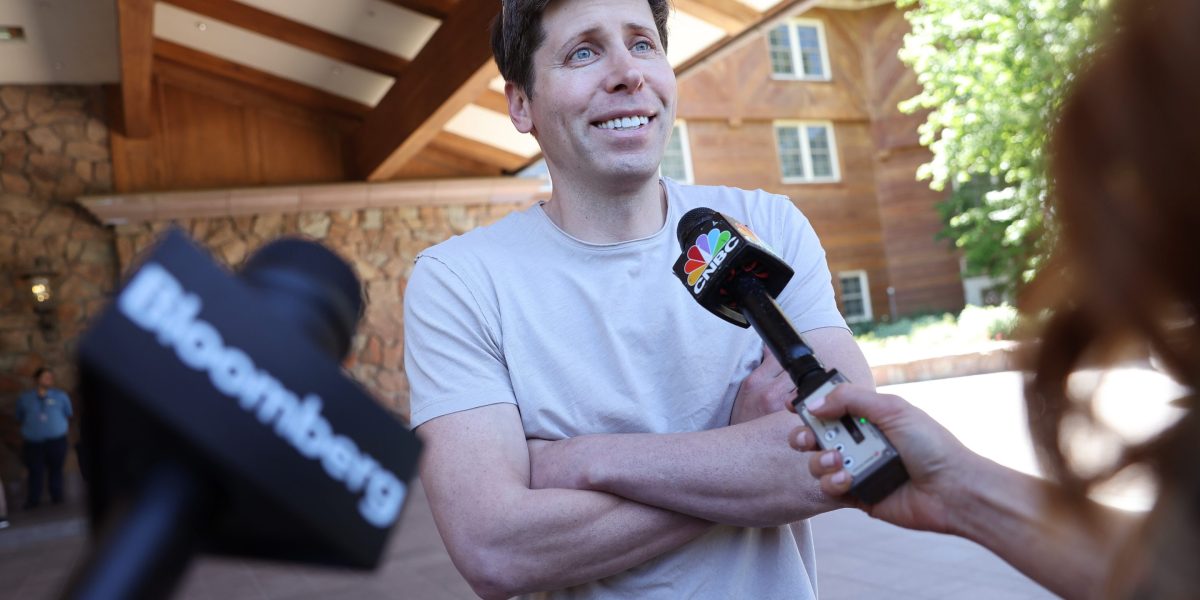
Disney’s $1 billion investment in OpenAI, announced Thursday morning—and its decision to let more than 200 Disney, Pixar, Marvel, and Star Wars characters appear inside the Sora video generator—is more than a licensing deal. According to copyright and AI law expert Matthew Sag, who teaches at Emory University’s law school, the deal marks a strategic realignment that could reshape how Hollywood protects its IP in the face of AI-generated content that threatens to leech on their legally-protected magic. 

“AI companies are either in a position where they need to aggressively filter user prompts and model outputs to make sure that they don’t accidentally show Darth Vader, or strike deals with the rights holders to get permission to make videos and images of Darth Vader,” Sag told Fortune. “The licensing strategy is much more of a win-win.” 

The three-year agreement gives OpenAI the right to ingest hundreds of Disney-owned characters into Sora and ChatGPT Image. Disney will also receive equity warrants and become a major OpenAI customer, while deploying ChatGPT internally.

Sag said the deal itself will be a kind of “revenue-sharing.”

“OpenAI hasn’t figured out the revenue model,” Sag said. “So I think making this just an investment deal, in some ways, simplifies it. For Disney … [OpenAI] will figure out a way to make this profitable at some point, and [Disney will] get a cut of that.”

Why this deal matters: the ‘Snoopy problem’

For more than a year, the biggest legal threat to large-scale generative AI has centered on what Sag calls the “Snoopy problem”: It is extremely difficult to train powerful generative models without some degree of memorization, and copyrightable characters are uniquely vulnerable because copyright protects them in the abstract.

Sag was careful to outline a key distinction. AI companies aren’t licensing the right to train on copyrighted works; they’re licensing the right to create outputs that would otherwise be infringing.

That’s because the case for AI companies training their models on unlicensed content is “very strong,” Sag said. Two recent court rulings involving Anthropic and Meta have strengthened those arguments.  

The real stumbling block, Sag said, has always been outputs, not training. If a model can accidentally produce a frame that looks too much like Darth Vader, Homer Simpson, Snoopy, or Elsa, the fair use defense begins to fray.

“If you do get too much memorization, if that memorization finds its way into outputs, then your fair-use case begins to just crumble,” Sag said.

While it’s impossible to license enough text to train an LLM (“that would take a billion” deals, Sag said), it is possible to build image or video models entirely from licensed data if you have the right partners. This is why deals like Disney’s are crucial: They turn previously illegal outputs into legal ones, irrespective of whether the training process itself qualifies as fair use.

“The limiting principle is going to be essentially about whether—in their everyday operation—these models reproduce substantial portions of works from their training data,” Sag said.

The deal, Sag says, is also a hedge against Hollywood’s lawsuits. This announcement is “very bad” for Midjourney, who Disney is suing for copyright infringement, because it upholds OpenAI’s licensing deal as the “responsible” benchmark for AI firms. 

This is also a signal about the future of AI data

Beyond copyright risk, the deal exposes another trend: the drying up of high-quality, unlicensed data on the public internet.

In a blog post, Sag wrote:

“The low-hanging fruit of the public internet has been picked,” he wrote. “To get better, companies like OpenAI are going to need access to data that no one else has. Google has YouTube; OpenAI now has the Magic Kingdom.”

This is the core of what he calls the “data scarcity thesis.” OpenAI’s next leap in model quality may require exclusive content partnerships, as opposed to more scraping. 

“By entangling itself with the world’s premier IP holder, OpenAI makes itself indispensable to the very industry that threatened to sue it out of existence,” Sag wrote. 

AI and Hollywood have spent three years locked in a cold war over training data, likeness rights and infringement. With Disney’s $1 billion investment, that era appears to be ending.

“This is the template for the future,” Sag wrote. “We are moving away from total war between AI and content, toward a negotiated partition of the world.”


Source link

Continue Reading

Business

Bob Iger says Disney’s $1 billion deal with OpenAI is an ‘opportunity, not a threat’: ‘We’d rather participate than be disrupted by it’
Published

on


Disney is investing $1 billion in OpenAI and is giving the go-ahead for its iconic characters like Mickey Mouse to be used in the AI short-form video app Sora.

The two companies announced a three-year deal that would bring more than 200 characters to Sora with a period of exclusivity for part of the duration of the deal.

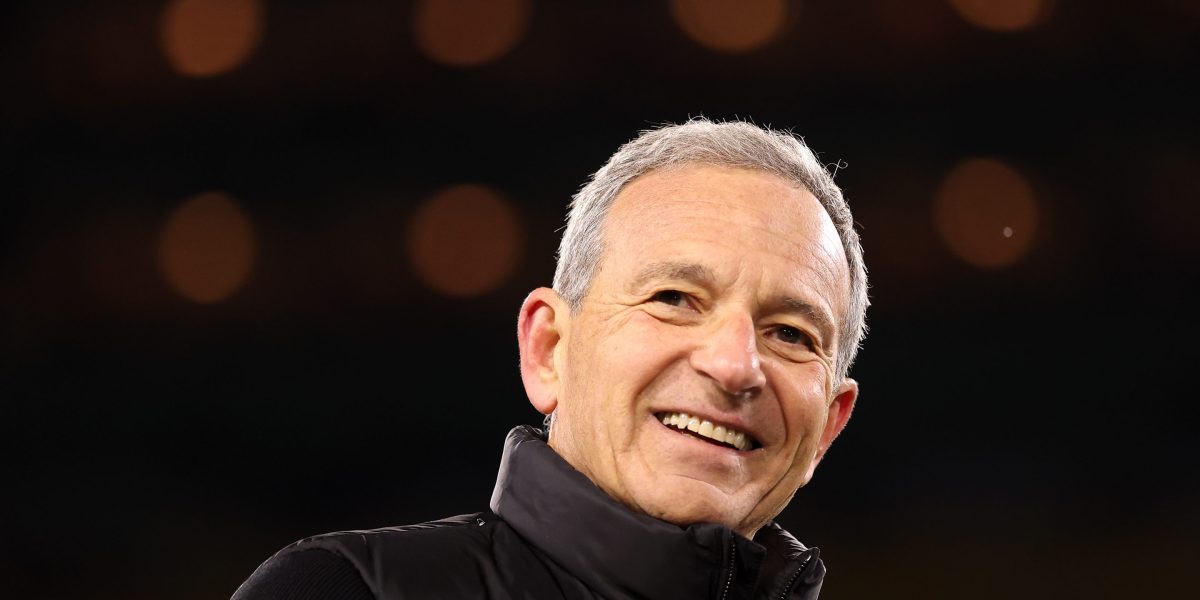
Disney CEO Bob Iger painted the team-up as Disney taking the next step in content with the newest technology and waived away concerns about whether the deal represents a threat to human creators.

“We’ve always viewed technological advances as opportunity, not threat,” Iger said. 

“It’s going to happen regardless, and we’d rather participate in the rather dramatic growth, rather than just watching it happen and essentially being disrupted by it,” he later added.

Iger also noted in an interview with CNBC that as part of the deal, Disney characters can be used in Sora videos, but it does not include rights to likeness or voices. 

“OpenAI is putting guardrails essentially around how these are used, so that really there’s nothing to be concerned about from a consumer perspective,” he said. “This will be a safe environment and a safe way for consumers to engage with our characters in a new way.”

Iger said the company would also feature some user-generated AI content from Sora on the Disney+ platform, which he said would be a great way to increase engagement with younger users.

Disney will receive warrants to buy additional equity in OpenAI as part of the deal and Iger said there would be future opportunities for the company to become an OpenAI customer including licensing from OpenAI. 

Starting last year, OpenAI started opening up Sora to more users and in September launched Sora 2, an upgraded version of the video generator catered more toward mobile. Controversy followed its September release because of the app’s ability to create convincing and realistic videos of people. In October, OpenAI paused AI-generated deepfake videos that featured civil rights leader Martin Luther King Jr. after his daughter, Bernice A. King complained they were being used in a “demeaning, disjointed” way.

Thursday’s deal also comes after Disney sent a cease-and-desist letter to Google for allegedly using its intellectual property to train its AI models and in its services without permission. The company has previously sent similar letters to other companies like Character.ai. Iger told CNBC that Character.ai corrected the issue shortly after and noted that with Google, “the ball is in their court,” and Disney would wait to see how they react to the claim.

Altman for his part said Sora users have longed to use Disney characters in their videos and said he hoped adding them to the platform could “unleash a sort of whole new way that people use this technology.”

“We have underestimated the amount of latent creativity in the world,” said Altman. “But if you lower the effort, skill, time required to create new things people very quickly are able to bring ideas to life.”


Source link

Continue Reading

Business

RFK Jr. and Sean Duffy had pull-up competition to announce a $1B plan for healthy airport upgrades

Published

on


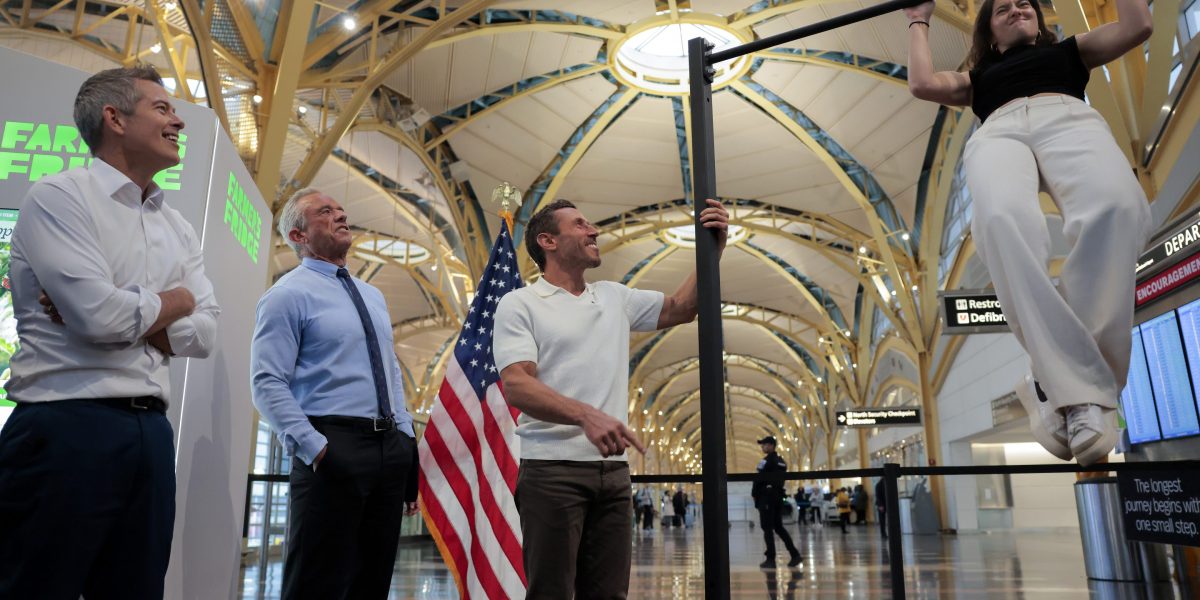
As if dragging a three-wheeled carry-on across the mileage of an international airport isn’t enough, the government wants you panting before your flight. This week, Transportation Secretary Sean Duffy and Health Secretary Robert F. Kennedy Jr. had a pull-up competition in the middle of Reagan National Airport’s Terminal 2 (not a metaphor) to announce the $1 billion in grants the administration plans to allocate toward healthy airport upgrades.

  • Officials were vague about what these upgrades could include, but mentioned projects like dedicated play areas for kids, more lactation pods, and mini-gyms for travelers.
  • The funding will come from former President Biden’s 2021 Infrastructure Investment and Jobs Act and is part of the current administration’s “Make Travel Family Friendly Again” initiative.

But…over 30 major US airport hubs already have children’s play areas, and most airports have been required to provide private lactation areas since FY2021. And 68% of passengers said their top priority for air travel changes is lower prices, according to a 2025 Ipsos poll for Airlines for America.

Big picture: The administration has been pushing initiatives to make flying more pleasant. Last month, Duffy encouraged travelers to dress up for flights and act right, which some travelers responded to by…wearing pajamas to the airport to troll the secretary.—MM

This report was originally published by Morning Brew.

Join us at the Fortune Workplace Innovation Summit May 19–20, 2026, in Atlanta. The next era of workplace innovation is here—and the old playbook is being rewritten. At this exclusive, high-energy event, the world’s most innovative leaders will convene to explore how AI, humanity, and strategy converge to redefine, again, the future of work. Register now.


Source link

Continue Reading

Trending

Copyright © Miami Select.