The recent rally in the shares of luxury goods makers will be put to the test this earnings season, as valuations are already back at demanding levels.
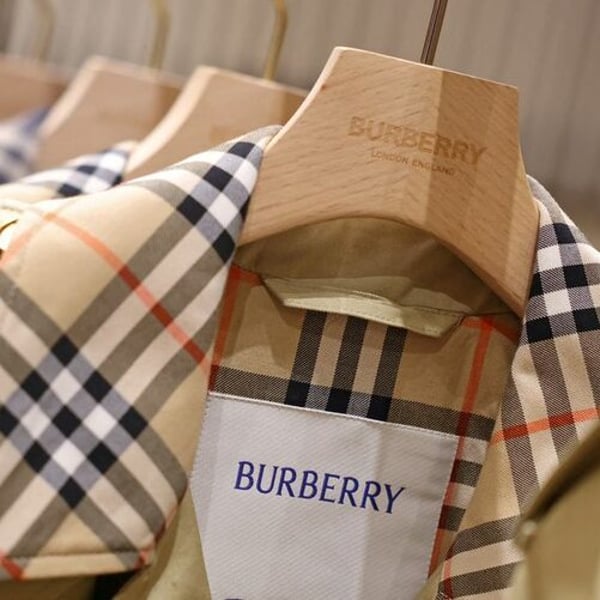
Burberry has seen some recent share price recovery – Reuters
After a rocky first half of the year, a gauge tracking the sector has jumped 14% over the past two months in a relief rally as damage from the Trump administration’s tariffs prove less severe than feared for exporters. That’s cranking up the pressure on companies to deliver market-pleasing results, even as they battle challenges like China’s uneven economic recovery and the stronger euro.
Earnings and sales growth for luxury companies has been lacking for almost two years amid falling demand from key markets such as China- which for decades had been a key support. Analysts have been cautious about calling a recovery, with data from Deutsche Bank AG showing no substantial acceleration in sales for the sector until the first quarter of 2026, at the earliest, as the industry remains stuck in its post-pandemic slump.
For this season, the sector could see easier year-earlier comparisons as third-quarter numbers begin to roll out- kicking off with LVMH Moët Hennessy Louis Vuitton SE on Tuesday. But the overall picture remains blurry.
“The recent rally does set the bar higher,” said Buenyamin Ak, a research analyst at Flossbach von Storch AG. “I would expect that providing unquantifiable, loose hopes would lead to disappointing price reactions.”
Europe’s flagship sector has grappled with lacklustre demand from the crucial Chinese market. Repeated calls that the sector’s most important source of growth is on the brink of a comeback have failed to prove correct.
Recent Chinese factory activity data showed evidence that sluggishness in the economy persisted through the end of the third quarter. Moreover, the summer ended with two of the weakest months for retail sales this year and the recent Golden Week holiday reflected subdued consumer spending.
To make things worse, the euro has climbed 12% this year against the dollar. That’s a burden on margins for luxury manufacturers, who have their costs based in the common currency but generate most revenue outside of Europe.
For some analysts, these twin external headwinds could provide the nudge companies need to confront problems closer to home.
“Weaker brands blame macroeconomics- tariffs, the China real estate market, geopolitical tensions- when the reality is more down-to-earth,” HSBC Holdings Plc analyst Erwan Rambourg wrote in a note. “Products grew too expensive and there was a lack of innovation/creativity.”
Investors have recently favoured shares in companies with a willingness to tackle internal crises dragging on performance. Take Gucci owner Kering SA and UK fashion brand Burberry Group Plc as examples. Their shares have climbed 27% and 21% this year, respectively.
After years of underperformance, Kering posted its best-ever quarterly stock gain on optimism that new CEO Luca de Meo will revive the Gucci brand. At Burberry, early signs of success from CEO Joshua Schulman on refocusing the brand on its British roots and better promoting its flagship outerwear products have triggered a recovery rally in the shares. However, the revival in sales and profits hasn’t materialised yet.
“There has been some speculative buying in recent weeks, focused on companies with new creative leaders but where we have yet to see any real evidence of an earnings inflection,” said Sam Glover, a fund manager at EFG Asset Management.
After seeing its stock plunging 42% between January and June, LVMH was upgraded to buy last week by analysts at Deutsche Bank and Morgan Stanley. They see the Christian Dior and Louis Vuitton owner as among the potential beneficiaries of less pessimistic sentiment among investors.
LVMH’s management team “has reacted with a number of management and creative designer changes,” said Deutsche Bank’s Adam Cochrane. “With a tough consumer backdrop, an increase in the pace of innovation and exciting customers with new products is paramount.”
But a look at analyst estimates for the company’s profits shows it still trails those of rival Hermes International SCA, while the rebound in the stock since June has sent its valuation back to near 25 times forward earnings.
Over the past month, fashion weeks in Paris and Milan have offered a glimpse of how luxury companies plan to convince shoppers to open their wallets again. Investors, however, may need more time before they share in the enthusiasm elicited by the latest catwalk presentations.
“If you just follow a fashion calendar and sort of a lead time, these collections would most likely come to stores at the very end of the second or third quarter next year,” UBS Group AG analyst Zuzanna Pusz said. “At this stage, that’s the earliest we could see things improve.”
Intimates and swim specialist Bravissimo Limited has filed its accounts for the period to the end of March and they showed much higher sales. However, it’s hard to get a clear picture of just how the company is faring.
Bravissimo
The UK-based company is part of Bravissimo Group Limited, which acts as its holding entity, as well as being the holding company for the US arm of the business.
That parent company was wholly acquired by Wacoal Europe Ltd partway through the period in late September last year. But the firm’s year-end date was changed to 31 March from 31 October at that point, which means the current period is 17 months against 12 months the ‘year’ before.
But with that in mind, its’s still worth looking at the figures for the UK operation.
For the 17 months reported, the company’s revenue was £79.3 million. For the comparison period (the 12 months to the end of October 2023) it was £57.6 million. Gross profit in the latest period was £49 million compared to £36.2 million for the shorter period previously. The gross profit margin for the most recent extra long ‘year’ was 61.8% compared to 6.2% in the previous year. That’s because the elongated period included two autumn seasons and autumn and winter sales typically have lower margins due to fewer swimwear pieces being shifted (swimwear has higher margins).
But the company said that despite the challenging inflationary environment cost were well controlled and the reported operating profit for the 17 months was £1.4 million. Had the firm being reporting its financial year as it did previously, that figure would have been £2.6 million, up from £2.5 million the year before.
Bravissimo also said that it had more active customers at the end of the latest period compared to the previous year and its website traffic was up as well, although retail store footfall dropped slightly. The website conversion rate edged upwards and the retail conversion rate was broadly stable.
In the previous year, the company said it had fully recovered from the effects of the pandemic, but it’s likely that the current year will feature worse results than those just filed.
In June 2025, the company said a warehouse fire meant disruption and delays to supply chains for its online customers. The fire was quickly extinguished, but the disruptions involving having to find temporary storage facilities. The brand stopped accepting orders online or over the phone until the issue was resolved.
It only reported being back online in late September but at least it said the business saw a 70% year-on-year rise in total sales on the day of its relaunch. Lingerie sales alone were up 90% compared to the same day last year.
Pepco’s preliminary results for FY25 showed the European value retail giant turning in a “strong financial performance” as it said “significant strategic execution delivers [a] transformational year”.
Pepco
The results, for the 12 months to the end of September, showed revenue rising 8.7% to €4.5 billion. Like for like (LFL) revenue growth was 2.6% after a 3% fall in the previous year. The gross profit margin rose to 48% from 47% and underlying EBITDA on an IFRS 16 basis was up 10.3% at €865 million. On a pre-IFRS 16 basis it was up 10.6% at €531 million. Underlying profit after tax rose 19.7% to €219 million.
All that came as the sale of Poundland was successfully completed in June 2025, “significantly simplifying the group structure”.
Pepco’s FMCG exit was also completed including the conversion of most Pepco plus stores in Iberia, “generating encouraging results”.
The company also saw an improved performance in Poland and Western Europe in general and the acceleration of its digital journey with a new website, app and loyalty scheme ready for launch in Q1 FY26.
It also said that the Dealz chain is now fully independent and the divestment process is intended to start next year as it explores strategic options for the business.
The big event during the year was the aforementioned sale of Poundland, the UK operation that had been a drain on the wider business in recent periods. With that now divested, it’s clear that the company is able to move forward and it confirmed that FY26 underlying EBITDA is expected to grow at least 9%.
That view is boosted by current trading. In the first financial quarter-to-date (1 October to 13 December 2025), Pepco LFL revenues have risen 3.9% excluding FMCG (LFL of +0.3% including FMCG).
It saw a solid start to the quarter in October but this was partially offset by a weaker November in line with the broader market, before returning to growth in December.
Dealz, as mentioned, is next to be divested but for now it’s dragging down the overall company performance, Pepco saying that this reflects “challenging trading conditions across all categories, particularly in health and beauty”.
Commenting on the results overall, CEO Stephan Borchert said: “2025 was a real turning point… the group has executed at exceptional pace, delivering significant progress in a short timeframe. The decision to refocus on Pepco and exclusively on our core categories of clothing and general merchandise has been validated by these strong results, in particular our gross margin and free cash performance, which were both ahead of expectations.
“We opened 247 net new stores with strengthened store economics and returns on capital for Pepco across our geographies, as we progressed our disciplined opening plans in both Western Europe, and Central and Eastern Europe. The performance of Western Europe has become a clear growth engine, exceeding our initial expectations. It is clear this region is now prepared for future accelerated growth.
“The development of our digital capabilities is progressing as per plan, and we are on track for launch during calendar Q1 2026.”
Activist investor Elliott Management has amassed a stake of more than $1 billion in Lululemon Athletica and is lining up a potential CEO candidate as it pushes to revive the struggling athletic apparel retailer, a source told Reuters on Wednesday.
Lululemon
Elliott has been working closely for months with veteran retail executive Jane Nielsen, former chief financial officer and chief operations officer at Ralph Lauren, and views her as a potential CEO candidate, the source added.
The hedge fund is now one of Lululemon’s biggest investors, with the move coming amid a busy year for Elliott that already includes a recent investment in PepsiCo and an earlier proxy fight at Phillips66.
The Wall Street Journal first reported the stake. Elliott and Lululemon did not immediately respond to Reuters’ requests for comment.
Last week, Lululemon said CEO Calvin McDonald would step down in January after seven years in the role, without naming a successor. Its share price rose after news of McDonald’s impending departure but has dropped about 60% from its peak two years ago.
The company, valued at $25 billion, now likely faces an expensive and drawn-out board dispute over the position of CEO. Its founder and largest shareholder, Chip Wilson, has also called for an urgent CEO search, led by new, independent directors with deep company knowledge to restore a product-first focus.
Wilson, who has previously courted criticism by saying some women’s body shapes “just actually don’t work” with Lululemon yoga pants, has publicly blamed McDonald and the board for the company’s lagging share price.
Known for its high-priced leggings and athleisure wear, Lululemon has ceded market share to newer brands such as Alo Yoga and to lower-cost private-label lookalikes, with executives voicing disappointment with product execution.







 Politics8 years ago