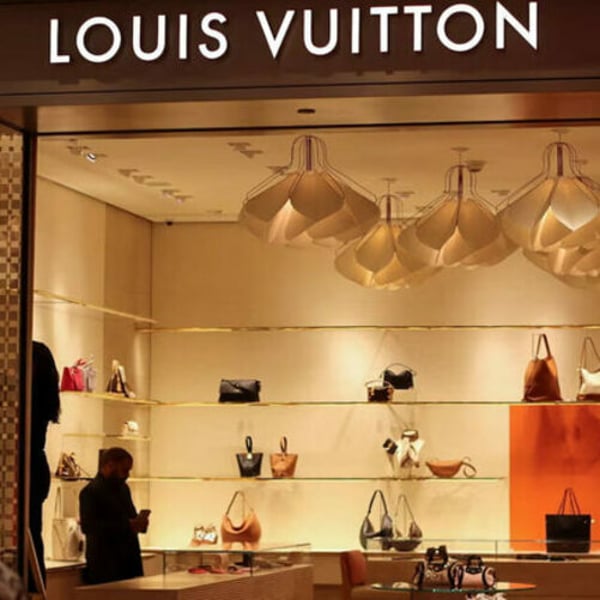
Fleur Arbel and Christophe Kairouz, both from France, were lured into Louis Vuitton‘s New York flagship recently by a colorful sculpture of a monogrammed giraffe and ostrich above the store’s entrance.
Louis Vuitton handbags on display at Saks Fifth Avenue in New York City on July 24, 2025. – Reuters
But the two 24-year-olds are more likely to spend their shopping dollars elsewhere, as Louis Vuitton’s heavy logos and styles strike them as passé.
“I think they failed to keep the luxury image in a way,” said Kairouz. “I think they need to create something new, original.”
Arbel and Kairouz are a tiny fraction of the Gen Z cohort, born between 1998 and 2012 — the luxury industry’s new frontier. The group accounted for 4% of global luxury spending before the pandemic; by 2030, they are expected to account for 25%, according to the Boston Consulting Group.
Executives, consultants, and analysts say this generation is harder to pin down than their predecessors. Influenced by a global social media landscape, they tend to mix and match goods from established names with trendier labels, shopping everywhere from TikTok to thrift stores. Legacy brands attempting to attract Gen Z consumers have utilized influencers, pop-up shops, and affordable items, such as bag charms, to appeal to this demographic.
“There’s a lot of similarity between Gen Z in Shanghai and Los Angeles and London,” said Scott Roe, chief financial officer and chief operating officer of Coach-parent Tapestry.
More affordable luxury companies, such as Coach and Ralph Lauren — whose revenue rose 6.8% in the 12 months ended in March — are capitalizing on the generational shift. Coach has gained cachet among Gen Z by utilizing influencers, offering personalized services, and prioritizing sustainability, according to experts.
Coach’s total revenue rose 9.9% to about $5.6 billion for the 12 months ended in June. Tapestry’s Roe said Gen Z is not less brand-loyal than other generations, but it is harder for brands to reach these consumers because shoppers have more choices. “To break through, you need to have a strong share of voice.”
That voice is pricey: Tapestry increased its marketing spend from 3% of sales pre-pandemic to 10% this year, according to its May earnings call — although it did not disclose how much was specifically targeted at Gen Z.
Brands are contending with upstarts and smaller established labels, such as Collina Strada and Mary-Kate and Ashley Olsen‘s The Row, which climbed two spots to sixth place in the most recent Lyst Index of the hottest luxury brands. Lyst, a global fashion shopping platform, tracks the behavior and social media engagement of more than 160 million users on its site and is considered the “biggest dataset in fashion,” according to the company.
Hillary Taymour, creative director of Collina Strada, said they started targeting Gen Z in 2020 with digital ads. Now, Gen Z and Millennials account for 58% of its business.
“It mixes sustainability with a playful, meme-driven aesthetic,” she said, citing the brand’s “inclusive casting and diverse runway shows” that make younger audiences feel like part of a community.
Affordable items draw in younger shoppers
Not all fashion powerhouses are being left on the shelf. Luxury labels from Kering-owned Bottega Veneta, Prada Group’s Miu Miu, and LVMH-owned Loewe continue to perform well with Gen Z. Miu Miu currently ranks first on the Lyst Index, followed by Loewe.
Miu Miu sales rose 49% in the first half of 2025 compared to the same period in 2024, capturing first-time luxury buyers with leather bag charms, which retail in the range of $240 to $1,250.
“Brands like Miu Miu succeeded because single pieces mirror the brand identity, allowing Gen Z consumers to buy into the brand without having to purchase a full look,” said Achim Berg, founder of FashionSIGHTS, an industry think tank.
Less expensive items attract younger luxury shoppers, who are still more budget-conscious than their older counterparts. In August, spending among Gen Z and Millennials — those born after 1978 — rose by just 0.5% from the previous year, according to Bank of America, compared to a 2.4% increase for Baby Boomers.
“When I shop luxury, I think about ‘what’s going to last me a long time?’ I’m spending a lot of money on an item — I want something I’m not going to get sick of in five or ten years,” said Kendall Still, a 26-year-old Los Angeles native.
Some brands have struggled. Sales at Kering-owned Gucci fell 25% in the second quarter. The company ousted CEO Stefano Cantino after just nine months on the job on Sept. 17. Data from Gen Z researcher dcdx, which tracks mentions and interactions with user-generated brand content, showed Gucci suffered the sharpest decline on social media among top luxury labels over the past year.
Over the last two years, Kering shares have lost 43% of their value, while Tapestry has more than tripled. Gucci did not respond to a request for comment.
“Legacy brands are splitting into clear winners and losers,” said Frederica Levato, senior partner at Bain & Company.
The next players to emerge globally could be Chinese brands like Uma Wang and Shushu/Tong. In Asia, newer Chinese companies are gaining traction with younger shoppers due to their digital fluency and ability to capture China’s national identity, according to Chanel CEO Leena Nair, who spoke at The Economic Club of New York on September 16.
“You cannot take the longevity of a brand for granted. You stay in the public consciousness and you have the iconicity because you’re relevant and timely, and constantly modern,” she said.
John Galliano‘s former lawyer was given a two-year suspended prison sentence on appeal on Tuesday, identical to the term imposed at first instance, for misappropriating funds from the designer’s bank accounts and those of one of his companies.
John Galliano – DR
The Paris Court of Appeal upheld the June 2023 judgment of the criminal court, which had found Stéphane Zerbib guilty of breach of trust totalling 856,500 euros between 2008 and 2011, and of the use of forged documents.
John Galliano lodged a complaint in April 2011 against his former lawyer, accusing him of misappropriating around three million euros by withdrawing cash or making bank transfers without his knowledge.
The designer had just been dismissed by the House of Dior after hurling antisemitic insults at patrons in a Paris bar in February 2011, and was undergoing treatment for his “addictions” at a rehabilitation clinic in Arizona.
At the hearing, Stéphane Zerbib denied any fraudulent withdrawals from the accounts of his former client and from one of his companies, Cheyenne Freedom.
The Court of Appeal also upheld a one-year suspended prison sentence for Stéphane Zerbib’s wife, Danielle Nahon, a legal adviser who also advised John Galliano at the time, for breach of trust, use of forged documents and unlawfully holding herself out as a lawyer.
The lawyer and his wife were ordered to jointly pay John Galliano 145,000 euros in material damages and 5,000 euros in moral damages, as well as 606,605 euros to the company Cheyenne Freedom.
This article is an automatic translation. Click here to read the original article.
The upcoming January edition of Pitti Uomo will mark Swaim Hutson’s debut as head of menswear design at rag & bone, unveiling his first collection for the New York-based brand for the autumn/ winter 2026–27 season.
Swaim Hutson
“rag & bone has always stood for authenticity and innovation,” Hutson commented. “I want to build on these values, creating menswear that is both enduring and immediate, capable of expressing the spirit of New York and engaging with a global audience.”
Hutson brings nearly two decades of experience in international menswear to the role. After founding Obedient Sons in New York- a CFDA/ Vogue Fashion Fund finalist- he held creative director roles at 3.1 Phillip Lim, Club Monaco, and Generra. He later launched The Academy New York, a label that has established itself within the fashion, art, and music communities.
“Swaim brings an innovative vision of creativity and craftsmanship, strengthening the essence of the brand: the elegance of British tailoring combined with the authenticity of American sportswear,” said Andrew Rosen, executive chairman of rag & bone.
This article is an automatic translation. Click here to read the original article.
The newest ‘next-generation’ Frasers department store has opened at Queensgate Peterborough in the heart of the city.
Frasers Group
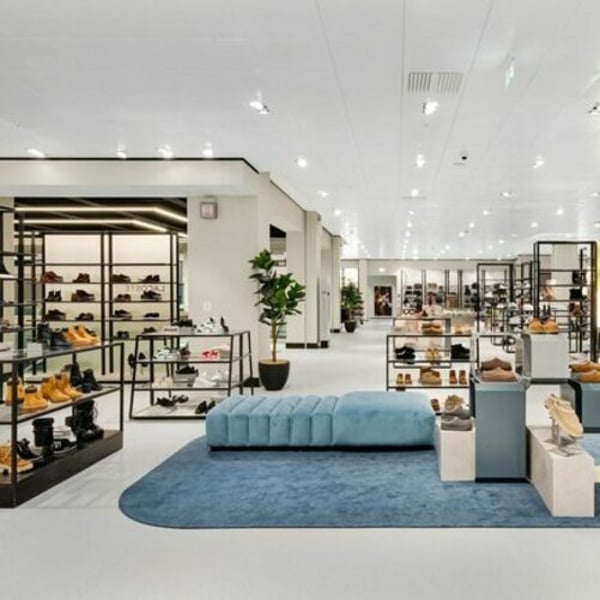
Spanning 60,000 sq ft across two floors, it brings together Frasers Group brands including Flannels, Sports Direct, USC, and Jack Wills under one roof.
The new destination “offers an elevated retail experience, providing access to the world’s most aspirational premium, lifestyle and sports brands”, across women’s, men’s, and kidswear, Frasers Group said.
It includes a dedicated 5,000 sq ft Flannels store, providing the Queensgate catchment “with the best in luxury and contemporary fashion, footwear, and accessories”.
This includes an extensive range of globally-recognised labels including Boss, Coach, Levi’s, Biba, Tommy Hilifger, Barbour, alongside sports brands under its Sports Direct banner, including Adidas, Nike, The North Face, Under Armour, New Balance, Everlast, Slazenger, Karrimor and USA Pro.
Ed Ginn, director of Investment Management for Queensgate operator Invesco Real Estate, said: “Frasers Group’s opening is the start of an exciting new chapter, and marks significant progress in our efforts to maintain Queensgate as a leading retail and leisure destination in the region and in the UK more widely.
“[The Frasers] addition… to the centre raises the bar for potential investment from brands to further enhance the shopping experience, as we continue to evolve Queensgate in a way that provides our catchment with everything they could need or want, in one place.”







 Politics8 years ago