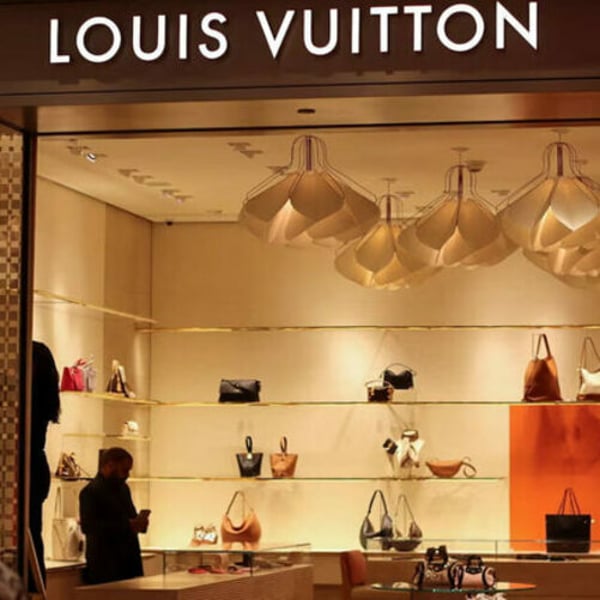
Fleur Arbel and Christophe Kairouz, both from France, were lured into Louis Vuitton‘s New York flagship recently by a colorful sculpture of a monogrammed giraffe and ostrich above the store’s entrance.
Louis Vuitton handbags on display at Saks Fifth Avenue in New York City on July 24, 2025. – Reuters
But the two 24-year-olds are more likely to spend their shopping dollars elsewhere, as Louis Vuitton’s heavy logos and styles strike them as passé.
“I think they failed to keep the luxury image in a way,” said Kairouz. “I think they need to create something new, original.”
Arbel and Kairouz are a tiny fraction of the Gen Z cohort, born between 1998 and 2012 — the luxury industry’s new frontier. The group accounted for 4% of global luxury spending before the pandemic; by 2030, they are expected to account for 25%, according to the Boston Consulting Group.
Executives, consultants, and analysts say this generation is harder to pin down than their predecessors. Influenced by a global social media landscape, they tend to mix and match goods from established names with trendier labels, shopping everywhere from TikTok to thrift stores. Legacy brands attempting to attract Gen Z consumers have utilized influencers, pop-up shops, and affordable items, such as bag charms, to appeal to this demographic.
“There’s a lot of similarity between Gen Z in Shanghai and Los Angeles and London,” said Scott Roe, chief financial officer and chief operating officer of Coach-parent Tapestry.
More affordable luxury companies, such as Coach and Ralph Lauren — whose revenue rose 6.8% in the 12 months ended in March — are capitalizing on the generational shift. Coach has gained cachet among Gen Z by utilizing influencers, offering personalized services, and prioritizing sustainability, according to experts.
Coach’s total revenue rose 9.9% to about $5.6 billion for the 12 months ended in June. Tapestry’s Roe said Gen Z is not less brand-loyal than other generations, but it is harder for brands to reach these consumers because shoppers have more choices. “To break through, you need to have a strong share of voice.”
That voice is pricey: Tapestry increased its marketing spend from 3% of sales pre-pandemic to 10% this year, according to its May earnings call — although it did not disclose how much was specifically targeted at Gen Z.
Brands are contending with upstarts and smaller established labels, such as Collina Strada and Mary-Kate and Ashley Olsen‘s The Row, which climbed two spots to sixth place in the most recent Lyst Index of the hottest luxury brands. Lyst, a global fashion shopping platform, tracks the behavior and social media engagement of more than 160 million users on its site and is considered the “biggest dataset in fashion,” according to the company.
Hillary Taymour, creative director of Collina Strada, said they started targeting Gen Z in 2020 with digital ads. Now, Gen Z and Millennials account for 58% of its business.
“It mixes sustainability with a playful, meme-driven aesthetic,” she said, citing the brand’s “inclusive casting and diverse runway shows” that make younger audiences feel like part of a community.
Affordable items draw in younger shoppers
Not all fashion powerhouses are being left on the shelf. Luxury labels from Kering-owned Bottega Veneta, Prada Group’s Miu Miu, and LVMH-owned Loewe continue to perform well with Gen Z. Miu Miu currently ranks first on the Lyst Index, followed by Loewe.
Miu Miu sales rose 49% in the first half of 2025 compared to the same period in 2024, capturing first-time luxury buyers with leather bag charms, which retail in the range of $240 to $1,250.
“Brands like Miu Miu succeeded because single pieces mirror the brand identity, allowing Gen Z consumers to buy into the brand without having to purchase a full look,” said Achim Berg, founder of FashionSIGHTS, an industry think tank.
Less expensive items attract younger luxury shoppers, who are still more budget-conscious than their older counterparts. In August, spending among Gen Z and Millennials — those born after 1978 — rose by just 0.5% from the previous year, according to Bank of America, compared to a 2.4% increase for Baby Boomers.
“When I shop luxury, I think about ‘what’s going to last me a long time?’ I’m spending a lot of money on an item — I want something I’m not going to get sick of in five or ten years,” said Kendall Still, a 26-year-old Los Angeles native.
Some brands have struggled. Sales at Kering-owned Gucci fell 25% in the second quarter. The company ousted CEO Stefano Cantino after just nine months on the job on Sept. 17. Data from Gen Z researcher dcdx, which tracks mentions and interactions with user-generated brand content, showed Gucci suffered the sharpest decline on social media among top luxury labels over the past year.
Over the last two years, Kering shares have lost 43% of their value, while Tapestry has more than tripled. Gucci did not respond to a request for comment.
“Legacy brands are splitting into clear winners and losers,” said Frederica Levato, senior partner at Bain & Company.
The next players to emerge globally could be Chinese brands like Uma Wang and Shushu/Tong. In Asia, newer Chinese companies are gaining traction with younger shoppers due to their digital fluency and ability to capture China’s national identity, according to Chanel CEO Leena Nair, who spoke at The Economic Club of New York on September 16.
“You cannot take the longevity of a brand for granted. You stay in the public consciousness and you have the iconicity because you’re relevant and timely, and constantly modern,” she said.
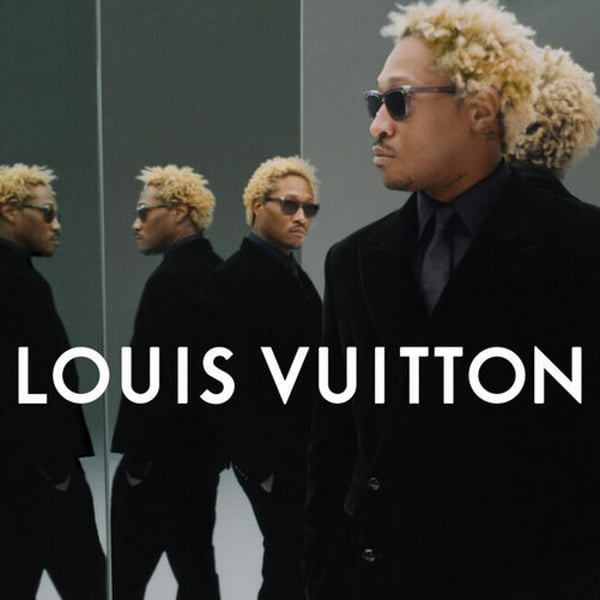
Louis Vuitton has named Grammy Award–winning artist Future as its newest ambassador, deepening the maison’s ongoing commitment to celebrating talent across cultural landscapes.
Louis Vuitton names Future as its newest ambassador. – Louis Vuitton
The Atlanta-born rapper, producer and composer continues to dominate the global music landscape. Most recently, he released back-to-back chart-topping albums, “We Don’t Trust You” and “We Still Don’t Trust You”, which became an international phenomenon and further cemented Future’s status as a cultural trailblazer. Over the course of his career, Future has earned 11 number-one albums and multiple chart-leading singles.
“Future embodies the core values of Louis Vuitton, including creativity, artistry, and a pioneering spirit that resonates with international audiences,” the maison said in a statement. “His unique style and creative vision make him an invaluable addition to the Louis Vuitton family.”
It’s not the first time Future collaborates with Louis Vuitton. He attended Louis Vuitton’s Men’s Spring–Summer 2026 show in Paris at the invitation of Pharrell Williams, a longtime friend and creative collaborator. Earlier this year, Future also appeared at the 2025 Met Gala, themed “Superfine: Tailoring Black Style,” wearing a custom Louis Vuitton grey quarter-zip ensemble layered with a tie, designed by Williams.
Rent the Runway announced on Monday sales for the third quarter rose 15.4% to $87.6 million, with the U.S. rental platform clocking growth across its subscriber base.
Rent the Runway
The New York-based firm said ending active subscribers grew 12.4% to 148,916 during the three months, and average active subscribers totalled 147,645, up 12.9% on the prior-year period.
Meanwhile, total subscriber numbers lifted 6.1% to 185,166 during the quarter ending October 31.
In line with strong sales growth, the company reported a net income of $76.5 million, as compared to a loss of $18.9 million in the third quarter last year.
“This year we’ve repositioned ourselves for sustained growth in the category,” said Jennifer Hyman, co-founder and CEO of Rent the Runway.
“Not only did we execute operationally on our stated goals to return to our customer-obsessed origins, reinvigorate our brand, and drive double-digit growth in subscribers; but we also restructured our balance sheet, closing the recapitalization transactions in October that offer improved financial flexibility to better position us for continued growth.”
Earlier this year, Rent the Runway said it will hand over a controlling stake in the company as part of a plan to cut debt and grow.
The deal, with lender Aranda Principal Strategies and other partners, will wipe more than $240 million of debt from Rent the Runway’s balance sheet, according to an emailed statement released in August.
Looking ahead, Rent the Runway said it forecasts revenue of between $323.1 million and $325.1 million for the full-year.
Elisabetta Caldera, 55, has been named global chief people and organization officer for Chanel Ltd., succeeding Claire Isnard, 64, starting next month, the company told Bloomberg News in a statement.
Isnard is retiring after more than 17 years at the group, which had a workforce of around 38,400 employees last year. Caldera will join Chanel’s leadership team, reporting to Chief Executive Officer Leena Nair, and be based in London.
Caldera spent more than four years as global chief human resources officer at Aegon Ltd. where she was also part of the insurer’s executive committee. The Italian executive previously spent 17 years at Vodafone Group Plc in various HR roles until 2021 when she joined Aegon.
Under CEO Nair, the former head of HR at Unilever Plc, Chanel has been rebuilding the roster of top managers at the company as an older guard retires.
Chanel, known for its No. 5 fragrance, is privately owned by the billionaire brothers Alain and Gerard Wertheimer whose fortunes are estimated at about $43 billion each, according to the Bloomberg Billionaires Index.
The company, founded in Paris but headquartered in London, reports its financial performance once a year, generally around late May. Revenue fell 4.3% to $18.7 billion in 2024 on a comparative basis with operating profit sliding by almost a third partly due to heavy advertising spending and a rise in hiring.





 Politics8 years ago