Luxury might not exactly be back, but it is certainly moving in the right direction. That’s the message from LVMHMoet HennessyLouis Vuitton SE, the world’s biggest seller of top-end goods. Yet just as investors overly punished the sector earlier in the year, they may now be betting on a bling bonanza that could prove elusive.
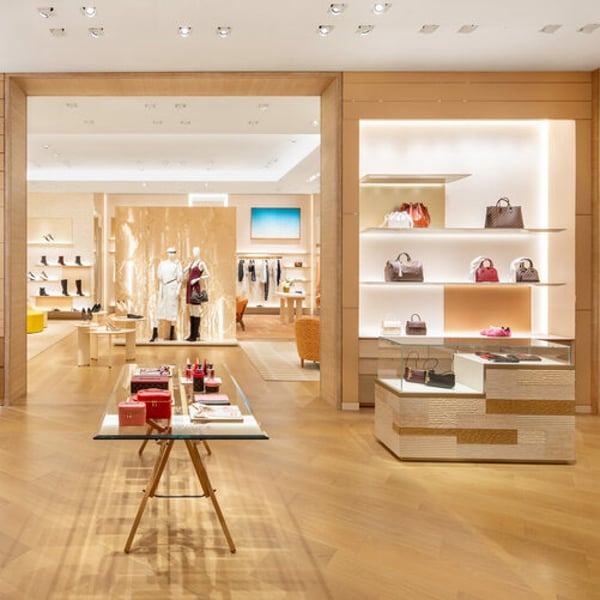
Inside Louis Vuitton’s Orlando store in the US – Louis Vuitton
LVMH on Tuesday reported that sales excluding currency movements and mergers and acquisitions rose 1% in the three months ended September 30, the first increase in revenue this year. Organic sales from the crucial fashion and leather goods division declined 2%, but this was much better than both the 3.5% drop that analysts had expected and the 9% slump in the second quarter. The shares gained as much as 14% in early trading on Wednesday.
LVMH’s performance underlines that the worst is probably over for luxury. US demand has bounced back from April, when even wealthy shoppers went on a buyers’ strike, driven by the combination of steep increases in the price of handbags and slumping stock markets in the wake of US tariffs. With equities roaring back, Americans are buying more champagne, and not just because of stockpiling ahead of higher levies. And as the US recovers, the other engine of growth, China, is stabilising, with sales of designer clothes and handbags on the mainland turning positive in the third quarter.
While LVMH benefited from comparisons with difficult conditions a year ago, its own initiatives are paying off, such as The Louis, a store in Shanghai shaped like a ship that’s not only proving a tourist attraction but is also boosting luggage sales. New designers, including at LVMH’s Dior and Celine brands, are creating excitement around fashion once more.
And the improvements aren’t just coming from price increases. Well-heeled shoppers are back- and buying. The more encouraging backdrop explains why luxury stocks have rebounded. Shares in LVMH are up almost 24% in the past six months.
Luxury stocks were clearly oversold earlier in the year amid fears that demand had been permanently dented by so-called ‘greedflation’ by big brands. But just as investors then were too gloomy, now they may be getting ahead of themselves.
Aside from some pieces from Demna Gvasalia’s first collection for rival Kering SA’s Gucci– only available for just over two weeks to drive desirability- and LVMH’s Celine, most fashion products shown on the runways won’t appear until early next year.
Meanwhile, sales over the next few months will compare with the final quarter of 2024, when exuberance after the US election drove a wave of demand for Cie Financiere Richemont SA’s Cartier watches and scarves from Britain’s Burberry Group Plc.
And just as the prospect of tariffs- and resulting equity market declines- put paid to last year’s bounce back, there’s a danger that a return of trade tensions, recent wobbles in stocks and crypto currencies turning into a deeper rout or an uptick in US unemployment could undermine top-end spending this time around.
But the biggest factor that will determine whether the luxury revival is sustainable is China. LVMH said that while domestic sales to Chinese shoppers were now expanding by a percentage in the mid-to-high single digits, their spending abroad- which tends to be more extravagant- is still experiencing a double-digit decline.
Even if a recovery takes hold, it might not be felt evenly across the industry. LVMH, given its considerable scale, should be a winner. It has two of the most talked about new designers- Jonathan Anderson at Dior and Michael Rider at Celine. The company also announced on Tuesday that former Dior designer Maria Grazia Chiuri would become the creative director of Fendi. It can use its marketing clout to stay at the forefront of consumers’ minds, as the success of The Louis shows.
At rival Kering, the turnaround depends primarily on Gucci designer Demna. He’s made a strong start, but the brand must build on that early promise. Meantime, those companies that have prospered in a market dominated by jewellery and understated fashion might not do so well in a revival. Hermes International SCA tends to outperform when times are tough because it enjoys more demand for its bags- the Birkin, Kelly and Constance- than it can meet. But equally its production constraints mean it can’t sell many more of those bags in the boom times.
Richemont has also ridden the jewellery wave as price hikes for handbags have made baubles better value for money. But more moderate price increases for leather goods, as well as the creative overhaul, means more competition for jewellery.
For now, top-end demand looks brighter than it has for the past two and a half years, the brief post-election boom notwithstanding. But as anyone fond of the latest looks knows, fashion is notoriously fickle. Luxury investors will be hoping that the nascent recovery is the start of an enduring trend, and not a dopamine-driven spike that will quickly evaporate.
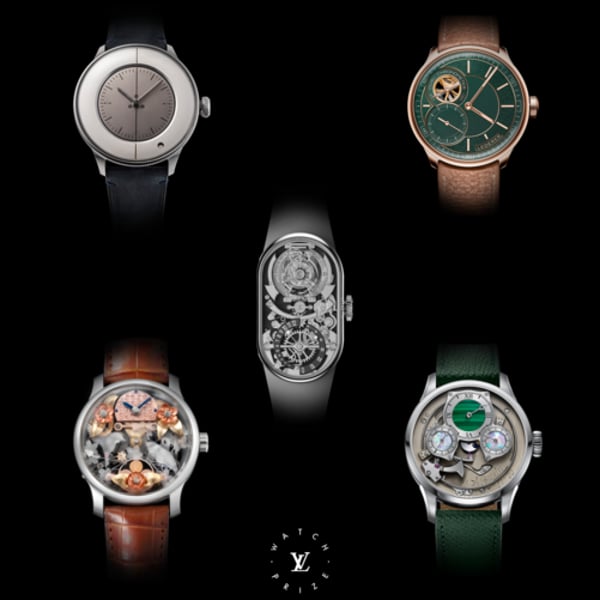
On December 16, Louis Vuitton unveiled its five finalists and five final jury members for the second edition of the Louis Vuitton Watch Prize for Independent Creatives, to be awarded at an exclusive celebration ceremony on March 24, 2026.
The five finalists for the Louis Vuitton Watch Prize for Independent Creatives – Louis Vuitton
Watch Prize finalist Daizoh Makihara of Daizoh Makihara Watchcraft Japan’s ‘Beauties of Nature’ wristwatch entry incorporates the delicate, traditional Japanese cut-glass technique ‘Edo Kiriko’ into watchmaking in a world first and his botanical design features an automatic petal mechanism, perpetual moon phase, and 25-jewel movement running at 18,000 vibrations per hour. Independent watchmaker Xinyan Dai of Fam Al Hut’s mechanical, manual-wind wristwatch named ‘Möbius’ presents the most compact bi-axis tourbillon conceived to date, blending tradition and future-facing innovation with over 200 hours of handcraftsmanship.
Victor Monnin and Alexandre Hazemann of Hazemann & Monnin’s ‘School Watch’ entry celebrates the Morteau school of watchmaking with a fully in-house made HM01 calibre, synchronising complex mechanics and precise poetry. Bernhard Lederer of Lederer’s wristwatch ‘CIC 39 mm Racing Green’ presents the first fully functional dual detent escapement in a wristwatch, highlighted by a transparent case back and sanded, matte dial.
Quiet Club’s Norifumi Seki has entered ‘Fading Hours,’ designed to innovate “new mechanics that respond to everyday needs,” according to the watchmaker. Created almost entirely in-house, the watch has a first-of-its-kind alarm with a vertically mounted hammer and minimalist, concealed elements.
‘Beauties of Nature’ by Daizoh Makihara – Louis Vuitton
“Since the launch of the Louis Vuitton Watch Prize, our admiration for the dynamism of independent watchmaking has continued to grow,” said Louis Vuitton’s watch director Jean Arnault in a release. “These artisans create truly audacious timepieces, uniting extraordinary technical mastery with the boldness to challenge convention, and in doing so, they push the very boundaries of what is possible. As we celebrate this year’s finalists, I also want to thank the entire watchmaking community for the enthusiasm and support behind this initiative. I would also like to extend my gratitude to the members of the expert committee.”
After receiving submissions from around the world, Louis Vuitton’s five finalists were chosen from a group of 20 semi-finalists, whose work was evaluated by a Committee of Experts. The 65 watch enthusiasts, industry representatives, and global collectors measured the candidates’ timepieces against the principles of design, creativity, innovation, craftsmanship, and technical complexity to discern the five top entries.
Möbius by Xinyan Dai – Louis Vuitton
Carole Forestier-Kasapi, haute horlogerie and movements strategy director at Tag Heuer will take up the role of president of the Watch Prize’s jury after being nominated by the Committee of Experts. The jury also welcomes journalist Frank Geelen, founder and editor-in-chief of Monochrome Watches; Matthieu Hegi, La Fabrique du temps Louis Vuitton artistic director; watch enthusiast François-Xavier Overstake, founder and editor of Equation du Temps; and Kari Voutilainen, master watchmaker and owner of the Voutilainen workshops.
The winner of the Louis Vuitton Watch Prize for Independent Creatives will receive 150,000 euros and a one-year specially tailored mentorship by experts from La Fabrique du Temps and Louis Vuitton. “The future looks promising, and we’re excited to see what’s next,” said Jean Arnault.
John Galliano‘s former lawyer was given a two-year suspended prison sentence on appeal on Tuesday, identical to the term imposed at first instance, for misappropriating funds from the designer’s bank accounts and those of one of his companies.
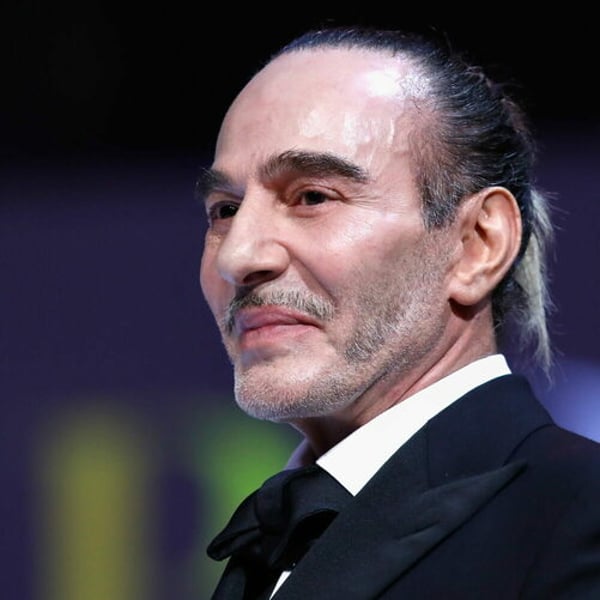
John Galliano – DR
The Paris Court of Appeal upheld the June 2023 judgment of the criminal court, which had found Stéphane Zerbib guilty of breach of trust totalling 856,500 euros between 2008 and 2011, and of the use of forged documents.
John Galliano lodged a complaint in April 2011 against his former lawyer, accusing him of misappropriating around three million euros by withdrawing cash or making bank transfers without his knowledge.
The designer had just been dismissed by the House of Dior after hurling antisemitic insults at patrons in a Paris bar in February 2011, and was undergoing treatment for his “addictions” at a rehabilitation clinic in Arizona.
At the hearing, Stéphane Zerbib denied any fraudulent withdrawals from the accounts of his former client and from one of his companies, Cheyenne Freedom.
The Court of Appeal also upheld a one-year suspended prison sentence for Stéphane Zerbib’s wife, Danielle Nahon, a legal adviser who also advised John Galliano at the time, for breach of trust, use of forged documents and unlawfully holding herself out as a lawyer.
The lawyer and his wife were ordered to jointly pay John Galliano 145,000 euros in material damages and 5,000 euros in moral damages, as well as 606,605 euros to the company Cheyenne Freedom.
This article is an automatic translation. Click here to read the original article.
The upcoming January edition of Pitti Uomo will mark Swaim Hutson’s debut as head of menswear design at rag & bone, unveiling his first collection for the New York-based brand for the autumn/ winter 2026–27 season.
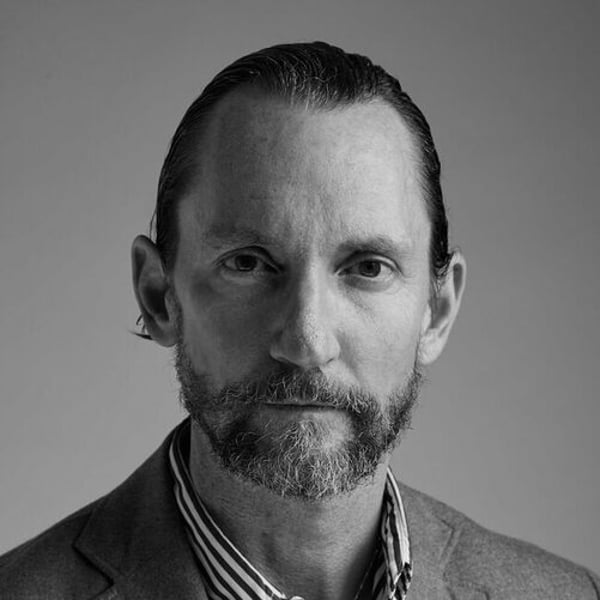
Swaim Hutson
“rag & bone has always stood for authenticity and innovation,” Hutson commented. “I want to build on these values, creating menswear that is both enduring and immediate, capable of expressing the spirit of New York and engaging with a global audience.”
Hutson brings nearly two decades of experience in international menswear to the role. After founding Obedient Sons in New York- a CFDA/ Vogue Fashion Fund finalist- he held creative director roles at 3.1 Phillip Lim, Club Monaco, and Generra. He later launched The Academy New York, a label that has established itself within the fashion, art, and music communities.
“Swaim brings an innovative vision of creativity and craftsmanship, strengthening the essence of the brand: the elegance of British tailoring combined with the authenticity of American sportswear,” said Andrew Rosen, executive chairman of rag & bone.
This article is an automatic translation. Click here to read the original article.