L’Oreal SA’s €4 billion ($4.7 billion) purchase of Kering SA’s beauty business marks the largest in a string of recent deals by the French cosmetics group, as it builds out its range of luxury brands.
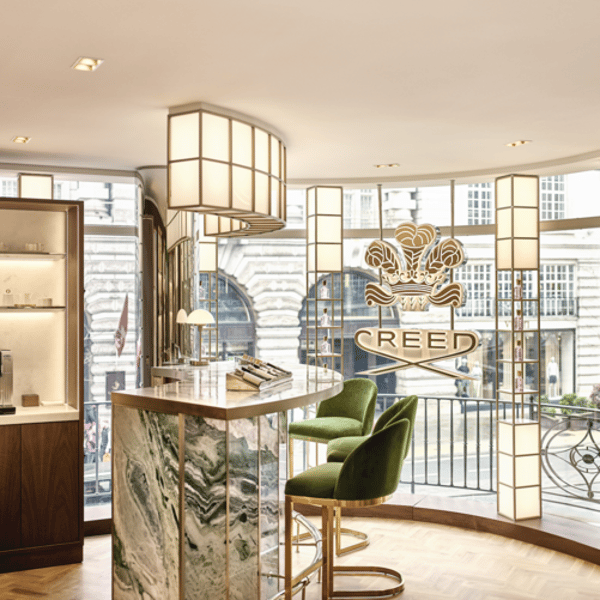
Inside Creed’s London flagship store – Dr
The acquisition showed the owner of Maybelline and Lancôme is willing to pounce when prized assets are up for grabs at an attractive price. Creed’s valuation was lower in the deal than the €3.5 billion Kering paid for it in 2023, a person familiar with the talks said, declining to say by how much.
L’Oreal Chairman Jean-Paul Agon approached Kering’s then CEO Francois-Henri Pinault in the past year about striking a beauty deal, people familiar with the transaction said. Pinault is still chairman of Kering but was replaced as CEO last month by Luca de Meo. The talks accelerated in September, one person said.
The all-cash purchase was billed as a beauty and wellness partnership between Kering, the owner of Gucci, and L’Oreal. Beyond Creed, L’Oreal will also get 50-year licenses to develop and market beauty offerings for Kering’s fashion brands, including Bottega Veneta, Balenciaga and eventually Gucci — once that license is freed from its partnership with Coty Inc.
The Gucci license is set to become available in 2028 at the latest, according to the deal terms, people familiar said.
Berenberg analysts led by Nick Anderson estimate Creed is being valued at €2.5 billion in the sale, implying a writedown of around €1 billion on the 2023 purchase price, they said Monday in a note. They estimate the Gucci license is worth €1.5 billion.
The deal “comes at a price, namely a one-third write-down of an asset bought just two years ago,” the analysts said.
Kering investors still welcomed the deal, sending shares as much as 5.5% higher in Paris. With the sale, leverage will come down close to 1.5 times earnings before interest, tax, depreciation and amortization from 2.3 times at the end of last year, according to estimates by Banco Santander SA.
The move to offload the beauty business is “positive, not only to improve the balance sheet, but also to focus on its core luxury brands,” Santander analyst Mariano Szachtman wrote.
Representatives for L’Oreal and Kering didn’t immediately respond to requests for comment. A Coty representative declined to comment. The companies will also explore business opportunities in the fields of luxury, wellness and longevity, they announced.
Kering has struggled in recent years with slumping sales at its biggest brand, Gucci, and an increasing debt load after a series of pricey deals, including Creed and premium property acquisitions. De Meo vowed last month to slash debt and costs.
L’Oreal, meantime, has been on an acquisition spree. It bought Aēsop in 2023 at an enterprise value of about $2.5 billion, and recently purchased South Korean brand Dr. G, a majority stake in Medik8, and minority stakes in Omani high-end fragrance maker Amouage, French fashion brand Jacquemus, and Galderma Group AG, which specialises in injectable skin fillers.
Some of these recent purchases are part of L’Oreal’s growing luxury portfolio, which is overseen by Cyril Chapuy.
Investors are also waiting for a resolution as to who will buy an initial 15% stake in Giorgio Armani SpA following the founder’s death last month. L’Oreal, which has a license with Armani to market its fragrance, makeup and skincare products until 2050, was named as a one of the preferred buyers in Giorgio Armani’s will along with EssilorLuxottica SA, another license holder, as well as LVMH Moët Hennessy Louis Vuitton SE.
On the Kering deal, L’Oreal was advised by Bank of America, Rothschild and PVC PH. Villin Conseil. Kering was advised by Centerview and Evercore.
Global luxury fashion retailer Fwrd has appointed Rosie Huntington-Whiteley as fashion director as the Revolve Group-owned platform continues to gain market share.
Fwrd names Rosie Huntington-Whiteley as fashion director. – Fwrd
In this role, Huntington-Whiteley will oversee fashion curation, merchandising, and seasonal strategy, while bringing her global profile and personal aesthetic to the role.
“As fashion director at Fwrd, my role is about defining the brand’s fashion point of view through a modern, timeless, and refined lens,” said Huntington-Whiteley.
“I believe in the power of storytelling through clothing, building a wardrobe that balances both sophistication and ease that truly resonates with the Fwrd customer’s lifestyle.”
The company most recently reported a 37% year-over-year increase in gross profit dollars in the third quarter of 2025. Fwrd’s personal shopping program has been a key contributor, delivering more than 100% year-over-year sales growth in the first nine months of 2025.
Fwrd has also expanded its luxury portfolio through recent brand launches including Phoebe Philo, Dries Van Noten, and Skims x Roberto Cavalli. It continues to strategically invest in owned brands, physical retail, merchandising, and client experiences.
“Fwrd’s strong performance in today’s evolving luxury market underscores the significant opportunity ahead as we continue to scale. With visionary creative leadership guiding the brand forward, we’re continuing to elevate Fwrd’s global presence and strengthen its position in the luxury space,” added Michael Mente, co-founder & co-CEO Revolve Group, Inc.
“As we invest in initiatives like our personal shopping program and expand our physical footprint, we’re deepening client engagement and driving long-term growth to ensure Fwrd remains the destination for modern, curated luxury fashion.”
Friends and business partners Ana Abreu and Rita Galamba have just opened, at 8Marvila in Lisbon, the first bricks-and-mortar space for their Portuguese brand, Anahí India — a name that nods to original Indian pieces and to those created from traditional saris, from a country first reached by sea by Vasco da Gama in the 15th century and whose nationals are among the largest immigrant communities in Portugal, alongside Angolans and Brazilians.
Instagram
India is also the guiding inspiration for the entrepreneurial duo’s label, and they now oversee in-house, local production in both countries.
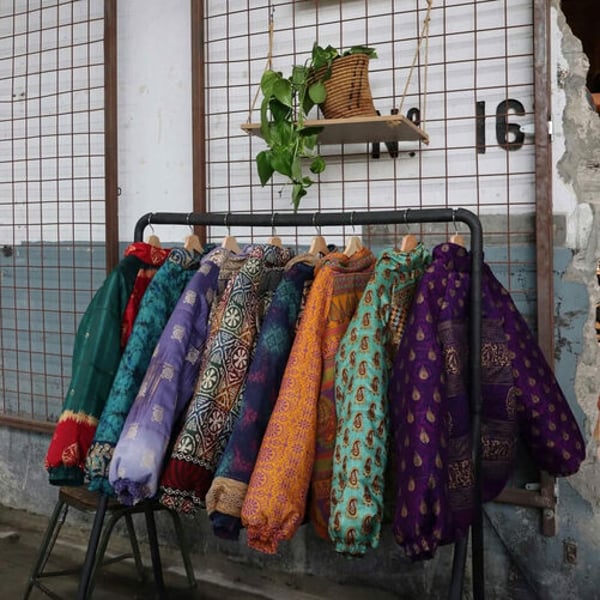
Measuring around 25 square metres, the new shop showcases unisex jackets, dresses and kimonos — a line they began selling nearly a decade ago at music festivals, initially with men’s shirts brought directly from India by the founders. There is no shortage of accessories either, such as sarongs or karnatakas, and jewellery featuring traditional styles and motifs.
The duo opened Anahí India’s debut shop at the end of November, presenting the brand’s full range and making a point of asserting its identity, despite the clean and industrial aesthetic choices of the alternative space, which stand in constant contrast to the vibrant colours and intricate patterns of the recycled and repurposed fabrics used throughout the collections.
In addition to the “unique and exclusive pieces of Indian origin,” Anahí India also offers designs created collaboratively, resulting in styles that both Ana and Rita would wear all year round, in materials such as silk.
Instagram
Another update: until December 12, “we’ll be in Praça D. Luís for the Time Out Lisboa Christmas fair,” the brand announces on its social media channels, inviting you to “discover exclusive pieces and find stylish gifts,” as noted on the brand’s Instagram account.
“And of course… Don’t forget our store at Rua Marvila 8, open from Thursday to Sunday, from 12 noon to 8 pm — always ready to welcome you with the best energy,” the brand added, while also highlighting the goal of continuing to grow online, where it explains: “At the heart of our brand lies a deep commitment to sustainability and the preservation of India’s rich textile heritage,” it said via its website.
“The materials used are, in fact, recycled Indian saris, reimagined and reinvented to create unique fashion pieces. This process not only respects the environment, but also pays homage to the history and art of India.”
According to the website: “The Anahí brand is a story of beauty, culture and sustainability that originated in India, where the charm of recycled Indian saris is transformed into fashion, and which established itself in Portugal in 2017,” it further explained.
“Anahí represents a true fusion of cultures and traditions, with production in both India and Portugal. This intercultural collaboration results in a diverse range of clothing and accessories that combine the essence of East and West.”
Federal authorities are investigating off balance-sheet transactions involving Lugano Diamonds & Jewelry, a chain of high-end boutiques that’s accused its founder of misrepresenting diamond investments he brokered with wealthy clients.
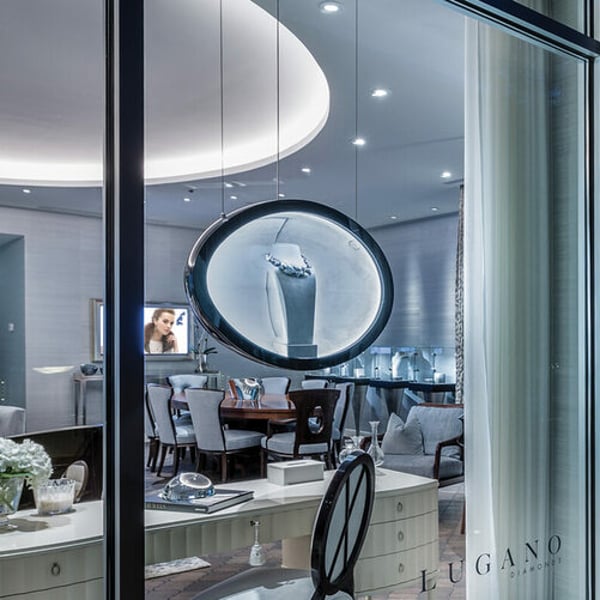
Lugano
FBI agents have interviewed individuals who struck deals with Lugano founder and former chief executive officer Mordechai “Moti” Ferder as part of an investigation into the business, according to people familiar with the matter. A Lugano spokesman said the boutique is cooperating with the probe.
The Newport Beach, California-based chain of about a half-dozen shops, which is majority owned by Compass Diversified, sued Ferder in June and accused him of manipulating Lugano’s accounts by disguising the gem-backed financing as direct sales. Lugano filed for bankruptcy protection last month and Ferder is residing in his native Israel, according to court documents filed by the company.
Lugano, Ferder or related parties have been sued by about a dozen individuals or firms over the diamond investment contracts. The boutique has claimed Ferder entered into financing deals that together may represent more than $100 million in liabilities to the business. Compass said in May it would restate its financial statements.
Ferder’s lawyer Jeffrey Reeves said his client hasn’t been contacted by the FBI or the Department of Justice.
“Mr. Ferder maintains his innocence and denies any criminal wrongdoing,” Reeves said. “We remain focused on defeating the civil claims brought against him as well as prosecuting the counterclaims he intends to file against Compass Diversified, Lugano, and others.”
An FBI spokesperson didn’t reply to multiple requests for comment.
Lugano said in its lawsuit filed in a state court in California that Ferder offered clients stakes in valuable diamonds that the boutique already owned, promising hefty returns once the gems were sold. The lawsuit claims Feder told Lugano personnel that the deals were ordinary sales. Feder has denied the allegations and claimed Lugano and Compass were aware of the contracts.
Lugano interim CEO Josh Gaynor said in a June email to an investor who sued Ferder that those “who have expressed interest in any parallel criminal investigations” may wish to contact an FBI agent, according to court documents filed in an investor lawsuit. The agent has been assigned to the complex financial crime squad in the agency’s Los Angeles field office, according to papers filed in unrelated court cases.
A Compass spokesman said the firm “has been cooperating with the authorities investigating this matter, as well as conducting our own extensive internal investigation.”
Compass released its restated earnings on Monday and said in a securities filing that its internal investigation determined Lugano’s former chief executive officer “deliberately engaged in fraudulent activity” by recording fictitious sales and misrepresenting the value of the jewelry boutique’s inventory. The conglomerate is now focused on cutting debt and “putting this chapter behind us,” Compass CEO Elias Sabo said. It is considering selling some businesses to reduce debt, it told investors last week.
The group acquired a 60% stake in Lugano in 2021 for $198 million and opened additional locations in the US and London, which was recently closed, according to court papers.
The boutique is planning to sell its business in Chapter 11. In September, a holding company that owns Ferder’s shares in Lugano as well as a title to an Aspen property also filed for bankruptcy. Ferder ceded control of the holding company to Lugano’s chief restructuring officer, according to court papers.