Connect with us

Business

Little-known underground salt caverns could slow the AI boom and its thirst for power

Published

on


A slow-starting race to build underground salt caverns could hamper the AI data center boom and weaken power delivery for the massive computing facilities that typically require 99.999% reliability. About half as much new gas storage is planned than will be needed in the future, industry sources estimate.

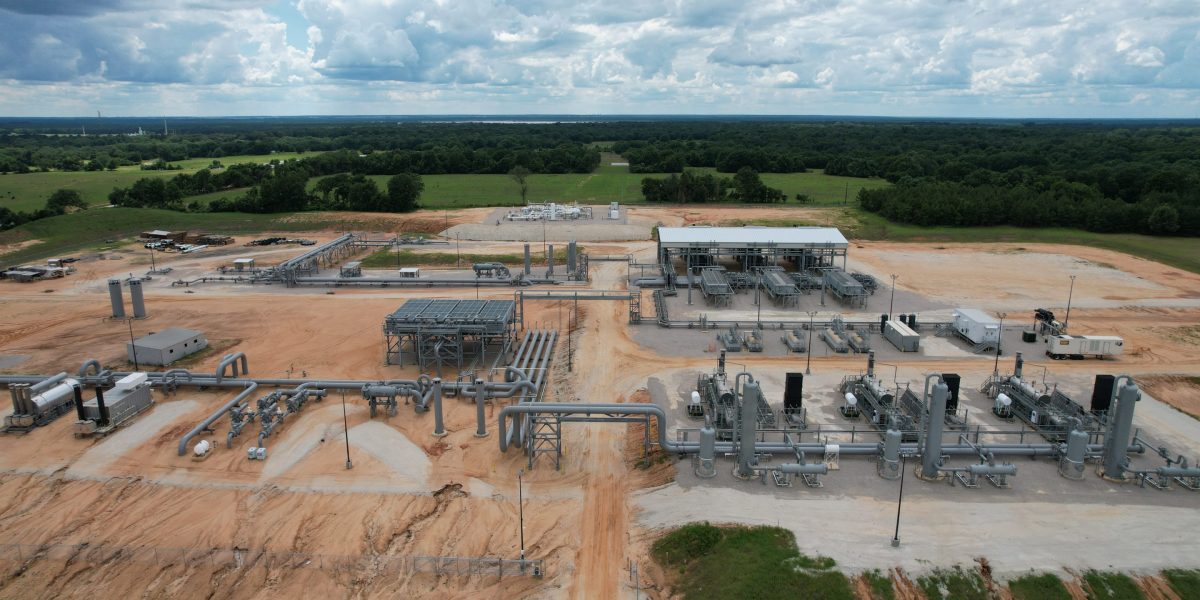
Yes, you read that correctly, salt caverns. Manmade reservoirs thousands of feet below the surface are ideal storage structures for the volume of natural gas required to power AI data centers being built by hyperscalers and to feed the rapid growth of gas-exporters along the U.S. Gulf Coast.

U.S. natural gas output is projected to spike another 15-25% from 2024 through 2030—and continue rising—because of a doubling of gas exports and a surge in domestic demand from the data center construction wave, ongoing electrification, and manufacturing onshoring.

The lack of underground storage now threatens to become a bottleneck in the AI race against China. Without nearby gas storage facilities, customers are reliant on gas pipelines for their supplies. Pipes can fail due to weather events, landslides, and corrosion, leaving facilities without power even if gas is available elsewhere.

A wave of construction for new pipelines and power plants is underway—despite a shortage of gas-fired turbines for power generation—but hardly any new gas storage has been built in over a decade.

“I don’t want to be a bomb thrower or a Chicken Little, but it just seems like everybody in the data center world is in a great big giant hurry, and they haven’t thought about all the things that can happen on the gas side,” said Edmund Knolle, president of Gulf Coast Midstream Partners, which is developing a major salt cavern gas storage project near Houston slated to come online by the end of 2030.

Electricity and gas heating costs already are on the rise because of higher gas demand, and the lack of storage is expected to add to the volatility and rising utility bills going forward, according to energy analysts and developers.

“I think we’re going to be way short of storage,” Knolle added. “Once the light bulb turns on for a lot of people, we’re going to be looking at years to create storage.”

Slowly speeding up

Enbridge (No. 397 on the Fortune Global 500) is North America’s largest pipeline and energy storage company, and it is currently in the process of building more new gas storage than anyone—all from expanding its existing salt caverns in Texas and Louisiana. Caitlin Tessin, vice president for Enbridge’s gas transmission, told Fortune she isn’t losing sleep over storage just yet, but it is a growing issue.

“Our pipes are full. There is an incredible demand from a natural gas perspective, and our existing infrastructure and assets are full,” Tessin said. “There’s some concern around supply of storage.”

“This [growth] is absolutely unprecedented from a gas storage and demand perspective,” she added.

Tessin said natural gas pipelines and storage will prove to be the “backbone” of digital infrastructure AI, even pairing gas with renewable energy to power AI. “Foremost for that crowd is reliability for powering those data centers, offering that 24/7 baseload power, and rapid deployment.”

Energy analyst Jack Weixel, of East Daley Analytics, said there around more than a dozen gas storage projects underway—with a couple recently completed—but some will fall short of the necessary financing to break ground, and others may not be completed for another five years.

About twice as much storage capacity is needed than the roughly 300 billion cubic feet of storage currently planned, Weixel said. The need for data centers, electrification, and gas exports is huge, but the key is still to maintain a strong grid overall, he said, and that requires more gas storage for steady reliability.

“The No. 1 rule there for utilities is don’t freeze grandma,” Weixel said.

Salt of the earth

Unlike with the U.S. Strategic Petroleum Reserve for crude oil, there’s no federal backstop for natural gas storage.

That means the industry must build commercial storage itself with the promise of revenues years away—a key reason why there’s a wait-and-see approach to commencing projects only once there are strong enough demand and pricing signals.

There are two main options for developing storage. The first involves drilling into naturally occurring salt domes in the earth and injecting water to pump and hollow out the space. This “leaching” of the caverns is time consuming, often requiring four years of construction.

The cheaper and faster option is using existing gas wells that are dried up, essentially pumping gas back into the depleted reservoirs. But such reservoirs are not as structurally sound as salt caverns and cannot handle higher pressures, so companies cannot inject and withdraw gas as frequently from them. Typically, injection occurs during the summer and fall, and the gas is pumped back out for winter when heating demand spikes.

Weather disruptions can range from fog to pipes freezing, but the biggest fear is a massive hurricane aimed right at the gas-exporting infrastructure concentrated along the Texas and Louisiana Gulf Coast, Weixel said. That could lead to a lot of stranded gas—nationwide, storage is already near capacity.

“Typically, those hurricanes hit late in injection season, so there may not be room for the gas. It’s operational chaos,” Weixel said.

With adequate storage, companies can “save the gas and squirrel it away like an acorn. And then pull it out in the winter once operations are normal.”
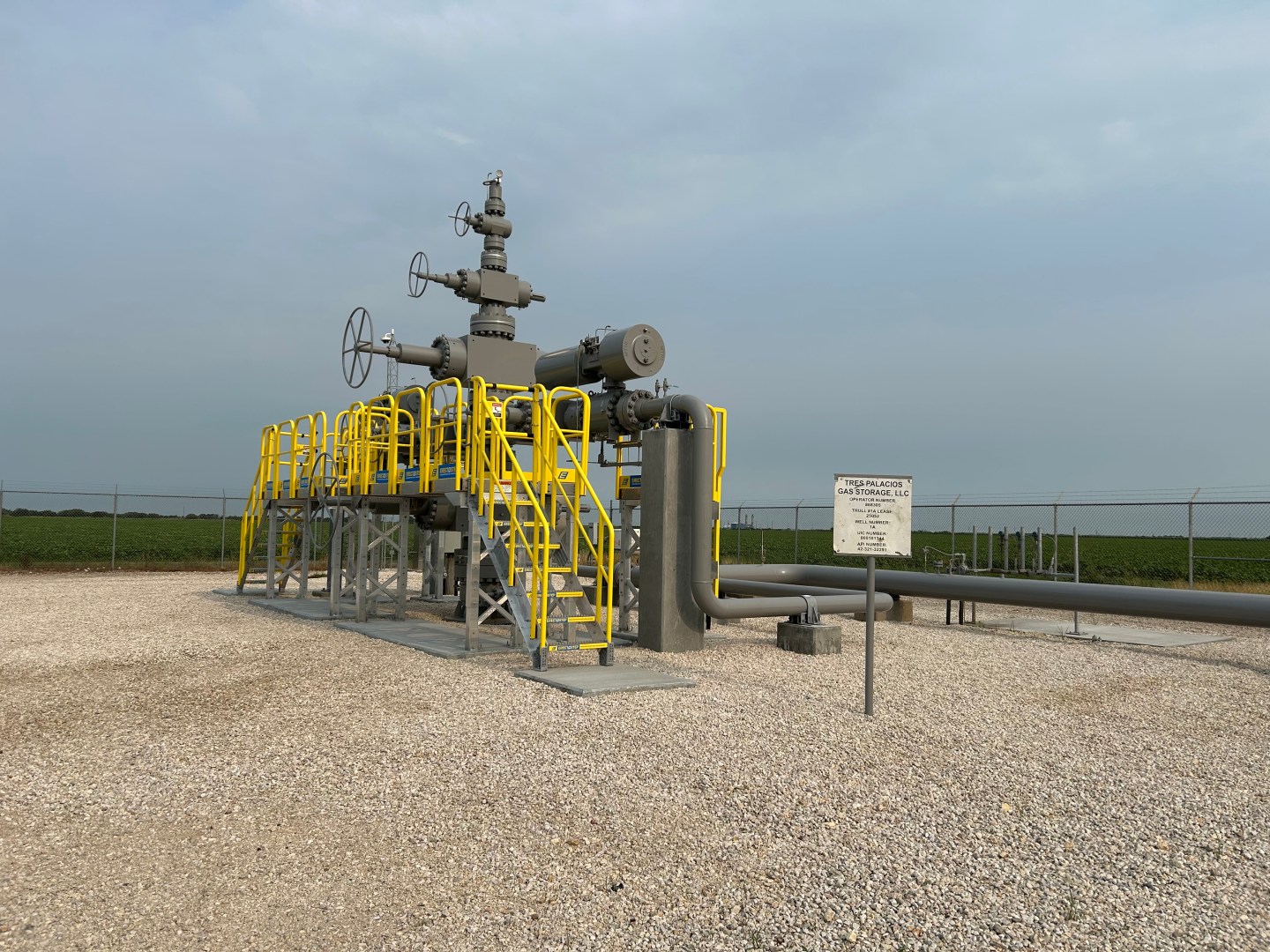
Enbridge recently completed an expansion at its Tres Palacios salt cavern storage hub in Texas and more incremental expansions are starting soon through 2030.

What’s being done?

Knolle’s FRESH project (Freeport Energy Storage Hub) southwest of Houston aims to commence construction in the back half of 2026 to 26 billion cubic feet of gas capacity between two salt caverns.

Enbridge is expanding its Moss Bluff and Egan storage facilities in Texas and Louisiana, respectively to add a combined 23 billion cubic feet, Tessin said, coming online incrementally from 2028 to 2033. Enbridge also recently completed an expansion of its large Tres Palacios hub in South Texas and just announced more growth expected there—three new caverns adding 24 billion cubic feet from 2028 to 2030.

But the only major storage project recently completed is Trinity Gas Storage’s brand-new East Texas facility with 24 billion cubic feet of storage. In December, Trinity just approved an expansion to add another 13 billion feet by late summer 2026. Trinity’s approach is one of the only projects using depleted reservoirs instead of salt domes.

Trinity CEO Jim Goetz told Fortune that more storage built quickly is critical to keep up with the pace of the data center boom, especially because so many of them require building their own temporary gas-fired power before they can be connected to the power grid. The storage provides necessary redundancies for any gas or power disruptions, he said.

The industry built up enough storage for the early days of the shale gas boom through 2010 or so, but it completely stagnated from then until now. He called this a wave of construction growth for “gas storage super-cycle 2.0.”

“The market is kind of like a pendulum, and we seem to go from one extreme to the other,” Goetz said. “Now we’re caught behind the eight-ball here, and we have to catch up.”

He worries the industry isn’t moving forward with enough storage projects quickly enough. And, yet, he’s oddly confident that capitalism will find a way—just as it has in the past.

“It’s a problem that will get solved,” Goetz said. “How? I’m not necessarily sure. But it must get solved; I think it’s just there’s too much riding on it.”



Source link

Continue Reading

Business

Down Arrow Button Icon

Published

on


Good morning. It’s easy to assume China must have been crippled by the U.S. trade battle that reached a temporary truce when President Trump and President Xi met in October. But China’s trade surplus is at a record high of $1.08 trillion in the first 11 months of this year. Some of that is due to China doubling down on other markets: overall exports were up 6% in November over the previous year, even though exports to the U.S. were down 29%.

But part of it reflects the fact that U.S. companies didn’t go away.  I recently spoke with Stephan Tanda, CEO of AptarGroup, a $3.7 billion-a-year manufacturer of specialized packaging and delivery systems for pharma, beauty, and consumer companies, based in Crystal Lake, Illinois. He points out that China remains a key manufacturing hub with longstanding infrastructure and relationships that are central to the company’s regional supply chain. What’s more, he says the speed to market is an advantage that’s hard to replicate in their other innovation centers around the world.

“The amount of grit and sheer willpower is on a different scale,” said Tanda, noting that he now leverages Chinese talent to help his European plants develop product prototypes in six weeks vs. up to 18 months. “We need the China ecosystem to create the pilot mold. We may still want something made in France for luxury beauty products but a lot of innovation used to be China [producing] for China and now it’s China for the region, China for the world.”

Tanda does have the advantage that his products are not considered sensitive from a national defense perspective—”essential items but, yes, there’s not going to be a war waged over them”—and he echoes his U.S. peers in focusing much of his production on local needs, with more than half of his customer base for Chinese-made products coming from China. “It used to be you’d want the Western luxury brand but now you buy the Chinese brand because it’s just as good or better … It helps that we’ve been an early leader in automating our core processes and it’s much easier with AI.”

Added Tanda: “China is more capitalistic than any other country that I know in terms of real drive, hustling, making things work, iterating. For companies doing business, that’s what you compete with. And that means you become a much more competitive actor yourself to be successful in that environment. It helps us to stay sharp and get more competitive because if we can do it there, we can also learn it here.”

Contact CEO Daily via Diane Brady at diane.brady@fortune.com

Top news

Musk decision on electric doors preceded 15 deaths

Fifteen people have died in traffic accidents in which passengers or rescuers were unable to open the doors of burning Teslas because the electric door handles malfunctioned, keeping the doors closed, Bloomberg reports. The decision to make the handles all-electric was originally pushed by Elon Musk, the news service reported

White House halts all U.S. wind-power projects 

The Trump administration said it would stop leases for offshore wind projects due to “national security risks.” The Interior Department claimed wind turbines interfere with radar. “The clutter caused by offshore wind projects obscures legitimate moving targets and generates false targets in the vicinity of the wind projects,” the department said.

Larry Ellison vows $40 billion in son’s bid for Warner Bros.

Oracle cofounder Larry Ellison intervened to salvage his son David Ellison’s hostile takeover bid for Warner Bros. Discovery. David’s company, Paramount Skydance, announced the elder Ellison had provided a guarantee of $40.4 billion to finance the deal. David Ellison has proposed an all-cash offer of $108 billion. WBD’s board previously rejected that offer in favor one from Netflix for roughly $83 billion.

Trump names class of warships after himself

The U.S. Navy’s new “Trump-class” ships are part of a push to modernize the fleet. The president previously named the the F-47 stealth weapon system in a nod to himself as the 47th president. And he added his name to the Trump-Kennedy Center and the Donald J. Trump Institute of Peace.

AI spurs near-record amount of debt

U.S. companies have issued $1.7 trillion in new, investment-grade corporate debt this year, much of it to fuel funding for AI data center buildout. The record for debt issuance was set at $1.8 trillion in 2020 during the Covid pandemic, when companies borrowed heavily to tide themselves through the lockdowns. AI-related debt funding is expected to grow further in 2026, the FT reports.

iRobot cofounder points to China competition as one reason for recent bankruptcy

iRobot cofounder and former CEO Colin Angle revealed that intense competition from China was the reason the company filed for bankruptcy last week. He said that once the company’s vacuuming robot took off in the country, “China decided that this was a market of interest, and they were going to ensure that Chinese companies were advantaged to succeed there.”

Google’s “ultimate” search engine could soon arrive

It was 25 years ago that Google cofounder Larry Page predicted that “artificial intelligence would be the ultimate version of Google.” With the company’s Gemini model edging out competitors, the prediction could be close to coming true.

Gold price hits new record high

The price of gold hit $4,459.60 an ounce yesterday, setting a new record. Demand for the safe-have investment was fuelled by conflict over oil between the U.S. and Venezuela and Ukraine and Russia, the Fed’s lowering of interest rates and a collapse in the price of Bitcoin which, briefly, had appeared to be a candidate for “digital gold” status.

The markets

S&P 500 futures are up marginally this morning. The last session closed up 0.64%. STOXX Europe 600 was up 0.18% in early trading. The U.K.’s FTSE 100 was flat in early trading. Japan’s Nikkei 225 was flat. China’s CSI 300 was up 0.2%. The South Korea KOSPI was up 0.28%. India’s NIFTY 50 was flat. Bitcoin sunk to $87K.

Around the watercooler

Mitt Romney says the U.S. is on a cliff—and taxing the rich is now necessary ‘given the magnitude of our national debt’ by Dave Smith

Billionaire philanthropy’s growing divide: Mark Zuckerberg stops funding immigration reform as MacKenzie Scott doubles down on DEI by Ashley Lutz

Notorious crypto conman Sam Bankman-Fried has a prison passion project: giving legal advice to other inmates by Carlos Garcia

Former U.S. Secret Service agent says bringing your authentic self to work stifles teamwork: ‘You don’t get high performers, you get sloppiness’ by Sydney Lake

CEO Daily is compiled and edited by Joey Abrams, Claire Zillman and Lee Clifford.


Source link

Continue Reading

Business

Goldman Sachs CEO says he’d hire someone ‘smart enough’ over the smartest person in the world because ultimately experience trumps brains

Published

on


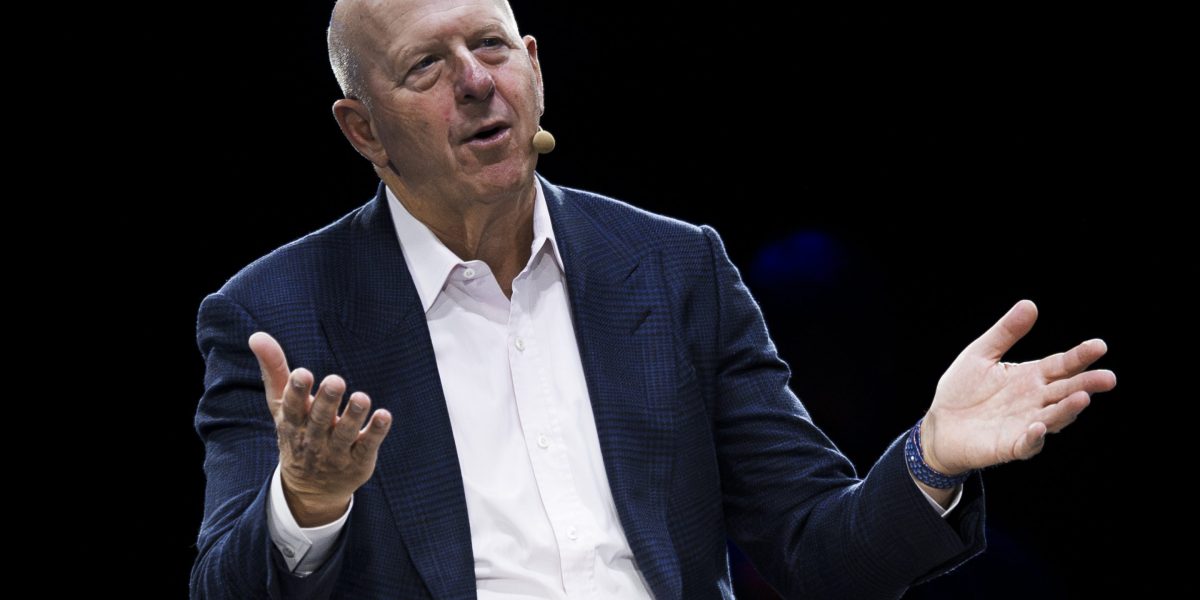
It’s easier to get into an Ivy League school than it is to land a job at $268 billion banking giant Goldman Sachs. But unlike the colleges, the business isn’t chasing the most intelligent minds floating into its talent pools. David Solomon, the CEO of Goldman, says he’s in the “camp of smart enough.” 

“You have to be smart enough, but the smartest person in the world without a whole package of other things [is] not going to navigate Goldman Sachs well, not going to be successful in Goldman Sachs over the long run,” Solomon revealed recently on Sequoia Capital’s Long Strange Trip podcast.

There are a few key qualities Solomon looks for in new hires, over educational pedigree. The CEO said the most attractive candidates are in touch with “human elements” like the ability to connect, be resilient, and determined. They always need to be striving for excellence—and on top of everything else, should come to Goldman Sachs with a proven track record. 

Experience, Solomon said, is “hugely underrated” and “a big differentiator for the firm.” It’s not impossible to do very well without it, he added, but relying on book smarts over real-life expertise won’t get one hired at the bank.

“You can’t teach experience,” Solomon explained. “Experience matters in these big organizations and when it matters it doesn’t matter when things are going well. It matters when the bumps come. You’ve got to make difficult judgments.”

CEOs aren’t always going for the brightest Ivy League grads

Solomon isn’t the only CEO choosing life skills over intellectual excellence. Even the CEO of LinkedIn, Ryan Roslansky, has cautioned that instead of chasing candidates with Ivy League backgrounds, hiring managers today will be on the hunt for AI-savvy talent. 

“I think the mindset shift is probably the most exciting thing because my guess is that the future of work belongs not anymore to the people that have the fanciest degrees or went to the best colleges,” Roslansky said during a recent fireside chat.

Even Berkshire Hathaway’s Warren Buffett looks past Ivy League degrees when it comes to hiring. The hedge fund mogul, worth $149 billion, doesn’t care if his employees went to Stanford or Princeton—or any college at all. 

While discussing Berkshire Hathaway’s 2005 acquisition of Forest River, an RV manufacturer led by Pete Liegl, he said “no competitor came close to his performance” despite Liegl not hailing from an incredibly prestigious university. Buffett also pointed to Microsoft entrepreneur Bill Gates, who achieved billion-dollar success without a college diploma. 

“I never look at where a candidate has gone to school. Never!” Buffett said in his 2025 annual letter to shareholders. “Of course, there are great managers who attended the most famous schools. But there are plenty such as Pete [Liegl] who may have benefited by attending a less prestigious institution or even not bothering to finish school.”

Even elite college degrees—once the benchmark of intelligence—have fallen flat, according to business leaders. The iconic Harvard University dropout himself, Meta’s Mark Zuckerberg, said that colleges aren’t skilling graduates for the jobs they need. The Facebook creator cautioned that the tide is changing as people figure out whether pursuing a degree makes sense anymore, especially as employers hunt for new talent skills.  

“There’s going to have to be a reckoning,” Zuckerberg said on the This Past Weekend podcast in April. “People are going to have to figure out whether that makes sense. It’s sort of been this taboo thing to say, ‘Maybe not everyone needs to go to college,’ and because there’s a lot of jobs that don’t require that…People are probably coming around to that opinion a little more now than maybe like 10 years ago.”


Source link

Continue Reading

Business

Trump will lead the design of his new class of warships ‘because I’m a very aesthetic person’

Published

on


President Donald Trump has announced a bold plan for the Navy to build a new, large warship that he is calling a “battleship” as part of a larger vision to create a “Golden Fleet.”

“They’ll be the fastest, the biggest, and by far 100 times more powerful than any battleship ever built,” Trump claimed during the announcement at his Mar-a-Lago resort in Florida.

The ship, according to Trump, will be longer and larger than the World War II-era Iowa-class battleships and will be armed with hypersonic missiles, rail guns, and high-powered lasers — all technologies that are still being developed by the Navy.

Just a month ago, the Navy scrapped its plans to build a new, small warship, citing growing delays and cost overruns, deciding instead to go with a modified version of a Coast Guard cutter that was being produced until recently. The sea service has also failed to build its other newly designed ships, like the new Ford-class aircraft carrier and Columbia-class submarines, on time and on budget.

Historically, the term battleship has referred to a very specific type of ship — a large, heavily armored vessel armed with massive guns designed to bombard other ships or targets ashore. This type of ship was at the height of prominence during World War II, and the largest of the U.S. battleships, the Iowa-class, were roughly 60,000 tons.

After World War II, the battleship’s role in modern fleets diminished rapidly in favor of aircraft carriers and long-range missiles. The U.S. Navy did modernize four Iowa-class battleships in the 1980s by adding cruise missiles and anti-ship missiles, along with modern radars, but by the 1990s all four were decommissioned.

Trump has long held strong opinions on specific aspects of the Navy’s fleet, sometimes with a view toward keeping older technology instead of modernizing.

During his first term, he unsuccessfully called for the return to steam-powered catapults to launch jets from the Navy’s newest aircraft carriers instead of the more modern electromagnetic system.

He has also complained to Phelan about the look of the Navy’s destroyers and decried Navy ships being covered in rust.

Phelan told senators at his confirmation hearing that Trump “has texted me numerous times very late at night, sometimes after one (o’clock) in the morning” about “rusty ships or ships in a yard, asking me what am I doing about it.”

On a visit to a shipyard that was working on the now-canceled Constellation-class frigate in 2020, Trump said he personally changed the design of the ship.

“I looked at it, I said, ‘That’s a terrible-looking ship, let’s make it beautiful,’” Trump said at the time.

He said Monday he will have a direct role in designing this new warship as well.

“The U.S. Navy will lead the design of these ships along with me, because I’m a very aesthetic person,” Trump said.


Source link

Continue Reading

Trending

Copyright © Miami Select.