Connect with us

Business

LinkedIn CEO says it’s ‘outdated’ to have a five-year career plan

Published

on


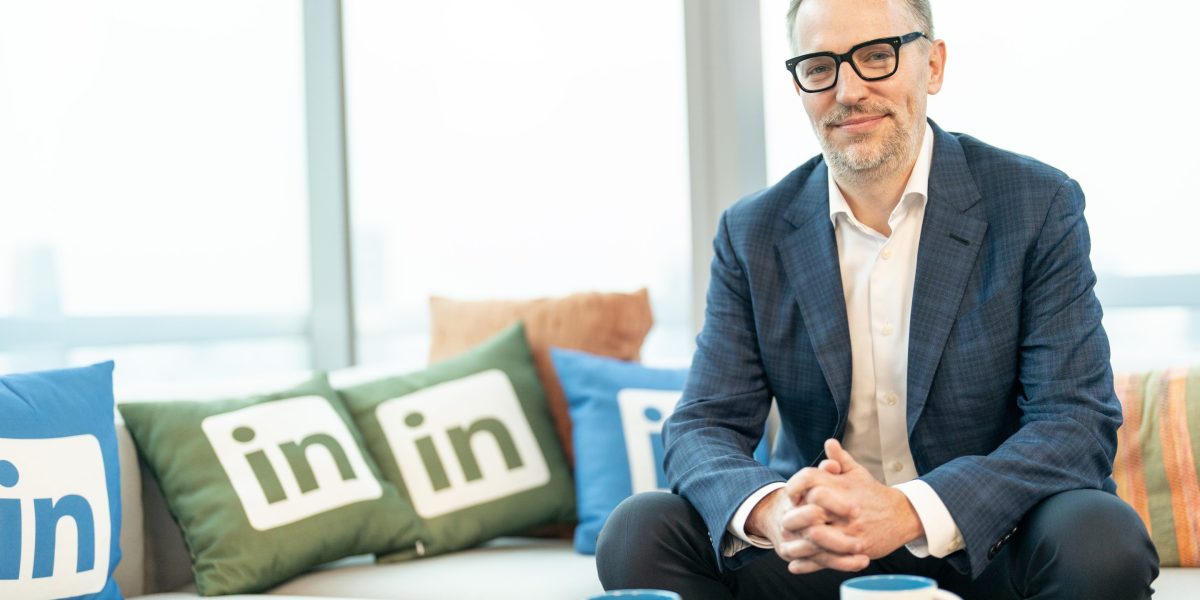
One of the most common pieces of career advice is you should always have a five-year plan mapped out. It’s a way to set targets, stay on track, and advance in your career. But LinkedIn’s CEO says that’s “outdated,” considering the state of today’s job market. 

“You’ll hear people frequently say, ‘Hey, you have to have a five-year plan, like, chart out what the next five years of your life are going to look like, and then follow that path and follow that plan,” Ryan Roslansky said during a recent No One Knows What They’re Doing podcast episode

“And in reality, when you know technology and the labor market and everything is moving beneath you, I think having a five-year plan is a little bit foolish,” the LinkedIn CEO continued. 

Being the chief executive of one of the most popular career-focused social media and job-search platforms since 2020, Roslansky has witnessed countless career paths from users—especially in a tumultuous job market challenged by the pandemic, different administrations, layoffs, tariffs, inflation, and more. 

But one of the most recent and prominent transformations to the job market is the introduction of AI. Because technology is changing the workplace at such a rapid pace, Roslansky suggested professionals make shorter-term career goals instead of focusing on years down the road. Data from the World Economic Forum supports Roslansky’s argument the workplace is changing rapidly—and therefore people need to stay more agile about mapping their careers. Workers can expect roughly 39% of their core skills to be transformed or become obsolete by 2030, according to WEF. 

“I would much recommend people focus on maybe the next few months and a couple of things that aren’t a plan, but [rather] what do you want to learn? What type of experiences do you want to get? That’s, I think, the right mental model in this environment,” he said. 

Other career experts still subscribe to the necessity of a five-year plan, arguing “career growth doesn’t just happen by accident,” and more intensive planning helps people actually reach their goals. 

“Five-year plans also give you the flexibility to change what’s no longer relevant to your long-term goals, without derailing your progress,” talent management executive Mary McNevin told Arielle Executive. “This way, you’re always working toward what you truly want to achieve.”

But Roslansky is so dedicated to this idea he hosts his own podcast called The Path, which is focused on how professionals take on a variety of career paths that aren’t necessarily linear. 

“A lot of people just believe that there’s some linear career path that you jump on,” he said. “You know, you graduate high school and then go to a certain college and then you become a consultant and then get an MBA. People believe that’s how it happens.”

Armed with insights and data from his own company, Roslansky knows a linear education and career is not the reality for most people. In fact, a recent report from vocational and education provider TAFE Gippsland shows people, on average, go through three-to-seven career changes throughout their lifetime—and 16 job changes. 

And this trend is especially evident in Gen Z, who changes jobs, on average, every 1.1 years, according to a recent report by recruiting firm Randstad. The firm calls this “growth-hunting,” and not “job-hopping,” though, because Gen Z says they change jobs because they sense a lack of progression in their current roles.

“If you focus on those shorter steps, gaining learning, gaining experience, a lot of your career path will open up for you,” he said. “And the sooner you realize that, you can take your own career into your own hands. No one is trying to figure this out for you.”


Source link

Continue Reading

Business

Alexandr Wang says the next Bill Gates will be a 13-year-old who is ‘vibe coding’ right now

Published

on


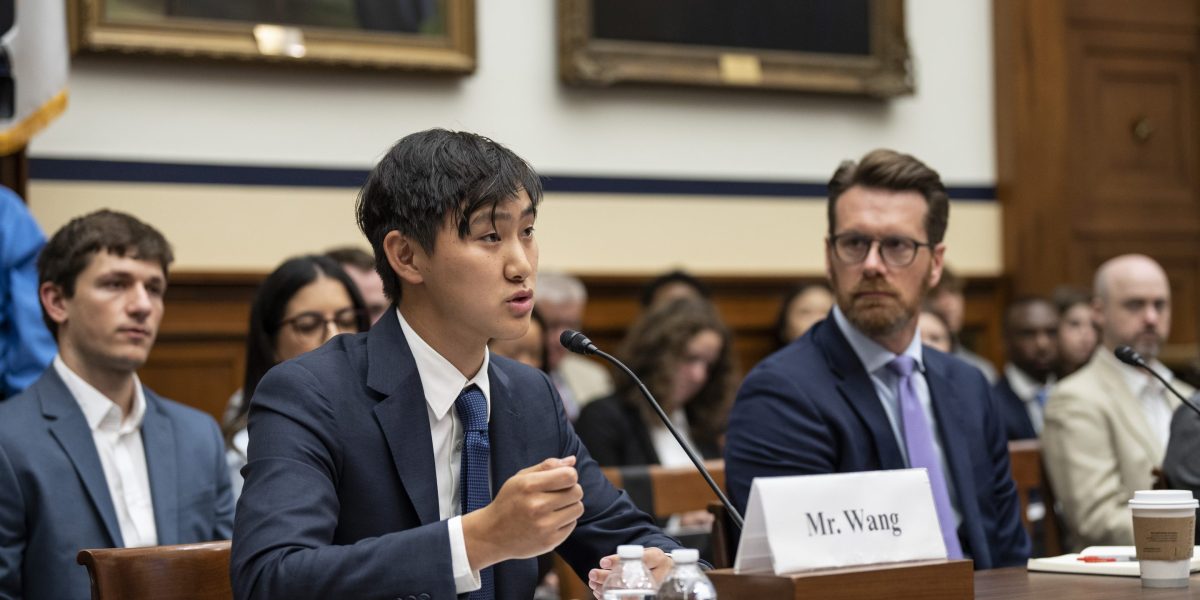
Alexandr Wang—who became the world’s youngest self-made billionaire at 24—is now, at 28, running one of the most ambitious AI efforts in Silicon Valley. In his first 60 days at Meta, he built a 100-person lab he described to TBPN hosts John Coogan and Jordi Hays as “smaller and more talent dense than any of the other labs.” 

His goal: nothing less than superintelligence.

Wang, with his aerial view of the industry, has advice for kids, especially those in Gen Alpha now entering middle school: Forget gaming, sports, or traditional after-school hobbies. 

“If you are like 13 years old, you should spend all of your time vibe coding,” he said in his recent TBPN interview. “That’s how you should live your life.”

Why is this a generational moment for Gen Z?

For Wang, the reasoning is simple. Every engineer, himself included, is now writing code he believes will be obsolete within five years.

“Literally all the code I’ve written in my life will be replaced by what will be produced by an AI model,” he said.

That realization has left him, in his words, “radicalized by AI coding.” What matters most now isn’t syntax, or learning a particular language, but time spent experimenting with and steering AI tools.

“It’s actually an incredible moment of discontinuity,” Wang said. “If you just happen to spend 10,000 hours playing with the tools and figuring out how to use them better than other people, that’s a huge advantage.”

Teenagers have a clear advantage over adults: time and freedom to immerse themselves in new technology. And while in the past, entrepreneurial teenagers leveraged this time to be “sneaker flippers” or run Minecraft servers, Wang says the focus should now be on the code.

He compares the moment to the dawn of the PC revolution. The Bill Gateses and Mark Zuckerbergs of the world had an “immense advantage” simply because they grew up tinkering with the earliest machines. 

“That moment is happening right now,” Wang said. “And the people who spend the most time with it will have the edge in the future economy.”

Is superintelligence coming?

Wang isn’t coy about Meta’s ambitions. He calls the company’s infrastructure, scale, and product distribution unmatched. 

“We have the business model to support building literally hundreds of billions of dollars of compute,” he said.

His team, just over 100 people, is deliberately designed to be “smaller and more talent dense” than rivals. “The other labs are like 10 times bigger,” Wang said, but their lab had “cracked” coders. 

The lab is split into three pillars: research, product, and infrastructure. Research builds the models Wang says will “ultimately be superintelligent.” Product ensures they get distributed across billions of users through Meta’s platforms. And infrastructure focuses on what he calls “literally the largest data centers in the world.”

Wang is particularly excited about hardware. Like many Meta executives now, he points to the company’s new smart glasses, which had a hilariously foppish demo, as the “natural delivery mechanism for superintelligence.”

Placed right next to the human senses, they will merge digital perception with cognition.

“It will literally feel like cognitive enhancement,” Wang said. “You will gain 100 IQ points by having your superintelligence right next to you.”

Why vibe coding matters

Vibe coding is the shorthand for this shift: using natural language prompts to generate and iterate on code. Rather than writing complex syntax, users describe their intent, and AI produces functioning prototypes.

The concept is spreading across Silicon Valley’s C-suites. Klarna CEO Sebastian Siemiatkowski has said he can now test ideas in 20 minutes, instead of burning weeks of engineering cycles. Google CEO Sundar Pichai revealed that AI already generates more than 30% of new code at the company, calling it the biggest leap in software creation in 25 years.

Wang takes that further. For him, vibe coding isn’t just a productivity hack, but a future cultural mandate. What matters isn’t the code itself — it’s the hours of intuition-building that come from pushing AI tools to their limits, which is why he urges Gen Alpha to start early.

“The role of an engineer is just very different now than it was before,” he said. 

A version of this story was published on Fortune.com on September 19, 2025.

More on Meta:

Join us at the Fortune Workplace Innovation Summit May 19–20, 2026, in Atlanta. The next era of workplace innovation is here—and the old playbook is being rewritten. At this exclusive, high-energy event, the world’s most innovative leaders will convene to explore how AI, humanity, and strategy converge to redefine, again, the future of work. Register now.


Source link

Continue Reading

Business

Down Arrow Button Icon

Published

on


CEO burnout may be hiding in plain sight. The CEO of Calm, the world’s top sleep and meditation app, said business leaders are losing sleep, feeling drained, and contemplating quitting their jobs. But when asked how they are, they say they’re doing just fine.

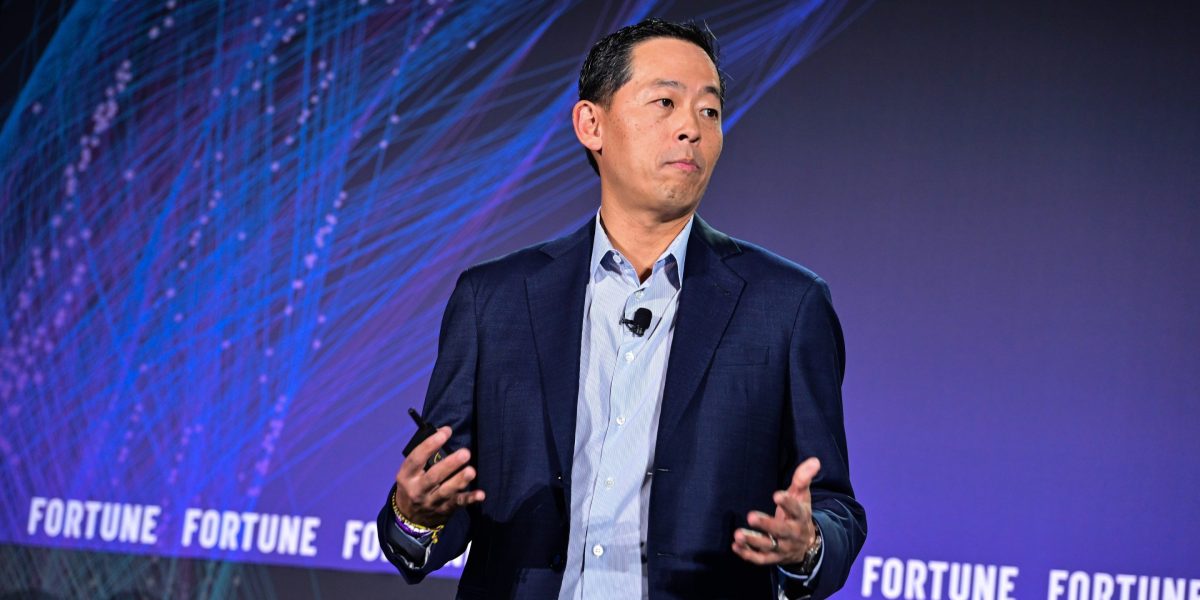
Calm chief executive David Ko, speaking to an audience at the Fortune Brainstorm AI conference earlier this month, said his company did a survey of more than 250 C-suite executives, and posed a simple question to them: “How are you doing?”

“Most people said that they were doing good,” Ko said.

But when Ko broke down wellness metrics, from if leaders felt anxious or depressed to mentally present at work, the results were starkly different: 48% of respondents reported being overwhelmed, and a quarter said they were feeling anxiety or depression. Moreover, 34% said they were mentally drained, and 40% reported being unable to be mentally present on the job. Half of the survey participants said they thought of stepping down from their positions.

Ko also asked executives to compare their energy to a battery, arguing it’s a more accessible metric for individuals to assess their mental health. Only one in four executives said their batteries were “fully recharged.”

“Most leaders, like in this room, are operating at about 20%,” Ko said. “Think about what that means.”

The cost of CEO burnout

Burnout, which the majority of small-to-medium business executives report feeling, can not only result in leaders taking more sick days, higher absenteeism, and greater turnover, but can also gnaw at companies’ bottom lines. A study published by the American Journal of Preventive Medicine in April found burned-out workers can cost a workplace an average of $3,999 per hourly worker, and up to more than $20,000 per executive. The social contagion effect, in which employees pick up on the mood of their colleague or superior, can result in a “downward spiral” for the whole office, human resources experts said.

Ko said companies that have invested in mental health interventions report less burnout, higher returns in investments, and greater engagement. Nearly 85% of individuals Calm surveyed reported believing mental health directly impacts a company’s bottom line.

The CEO said mental health interventions, such as using a mindfulness app like Calm, can help employees process AI anxiety, particularly amid growing concerns of AI displacing human workers. According to a Pew Research Center report from February, more than half of employees surveyed said they’re worried about the impact of the technology in the workplace in the future. Calm, for its part, has integrated AI-guided meditations into its app, and Ko suggested his mindfulness app can not only alleviate AI anxiety through mindfulness, but also by having users engage with AI directly.

“In a world that’s currently being transformed by AI, organizations are realizing that our greatest assets aren’t just the technology,” he said. “It’s the people behind them.”


Source link

Continue Reading

Business

Down Arrow Button Icon

Published

on


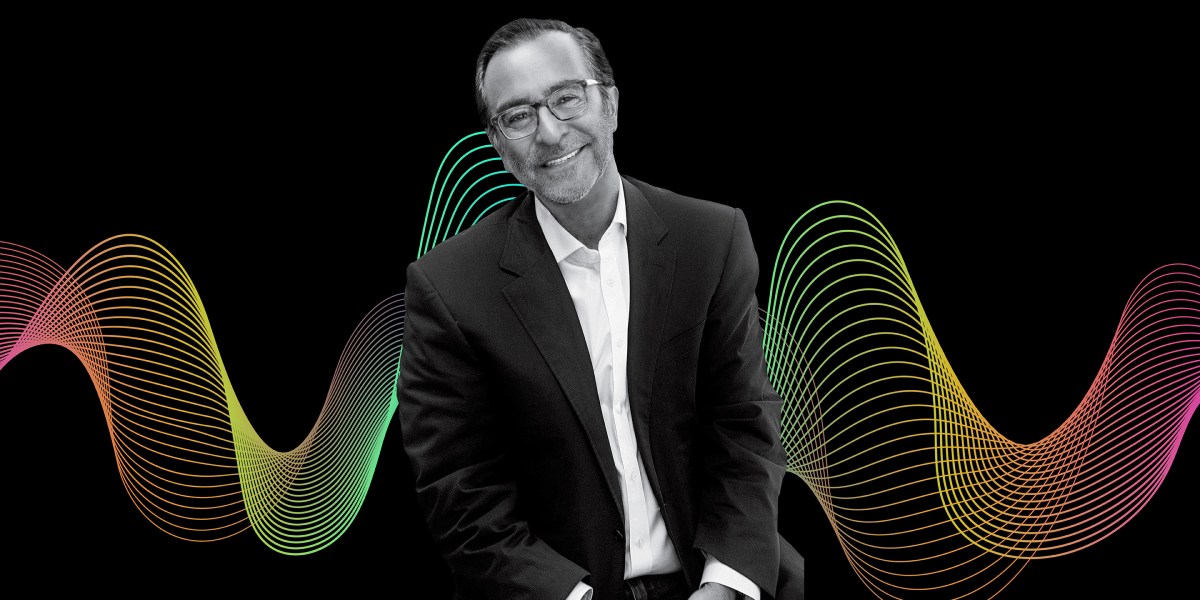
Good morning. In this week’s episode of Leadership Next, Kristin Stoller and I speak with Dani Richa, chairman and group CEO of Impact BBDO International. In the annals of advertising, few agencies have had more cultural heft than BBDO. In the 1960s, it made Boomers feel part of the “Pepsi Generation” and DuPont cool with the tagline “Better Things for Better Living … through Chemistry.” Matthew Weiner even cited BBDO as the model for the fictional 1960s ad agency in his hit TV series Mad Men.  BBDO also created Snickers’ “You’re not you when you’re hungry” ad with Betty White, and many more iconic campaigns in its 134-year history. 

As a Dubai-based CEO who oversees BBDO Worldwide’s business in the Middle East, Africa and Pakistan, Richa argues that risk is a relative concept in fast-changing markets and times. He recalls thanking one CEO for taking a bold risk with a campaign, only to be told, “What? What risk? What do you mean? The biggest risk I would have taken is not doing that.”

“The starting point is choosing partners that share your values,” he said.

In an era where brands can whip up AI-generated ads—Guess’s AI-generated model in Vogue is hopefully not being a harbinger of what’s to come—Richa’s work is a reminder that technology alone will never triumph when it comes to bold ideas and creativity that’s rooted in real issues. “Big ideas that touch people, that move people, that move businesses, that never changes,” said Richa, while noting that BBDO “uses digital and social (media) like never before to amplify that messaging.”

The best ads don’t just sell products, they can change culture, politics, and the way people think. One especially memorable and award-winning campaign under his watch was “the Elections Edition” in 2022 for Lebanon’s An Nahar newspaper, which ran a blank edition, followed by an invitation for people to fill the pages with messages to politicians. It went viral, generating massive public pressure for elections and citizens’ right to vote. 

Richa compares AI to giving a camera to everyone and then realizing the best photographers produce different results. “AI is going to give you tons of stuff,” he says. “To pick the right message takes a lot of experience, a lot of creative judgment.”  

You can listen to our full conversation on Apple, Spotify or YouTube.

Contact CEO Daily via Diane Brady at diane.brady@fortune.com

Top news

OpenAI looking at $830 billion valuation

Sam Altman’s AI company is in talks for $100 billion in new investment from Softbank and others, the WSJ says. The company is also considering a possible IPO next year.

What that Trump Media-nuclear fusion deal means

The financially struggling Trump Media & Technology Group’s $6 billion merger with a nuclear fusion developer represents either a bet on more taxpayer dollars being invested in the first fusion player to go public—soon owned in part by the Trump family—or a belief that an influx of capital will speed up the launch of clean, limitless electricity that eventually will transform the global grid.

TikTok sale agreed

ByteDance, the Chinese company that owns TikTok, has reached a deal to offload 80% of its U.S. assets to Oracle, Silver Lake, and MGX, according to Reuters. The valuation is not yet known. The deal will help the company avoid being banned in the U.S.—a longstanding promise of President Trump. 

Chanel’s Claire Isnard speaks

Claire Isnard can trace her 40‑year career—including 17 years at Chanel—back to one bad exam. Had she passed, she’d likely still be in a classroom, grading essays on Italian literature. In her first-ever sit-down interview ahead of her retirement, Isnard says she’s come full circle. Despite having zero HR qualifications, she wound up as Chanel’s chief people and chief organization officer. “When you draw my story back, the first compelling and meaningful thing that would end up spread across everything I’ve done is helping people become who they didn’t think they can become,” she told Fortune.

PayPal CEO Alex Chriss on stablecoins

Since January, PayPal’s stock price has dropped more than 30% as it tries to halt competitors from encroaching on its core products of online checkout and peer-to-peer payments. In response, Chriss says the fintech is looking to get a lift from next-generation payment products like stablecoins, and working to incorporate them across its operations and products. 

North Korea is biggest crypto thief

A massive amount of crypto was robbed this year, and most of it went to North Korea. The country accounted for roughly 59% of the more than $3.4 billion in stolen crypto, according to Chainalysis’ 2026 Crypto Crime Report. 

More Epstein photos released

House Democrats released several dozen more photos Thursday from the estate of the convicted sex offender Jeffrey Epstein, showing his associations with the rich and famous, including Bill Gates and Sergey Brin, as the Department of Justice faces a deadline to release many of its case files by the end of the week.

EU agrees €90 billion loan to Ukraine

After a deal to use frozen Russian assets fell apart, the bloc agreed to fund Kyiv’s defense against the invasion by Russia with its own cash. “We committed, we delivered,” European Council president António Costa said.

Trump designates Christmas Eve, Dec. 26 as federal holidays

Government workers will get a five-day weekend, perhaps setting a tone for the private sector.

The markets

S&P 500 futures are up 0.33% this morning. The last session closed up 0.79%. STOXX Europe 600 was flat in early trading. The U.K.’s FTSE 100 was flat in early trading. Japan’s Nikkei 225 was up 1.03%. China’s CSI 300 was up 0.34%. The South Korea KOSPI was up 0.65%. India’s NIFTY 50 was up 0.59%. Bitcoin was at $88K.

Around the watercooler

Southeast Asian economies prove resilient in the face of Trump’s tariffs as supply chains expand by Angelica Ang

Walmart’s women truckers surge thanks to $115,000 starting pay and other perks bringing in nontraditional candidates Marco Quiroz-Gutierrez by Marco Quiroz-Gutierrez

Lovable hits $6.6 billion valuation as its CEO says it wants to be ‘the last piece of software’ companies ever buy by Beatrice Nolan

‘This is a wacky number’: economists cry foul as new government data assumes zero housing inflation in surprising November drop by Eva Roytburg

How Salient, an AI loan processing startup valued at $500 million, grew ARR to $25 million in two years by Lily Mae Lazarus

CEO Daily is compiled and edited by Jim Edwards and Lee Clifford.


Source link

Continue Reading

Trending

Copyright © Miami Select.