Connect with us

Politics

Liesa Priddy crosses $215K raised for HD 82 bid

Published

on


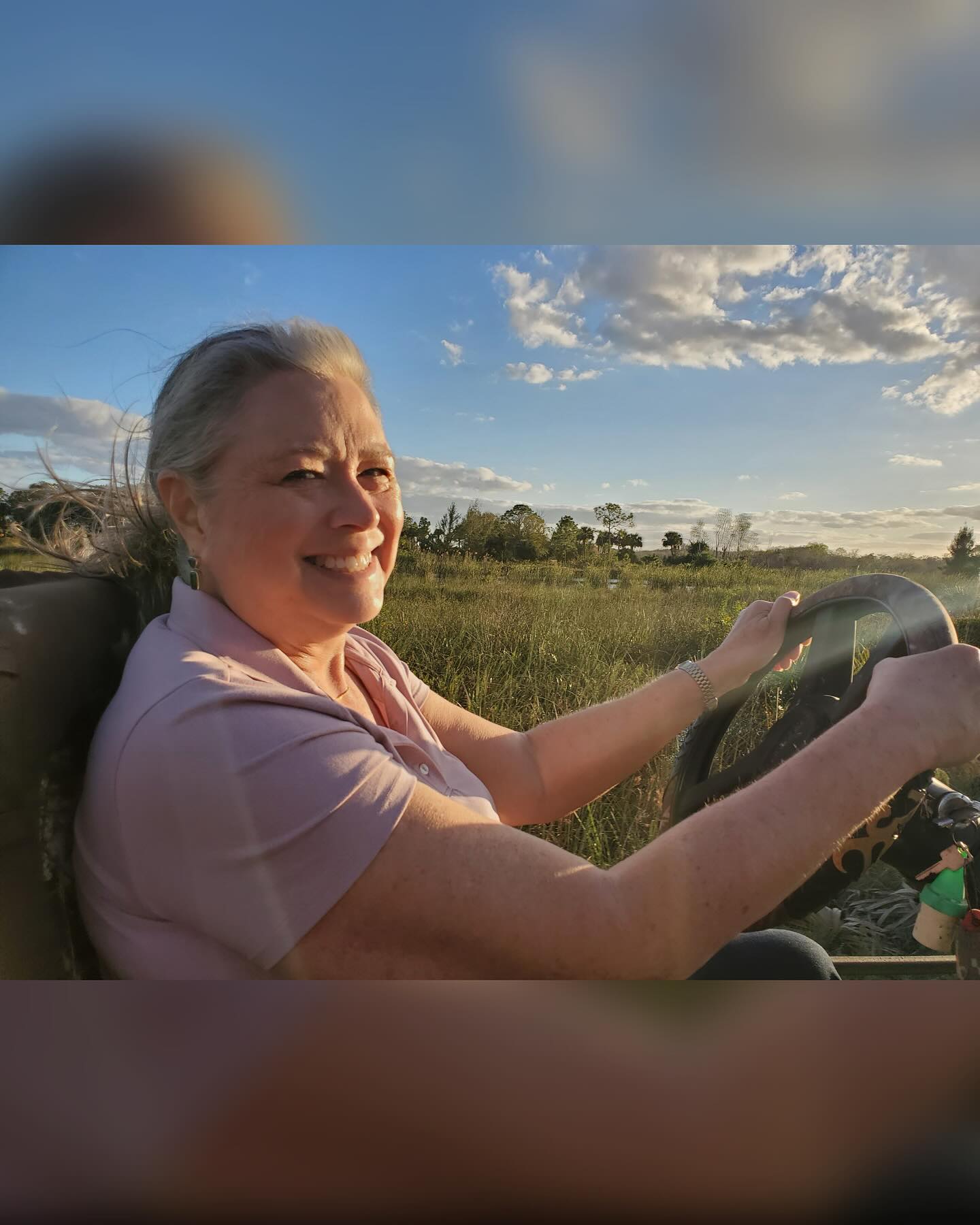
Republican Liesa Priddy continues to flex fundraising muscle in the race to succeed Rep. Lauren Melo in House District 82.

Priddy has now raised $216,500 for her campaign, including $65,500 in the most recent quarter, as the race to succeed Melo takes shape.

The fundraising momentum follows recent endorsements from conservative advocacy group Americans for Prosperityand the Associated Industries of Florida, an influential business lobby.

“Liesa Priddy’s distinguished background in business, agriculture, and conservation makes her an exceptional advocate for Florida’s economy and natural resources,” AIF President and CEO Brewster Bevis said in a statement last week. “We know her staunch conservative voice will be an asset to Florida’s business community in the Florida House, and we are proud to endorse her campaign.”

The lifelong Collier County resident has also picked up endorsements from Reps. Adam Botana and Yvette Benarroch, former Reps. Matt Hudson and Joe Spratt, LaBelle City Commissioner Barbara Spratt, Everglades City Mayor Howie Grimm, Everglades City Councilman Mike McComas, Hendry County School Board member Amanda Nelson.

Priddy is one of four Republican hopefuls running for the seat, which covers swath of Southwest Florida, including Hendry County and parts of Collier County. The district is open this cycle because Melo is running for Senate rather than a fourth term.

The current Republican field includes Priddy, Bill Poteet, Drew-Montez Arthur Clark and Hugo Vargas. Poteet’s Q4 report shows $4,525 raised last quarter with $28,372 on hand as of Dec. 31; Clark has raised $12,105 since entering the race in February and finished the year with less than $1,000 in the bank. Vargas’ report in yet available on the Florida Division of Elections website.

HD 82 is a safe Republican seat, with the GOP holding a 15-point registration advantage in the district according to the most recent data from L2. In 2024, Melo cruised with 70% support in a head-to-head with Democratic nominee Arthur Oslund.


Source link

Continue Reading

Politics

AARP Florida signals legislative priorities to protect seniors

Published

on


From keeping seniors safe in emergencies to protecting them from scammers, AARP Florida released its 2026 Legislative Priorities.

“AARP’s mission in the legislative process is clear: provide data-driven insights, champion innovative policy solutions, and ensure the voices of older Floridians are heard,” said AARP Florida State Director Jeff Johnson. “We’re committed to working hand-in-hand with lawmakers to make Florida a place where people of all ages can thrive.”

As the Regular Session convenes Tuesday, the AARP said its agenda fits into four key areas — affordable housing, “health security” to improve Home and Community-Based Services and enhance nursing home quality, expand consumer protections to protect seniors from fraud and abuse, as well as providing more accessible retirement saving opportunities, the organization said in a press release.

AARP Florida said it wants to improve staffing and training and stronger oversight in nursing homes. 

Florida’s 2.7 million family caregivers need more support — including respite care — as they care for aging family members, AARP Florida said.

Seniors also need more telehealth and digital tools, but that needs to come with training and infrastructure to help people access them, AARP Florida said.

The AARP Florida also wants to expand access to Home and Community-Based Services by increasing state investment through Medicaid and other funding streams,” the organization said, adding it wants to “prioritize services that allow older adults to age in place with dignity and independence.”

Strengthening consumer protections, the AARP Florida wants better “interagency and interorganizational coordination, data sharing and reporting to protect vulnerable adults from abuse, neglect and exploitation,” the press release said.

To keep seniors safe from scams, AARP Florida is also asking lawmakers for stronger law enforcement and increased education to warn seniors about exploitative schemes targeting the elderly.

When it comes to housing, the AARP Florida backs zoning reforms, inclusive development and eviction protections to help seniors find affordable housing, the organization said. In addition, AARP Florida is urging lawmakers to ensure seniors and people with disabilities aren’t overlooked in emergency planning so they can access shelters and post-emergency assistance.

Johnson said volunteer advocates will help lobby lawmakers as AARP Florida seeks to support Floridians ages 50 and up.

“Our volunteers will once again join us at the Capitol during this Legislative Session. Their passion and real-life experiences help lawmakers understand how legislation impacts older adults,” Johnson said. “Over the years, their advocacy has championed meaningful changes for Floridians.”


Source link

Continue Reading

Politics

Shevrin Jones prioritizes fleet of people-focused proposals

Published

on


Miami Gardens Sen. Shevrin Jones is entering the 2026 Legislative Session with a people-focused policy agenda.

His priority measures, he said, center on three issues: “protecting people’s pocketbooks, protecting people’s rights and, most importantly, protecting people’s lives.”

“What I’m noticing while talking to constituents is people are scared. People are anxious. People don’t know if their government is actually working for them,” he told Florida Politics.

“Our goal this Session is to show people that we hear them, see them and are trying to execute for them.”

Jones highlighted a handful of proposals he especially hopes will get across the proverbial finish line this year.

The first is SB 114, which deals with the ever-vexing issue of health care and was inspired by recent problems he and tens of thousands of others encountered late last year after Florida Blue removed Memorial Healthcare System from its in-network provider list.

At the time, Jones had just been released from a Memorial hospital following treatment for a serious health condition and found himself suddenly without coverage.

“I’m in limbo,” he said. “I have to find another doctor, and I’m paying out-of-pocket right now.”

SB 114 would ensure that people don’t suddenly find themselves in the lurch due to corporate disagreements outside their control by requiring insurers and health care providers to give affected patients at least 60 days’ advance notice.

The notice would have to explain, in plain language, each patient’s rights, transition timeline and where to direct questions or complaints, with regulators authorized to impose fines for violations.

The bill would also allow patients already in active treatment, including those receiving prenatal care, to continue seeing their current provider under the same contract terms for up to six months or through postpartum care, whichever applies.

“It basically just protects patients from financial and medical harm,” he said.

Hollywood Democratic Rep. Marie Woodson is carrying the bill’s House companion (HB 577).

Jones is also sponsoring SB 178, which would enable coaches to provide financial help to public K-12 students while mandating new safeguards against misuse or recruitment-related incentives.

Inspiration for the bill, which Florida Politics first reported on Oct. 15, came from the story of NFL quarterback-turned-Miami high school football coach Terry Bridgewater, who was suspended last July for paying out-of-pocket for Uber rides, clothing, meals and a preseason training camp for his players — impermissible under Florida High School Athletic Association (FHSAA) rules.

Bridgewater, who retired from the NFL in 2024 but returned to the league in August with the Tampa Bay Buccaneers, said he spent the money on his players for protective reasons. “I’m a father first before anything,” he said. “And when I decided to coach, those players became my sons.”

SB 178, which awaits a House companion, would require the FHSAA to adopt rules allowing high school coaches to use personal funds to help meet students’ basic welfare needs — food, transportation or recovery services — without that assistance being treated as an improper athletic benefit.

Under the new rules, coaches would have to report such spending, which would be presumed permissible unless it is unreported, not made in good faith or used for recruiting.

“Teddy Bridgewater wasn’t buying these kids anything quid pro quo. He was making sure they ate and got home on time,” Jones said. “What he did was absolutely noble.”

Another bill (SB 252), dubbed the CROWN Act, would prohibit discrimination against students in Florida’s public education system based on hairstyles historically associated with race, such as afros, braids, locks and twists.

The bill — which Jones also ran last year; it died unheard — would define “protected hairstyle” in state law and extend those protections to public K-12 schools and private schools that participate in state scholarship programs.

Schools that violate the policy could face enforcement actions, including loss of eligibility for scholarship funding.

House Democratic Leader Fentrice Driskell and Fort Lauderdale Democratic Rep. Daryl Campbell are carrying an identical, lower-chamber version of the bill (HB 235), which mirrors an identically named law Texas Gov. Greg Abbott signed in May 2023.

“This bill absolutely protects individual rights while reinforcing that opportunity in Florida should be based on merit, not appearance,” Jones said.

There’s also SB 418, which would create a statewide “blue envelope” program to help people with autism spectrum disorder communicate more effectively with police during traffic stops.

If passed, Jones’ bill or its House analogue (HB 365) by Tampa Republican Rep. Susan Valdés would institute a policy through which participating drivers would be issued blue envelopes to hold their driver’s license, proof of insurance, vehicle registration and emergency contact information.

The measure would also mandate training for law enforcement officers on recognizing autism, de-escalation techniques and appropriate responses, with the training incorporated into both recruit certification and ongoing education.

It’s a policy already in place or being implemented in 14 other states, and Jones said it would make a big difference for some of Florida’s most vulnerable residents.

“There are individuals on the autism spectrum who are fully functional — they work, they drive, and some of them are probably nonverbal — and we have seen instances where they’ve been pulled over by a police officer, and because the officers do not know how to interact with them, unfortunate things have happened,” he said.

“I’m happy we were able to work with police associations and autism organizations to get this to a place where we are now. There was a lot of back-and-forth, but we did it.”

Lastly, Jones and freshman Democratic Rep. Rashon Young of Orlando are collaborating on legislation (SB 814, HB 715) to improve safety measures at public schools, private schools and child care facilities.

If passed, the proposal would require local law enforcement agencies to issue a new “Ya Ya Alert” to those schools, directing them to lock down and remain vigilant when a violent suspect is believed to pose an immediate threat within a 3-mile radius.

It would also establish a broader “Imminent Threat Alert” to warn the general public through the emergency alert system and highway message signs when similar dangers exist. Agencies, media and others who disseminate the alerts in good faith would have civil liability protections.

The alert honors, and is named for, T’Yonna “Yaya” Major, a 9-year-old who was killed in a 2023 Pine Hills shooting while a violent suspect was still at large. The man charged with her killing, Keith Moses, had previously murdered a woman and later returned to the scene, shooting Major and her mother, who survived and has since sued the Orange County Sheriff’s Office.

Former Republican Sen. David Simmons of Altamonte Springs filed a similar proposal (SB 834) for the 2020 Session, but it died in its final committee stop.

“It creates a clear, statewide system,” Jones said, “that simply makes sure that schools are never left in the dark when danger is nearby.”

The 2026 Legislative Session begins Tuesday.


Source link

Continue Reading

Politics

Allison Tant outlines family-focused agenda for 2026

Published

on


Heading into her sixth Legislative Session, Tallahassee Democratic Rep. Allison Tant is prioritizing legislation aimed at helping families, people with disabilities and voters who expect fair play at the ballot box.

All are close to her heart in one way or another.

One proposal (HB 915) would create a new program within the Agency for Health Care Administration allowing certain adults with developmental disabilities to keep Medicaid waiver services while working and earning income. Tant said the change would remove employment disincentives that currently cause people to lose critical home- and community-based services when their earnings increase.

The issue is personal for Tant. One of her sons, who has disabilities and worked part time, was forced to quit his job after being automatically enrolled in the state retirement system — something she was told could jeopardize his Medicaid eligibility.

The lack of clear, codified rules caused panic and confusion for her family, and Tant later learned that many families, lawyers and even state staff were similarly unsure about what income or savings options are available to people with disabilities.

She said she only later learned, through ABLE United Director John Finch, that people with disabilities can hold up to $13,000 in assets without losing Medicaid — a protection authorized through a yearly budget proviso that is not clearly spelled out in statute.

“I’m paying attention, and I didn’t know about this,” Tant said. “I just want to make sure this is codified as a program of Florida and that families know there are protections.”

If passed, HB 915 or its Senate counterpart (SB 1016), sponsored by Fleming Island Republican Sen. Jennifer Bradley, would establish a state “Working People with Disabilities” program. Eligible participants must be at least 18, have a developmental disability, be employed and already enrolled in a qualifying Medicaid waiver program.

The measure would allow participants to earn up to 550% of the federal Supplemental Security Income benefit rate, disregard up to $13,000 in assets for individuals and $24,000 for couples, and exclude retirement accounts from asset limits.

Another bill (HB 969) is a follow-up to legislation Tant passed last year aimed at improving early detection of Type 1 diabetes in grade school students. This year’s proposal, carried in the Senate by Miami Republican Sen. Alexis Calatayud (SB 1046), would focus on developmental disorders.

The measure would require the Department of Health to work with school districts to develop and publish materials helping parents and guardians recognize signs of developmental delays and autism spectrum disorder in young children.

Public schools, charter schools, prekindergarten providers and early learning coalitions would be required to annually notify parents of voluntary prekindergarten through second-grade students about the materials.

Parents and early intervention programs try to identify developmental delays early, but Tant said some children still “slip that net.”

“I’m trying to get them identified, diagnosed and then get them some support,” she said, adding that earlier diagnoses can be both compassionate and cost-effective by allowing resources to be allocated earlier in a child’s education.

Tant is also sponsoring legislation (SB 448, HB 417) with Kissimmee Democratic Sen. Kristen Arrington that would require school districts to provide students and parents with information about available career and technical education programs, beginning by the end of fifth grade and annually thereafter.

The proposal would also mandate career and academic planning meetings for eighth-grade students and their parents before high school course registration, covering career options, scholarships, workforce data and dual enrollment opportunities.

Further, the measure would expand and standardize students’ personalized academic and career plans, requiring annual reviews beginning in ninth grade.

Tant told Florida Politics she will pilot the concept during a scholarship night in Jefferson County on March 4.

“I’m trying to get that information in front of families and students so they can work together to understand what their futures need to look like,” she said.

Tant’s last priority bill (HB 91) is a renewed attempt to strengthen enforcement of Florida’s party-affiliation rules for candidates.

State law already requires candidates to be registered with the political party from which they seek nomination for at least a year before qualifying for a General Election. But candidates have repeatedly skirted those rules, and courts have not consistently intervened.

Tant’s inspiration for the bill was perennial candidate Beulah Farquharson, whom she described as having “bounced around” Florida while frequently switching party affiliations shortly before qualifying deadlines.

Most recently, Farquharson filed in 2024 to run against Madison County Clerk Billy Washington. According to an August 2024 report by the Madison Enterprise Reporter, Farquharson filed as a Democrat the same day she switched parties, after previously being registered with no party affiliation in Osceola County.

Washington sued to remove Farquharson from the ballot and ultimately prevailed, but Tant said the challenge took months and cost thousands of dollars.

“Our courts were put through a ridiculous exercise on this,” she told members of the Government Operations Subcommittee last month. The panel voted unanimously to advance HB 91 — already making it more successful this Session than in last year’s.

HB 91 and its Senate counterpart (SB 62), also sponsored by Arrington, would require candidates to swear under oath that they have been registered with their political party for at least 365 consecutive days before qualifying.

The measure would also require no-party candidates to affirm they have not been affiliated with a political party during that same period and would limit who can file eligibility challenges and where those cases may be heard.

The 2026 Legislative Session begins Tuesday.


Source link

Continue Reading

Trending

Copyright © Miami Select.