Connect with us

Politics

Let’s unlock education data’s full potential to make Florida talent strong
Published

on


Skills are the new currency of economic development. This mantra is repeated in boardrooms throughout the country. Florida leaders have responded with a growing portfolio of policies designed to make the state the #1 state in the nation for workforce education.

Yet skills gaps remain a persistent workforce challenge. The mismatch between workers’ skills and workplace needs is a conundrum for many employers. The problem is exacerbated by today’s rapid rate of technological change. We live in an age when artificial intelligence and machine learning are transforming our world at a pace unprecedented since the dawn of the industrial era. By some estimates, nearly 40% of workers’ core skills will change dramatically or become obsolete by 2030.

How can Florida’s education systems nimbly adapt to this rapid rate of change to ensure students develop the skills to thrive in our dynamic economy? We believe the answer lies in Florida’s expansive education data system. Much like businesses mine data to improve ROI, Florida can optimize its data system to unlock student potential. By gleaning insights on student performance from preschool to employment and applying those insights to real-time improvements, Florida can build a resilient workforce that powers growth, attracts business, and drives future economic prosperity.

To Florida’s credit, our state has long been recognized as a national leader for our comprehensive data system that integrates across early education, K-12, postsecondary, and workforce. This data system has successfully enabled Florida to track student progress, support evidence-based decision-making, and ensure public accountability. It is the system that helps Florida assess our schools and track the performance of our colleges and universities. It has arguably helped earn Florida the #1 ranking in the nation for higher education.

Yet even Florida can strengthen its use of data to meet the evolving needs of the workforce. Florida College Access Network recently published research comparing Florida’s education data system with those of seven peer states, identifying leading-edge practices Florida can employ to improve student success and workforce outcomes. Through strategic investments, increased research capacity, improved access and usability, and collaboration, Florida can harness the power of data for unprecedented improvements to our education-to-workforce pipeline.

For example, we can invest in leading-edge technologies that leverage artificial intelligence to glean timely insights and cybersecurity to protect student privacy. We can enlist leaders in education, economic and workforce development, and industry to provide data system oversight, leveraging their expertise to foster greater alignment across the education-to-workforce continuum. We can partner with Florida’s best minds to research opportunities for real-time improvements. We can make data publicly accessible, especially for students and parents, empowering them with the intelligence to inform future career paths. And we can incentivize data collaboration between education institutions and industries to prepare students for careers in high-demand fields of critical regional importance.

A data partnership in Central Florida demonstrates the promise of these strategies. Called the Central Florida Educational Ecosystem Database (CFEED), the collaboration among the Orange County and Osceola County School Districts, Valencia College, and the University of Central Florida uses data and AI to generate insights to improve practices, remove barriers, and support students at scale. Through state-of-the-art data technologies and dozens of joint research projects each year, CFEED has driven significant improvements.

For example, CFEED learned that Valencia students who completed at least three courses relevant to their majors before transferring to UCF were more likely to complete their degrees, prompting the development of a new advising and scholarship program. CFEED also unlocked data to identify students ready for advanced coursework such as AP and dual enrollment, empowering school counselors to proactively advise students to enroll, giving them a head start on college. CFEED will soon use workforce data to track graduates into the labor market, enabling the partners to refine education programs to meet industry needs.

Imagine if every region in Florida could, like CFEED, collaboratively harness the power of data to build tomorrow’s workforce. Florida has this opportunity. Smart investments and strengthened policies would yield a tremendous return on investment. According to the Helios Education Foundation, increasing college enrollment by 10% would generate $8.38 billion in additional annual revenue for Florida, and increasing college completion by 20% would generate an extra $7.59 billion.

Let’s unlock the full potential of Florida’s education data system. Our state will reap the rewards for decades to come.

___

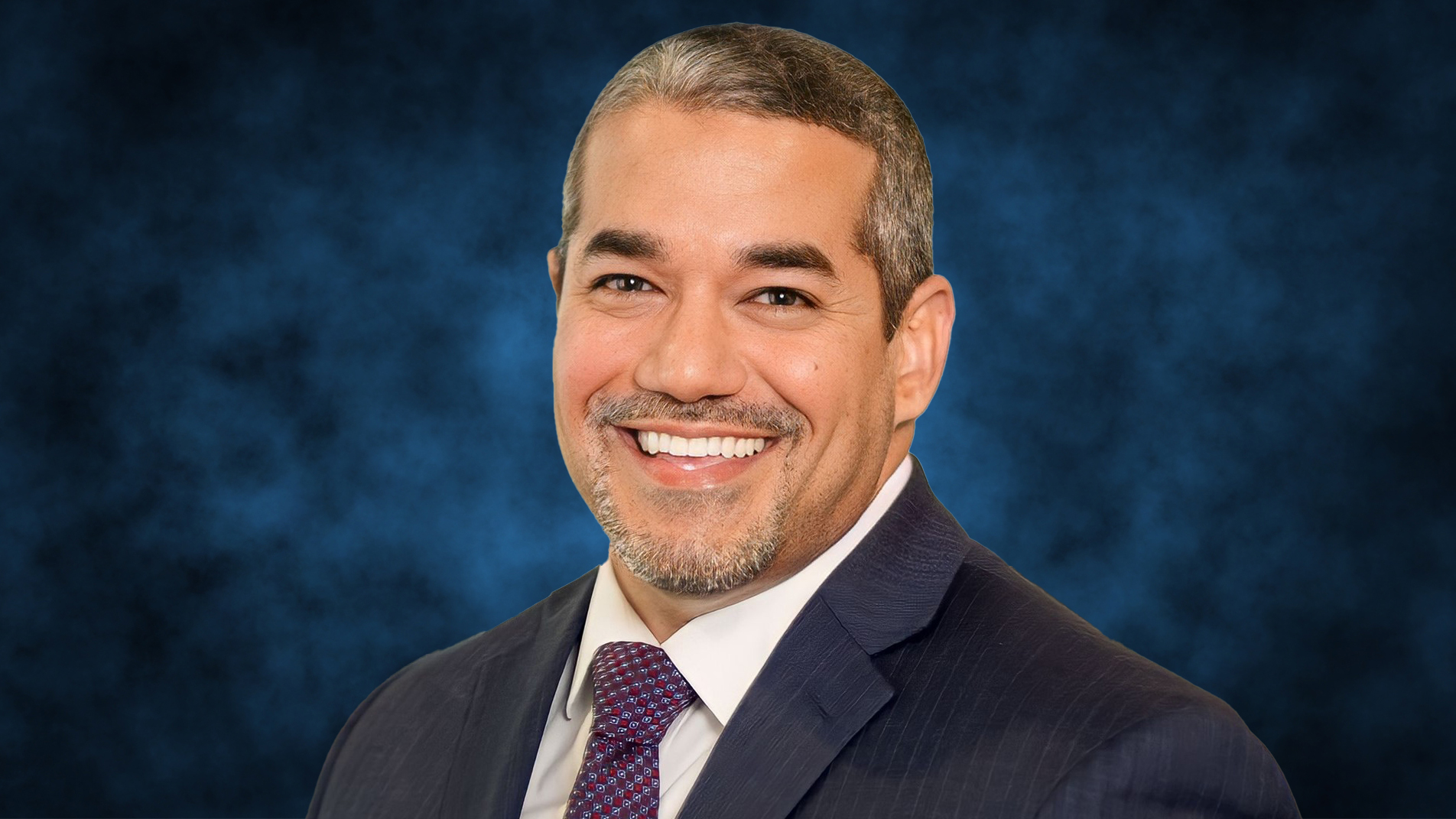
Braulio Colon, executive director of the Florida College Access Network, was recently named one of Florida’s 500 most influential business leaders by Florida Trend magazine. To read FCAN’s report “Insights into Action: The Next Phase of Florida’s Statewide Longitudinal Data System,” visit floridacollegeaccess.org.


Source link

Continue Reading

Politics

Ashley Moody says more Americans have died from fentanyl than have died in wars

Published

on


As President Donald Trump backs an executive order declaring fentanyl to be a weapon of mass destruction, U.S. Sen. Ashley Moody says the drug’s casualty rate exceeds that of military conflicts.

That underscores the seriousness of the national battle against traffickers, Moody said.

“Remember, we are losing more people to fentanyl than we’ve lost in wars. And this is a coordinated effort by these organizations that have more resources, more manpower, more coordination, than many nation-states,” the Plant City Republican said on “Fox & Friends First.”

More than 48,000 Americans died because of fentanyl overdoses last year, according to the Centers for Disease Control and Prevention. While that’s far fewer than the 698,000 Civil War casualties, it is more in one year than died in many conflicts.

Trump’s executive order links “illicit fentanyl” with national subversion.

“The two cartels that are predominantly responsible for the distribution of fentanyl in the United States engage in armed conflict over territory and to protect their operations, resulting in large-scale violence and death that go beyond the immediate threat of fentanyl itself,” the order reads.

“Further, the potential for fentanyl to be weaponized for concentrated, large-scale terror attacks by organized adversaries is a serious threat to the United States.”

Indeed, Moody depicted how the drug apparently has been used to nefarious effects in this state.

“In Florida, for example, you would have law enforcement roll up on a gas station, and you would have … 10 people splayed out on the ground at a gas station because they were exposed to fentanyl,”  Moody said.

While we weren’t able to find a news story about 10 people on the ground due to exposure, in 2018, three people overdosed at a gas station in Seminole County.

Moody said she has “seen studies done where if you can get this airborne, it can be incredibly dangerous.”

“I’ve been given information about the possibility of this being stockpiled, and remember, only the amount of only two grains of sand,” Moody said. “Compare that to fentanyl. That’s lethal. That’s lethal. And so it’s incredibly lethal, incredibly dangerous, the likes of which we have not experienced before in terms of the death toll in our country.”


Source link

Continue Reading

Politics

Marco Rubio defends strikes on Venezuelan boats in briefings to Congress

Published

on


Secretary of State Marco Rubio briefed lawmakers on increasing tensions with Venezuela.

Conducting business alongside Defense Secretary Pete Hegseth, Rubio characterized the sinking of Venezuelan ships in the Caribbean as a “counter-drug mission.”

Between Senate and House briefings, Rubio said that mission remains “focused on dismantling the infrastructure of these terrorist organizations that are operating in our hemisphere, undermining the security of Americans, threatening and killing Americans, poisoning Americans.”

The nation’s top diplomat returned to the Hill less than a year out from representing Florida — the state with the highest concentration of Venezuelans in America — in the Senate for 16 years. Rubio served as the top Republican on the Senate Intelligence Committee before President Donald Trump appointed him as Secretary of State.

He also had acute knowledge of the flight of Venezuelans from the regime of Nicolás Maduro, and of the impacts of the opioid crisis on the Sunshine State. A day after Trump reclassified fentanyl as a “weapon of mass destruction,” Rubio defended the force used to destroy and kill traffickers of the substance into the U.S.

“This has been a highly successful mission that’s ongoing and continued,” Rubio said. “We’re pleased to be here today to update Congress on how that’s developing and how that’s moving forward. As I said, I believe it’s our 22nd, 23rd such engagement, certainly, but at least the fourth or fifth that I’ve been involved in, and those will remain.”

While briefings were bipartisan with all members of the House and Senate, reactions differed in terms of the information received.

U.S. Rep. Gregory Meeks, a New York Democrat and ranking member of the House Foreign Affairs Committee, has filed a resolution to block further strikes. He told press after the briefing that he considered the strikes an unauthorized escalation of war and questioned if fighting drugs was the ultimate goal.

“If this is about regime change, it seems to me that the administration should say that’s what it is and should come to Congress to ask for that authorization, which has not taken place,” Meeks said.

Notably, Rubio for years as Florida’s senior Senate called for Maduro to step aside. Rubio visited the Columbia-Venezuela border in 2019, after Trump in his first term announced he would not recognize Maduro as the legitimate leader of the country. During that push to isolate the regime, Rubio encouraged the Venezuelan military to defy orders and allow humanitarian trucks to reach the nation’s people.

The strikes on Venezuelan boats mark a substantial increase in pressure during Trump’s second term, and Rubio has defended the legality even as Hegseth faces increasing pressure over whether war crimes have been committed with multiple strikes.

But Florida Republicans have effusively praised the policies surrounding Venezuela.

“Dictator Nicolas Maduro’s narcoterrorist Cartel de los Soles will now have a very hard time smuggling lethal drugs, oil and illegal mining out of Venezuela,” posted U.S. Rep. Carlos Giménez, a Miami-Dade Republican. “All narcoterrorist Cartel de los Soles ships will be subject to seizure and/or destruction. The end is near.”

GOP leadership in the House also left briefings feeling confident the administration’s approach was both appropriate and grounded in law.

“As the Commander in Chief, President Trump has both the authority and the obligation to defend our homeland, and I think that’s beyond dispute,” said Speaker Mike Johnson, a Louisiana Republican.


Source link

Continue Reading

Politics

Paul Renner campaign launches ‘Women for Renner Coalition’ with steering committee

Published

on


Former House Speaker Paul Renner is formalizing his push for the Governor’s Mansion with a new organizing arm focused on women voters.

Renner’s campaign just announced the creation of a statewide steering committee for its “Women for Renner Coalition,” assembling dozens of conservative activists, educators, business leaders and faith-based advocates to amplify women’s voices supporting his gubernatorial bid.

The coalition, the campaign said, is designed to mobilize women across political and professional lines around issues. Among them: parental rights, public safety, faith, economic opportunity and what the campaign describes as “principled leadership.”

Renner said in a statement Tuesday that the coalition will serve as both a values-driven and operational component of his campaign.

“Women are the heart and voice of families and communities,” Renner said. “I am honored to have the growing support of strong, dedicated female leaders that will ensure their concerns remain front and center — especially when it comes to protecting faith, American exceptionalism, parental rights, a prosperous economy, and defending the principles of freedom that guide us.”

The “Women for Renner Coalition” will function as an internal organizing network, encouraging women across Florida to share personal stories, engage voters and advocate on key campaign issues. The campaign said the group will also work to elevate women’s perspectives in policymaking and community engagement.

Adriana Renner, the candidate’s wife, said she has seen her husband’s commitment to families and praised the coalition as a vehicle for advancing what the campaign calls a “Florida First agenda.”

“I know his heart and his dedication to serving Florida’s families runs deep,” she said in a statement.

Several conservative activists and former officials offered endorsements through the announcement, praising Renner’s record on parental rights, medical freedom and opposition to federal overreach.

Nancy Peek McGowan, who held prominent roles in past campaigns of Gov. Ron DeSantis and Secretary of State Marco Rubio, highlighted Renner’s background as a U.S. Navy veteran, former state prosecutor and University of Florida law graduate.

“As the former State Chairwoman for ‘Women for DeSantis,” she said, “I can say with certainty, Paul Renner is the only authentic conservative running for Governor with a lifetime record to prove it.”

Mary Flynn O’Neill, Executive Director of America’s Future, said Renner has exhibited “steadfast leadership to protect the ideals that matter most to Floridians.”

“Paul Renner has consistently championed the principles that define our nation — faith, freedom, and the enduring strength of the American family,” she said. “His leadership reflects a deep respect for the values that unite our communities and guide Florida forward.

The steering committee itself includes more than 40 members from across the state, ranging from local school board officials and former legislators to nonprofit executives, physicians and student activists.

They include Wendy Biddle, educator and activist; Regina Brown, Realtor and President of Transforming Florida; Lourdes Castillo, businesswoman and conservative activist; Virginia Cortes, nonprofit executive; Ann Dugger, former Executive Director of the Justice Coalition; Maureen France, conservative activist and former Chair of Citizens Against Legalizing Marijuana Florida; Mara Frazier, educator and conservative activist; Christi Griner, patient advocate and former state leader for Concerned Women of America; Jenna Hague, business leader and political activist; Mary Lou Hendry, pro-life advocate; Stephanie Jacobson, pro-life advocate; Charlotte Joyce, Duval County School Board member; Debbie Joyce, business leader and conservative activist; Jill Kiley, health freedom advocate; Bailey Kuykendoll, health freedom advocate; Lori Long, business leader and Central Florida community activist; Zarai Maza, CEO of Guardians of Human Rights Foundation; Aimee Villela-McBride, Executive Director of Global Wellness Forum; Aislynn Thomas-McDonald, lawyer and conservative advocate; Nancy Peek McGowan, former co-Chair of the DeSantis gubernatorial campaign and Rubio campaign grassroots leader; Kate Morales, student activist; Karyn Morton, leader of the Republican Liberty Caucus, co-founder of the Duval Trump Club, and former Duval County GOP Chair and Committeewoman; Andrea Marconi Nasteli, physician and grassroots advocate; Becky Nathanson, education activist; Mary Flynn O’Neill, Executive Director of America’s Future; Lindsay Randall, education leader and advocate; Adriana Renner; Miriam Ramirez, physician and former state Senator of Puerto Rico; Isabelle Sala, educator; Ginger Soud, former Jacksonville City Council Chair and Duval County co-Chair of Trump for President; Cyndi Stevenson, former state Representative; Patti Sullivan, parental rights advocate; Ann Vandersteel, radio show host and conservative activist.

The launch comes as Florida’s 2026 Governor’s race begins to take clearer shape. Notable Republicans lining up to succeed DeSantis, who faces term limits, include U.S. Rep. Byron Donalds and investment executive James Fishback.

Two high-profile Democrats, former U.S. Rep. David Jolly and ex-Orange County Mayor Jerry Demings, are also running.

DeSantis hasn’t yet weighed in on the contest, which Lt. Gov. Jay Collins has hinted at entering.


Source link

Continue Reading

Trending

Copyright © Miami Select.