
Politics
Legislature sends foreign influence crackdown to Governor hours before Sine Die
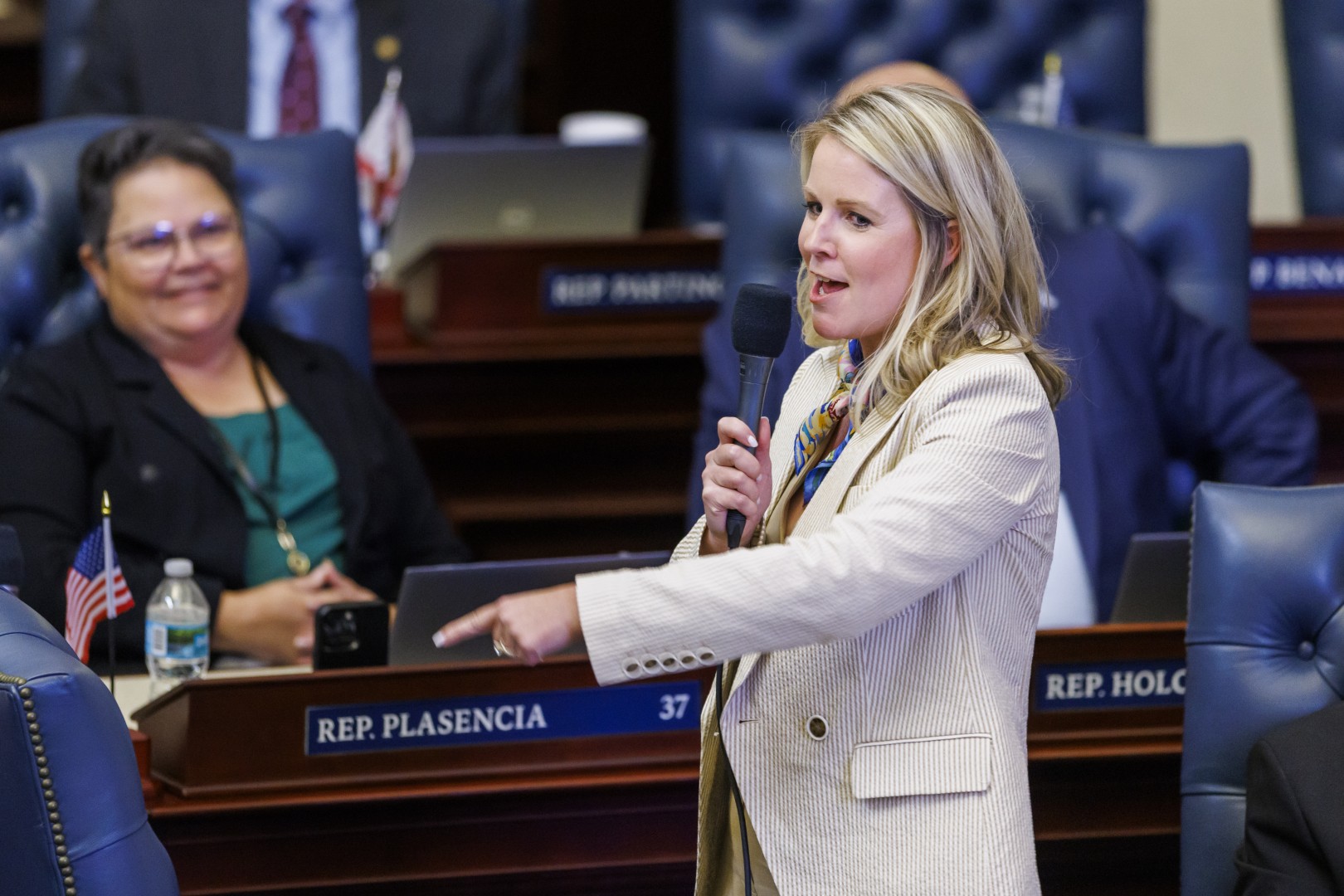
The Legislature has approved a measure aimed at curbing foreign government influence in Florida institutions, sending the proposal to Gov. Ron DeSantis on the final day of the Legislative Session.
The House approved the Senate’s rewrite of HB 905, a proposal carried in the lower chamber by Fort Myers Republican Rep. Jenna Persons-Mulicka. The measure, dubbed the Foreign Interference Restriction and Enforcement (FIRE) Act, expands a series of restrictions targeting governments classified in Florida law as “foreign countries of concern,” including China, Russia, Iran, North Korea, Cuba, Venezuela under Nicolás Maduro and Syria.
The Senate adopted a “delete-all” amendment Thursday sponsored by Fort Pierce Republican Sen. Erin Grall, replacing the bill’s original language with provisions drawn largely from her own Senate proposal (SB 1178) while retaining some elements from the House bill. The amendment removed sections requiring agents of foreign organizations to register, removed a section regarding procurement of information technology, removed a section regarding critical infrastructure contracts, and removed a section regarding the unauthorized enforcement of foreign law.
Despite Democratic opposition to the overall bill, debate in both chambers has largely focused on parts of the measure that address reproductive agreements involving foreign nationals. The proposal prohibits preplanned adoption arrangements or gestational surrogacy contracts if any party involved is a citizen or resident of a foreign country of concern. The Senate amendment retained the measure, along with many others meant to curb foreign influence in Florida.
“The Senate amendment leaves a lot of work left to be done on the table, but our work in the area of state security never ends so we have more work to do every year,” Persons-Mulicka told Representatives on Friday.
“But the FIRE act still leaves in place incredibly important wins for Floridians, including prohibiting the exploitation of surrogacy by China, including preventing foreign influence operations at the local government level, and including deterring bad actors from breaking our laws to benefit our foreign adversaries.”
Supporters argue the provision is needed to prevent adversarial governments from exploiting international surrogacy arrangements. Critics have said the language was added late in the legislative process and deserved a more thorough review as a standalone policy issue. Delray Beach Democratic Rep. Kelly Skidmore filed an amendment to remove much of that language from the measure that was ultimately denied.
“I’m not okay with any of it Representative, let’s be clear,” Skidmore said in response to Persons-Mulicka, who questioned why some surrogacy stipulations were left in the bill by the amendment but not others.
“This amendment is not going to pass and it’s not going to change anything,” Skidmore added. “This is my opportunity to talk about how bad some parts of this bill are, and why it is important that members of this body pay attention to what we do. It should not be that we just check the box, like ‘well, it’s okay with leadership so I’m going to go with it.’ There are many parts of this bill that are incorrect that I don’t think we should pass. This is my attempt at one of them.”
Overall, the proposal strengthens ethics laws by prohibiting public officials, government employees, candidates and local government attorneys from soliciting or accepting gifts from entities representing foreign countries of concern or designated foreign terrorist organizations. Violators could face enhanced penalties and would be required to repay twice the value of any financial benefit received.

The measure also expands training requirements for public officials by directing the Florida Commission on Ethics to develop updated coursework addressing foreign influence.
The bill also authorizes tax collectors and local governments to revoke or refuse to renew business tax receipts for companies doing business with Cuba in violation of federal law. It also prohibits state agencies, local governments and publicly funded schools from entering agreements or accepting grants from foreign countries of concern or entities controlled by them.
Existing international agreements that allow foreign governments to influence educational curriculum or other public programs would be terminated by July 1 under the proposal. The legislation also eliminates the Florida-China Institute, a state program connecting Florida universities with Chinese academic institutions, and prohibits state linkage institutes from partnering with foreign countries of concern.
Another section increases criminal penalties when offenses are committed to benefit a foreign government or a designated foreign terrorist organization. Under the measure, crimes could be reclassified to higher-degree offenses if prosecutors determine they were committed to advance the interests of foreign entities.
HB 905 now heads to the Governor’s desk. If signed, the measure would take effect July 1.