Connect with us

Business

Legal sports betting generated $10 billion through the first 9 months of 2025. The NBA poker bombshell is exposing its dark underbelly

Published

on


The stunning indictment that led to the arrest of more than 30 people, including Miami Heat guard Terry Rozier and other NBA figures, on charges of illegal sports betting has drawn new scrutiny of the booming business of professional sports gambling across the U.S.

Since widespread legalization, the multibillion-dollar industry has made it easy to place wagers on everything from the outcome of games to that of a single play with just a few taps of a cellphone. It’s just about impossible to go to a basketball, football, baseball or other pro game today — or watch a matchup on TV — without seeing ads for sports betting.

Fans can place wagers from their stadium seats, while “Bet” tickers scroll on TV sports broadcasts. Star athletes are frequently at the center of ads promoting it all.

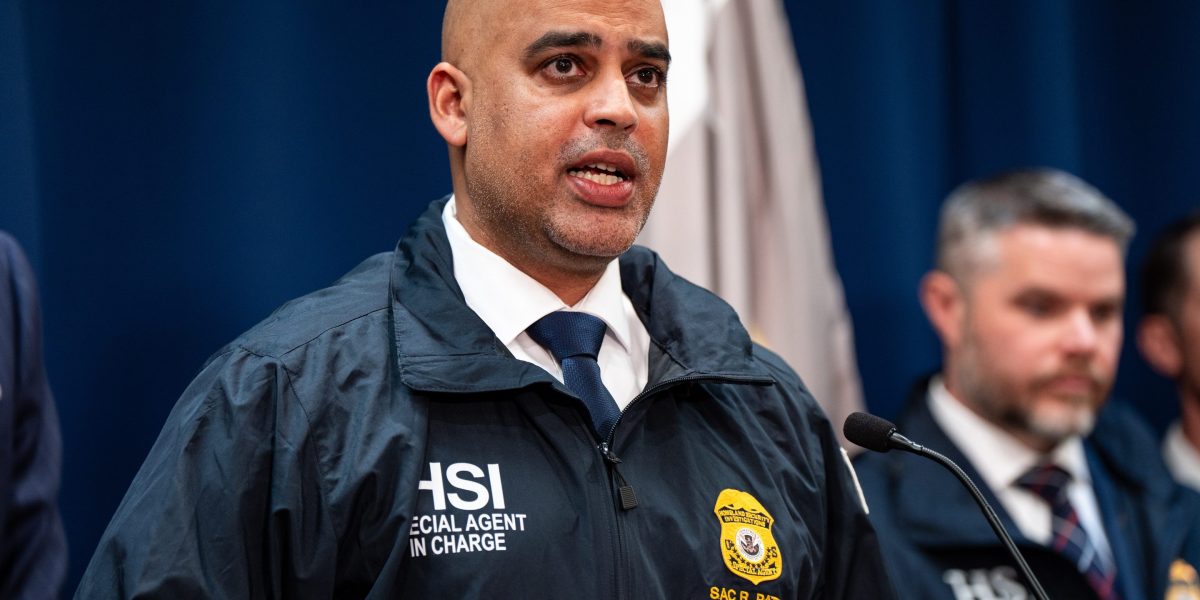
In Thursday’s indictment, federal investigators accused Rozier and other defendants of breaking the law by exploiting private information about players to win bets on NBA games. Rozier’s lawyer, Jim Trusty, said in a statement that his client is “not a gambler” and “looks forward to winning this fight.”

A separate indictment alleges Portland Trail Blazers coach Chauncey Billups and others participated in a conspiracy to fix high-stakes card games. Billups’ attorney, Chris Heywood, issued a statement denying the allegations, calling his client a “man of integrity.”

Regulating sports wagering has proven to be a challenge — and experts warn about the ramifications for gamblers who typically lose money. Professional leagues’ own role in promoting gambling has raised eyebrows.

Here’s what we know.

Explosion of legalized sports betting

Sports betting is probably as old as sports itself. But in the U.S., legal gambling really took off in 2018.

That’s when the Supreme Court struck down the Professional Amateur Sports Protection Act, which barred sports betting in most states. Once allowed only in Nevada, sports betting is now permitted online or in retail locations in 38 states and Washington, D.C. Missouri will become the 39th state on Dec. 1.

Experts say the biggest jump has been online, through smartphone apps and platforms like DraftKings and FanDuel. Through the third quarter of this year, legal sports betting generated $10 billion in revenue, up about 19% from the same period a year ago, according to the American Gaming Association.

The industry argues that legal wagering generates money for states and can deter illegal betting. Major operators point to technology they use to monitor suspicious activity. FanDuel said Thursday’s news illustrates “the stark contrast between legal and illegal betting markets.”

Who benefits?

There is plenty of money on the table both for those who place winning bets and the platforms that make it possible. The NBA and other pro sports leagues have also created revenue streams by partnering with sportsbooks and reaping advertising dollars.

Live game stats provided by leagues are key to the sports world’s relationship with the gambling industry. When you’re able to bet what the next pitch in a baseball game is going to be, that’s because Major League Baseball is selling data to platforms “for a pretty high price,” according to Isaac Rose-Berman, whose research focuses on sports betting as a fellow at the American Institute for Boys and Men.

The NBA has a partnership with Sportradar for its data rights. Sportradar, in turn, provides FanDuel Sportsbook official NBA statistics. When the deal was announced in 2022, Sportradar touted it as a way “to monetize our long-term partnership with the NBA.”

How is sports betting regulated?

Each state has its own regulations and tax rates for sports betting. A handful restrict where you can place bets — allowing users to use mobile apps, but only while they’re physically inside a casino or within a certain radius of a stadium, for example. Others limit which betting platforms you can use or what you can bet on.

“States sort of opened up a can of worms, and now some of them are starting to realize just how crazy this sports betting world sort of is,” said Wayne Taylor, a professor of marketing at Southern Methodist University.

An even stickier factor is when players and other team or league personnel are involved. The NFL, NBA, MLB and NHL all prohibit employees and players from betting on their own league games, although some gambling in separate areas is allowed.

Legalized betting has certain security advantages in that unusual betting patterns — such as large bets being placed on a random player’s performance — can be immediately flagged. In some cases, sportsbooks have taken down odds on certain events to protect against manipulation.

Still, experts like Taylor note that companies’ own financial interests may bring some of that into question. And across the sports market, he says the large number of players and scope of micro bet possibilities makes potential manipulation “easier to hide.”

What is prop betting?

A prop is a type of wager that allows gamblers to bet on whether a player will exceed a certain statistical number, such as whether a basketball player will finish over or under a certain total of points, rebounds, assists and more.

This kind of bet is key to the sports betting probe announced Thursday. Investigators pointed to a March 23, 2023, game involving Rozier, then playing for the Charlotte Hornets.

Rozier played the first 9 minutes and 36 seconds of that game — and not only did he not return that night, citing a foot issue, but he did not play again that season. He finished with five points, four rebounds and two assists — a productive opening quarter, but well below his usual total output for a full game. At the time, many bettors turned to social media to say that something shady occurred regarding prop bets involving his stats for that night.

More broadly, the NBA has expressed concern about prop bets, while other sports leagues have worried about the potential for manipulation.

Earlier this year, Ohio Gov. Mike DeWine urged his state’s gambling commission to ban prop bets after Major League Baseball placed two Cleveland Guardians pitchers on leave during a sports betting investigation.

What are other pitfalls and social implications?

Sports betting also faces criticism for opening the door to addictive gambling.

“The fact that it’s normalized, the advertising is aggressive, it’s available 24/7, the micro bets — all of this is adding up to tremendous increase in usage across individuals,” said Taylor, citing algorithms and other incentives betting platforms use to increase engagement.

Rose-Berman notes that platforms make the most off of returning “biggest losers.” Recent research suggests that young men in low-income communities are particularly affected by financial consequences tied to sports gambling.

“Upwards of 90% of sports bettors are not really going to experience significant negative impacts — but it’s really concentrated among those big losers and it’s going to be devastating for them,” he said.

_____

Associated Press reporters Tim Reynolds in Miami, David Lieb in Jefferson City, Missouri, and Alan Suderman in Richmond, Virginia, contributed to this report.


Source link

Continue Reading

Business

Kimberly-Clark exec says old bosses would compare her to their daughters when she got promoted

Published

on


Women have their own unique set of challenges in the workforce; the “motherhood penalty” can set them back $500,000, their C-suite representation is waning, and the gender pay gap has widened again. One senior executive from $36 billion manufacturing giant Kimberly-Clark knows the tribulations all too well—after all, she’s one of few women in the Fortune 500 who holds the coveted role. 

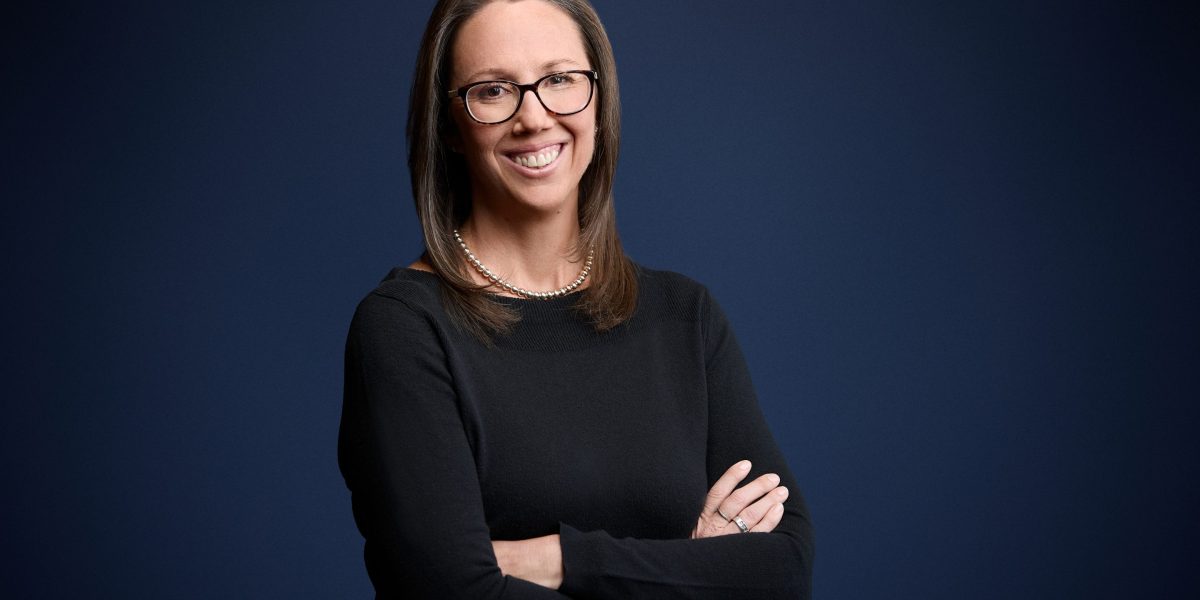
Tamera Fenske is the chief supply chain officer (CSCO) for Kimberly-Clark, who oversees a massive global team of 22,665 employees—around 58% of the global CPG manufacturer’s workforce. She’s in charge of optimizing the company’s entire supply chain, from sourcing raw materials for Kimberly-Clark products including Kleenex and Huggies, to delivering the final product into customers’ shopping carts. 

It’s a job that’s essential to most top businesses operating at such a massive scale; around 422 of the Fortune 500 have chief supply chain officers, according to a 2025 Spencer Stuart analysis. However, most of these slots are awarded to white men; only about 18% of executives in this position are women, and 12% come from underrepresented racial and ethnic backgrounds. It’s one of the C-suite roles with the least female representation, right next to chief financial officers, chief operating officers, and CEOs. 

In fact, Fenske is one of just 76 Fortune 500 female executives who have “chief supply chain officer” on their resumes. However, the executive tells Fortune it’s an unfortunate fact she “doesn’t think about” too often—if anything, it motivates her further.

“Anytime someone tells me I can’t do something, it makes me want to work that much harder to prove them wrong,” Fenske says. 

The first time Fenske noticed she was one of few women in the room

Fenske has spent her entire life navigating subjects dominated by men—something she didn’t even consider until college. 

Her father, aunts, uncles, and grandfather all worked for Dow Chemical, so she grew up in a STEM-heavy household. Naturally, she leaned into math and science as well, eventually pursuing a bachelor’s in environmental chemical engineering at Michigan Technological University. It was there that her eyes first opened to the reality that she was one of few women in the room. 

“It definitely was going to Michigan Tech, where I first realized the disparity,” Fenske said, adding that there was around an eight-to-one male-to-female ratio. “As you continue through the higher levels and the grades, it becomes even more tighter, especially as you get into your specialized engineering.” 

Once joining the world of work, it wasn’t only Fenske who noticed the lack of women in senior roles—some bosses would even point it out. 

The Fortune 500 boss is paying it forward—for both men and women

After Fenske graduated from Michigan Tech, she got her start at $91 billion manufacturer 3M: a multinational conglomerate producing everything from pads of Post-It notes to rolls of Scotch tape. Fenske was first hired as an environmental engineer in 2000. Promotion after promotion came, but all people could seem to focus on was her gender.

“It would come to light when I moved relatively quickly through the ranks. Some of my bosses would say, ‘You’re the age of my daughter,’ and different things like that. ‘You’re the first woman that’s had this role at this plant or in this division,’” Fenske recalls. Over the course of 2 decades, she rose through the company’s ranks to the SVP of 3M’s U.S. and Canada manufacturing and supply chain. 

And anytime she was asked about her gender? She’d flip the questions back at them while standing her ground. “I would always try to spin it a little bit and ask them questions like, ‘Okay, so what is your daughter doing?’…I always try to seek to understand where they are coming from, but then also reinforce what brought me to where I am.”

Now, three years into her current stint as Kimberly-Clark’s CSCO, the 47-year-old is paying it back—but not just to the women following in her footsteps.

“I never saw myself as necessarily a big, ground-breaker pioneer, even though the statistics would tell you I was,” Fenske says. “I tried to give back to women and men, to be honest. Because I think men [are] one of the strongest advocates for women as well. So I think we have to teach both how to have that equal lens and diverse perspective.”


Source link

Continue Reading

Business

SpaceX to offer insider shares at record-setting $800 billion valuation

Published

on


SpaceX is preparing to sell insider shares in a transaction that would value Elon Musk’s rocket and satellite maker at as much as $800 billion, people familiar with the matter said, reclaiming the title of the world’s most valuable private company. 

The details, discussed by SpaceX’s board of directors on Thursday at its Starbase hub in Texas, could change based on interest from insider sellers and buyers or other factors, said some of the people, who asked not to be identified as the information isn’t public. SpaceX is also exploring a possible initial public offering as soon as late next year, one of the people said. 

Another person briefed on the matter said that the price under discussion for the sale of some employees and investors’ shares is higher than $400 apiece, which would value SpaceX at between $750 billion and $800 billion. The company wouldn’t raise any funds though this planned sale, though a successful offering at such levels would catapult it past the record of $500 billion valuation achieved by OpenAI in October.

Elon Musk on Saturday denied that SpaceX is raising money at a $800 billion valuation without addressing Bloomberg’s reporting on the planned offering of insiders’ shares. 

“SpaceX has been cash flow positive for many years and does periodic stock buybacks twice a year to provide liquidity for employees and investors,” Musk said in a post on his social media platform X. 

The share sale price under discussion would be a substantial increase from the $212 a share set in July, when the company raised money and sold shares at a valuation of $400 billion. The Wall Street Journal and Financial Times earlier reported the $800 billion valuation target.

News of SpaceX’s valuation sent shares of EchoStar Corp., a satellite TV and wireless company, up as much as 18%. Last month, EchoStar had agreed to sell spectrum licenses to SpaceX for $2.6 billion, adding to an earlier agreement to sell about $17 billion in wireless spectrum to Musk’s company.

Subscribe Now: The Business of Space newsletter covers NASA, key industry events and trends.

The world’s most prolific rocket launcher, SpaceX dominates the space industry with its Falcon 9 rocket that lifts satellites and people to orbit.

SpaceX is also the industry leader in providing internet services from low-Earth orbit through Starlink, a system of more than 9,000 satellites that is far ahead of competitors including Amazon.com Inc.’s Amazon Leo.

Elite Group

SpaceX is among an elite group of companies that have the ability to raise funds at $100 billion-plus valuations while delaying or denying they have any plan to go public. 

An IPO of the company at an $800 billion value would vault SpaceX into another rarefied group — the 20 largest public companies, a few notches below Musk’s Tesla Inc. 

If SpaceX sold 5% of the company at that valuation, it would have to sell $40 billion of stock — making it the biggest IPO of all time, well above Saudi Aramco’s $29 billion listing in 2019. The firm sold just 1.5% of the company in that offering, a much smaller slice than the majority of publicly traded firms make available.

A listing would also subject SpaceX to the volatility of being a public company, versus private firms whose valuations are closely guarded secrets. Space and defense company IPOs have had a mixed reception in 2025. Karman Holdings Inc.’s stock has nearly tripled since its debut, while Firefly Aerospace Inc. and Voyager Technologies Inc. have plunged by double-digit percentages since their debuts.

SpaceX executives have repeatedly floated the idea of spinning off SpaceX’s Starlink business into a separate, publicly traded company — a concept President Gwynne Shotwell first suggested in 2020. 

However, Musk cast doubt on the prospect publicly over the years and Chief Financial Officer Bret Johnsen said in 2024 that a Starlink IPO would be something that would take place more likely “in the years to come.”

The Information, citing people familiar with the discussions, separately reported on Friday that SpaceX has told investors and financial institution representatives that it’s aiming for an IPO of the entire company in the second half of next year.

Read More: How to Buy SpaceX: A Guide for the Eager, Pre-IPO

A so-called tender or secondary offering, through which employees and some early shareholders can sell shares, provides investors in closely held companies such as SpaceX a way to generate liquidity.

SpaceX is working to develop its new Starship vehicle, advertised as the most powerful rocket ever developed to loft huge numbers of Starlink satellites as well as carry cargo and people to moon and, eventually, Mars.


Source link

Continue Reading

Business

National Park Service drops free admission on MLK Day and Juneteenth while adding Trump’s birthday

Published

on


The National Park Service will offer free admission to U.S. residents on President Donald Trump’s birthday next year — which also happens to be Flag Day — but is eliminating the benefit for Martin Luther King Jr. Day and Juneteenth.

The new list of free admission days for Americans is the latest example of the Trump administration downplaying America’s civil rights history while also promoting the president’s image, name and legacy.

Last year, the list of free days included Martin Luther King Jr Day and Juneteenth — which is June 19 — but not June 14, Trump’s birthday.

The new free-admission policy takes effect Jan. 1 and was one of several changes announced by the Park Service late last month, including higher admission fees for international visitors.

The other days of free park admission in 2026 are Presidents Day, Memorial Day, Independence Day, Constitution Day, Veterans Day, President Theodore Roosevelt’s birthday (Oct. 27) and the anniversary of the creation of the Park Service (Aug. 25).

Eliminating Martin Luther King Jr. Day and Juneteenth, which commemorates the day in 1865 when the last enslaved Americans were emancipated, removes two of the nation’s most prominent civil rights holidays.

Some civil rights leaders voiced opposition to the change after news about it began spreading over the weekend.

“The raw & rank racism here stinks to high heaven,” Harvard Kennedy School professor Cornell William Brooks, a former president of the NAACP, wrote on social media about the new policy.

Kristen Brengel, a spokesperson for the National Parks Conservation Association, said that while presidential administrations have tweaked the free days in the past, the elimination of Martin Luther King Jr. Day is particularly concerning. For one, the day has become a popular day of service for community groups that use the free day to perform volunteer projects at parks.

That will now be much more expensive, said Brengel, whose organization is a nonprofit that advocates for the park system.

“Not only does it recognize an American hero, it’s also a day when people go into parks to clean them up,” Brengel said. “Martin Luther King Jr. deserves a day of recognition … For some reason, Black history has repeatedly been targeted by this administration, and it shouldn’t be.”

Some Democratic lawmakers also weighed in to object to the new policy.

“The President didn’t just add his own birthday to the list, he removed both of these holidays that mark Black Americans’ struggle for civil rights and freedom,” said Democratic Sen. Catherine Cortez Masto of Nevada. “Our country deserves better.”

A spokesperson for the National Park Service did not immediately respond to questions on Saturday seeking information about the reasons behind the changes.

Since taking office, Trump has sought to eliminate programs seen as promoting diversity across the federal government, actions that have erased or downplayed America’s history of racism as well as the civil rights victories of Black Americans.

Self-promotion is an old habit of the president’s and one he has continued in his second term. He unsuccessfully put himself forwardfor the Nobel Peace Prize, renamed the U.S. Institute of Peace after himself, sought to put his name on the planned NFL stadium in the nation’s capital and had a new children’s savings program named after him.

Some Republican lawmakers have suggested putting his visage on Mount Rushmore and the $100 bill.


Source link

Continue Reading

Trending

Copyright © Miami Select.