
Politics
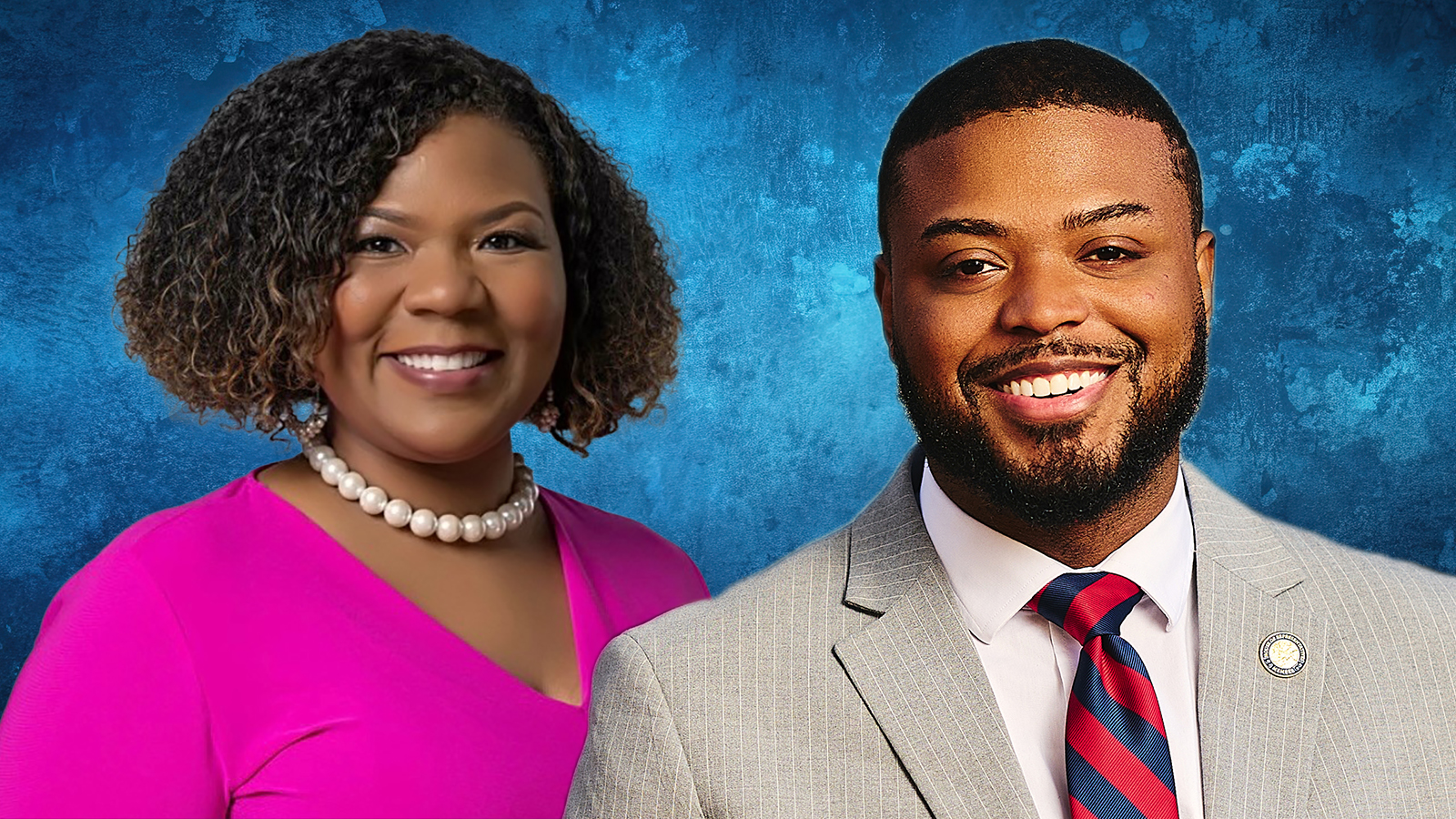
LaVon Bracy Davis, RaShon Young file bills to automatically register eligible Florida voters


Florida’s high school graduation rates continue to show real progress.
According to the Florida Department of Education’s most recent cohort data released on January 13, 2026, the statewide four-year graduation rate, including both charter schools and traditional district public schools, stands at approximately 92%. That is a meaningful achievement and one worth acknowledging, particularly as schools confront staffing shortages, rising student needs, and sustained budget pressures.
But headline averages can obscure important differences policymakers should examine closely as the Florida Legislature debates education funding, accountability, and continued charter expansion.
When the data is disaggregated, the contrast is clear.
In the 2024–25 cohort, traditional district public high schools graduated 93.8% of students within four years, while charter high schools graduated 78.4%, a gap of more than 15 percentage points.
Both figures are derived from the same state accountability system and employ the same graduation definition. The difference is not technical. It is systemic.
Florida’s strong statewide graduation rate is driven primarily by traditional district public schools, which educate the vast majority of students. When charter and traditional schools are combined, the average remains high, but it is lower than the graduation rate achieved by traditional district schools alone.
Supporters of charter expansion often cite statewide graduation rates as evidence that Florida’s parallel education systems perform equally well or that charter schools drive overall success. Florida’s own data does not support that conclusion.
While nearly 94% of students in traditional district public schools graduate on time, more than one in five charter students do not. Graduation rate alone understates the disparity.
In 2024–25, 13% of charter students remained enrolled beyond four years, compared with 2.6% of students in traditional district public schools. Charter dropout rates were nearly three times higher, 4.4% versus 1.5%. These outcomes reflect thousands of students whose path to graduation is delayed or disrupted.

Florida’s graduation gains are real, but they are being driven overwhelmingly by traditional district public schools.
This distinction matters because Florida policy continues to emphasize expansion — approving new charter schools, providing facility access, and creating parallel funding streams often without applying the same level of scrutiny to outcomes. Expansion is frequently treated as a proxy for success, even when performance data tells a more nuanced story.
None of this diminishes the commitment of charter educators or students. But sound policymaking requires more than good intentions. It requires an honest evaluation of results.
Florida’s traditional district public schools deliver the strongest and most consistent graduation outcomes on time, with fewer dropouts and far fewer students pushed beyond the four-year window while serving diverse populations and absorbing enrollment volatility.
That is not an argument against innovation or parental choice. It is an argument for aligning public investment with evidence.
As lawmakers consider education priorities this Session, the central question is not whether Florida’s graduation rates are improving. They are.
The question is whether state policy will follow the data and invest accordingly in the schools that are producing the strongest outcomes for Florida’s students.
Progress should be celebrated. But progress should also be understood. Florida doesn’t need competing narratives; it needs education policy grounded in facts.
___
Crystal Etienne serves as president of the EDUVOTER Action Network.
Politics
Jacksonville official warns Instagram followers about ICE arrests, advises on how to avoid ‘targeting’
“Flying cars” carrying passengers will be coming to Florida in late 2027 or 2028 as the skies turn into a booming multimillion-dollar industry, transit officials said during a House subcommittee hearing.
“There’s a lot of anticipation. There’s a lot of excitement. There’s a lot of private equity to get this moving forward quickly,” said Will Watts, the Assistant Secretary and Chief Operating Officer at Florida Department of Transportation (FDOT).
Watts said demonstration flights will be happening this year to show off the technology that officials believe will transform transportation.
In developing a statewide aerial network, the Interstate 4 corridor is the top priority route to be established so vertiports can fly passengers, carry micro freight and help with emergency management, officials said.
The rest of the phase one plan for city-to-city travel targets routes from Port St. Lucie to Miami, Tampa to Naples, Miami to Key West and Pensacola to Tallahassee, according to FDOT’s presentation to state lawmakers.
Phase two listed the routes from Daytona Beach to Jacksonville, then Sebring out east and west, followed by Orlando to Lake City and Tampa to Tallahassee followed by Jacksonville to Tallahassee.
Appealing to business travelers and tourists, vertiports could be responsible for anywhere from 220,000 trips to 1.4 million trips in the opening year.
“These numbers can grow, we believe, when we get into 2050 to over 11 million on the low end and almost close to 20 million annual trips on the high end,” Watts said.
Watts estimated that the first year could bring a more than $40 million profit as vertiports could fly to large commercial hubs, executive airports and also provide inner city transportation.
Watts gave an update during the House Transportation and Economic Development Budget Subcommittee.
The state is preparing to help usher in a new era of transportation.
“What was originally as sci-fi in movies and old cartoons like the Jetsons is potentially becoming a reality,” Transportation Secretary Jared Perdue said during Wednesday’s hearing. “This is here to stay and it’s going to happen and it could potentially have a very big impact on congestion relief and safety for transportation in the state of Florida. We have fully embraced the concept.”

The vertiports will be a privately operated service, though FDOT officials are currently in discussions to plan for zoning and what infrastructure is needed, as the amount of traffic in the sky would likely overwhelm air traffic controllers.
In addition to transporting passengers and goods that weigh 1-2 tons, the vertiports could help with emergency management, such as for organ donors, where every minute matters.


Highway 1 along Big Sur reopens after 3 years of closures amid tourism-destroyin landslide

Timothy Busfield Appears In Court After Surrendering On Child Sex Charges

Florida graduation rates are improving; policymakers should follow the data
-

 Politics8 years ago
Congress rolls out ‘Better Deal,’ new economic agenda
-
Entertainment8 years ago
New Season 8 Walking Dead trailer flashes forward in time
-
Politics9 years ago
Poll: Virginia governor’s race in dead heat
-
Politics8 years ago
Illinois’ financial crisis could bring the state to a halt
-
Entertainment8 years ago
The final 6 ‘Game of Thrones’ episodes might feel like a full season
-
Entertainment8 years ago
Meet Superman’s grandfather in new trailer for Krypton
-
Business8 years ago
6 Stunning new co-working spaces around the globe
-
Tech8 years ago
Hulu hires Google marketing veteran Kelly Campbell as CMO