
Politics
Lauren Melo backs Liessa Priddy as preferred successor in HD 82

“Pudge controls the weather,” is a semi-famous and entirely adorable line from Lilo and Stitch, in which the cartoon little girl feeds Pudge, a fish, a peanut butter sandwich every Thursday to ensure favorable conditions.
As endearing a moment that was in what has become a modern Disney classic, it’s also understood to be complete fiction.
But don’t tell that to CBS, whose team of reporters apparently think it’s actually Erika Donalds who controls the weather.
At issue is a report published last week by CBS reporters Michael Kaplan, Mark Strassmann, and Emma Nicholson, with help from several other CBS reporters, outlining the delayed opening of Optima Classical Academy in Fort Myers. It was supposed to open in late 2024, but didn’t because of ongoing impacts from Hurricane Ian, which struck the area as a Category 5 hurricane, causing catastrophic devastation throughout the community from both wind and flood damage. Recovery efforts led to delays in opening the school this year, too, though it is still authorized under law to open next year.
The CBS piece has the look and feel of a hard-hitting investigative piece — it’s long and has catchy sub-heads — but its findings don’t uncover much.
The headline points to “parents scrambling” after the school didn’t open on time. The main sub-headline says Donalds “defended millions paid to vendors she was tied to.”
But the story itself is mostly just commentary from a couple of parents frustrated with their kids’ lack of options giving the Optima Classical Academy delay, one of whom even acknowledges she “had all our eggs in that basket.” This doesn’t project a problem with choice. Instead, it only punctuates the need for more choice programs — including charter schools like the ones Donalds launches.
Donalds, wife of U.S. Rep. Byron Donalds, has become a leading voice in the school choice movement not just in Florida, but across the nation. She has successfully opened four classical charter schools in the state, a growing trend of schools that emphasize Eurocentric education that begins allowing students to explore primary documents such as the U.S. Constitution much earlier than traditional public curricula allows.
It’s become a popular choice among parents who worry about what many describe as “woke” education in public schools. And yes, it sucks that the early 300 parents in Fort Myers who selected Optima Classical Academy for their children are left waiting.
But assigning blame for that to Donalds rather than to the act of God that created the delay is a stretch at best.

“It is sexist — but not surprising — that CBS would choose to attack an accomplished businesswoman with a strong record of starting successful charter schools and providing thousands of students with an excellent education. Erika Donalds has been a leading voice in advancing school choice nationwide, both through policy and helping launch new schools. Her leadership has helped make Florida’s education landscape a national model for education freedom and innovation, her expertise continues to be sought by policymakers across America, and her dedication and lifelong commitment have expanded access to quality educational opportunities for children who need and deserve them,” said Danielle Alvarez, senior advisor to U.S. Rep. Byron Donalds’ campaign for Governor.
While Hurricane Ian made landfall near Fort Myers in late 2022, the Category 5 storm caused one of the longest and most complex disaster recoveries in U.S. history. Even three years after the storm, news coverage in Southwest Florida was still highlighting recovery challenges and progress, with numerous rebuilding efforts still underway. As anyone with experience recovering from hurricane devastation will tell you, the large-scale recovery affects areas far outside of landfall, with construction resources spread thin and exacerbating timelines.
But despite the CBS story’s failure to accurately portray what has happened with Optima’s delay, the piece actually does get some facts right, even if not in context.
For example, the story notes that “state data shows when it came to academic performance, one of the schools (Donalds opened) quickly excelled.” It also includes important context that the Fort Myers school “had yet to receive any taxpayer funding,” though it is still operating under the parameters of its approved charter agreement allowing it to open by 2026. Even in an example cited outlining areas of concern in academic performance at one Optima-run school, the CBS story correctly notes that academic performance improved after the independent audit, which was commissioned specifically to uncover areas of continued opportunity.
The piece cites a spokesperson for Donalds, who said the school’s improvement shows “how a supportive environment, committed teachers, and high expectations can help children thrive.”
But perhaps worst of all in what amounts to a cleverly disguised hit piece against Donalds, the story attempts to lead readers to believe Donalds made improper financial gain from the charter schools she opened or planned to open, arguing some charter school funds at schools that had already opened were spent on outside firms with ties to Donalds. But the information is framed in a derogatory way, despite later noting the firms “landed the schools a good price on payroll expenses, IT and other back-office services” and that each school “is owned and governed by its own independent nonprofit board, which is responsible for oversight and decision-making.”
Nevertheless, the narrative is framed in such a way that paints Donalds as the villain.
But sure, I guess we’ll just start feeding Donalds peanut butter sandwiches on Thursdays and hope for the best.
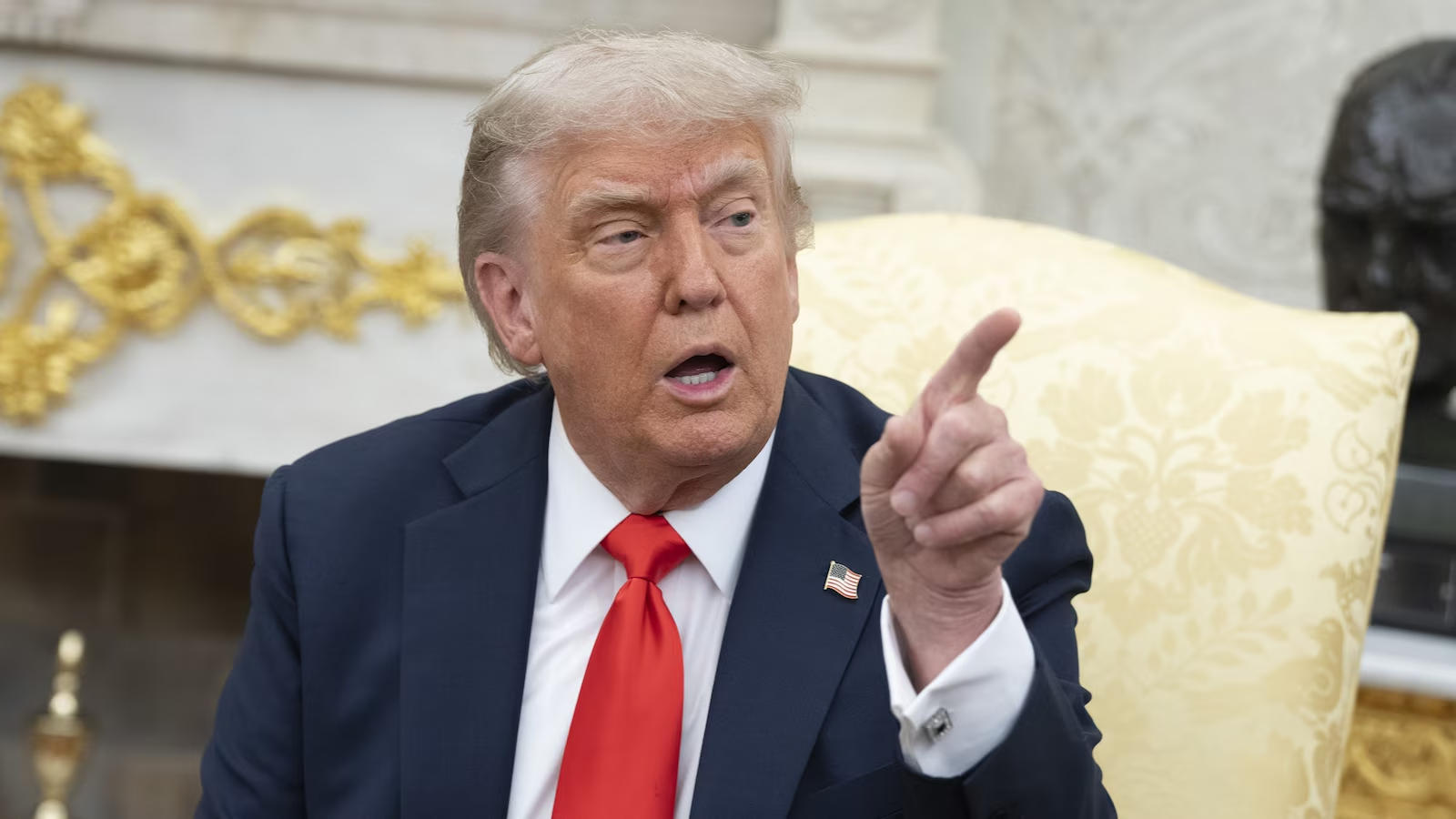
President Donald Trump is poised to set federal guidance for artificial intelligence that could preclude regulations that states like Florida and Governors like Ron DeSantis might want to enact.
“There must be only One Rulebook if we are going to continue to lead in AI. We are beating ALL COUNTRIES at this point in the race, but that won’t last long if we are going to have 50 States, many of them bad actors, involved in RULES and the APPROVAL PROCESS,” Trump posted to Truth Social.
“THERE CAN BE NO DOUBT ABOUT THIS! AI WILL BE DESTROYED IN ITS INFANCY! I will be doing a ONE RULE Executive Order this week. You can’t expect a company to get 50 Approvals every time they want to do something. THAT WILL NEVER WORK.”
The President’s comments come as the Florida House prepares to begin a week of committee meetings addressing AI, and after DeSantis has spent months fretting about the impacts of the technological inevitability and teasing statewide regulations to address it.
The House is holding meetings starting Tuesday revolving around what Speaker Daniel Perez calls “the potentially positive and negative impacts of the use of AI in their respective jurisdictions.”
The House Economic Infrastructure Subcommittee will tackle utility costs related to data centers. The House Careers & Workforce Subcommittee plans to explore “Artificial Intelligence and the Future of Work: Opportunities, Challenges, and Workforce Readiness.” And the House Information Technology Budget & Policy Subcommittee will examine “Examples of artificial intelligence use in state agencies and options for the future.”
Meanwhile, DeSantis is prioritizing a so-called “AI Bill of Rights” that is designed to counter what he calls an “age of darkness and deceit.”
Exploitative depictions concern the Governor. He said he wants the law to “do things like fortify some of the protections we have in place for things like deepfakes and use of explicit material, particularly those that depict minors.”
Foreign control also worries him.
DeSantis vows not to “allow any state or local government agency to utilize Chinese-created AI tools when they’re doing data here in the state of Florida.”

Other proposed protections include ensuring “that data inputted into AI is secure and private.”
Additionally, people dealing with insurance companies may have recourse against claims being determined by AI rather than humans, and lawyers’ clients could be protected from the technology being used to write briefs and filings.
DeSantis also wants the legislation to rein in data centers by capping utility rates that could be driven up by them, banning subsidies to build them, prohibiting them in agriculturally-zoned areas, issuing statewide noise regulations, and embracing the oft-trampled concept of home rule to allow local jurisdictions to ban them.
He also expects emergent legislation to “provide more parental rights … to ensure parents can access conversations their child has with one of these LLM (large language model) chatbots. Parents will be able to set parameters from when the child can access any of these platforms, and there will be notifications for parents required if the child exhibits concerning behavior.”
DeSantis has decried overstretched stock market valuations for “Mag 7” companies Alphabet, Amazon, Apple, Meta Platforms, Microsoft, Nvidia and Tesla, all of which are in the AI space. He has also suggested the “Founding Fathers” would hate the technology, and argued it will be used to perpetuate fraud.
Despite these qualms, Trump will move forward.
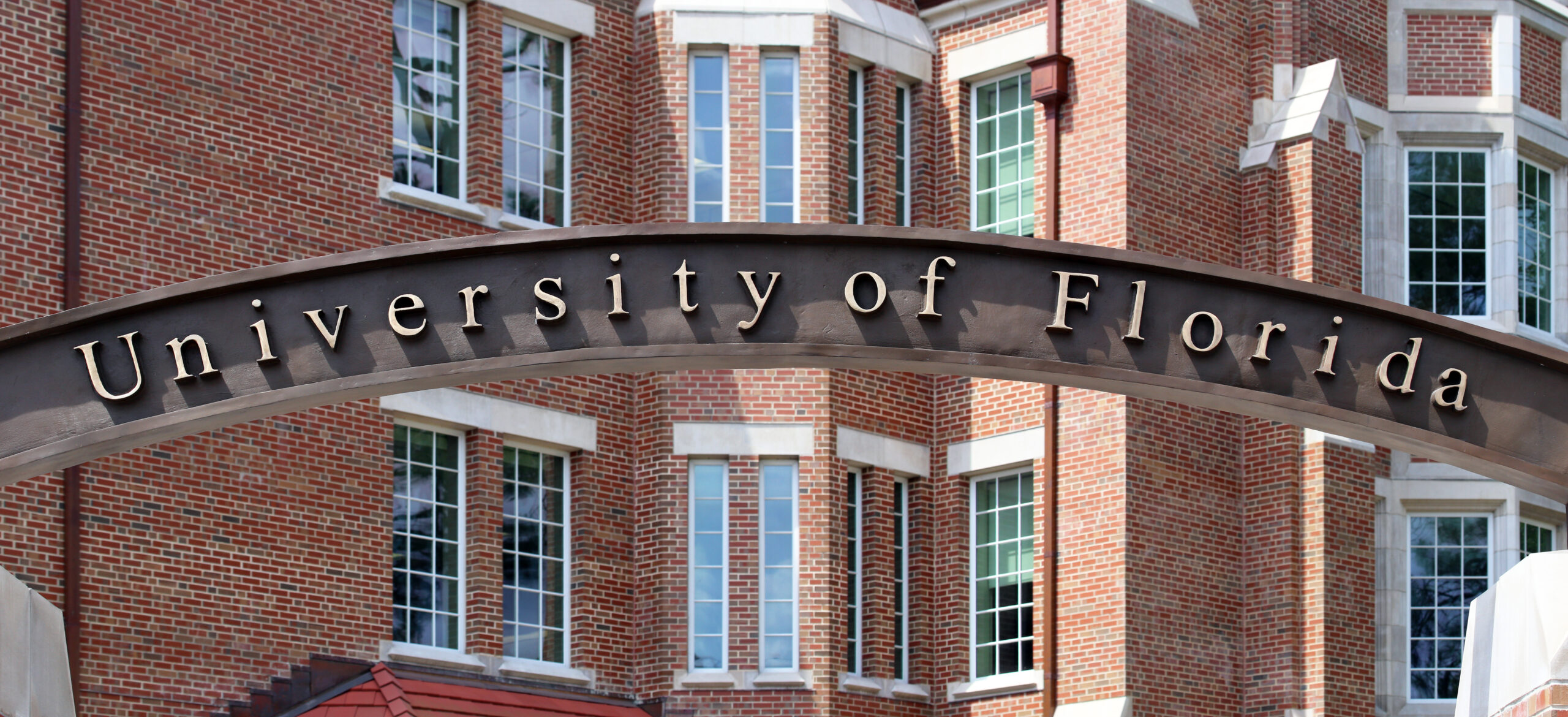
The University of Florida will not be taken over for ideological purposes, its interim President declared.
Interim President Donald Landry and UF Trustees expressed a commitment during a board meeting to “institutional neutrality” regarding how university actors will behave.
“We are not protecting the right to choose topics for classroom instruction, research, or scholarship if that right is not coupled with institutional neutrality,” Landry said.
“We have to provide protections for free expression, but we are not going to be able to engage in that protection if we have leadership speaking on issues that then create those aligned with leadership and those opposed to leadership. At that moment, those who are opposed to leadership are now afraid to speak, they don’t know if it’s safe.”
Trustees unanimously supported a policy that applies to university employees with access to communications resources used for “university business,” including email distribution lists, university websites, social media accounts, and teleconference systems.
“University business” encompasses “instructional activities, research and scholarship, administrative functions, communications,” and lobbying. Also: “Guidance regarding or requiring compliance with laws, regulations or policies.”
“Proclamations from UF institutional and unit leadership on issues that polarize society impair the free and open exchange of differing ideas on campus as it divides the student body and faculty into those aligned with leadership and those opposed,” the new policy says, in part.
The policy, according to its language, “clarifies expectations regarding (1) leadership commentary and proclamations on Social Issues; (2) the use of communication resources for personal expression; and (3) representations of affiliations.”
“When our leaders make comment or proclamations on social issues, political issues, normative issues, current events to their university constituents, these statements divide our faculty and students, chill free expression for those who do not agree with leadership, and send a signal that suddenly there’s no room for open discourse or the contest of ideas at the University of Florida,” Landry said.
Landry said he met with deans at the school about the neutrality statement.

“We resist ideological takeover of any unit of the university, we reject ideological indoctrination in favor of open discourse, we accomplish that at this university and in this state mainly through the right of the students to record any lecture,” Landry said.
The policy allows “political or social advocacy” as long as it’s not represented as UF policy, protecting “personal expression in their private capacities.”
Violation of the policy could result in termination.
“What we’re going to accomplish today is the voluntary restraint of leadership not to speak. If speech must come forth, it will come forth from the president in consultation with the chair, but otherwise we will remain silent,” Landry said.
Earlier in the meeting, Landry laid out his vision for the university. He holds the position while the university searches for a President. The search started Friday, and Chair Mori Hosseini said Landry signaled he will apply for the permanent position.
“This is a state where individuals can come confident that they will be able to learn, confident that their education will not be disrupted. It is a state where faculty can come, knowing they will be able to teach, they will be able to do research, they will be able to do their scholarship. That stability is priceless. That’s a firm foundation for a vision of preeminence and leadership,” Landry said.
The DeSantis administration’s political involvement in higher education led various professors to express their desire to leave the state, the Phoenix reported earlier this year.
Landry spent much of his time outlining his vision for the university, talking about expanding and supporting artificial intelligence research.
Hosseini, a major donor to Gov. Ron DeSantis, will serve another term as Chair of the state’s flagship university; the Trustees unanimously voted Friday to keep Hosseini in charge for another two years.
Hosseini has served on the UF Board since 2016 and before that he served on the Florida Board of Governors, which oversees public universities, on which he also was Chair.
Notably, Hosseini stood behind the UF Trustees’ support for Santa Ono, even after the state Board of Governors rejected him to be the leader of the university. Prominent Republicans came out in opposition to the former University of Michigan President after he abandoned his previous support for diversity, equity, and inclusion policies that are anathema to the MAGA movement.
“It’s no exaggeration to say that, in the modern era, I don’t think anybody has had as much influence on the trajectory of the University of Florida than you. From inspiring and challenging our leadership, to leveraging your relationships in Tallahassee for the benefit of our institution, the impact of your work is visible to all of us, every day,” Board Vice Chair Rahul Patel told Hosseini.
The Board also voted to keep Patel as the Board’s Vice Chair.
___
Reporting by Jay Waagmeester. Florida Phoenix is part of States Newsroom, a nonprofit news network supported by grants and a coalition of donors as a 501c(3) public charity. Florida Phoenix maintains editorial independence. Contact Editor Michael Moline for questions: info@floridaphoenix.com.
The post UF commits to ‘neutrality,’ institutionally appeared first on Florida Politics – Campaigns & Elections. Lobbying & Government..


Central bank body BIS raises concerns of gold and stocks double bubble

Pudge controls the weather, not Erika Donalds

‘It absolutely matters politically’: Swing-district Republicans alarmed at spiking health insurance premiums tipping midterms
-

 Politics8 years ago
Congress rolls out ‘Better Deal,’ new economic agenda
-
Entertainment8 years ago
New Season 8 Walking Dead trailer flashes forward in time
-
Politics8 years ago
Poll: Virginia governor’s race in dead heat
-
Entertainment8 years ago
The final 6 ‘Game of Thrones’ episodes might feel like a full season
-
Entertainment8 years ago
Meet Superman’s grandfather in new trailer for Krypton
-
Politics8 years ago
Illinois’ financial crisis could bring the state to a halt
-
Business8 years ago
6 Stunning new co-working spaces around the globe
-
Tech8 years ago
Hulu hires Google marketing veteran Kelly Campbell as CMO