Connect with us

Business

‘Largest LBO in history’: Warner rejects Paramount again, scoffing at $87 billion worth of debt in its $108 billion bid

Published

on


Warner Bros. Discovery’s Board of Directors has again unanimously recommended that WBD stockholders reject the revised offer from Paramount Skydance (PSKY) announced December 22, 2025, and continues to recommend that stockholders approve the deal with Netflix, which said it welcomed Warner’s latest reaffirmation of their binding deal.

“The Board unanimously determined that the Paramount’s latest offer remains inferior to our merger agreement with Netflix across multiple key areas,” said Samuel A. Di Piazza, Jr., Chair of the Warner Bros. Discovery Board of Directors. “Paramount’s offer continues to provide insufficient value, including terms such as an extraordinary amount of debt financing that create risks to close and lack of protections for our shareholders if a transaction is not completed.”

Since Netflix stunned Hollywood in early December by emerging as the winning bidder in the Warner auction, Paramount has put up a bitter fight, yet neither party has raised the value of its offer yet. Under the terms announced December 5, Netflix will acquire Warner Bros., including its film and television studios, HBO Max and HBO, in a cash-and-stock transaction valued at $27.75 per WBD share (total enterprise value of approximately $82.7 billion; equity value of $72 billion). The transaction preserves WBD’s planned separation of Discovery Global, expected in the third quarter of 2026. 

The Paramount bid is worth an enterprise value of around $108 billion for all of WBD, including Discovery global, and an equity value of about $74.35 billion. The big change to Paramount’s offer on December 22 regarded the personal guarantee of Larry Ellison, father of Paramount owner David Ellison, as the WBD board had objected to the previous offer being guaranteed by a trust. Paramount’s bid also lost the backing of Jared Kushner, President Trump’s son-in-law, halfway through December, although it still features a consortium of Middle Eastern investors, which the WBD board reportedly views as riskier than Netflix’s offer.

The WBD letter to shareholders did not mention the Middle Eastern aspect in particular, but stressed the fact that Paramount would be a relative minnow swallowing a whale in this transaction.

“The extraordinary amount of debt financing, as well as other terms of the PSKY offer, heighten the risk of failure to close, particularly when compared to the certainty of the Netflix merger,” the letter said. “PSKY is a company with a $14 billion market capitalization attempting an acquisition requiring $94.65 billion of debt and equity financing, nearly seven times its total market capitalization. To effect the transaction, it intends to incur an extraordinary amount of incremental debt – more than $50 billion – through arrangements with multiple financing partners.” The WBD board also noted that this deal would be the largest leveraged buyout in history, with $87 billion of total pro forma gross debt and an estimated gross leverage of approximately 7x 2026E EBITDA before synergies.

Netflix has submitted its Hart-Scott-Rodino antitrust filing with U.S. competition authorities and is engaging with regulators, both domestically and in the EU. The financing structure is not subject to CFIUS review. Closing remains expected 12–18 months from signing, subject to regulatory and stockholder approvals. 

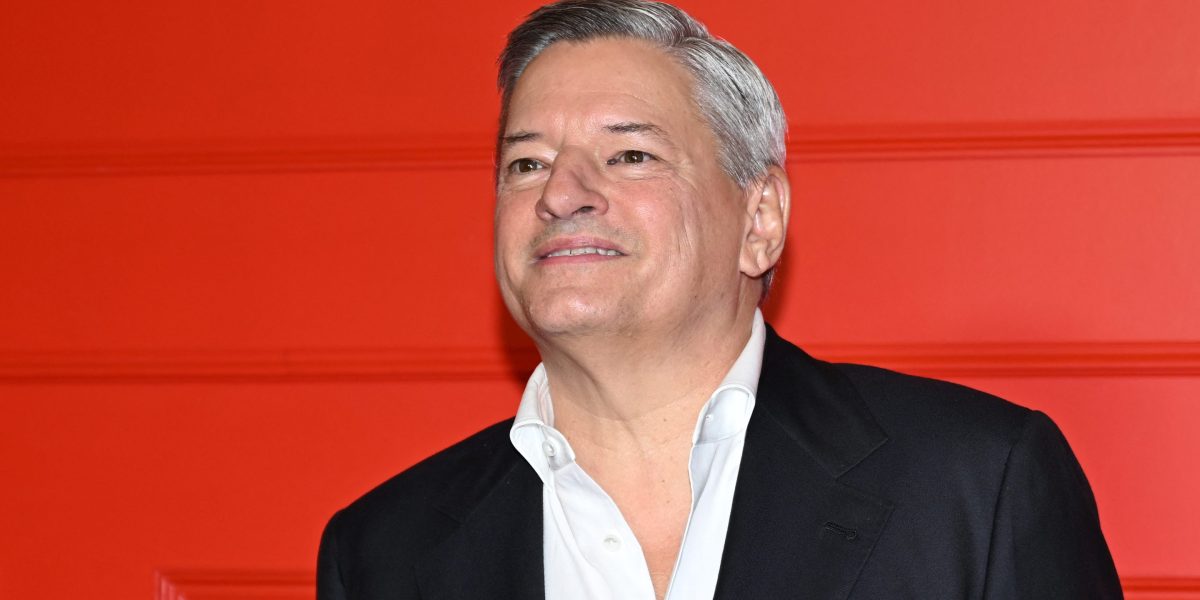
“The WBD Board remains fully supportive of and continues to recommend Netflix’s merger agreement, recognizing it as the superior proposal that will deliver the greatest value to its stockholders, as well as consumers, creators and the broader entertainment industry,” said Ted Sarandos and Greg Peters, co-CEOs of Netflix. “Netflix and Warner Bros. will bring together highly complementary strengths and a shared passion for storytelling. By joining forces, we will offer audiences even more of the series and films they love—at home and in theaters—expand opportunities for creators, and help foster a dynamic, competitive, and thriving entertainment industry.”

The WBD board also said it considered the costs and loss of value for WBD shareholders associated with accepting the PSKY offer, highlighting that it would be obligated to pay Netflix a $2.8 billion termination fee for abandoning its existing merger agreement; incur a $1.5 billion fee for failing to complete our debt exchange, which we could not execute under the PSKY offer without PSKY’s consent; and incur incremental interest expense of approximately $350 million. The total cost to WBD would be approximately $4.7 billion, or $1.79 per share. If Paramount were to return with a higher offer, say $5 billion or so, these concerns would be mitigated, but that hasn’t happened yet.

Editor’s note: the author worked for Netflix from June 2024 through July 2025.


Source link

Continue Reading

Business

Down Arrow Button Icon

Published

on


U.S. equity futures fell sharply Sunday night after Federal Reserve Chair Jerome Powell confirmed that he is under investigation related to testimony he gave last June concerning the renovation of Federal Reserve buildings. 

The New York Times report breaking news of the investigation and Powell’s subsequent disclosure rattled markets, reviving fears that years of President Donald Trump pressuring the Federal Reserve could now be realized into a direct assault on its independence.

Futures tied to the Nasdaq 100 led the decline, falling about 0.8%, as interest-rate-sensitive technology stocks bore the brunt of the selloff. S&P 500 futures were down roughly 0.5%, while Dow Jones Industrial Average futures fell about 0.4%, according to late-evening pricing.

Investors sought protection in the traditional safe-haven assets. Gold futures rose 1.7% to around $4,578 an ounce, while silver jumped more than 4%, reflecting renewed demand for protection against political and monetary instability. The U.S. dollar weakened modestly against several major currencies, including the Swiss franc and Japanese yen.

After years of largely staying silent while Trump repeatedly mocked and threatened him, Powell appeared to have reached a breaking point, issuing a rare and pointed statement. 

He wrote that while “No one—certainly not the chair of the Federal Reserve—is above the law,” the attack should be seen in the “the broader context of the administration’s threats and ongoing pressure.” 

“This new threat is not about my testimony last June or about the renovation of the Federal Reserve buildings…Those are pretexts. The threat of criminal charges is a consequence of the Federal Reserve setting interest rates based on our best assessment of what will serve the public, rather than following the preferences of the President.”

Economists warn that if the executive branch successfully co-opts the Fed, it could create a “self-fulfilling prophecy” of higher long-term inflation.

As Oxford Economics recently noted, any “cracks in the Fed’s independence” could spread rapidly through markets and ultimately raise borrowing costs for the businesses the administration seeks to protect with low interest rates. 

In a note published last July, when Trump publicly threatened to fire Powell, Deutsche Bank warned that such a move could spark severe market disruption.

“Both the currency and the bond market can collapse,” the bank wrote, citing heightened risks of inflation and financial instability. “The empirical and academic evidence on the impact of a loss of central-bank independence is fairly clear.”

Wall Street executives have echoed those concerns. Brian Moynihan, chief executive of Bank of America, said recently the erosion of Fed independence would carry serious consequences.

“The market will punish people if we don’t have an independent Fed,” Moynihan said.


Source link

Continue Reading

Business

Magnificent 7’s stock market dominance shows signs of cracking

Published

on


To beat the market in recent years, many investors applied a simple strategy: Load up on the biggest US technology stocks. 

It paid handsomely for a long time. But last year, it didn’t. For the first time since 2022, when the Federal Reserve started raising interest rates, the majority of the Magnificent 7 tech giants performed worse than the S&P 500 Index. While the Bloomberg Magnificent 7 Index rose 25% in 2025, compared with 16% for the S&P 500, that was only because of the enormous gains by Alphabet Inc. and Nvidia Corp.

Many Wall Street pros see that dynamic continuing in 2026, as profit growth slows and questions about payoffs from heavy artificial intelligence spending rise. So far they’ve been right, with the Magnificent 7 index up just 0.5% and the S&P 500 climbing 1.8% to start the year. Suddenly stock picking within the group is crucial. 

“This isn’t a one-size-fits-all market,” said Jack Janasiewicz, lead portfolio strategist at Natixis Investment Managers Solutions, which has $1.4 trillion in assets. “If you’re just buying the group, the losers could offset the winners.”

The three-year bull market has been led by the tech giants, with Nvidia, Alphabet, Microsoft Corp. and Apple Inc. alone accounting for more than a third of the S&P 500’s gains since the run began in October 2022. But enthusiasm for them is cooling as interest in the rest of the S&P 500 rises.

With Big Tech’s earnings growth slowing, investors are no longer content with promises of AI riches — they want to start seeing a return. Profits for the Magnificent 7 are expected to climb about 18% in 2026, the slowest pace since 2022 and not much better than the 13% rise projected for the other 493 companies in the S&P 500, according to data compiled by Bloomberg Intelligence.

“We’re already seeing a broadening of earnings growth and we think that’s going to continue,” said David Lefkowitz, head of US equities at UBS Global Wealth Management. “Tech is not the only game in town.”

One source of optimism is the group’s relatively subdued valuations. The Magnificent 7 index is priced at 29 times profits projected over the next 12 months, well below the 40s multiples earlier in the decade. The S&P 500 is trading at 22 times expected earnings, and the Nasdaq 100 Index is at 25 times. 

Here’s a look at expectations for the year ahead.

Nvidia

The dominant AI chipmaker is under pressure from rising competition and concerns about the sustainability of spending by its biggest customers. The stock is up 1,165% since the end of 2022, but it has lost 11% since its Oct. 29 record.

Rival Advanced Micro Devices Inc. has won data center orders from OpenAI and Oracle Corp., and Nvidia customers like Alphabet are increasingly deploying their own custom made processors. Still, its sales continue to race ahead as demand for chips outstrips supply. 

Wall Street is bullish, with 76 of the 82 analysts covering the chipmaker holding buy ratings. The average analyst price target implies a roughly 39% gain over the next 12 months, best among the group, according to data compiled by Bloomberg.

Microsoft

For Microsoft, 2025 was the second consecutive year it underperformed the S&P 500. One of the biggest AI spenders, it’s expected to invest nearly $100 billion in capital expenditures during its current fiscal year, which ends in June. That figure is projected to rise to $116 billion the following year, according to the average of analyst estimates.

The data center buildout is fueling a resurgence in revenue growth in Microsoft’s cloud-computing business, but the company hasn’t had as much success in getting customers to pay for the AI services infused into its software products. Investors want to start seeing returns on those investments, according to Brian Mulberry, client portfolio manager at Zacks Investment Management.

“What you’re seeing is some people looking for a little bit more quality management in terms of that cash flow management and a better idea on what profitability really looks like when it comes to AI,” Mulberry said.

Apple

Apple has been far less aggressive with its AI ambitions than the rest of the Magnificent 7. The stock was punished for it last year, falling almost 20% through the start of August. 

But then it caught on as an “anti-AI” play, soaring 34% through the end of the year as investors rewarded its lack of AI spending risk. At the same time, strong iPhone sales reassured investors that the company’s most important product remains in high demand. 

Accelerating growth will be the key for Apple shares this year. Its momentum has slowed recently, the stock closed higher on Friday, narrowly avoiding matching its longest losing streak since 1991. However, revenue is expected to expand 9% in fiscal 2026, which ends in September, the fastest pace since 2021. With the stock valued at 31 times estimated earnings, the second highest in the Magnificent 7 after Tesla, it will need the push to keep the rally going.

Alphabet

A year ago, OpenAI was seen as leading the AI race and investors feared Alphabet would get left behind. Today, Google’s parent is a consensus favorite, with dominant positions across the AI landscape. 

Alphabet’s latest Gemini AI model received rave reviews, easing concerns about OpenAI. And its tensor processing unit chips are considered a potential significant driver of future revenue growth, which could eat into Nvidia’s commanding share of the AI semiconductor market. 

The stock rose more than 65% last year, the best performance in the Magnificent 7. But how much more can it run? The company is approaching $4 trillion in market value, and the shares trade at around 28 times estimated earnings, well above their five-year average of 20. The average analyst price target projects just a 3.9% gain this year. 

Amazon.com

The e-commerce and cloud-computing giant was the weakest Magnificent 7 stock in 2025, its seventh straight year in that position. But Amazon has charged out of the gate in early 2026 and is leading the pack.

Much of the optimism surrounding the company is based on Amazon Web Services, which posted its fastest growth in years in the company’s most recent results. Concerns that AWS was falling behind its rivals has pressured the stock, as has the company’s aggressive AI spending, which includes efforts to improve efficiency at its warehouses, in part by using robotics. Investors expect the efficiency push to start paying off before long, which could make this the year the stock goes from laggard to leader. 

“Automation in warehouses and more efficient shipping will be huge,” said Clayton Allison, portfolio manager at Prime Capital Financial, which owns Amazon shares. “It hasn’t gotten the love yet, but it reminds me of Alphabet last year, which was sort of left behind amid all the concerns about competition from OpenAI, then really took off.”

Meta Platforms

Perhaps no stock in the group shows how investors have turned skeptical about lavish AI spending more than Meta. Chief Executive Officer Mark Zuckerberg has pushed expensive acquisitions and talent hires in pursuit of his AI ambitions, including a $14 billion investment in Scale AI in which Meta also hired the startup’s CEO Alexandr Wang to be its chief AI officer.

That strategy was fine with shareholders — until it wasn’t. The stock tumbled in late October after Meta raised its 2025 capital expenditures forecast to $72 billion and projected “notably larger”spending in 2026. When the shares hit a record in August they were up 35% for the year, but they’ve since dropped 17%. Demonstrating how that spending is boosting profits will be critical for Meta in 2026.

Tesla

Tesla’s shares were the worst performers in the Magnificent 7 through the first half of 2025, but then soared more than 40% in the second half as Chief Executive Officer Elon Musk shifted focus from slumping electric vehicle sales to self-driving cars and robotics. The rally has Tesla’s valuation at almost 200 times estimated profits, making it the second most expensive stock in the S&P 500 behind takeover target Warner Bros. Discover Inc.

After two years of stagnant revenue, Tesla is expected to start growing again in 2026. Revenue is projected to rise 12% this year and 18% next year, following an estimated 3% contraction in 2025, according to data compiled by Bloomberg.

Still, Wall Street is pessimistic about Tesla shares this year. The average analyst price target projects a 9.1% decline over the next 12 months, data compiled by Bloomberg show. 


Source link

Continue Reading

Business

Reference to Trump’s impeachments is removed from Smithsonian portrait display

Published

on


President Donald Trump’s photo portrait display at the Smithsonian’s National Portrait Gallery has had references to his two impeachments removed, the latest apparent change at the collection of museums he has accused of bias as he asserts his influence over how official presentations document U.S. history.

The wall text, which summarized Trump’s first presidency and noted his 2024 comeback victory, was part of the museum’s “American Presidents” exhibition. The description had been placed alongside a photograph of Trump taken during his first term. Now, a different photo appears without any accompanying text block, though the text was available online. Trump was the only president whose display in the gallery, as seen Sunday, did not include any extended text.

The White House did not say whether it sought any changes. Nor did a Smithsonian statement in response to Associated Press questions. But Trump ordered in August that Smithsonian officials review all exhibits before the nation celebrates the 250th anniversary of the Declaration of Independence on July 4. The Republican administration said the effort would “ensure alignment with the president’s directive to celebrate American exceptionalism, remove divisive or partisan narratives, and restore confidence in our shared cultural institutions.”

Trump’s original “portrait label,” as the Smithsonian calls it, notes Trump’s Supreme Court nominations and his administration’s development of COVID-19 vaccines. That section concludes: “Impeached twice, on charges of abuse of power and incitement of insurrection after supporters attacked the U.S. Capitol on January 6, 2021, he was acquitted by the Senate in both trials.”

Then the text continues: “After losing to Joe Biden in 2020, Trump mounted a historic comeback in the 2024 election. He is the only president aside from Grover Cleveland (1837– 1908) to have won a nonconsecutive second term.”

Asked about the display, White House spokesman Davis Ingle celebrated the new photograph, which shows Trump, brow furrowed, leaning over his Oval Office desk. Ingle said it ensures Trump’s “unmatched aura … will be felt throughout the halls of the National Portrait Gallery.”

The portrait was taken by White House photographer Daniel Torok, who is credited in the display that includes medallions noting Trump is the 45th and 47th president. Similar numerical medallions appear alongside other presidents’ painted portraits that also include the more extended biographical summaries such as what had been part of Trump’s display.

Sitting presidents are represented by photographs until their official paintings are commissioned and completed.

Ingle did not answer questions about whether Trump or a White House aide, on his behalf, asked for anything related to the portrait label.

The gallery said in a statement that it had previously rotated two photographs of Trump from its collection before putting up Torok’s work.

“The museum is beginning its planned update of the America’s Presidents gallery which will undergo a larger refresh this Spring,” the gallery statement said. “For some new exhibitions and displays, the museum has been exploring quotes or tombstone labels, which provide only general information, such as the artist’s name.”

For now, references to Presidents Andrew Johnson and Bill Clinton being impeached in 1868 and 1998, respectively, remain as part of their portrait labels, as does President Richard Nixon’s 1974 resignation as a result of the Watergate scandal.

And, the gallery statement noted, “The history of Presidential impeachments continues to be represented in our museums, including the National Museum of American History.”

Trump has made clear his intentions to shape how the federal government documents U.S. history and culture. He has offered an especially harsh assessment of how the Smithsonian and other museums have featured chattel slavery as a seminal variable in the nation’s development but also taken steps to reshape how he and his contemporary rivals are depicted.

In the months before his order for a Smithsonian review, he fired the head archivist of the National Archives and said he was firing the National Portrait Gallery’s director, Kim Sajet, as part of his overhaul. Sajet maintained the backing of the Smithsonian’s governing board, but she ultimately resigned.

At the White House, Trump has designed a notably partisan and subjective “Presidential Walk of Fame” featuring gilded photographs of himself and his predecessors — with the exception of Biden, who is represented by an autopen — along with plaques describing their presidencies.

The White House said at the time that Trump himself was a primary author of the plaques. Notably, Trump’s two plaques praise the 45th and 47th president as a historically successful figure while those under Biden’s autopen stand-in describe the 46th executive as “by far, the worst President in American History” who “brought our Nation to the brink of destruction.”


Source link

Continue Reading

Trending

Copyright © Miami Select.