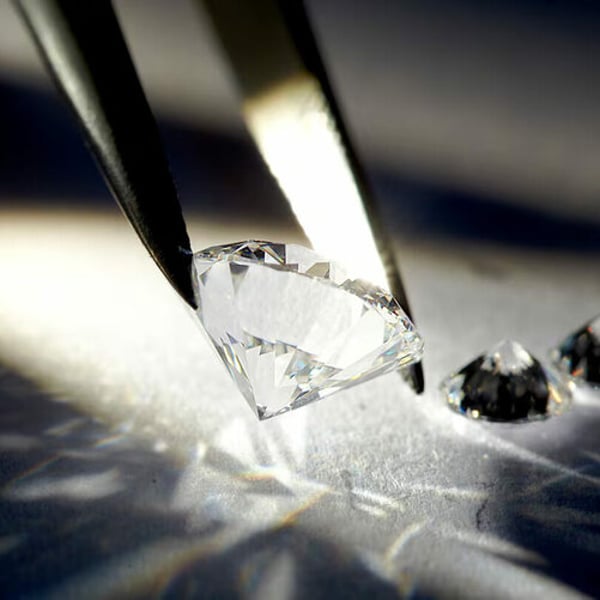
Across Botswana the lines of patients outside government clinics are lengthening, construction companies dependent on state jobs are firing workers and university students are threatening to boycott lectures after not getting the allowance increases they were promised.
Bloomberg
The economic slowdown is a sharp reversal from just a few years ago when the world’s richest diamond deposits allowed the sparsely-populated desert nation of 2.5 million people to invest in free and efficient healthcare and plow money into funding tertiary education for students both at home and abroad. Its robust finances allowed it to provide for its citizens in a way that made it the envy of southern Africa.
The discovery of gems in 1967 transformed what was a rural backwater with, at the time of independence from the UK a year earlier, only a few miles of tarred road into the richest nation per capita on the sub-Saharan African mainland. Six decades later a diamond-market crisis has turned that find into an affliction and a cautionary tale of what can happen to an economy that becomes overly reliant on one commodity.
“For decades, we have leaned and relied heavily on diamonds. While they served us well, we know painfully today that this model has reached its limits,” President Duma Boko, 55, said in an August speech. “This is no longer an economic challenge alone; it is a national social existential threat.”
The market for natural diamonds is in crisis, with cut-price lab-grown equivalents hitting demand particularly hard in the US, the biggest market for the gems. They accounted for almost half of engagement ring purchases last year compared with 5% in 2019, according to jewelry insurer BriteCo Inc. The collapse of the luxury retail sector in China and the impact US tariffs have had on trade have also hurt the industry.
While lab gems can be produced in weeks or months, the formation of natural diamonds, made of crystallized carbon formed under extreme pressure and heat deep beneath the earth’s surface, can take billions of years before volcanic eruptions propel them upwards to depths where they can be mined or found on ocean or river beds. They also cost many times as much as their synthetic rivals.Their increasing popularity is creating the biggest disruption in the market since abundant alluvial diamonds were discovered on Namibia’s beaches early last century, causing prices to plunge, according to mining historian Duncan Money.
It’s choking off the revenue that accounts for 80% of Botswana’s exports and a third of government income. After repeated write-downs of its value Anglo American Plc is looking to sell De Beers, the world’s biggest diamond company that mines almost all of Botswana’s gems in a venture with the government.
Boko’s administration, which in October displaced a political party that had ruled since independence, is scrambling.
In July, the government engaged Malaysia’s PEMANDU Associates to advise on accelerating economic diversification and on Aug. 21 Boko took to Facebook to announce a plan for a little-known Qatari group, Al Mansour Holdings, to invest $12 billion. There was scant information about how the capital will be deployed and the same group has in recent weeks promised more than $100 billion in investment across six African countries, raising questions about the credibility of the pledge.
The president on Aug. 25 declared a public health emergency and implored pension funds and insurers to help fund the response. Government has frozen recruitment and there are shortages of medication, medical supplies and equipment, according to Kefilwe Selema, president of the Botswana Doctors Union.
“The situation is very bad,” said Galeemiswe Mosheti, a 42-year-old diabetes-sufferer who arrives at a government clinic in the capital Gaborone, at 8 a.m. and can wait as long as eight hours for his medicine compared with just an hour a year ago. “We’re spending long periods in the queue and our jobs suffer,’’ said the taxi driver who loses income every time he fetches waits to be attended to.
For construction companies dependent on government work the situation is no better.
“Most of our members have had to retrench workers,” said Tshotlego Kagiso, chairman of the Tshipidi Badiri Builders Association, the country’s largest building contractors organization, which before the current downturn had more than 800 members, some of whom can no longer afford their membership fees.
“The majority have suspended operations and many have closed altogether due to slower government spending,” he added, saying thousands of workers have lost their jobs without being able to be more specific.
The country’s economic statistics tell a story of rapid decline and belie De Beers’ marketing catchphrase, ‘A diamond is forever.’
The International Monetary Fund forecast Botswana’s 2025 fiscal deficit climbing to 11% of gross domestic product. That’s the largest budget gap since the global financial crisis in 2009, and the biggest in sub-Saharan Africa this year. Government debt will rocket to 43% of GDP in 2025, about doubling the ratio in just two years, according to data from the Washington-based lender, and exceeding a legislative limit.
In June, the finance ministry abandoned a forecast of 3.3% growth in 2025 and instead said the economy may contract 0.4%, foreign reserves have slumped 27% over the last year and Citigroup Inc. in July forecast Botswana will need to keep devaluing its managed currency, the pula. A first ever mid-term budget review is planned for as early as next month and Debswana, the country’s joint venture with De Beers, is operating at about 60% of capacity.
Botswana is “experiencing a significant decline in revenue inflows resulting in massive liquidity challenges that threaten financial stability and sustainability of government business operations,” Finance Ministry Permanent Secretary Tshokologo Kganetsano told a parliamentary committee in June.
Already, after years of limited borrowing, the country is turning to debt. It secured $304 million from the African Development Bank in May and $200 million from the OPEC fund in July and plans a domestic bond roadshow for investors on Tuesday. Its investment grade credit rating, the highest in Africa, is under threat with both Moody’s and S&P Global Ratings this year cutting its outlook to negative.
“The diamond sector is under severe pressure — both prices and volumes,” Ravi Bhatia, director and lead analyst at S&P Global Ratings, said in an interview. “They’re doing a combination of trying to diversify, fiscal consolidation and also austerity.”
While Botswana’s governments have been talking about economic diversification since the country’s first president, Seretse Khama, set up the Botswana Development Corp. in 1970 to develop copper mining and beef production, little progress has been made.
Tourism, focused on luxury safaris in the country’s Okavango Delta wetlands and a wilderness that boasts the world’s largest elephant population, is the second-biggest contributor after diamonds, accounting for just 12% of GDP. Some copper mines are being developed while huge coal deposits, barely exploited, can no longer attract the funding needed for extraction.
That’s left more than two fifths of the population under the age of 24 unemployed, according to the International Labour Organization, with the diamond mines only employing a few thousand people, and reliant on government largesse. That’s a situation Boko described as “a huge risk,” in a January interview with Bloomberg.
“We must now focus on job creation,” Boko said as he laid out ambitious plans for investment in renewable energy, technology and agriculture.
What he hadn’t bargained for was that there would be no money to pay for it.
While many other countries are reliant on a single commodity for the bulk of their earnings and go through cyclical downturns, for example oil-reliant Nigeria and Angola, for Botswana the outlook is bleaker.
“The difference with the oil cycle is that diamond prices are unlikely to ever come back,” said Charlie Robertson, author of The Time Travelling Economist, a book on how developing economies industrialize. “Its economic model is likely to cease being one of the shining lights on the African continent.”
A look inside the salon of the French luxury house’s new Vienna store. – CELINE
The 150-square-metre luxury boutique in Vienna spans three storeys. It showcases the latest womenswear and menswear collections, beauty, fragrances, and Maison pieces. From the outside, the flagship impresses with a listed façade of sculpted marble, paired with large, dark-framed, floor-to-ceiling windows.
Inside, natural stone prevails, with materials such as Grand Antique marble combined with travertine. Basaltina flooring laid throughout features a French-inspired chevron pattern. The sense of luxury is heightened by ultra-clear mirrors- some finished in antique gold- neon lighting, and polished metal.
On the ground floor, womenswear is presented, beginning with accessories, leather goods, beauty products, and fragrances. This is followed by the ready-to-wear area.
A staircase with cantilevered steps, inspired by minimalism, leads to the first floor, where the menswear collections are presented. The scheme here is darker overall, with black-lacquered walls and a selection of timbers that contrast with the lighter woods in the other areas.
A look inside the luxury boutique. – CELINE
An intimate salon on the second floor, accessible exclusively via a private lift, expands the store and includes an enlarged fitting room.
Throughout the store and its numerous lounge areas, the furnishings comprise a selection of vintage and contemporary pieces. As part of the ongoing Celine Art Project, a curated selection of artworks is on display with a stoneware composition by Anders Hald, a painting by Jasmine Gregory, and sculptures by Rosalind Tallmadge and Marcelo Silveira.
This article is an automatic translation. Click here to read the original article.
“It is with great pleasure that we announce Micaela Oliveira, the celebrated Portuguese designer, as one of the featured couturières at the Saudi Arabia Creative Women Forum 2025 Gala Dinner and Awards Ceremony,” the organisation declared on its social media channels, in a post also shared on the designer’s Instagram account, announcing the tribute at the event held on November 6 at the National Museum in Riyadh. The evening opened with an address by Princess Noura bint Saud bin Naif bin Abdulaziz Al Saud, patron of the Forum and founder of Saudi Fashion Week, followed by a runway show by the Portuguese designer, celebrating the rich traditions of this enchanted kingdom.
Lux
The publication further notes that the Trofa-born couturière “grew up surrounded by fabrics, prints, and creativity- a world that has shaped her lifelong devotion to fashion,” and that over the past 20 years she has “built an extraordinary career defined by elegance, daring, and refinement, consolidating her name among the leading designers of wedding dresses and haute couture,” the statement continues.
“Her creations- a harmonious blend of sophistication, sensuality, and femininity- embody her belief that each dress should tell a story, evoke emotion, and reflect the unique essence of the woman who wears it,” reads the message shared simultaneously on the Forum and the eponymous designer’s Instagram accounts.
“Guided by the values of exuberance, creativity, and impeccable craftsmanship, Micaela’s creations blend classic beauty with contemporary art, achieving a timeless charm,” the post adds, highlighting “a vision that transcends borders” that “continues to enchant the global fashion world, transforming dreams into haute couture masterpieces that celebrate individuality and the eternal elegance of femininity.”
Lux
For her part, Micaela Oliveira expressed her gratitude for the honour at the Saudi Arabia Creative Women Forum 2025 Gala Dinner and Awards Ceremony, which took place in Riyadh, the capital and principal financial centre of Saudi Arabia: “It was a privilege, as a designer, to travel to the Kingdom of Saudi Arabia, where I was honoured before members of international royalty and government representatives at a truly magnificent awards ceremony,” she said in a statement quoted by Lux.
“This prestigious award was presented to me by Her Royal Highness Princess Noura bint Saud bin Nayef bin Abdulaziz Al Saud, a pioneering woman and a leading figure in the Kingdom’s artistic community. I had the great honour of presenting a fashion show celebrating the rich traditions of this remarkable country during the Creative Women Forum 2025 Gala Dinner and Awards Ceremony.”
Instagram
“We are delighted to announce the return of the Creative Women Forum in Riyadh, which will take place from November 4–6, 2025, under the esteemed patronage of Her Royal Highness Princess Noura bint Saud bin Nayef Al Saud,” announced Creative Women Platform on Instagram. “This year’s forum will be held at the iconic Princess Nourah bint Abdulrahman University- the largest women’s university in the world.”
“A powerful stage for a global gathering of visionary women,” it continues. “Join us for three transformative days filled with innovative leadership, inspiration, and ground-breaking ideas, as we explore creativity, entrepreneurship, sustainability, and the future of women in leadership.”
This time, the experience culminated in a fabulous gala dinner and awards ceremony, “celebrating the brilliance of the women who shape our world,” concludes Creative Women Platform, on its social media.
This article is an automatic translation. Click here to read the original article.
British footwear brand Clarks is celebrating its 200th anniversary this year. In Italy, the brand is marking the bicentennial by opening a pop-up space within the Candiani Denim Store, in piazza Mentana 3 in Milan, where customers are able to personalise their Clarks shoes throughout December.
Clarks shoes can be personalised at the Candiani Denim Store in Milan – Clarks
From December 2 to 9, the Milanese store by Candiani, a premium Italian denim producer with its own jeans line, is hosting a Clarks pop-up shop. Visitors will have the opportunity to explore the British footwear brand’s history, its signature models, and learn about some of the leading figures who have worn Clarks and helped define its identity, influencing generations. A documentary about Clarks’s 200 years in business, entitled From Somerset to the World, will be screened inside the pop-up shop. The shop will showcase a selection of Clarks Originals models, including the Wallabee, Desert Boot and Desert Trek, as well as several items from the Fall/Winter 2025-26 collection, reinterpreting materials, shapes and colours with a contemporary feel.
In parallel with the pop-up shop (where a special event was staged on Thursday December 4), throughout December the Candiani Denim Store is giving Clarks customers the chance to create a personalised version of their shoes, choosing from two Clarks Originals models, the Wallabee and the Desert Boot. The limited-edition shoes will feature a personalised denim fob, and customers will be able to choose from an extensive library of patterns and designs. The motif chosen will be lasered directly on to the shoes at Candiani Custom, the denim brand’s urban micro-factory for bespoke jeans located next to the store.
FashionNetwork.com has had the opportunity to talk about Clarks’s distribution plans in Italy with Fabio Antonini, CEO of 3A, the company that has been distributing the British brand’s men’s and women’s lines since the Fall/Winter 2025-26 season.
FashionNetwork.com: Clarks has been busy overhauling its retail presence in Italy. What are the implementation steps, and what have the initial results been?
Fabio Antonini: Unlike the previous distributor, whose strategy was chiefly aimed at monobrand stores, we have rejigged Clarks’s distribution model by focusing on the wholesale channel and on a strong presence in multibrand stores. This is enabling us to rapidly extend our territorial footprint, making the brand more accessible and better integrated within the Italian market.
Fabio Antonini, CEO of 3A
FN: How many more Clarks corners are you planning to open in 2026 in Italy? And what about Clarks’s monobrand presence? Are you considering other initiatives like the one with Candiani?
FA: We currently don’t have any plans for new corners or monobrand stores. Our strategy is focused on the wholesale channel and multibrand retailers. The initiative with Candiani was developed as a special project to celebrate Clarks’s 200th anniversary. Over the next few years, we will assess new collaborations and special projects, in line with the brand’s future requirements. FN: In how many multibrand stores is Clarks currently distributed, and how many more are you planning to reach?
FA: In 2025, we have made Clarks available at 433 clients for a total of 619 doors [in Italy]. Next year, we’re expecting to grow the number of clients served by approximately 10%. FN: Clarks recently announced and deployed a strategy designed to boost its position in global e-marketplaces, is it also being implemented in Italy?
FA: Clarks’s new global strategy is set to make the brand even more accessible and reachable by online consumers. Its expanded presence on new global marketplaces is making Clarks easier to access in Italy too, strengthening its online presence and making it easier for consumers to buy. FN: What revenue result did 3A reach in fiscal 2024, how much did it grow by, and what is your forecast for 2025?
FA: In 2024, 3A generated a revenue of approximately €110.3 million, up 4.84% over the €105.2 million recorded in 2023. We’re expecting to grow at a similar rate in 2025.
Clarks
FN: Have there been new entries or other changes within 3A’s brand portfolio?
FA: Yes, there have been changes. Our portfolio includes underwear by Nike, Jordan, Calvin Klein and Tommy Hilfiger, as well as footwear and other products by Clarks, Converse Shoes, Nike Swim, Nike, Jordan, Converse Apparel Kids, Lacoste Kids, Huggies Apparel and Crep Protect.
We’re pursuing a strategy aimed at introducing new lines with a distribution exclusive, to further enrich our portfolio also in terms of brand quality. Some new lines will feature as early as spring 2026.
Brand background
Clarks was founded in Street, Somerset, in 1825, when Cyrus Clark opened a tannery with his brother James. It began shoemaking by using leather offcuts to create slippers. In 1950, Clarks created the revolutionary Desert Boot shoes. Since then, Clarks has built an archive of over 22,000 models that have been worn across generations all over the world.
In fiscal 2024, Clarks’s parent company C&J Clark Ltd reported a revenue drop of 9.4%, to £901.3 million (approximately €1.07 billion), and a pre-tax loss of £39.3 million. This led the company to overhaul the Clarks brand, cutting overheads, modifying the marketing approach, and repositioning the range. The brand’s retail strategy too has been reappraised, streamlining the store fleet and developing initiatives like the Milanese pop-up store.
Clarks, in typically innovative fashion, is also expanding its online presence with several new launches on global e-tailers like Shein, Walmart, Target, Secret Sales and TikTok Shop. In the UK, Clarks has recently been introduced on Shein and Secret Sales, while in Europe it will be available at Secret Sales Netherlands and Dress for Less later this year. In the Americas, it has been featured on eBay for the last five years, and has recently reached Shop Simon, Shein and Walmart, while it will be available on Target this month.
Clarks has recently returned to Tottenham Court Road in London, with a new retail concept – Clarks
Clarks is also aiming to consolidate its presence on TikTok Shop. It launched on the Chinese social shopping channel in Singapore and Malaysia last year, and this year it has reached the UK and the Americas, with Europe set to follow in 2026. This expansion drive follows the September announcement of the first Clarks-owned digital marketplace, which is set to be launched in the UK in early 2026.
Candiani is an Italian family company founded in 1938 and based in Robecchetto con Induno, near Milan, in the Ticino Park Nature Reserve. Besides owning the store in piazza Mentana in Milan, with the Candiani Custom micro-factory for bespoke jeans, Candiani owns among others the patent for Coreva, the first and only biodegradable and compostable stretch denim available on the market.